Case at a glance
- Concerns & goals
- Previous treatment
- Surgical plan
- Removal of foreign material and adjustment of the nasal starting point: The bridge began too high on the face.
- Removal of previous support material: Artificial reinforcement material used in the earlier tip operation was carefully removed from both sides of the septal cartilage.
- Tip reconstruction with autologous rib cartilage: The patient's own rib cartilage was used to strengthen tip support and establish stable projection.
- Graft & material details
- Removal of previous support material: Artificial reinforcement material used in the earlier tip operation was carefully removed from both sides of the septal cartilage.
- Tip reconstruction with autologous rib cartilage: The patient's own rib cartilage was used to strengthen tip support and establish stable projection.
- Photo timing
These details are excerpts from the original article and captions. Follow a detail to read it in context.
Hello, I am Dr. Peter C. Kang, Medical Director of NOSELAB Clinic.
Today, I would like to share the case of a patient who came to us with concerns about a long-looking nose and a broad bridge after two previous nasal treatments and operations.
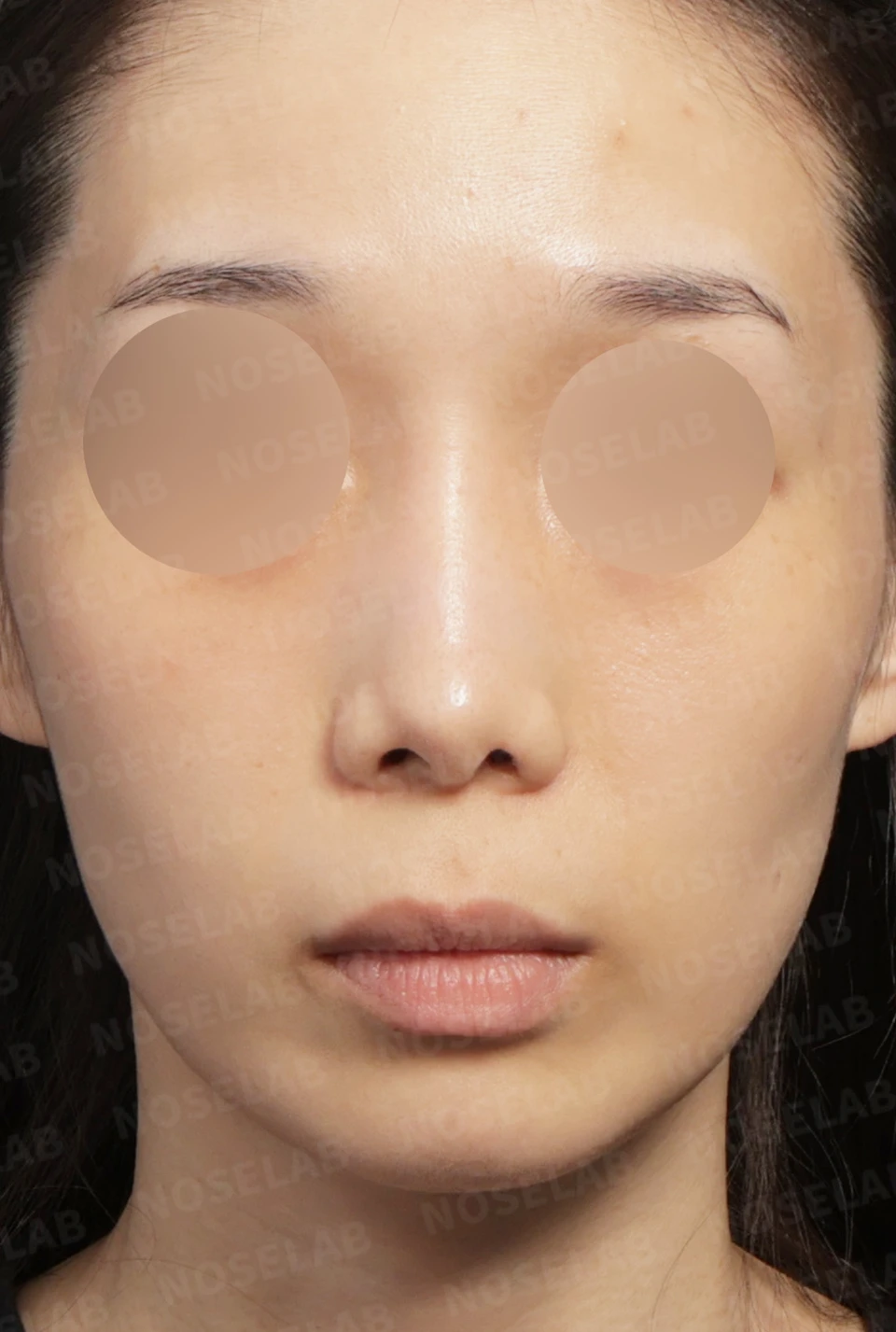
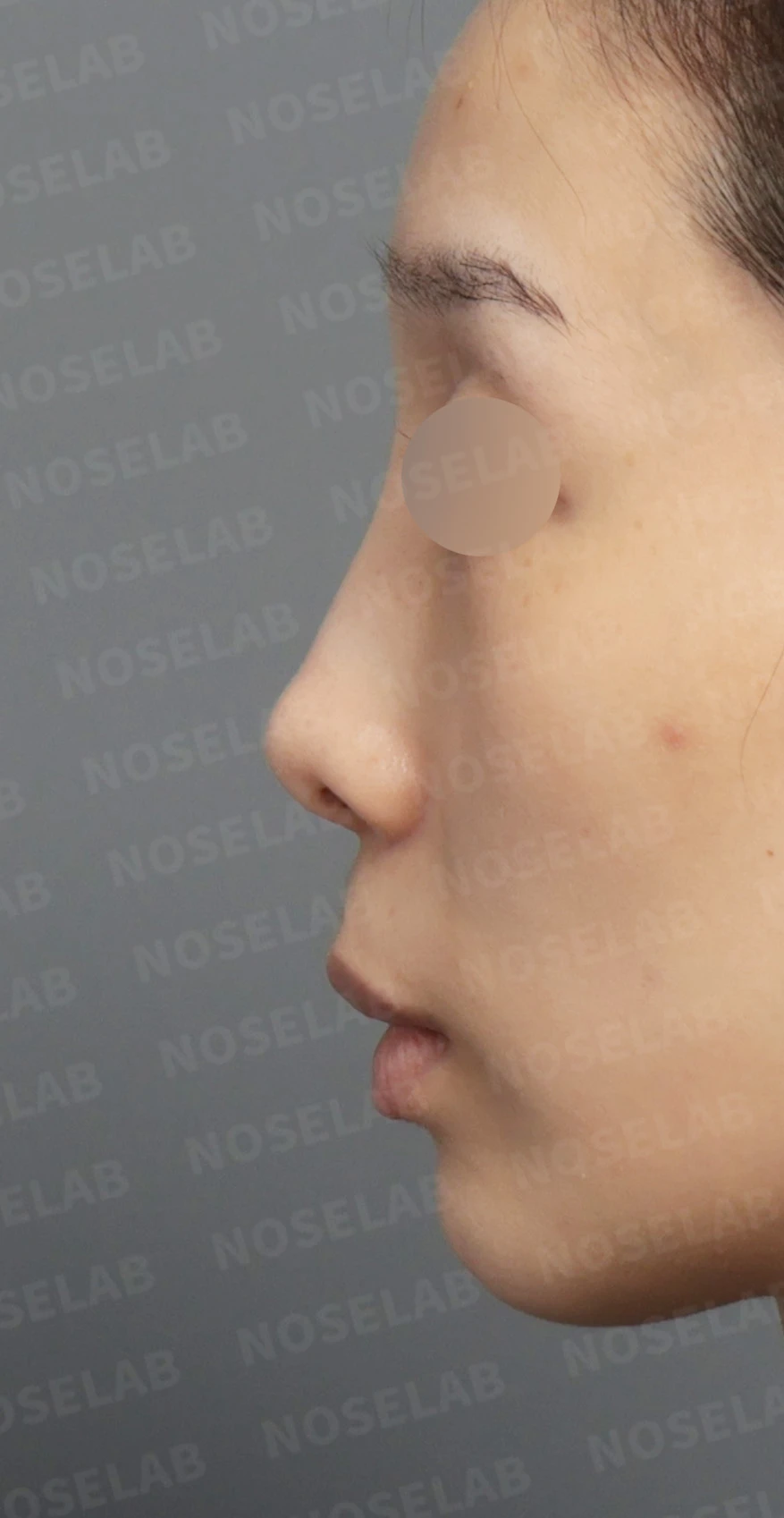
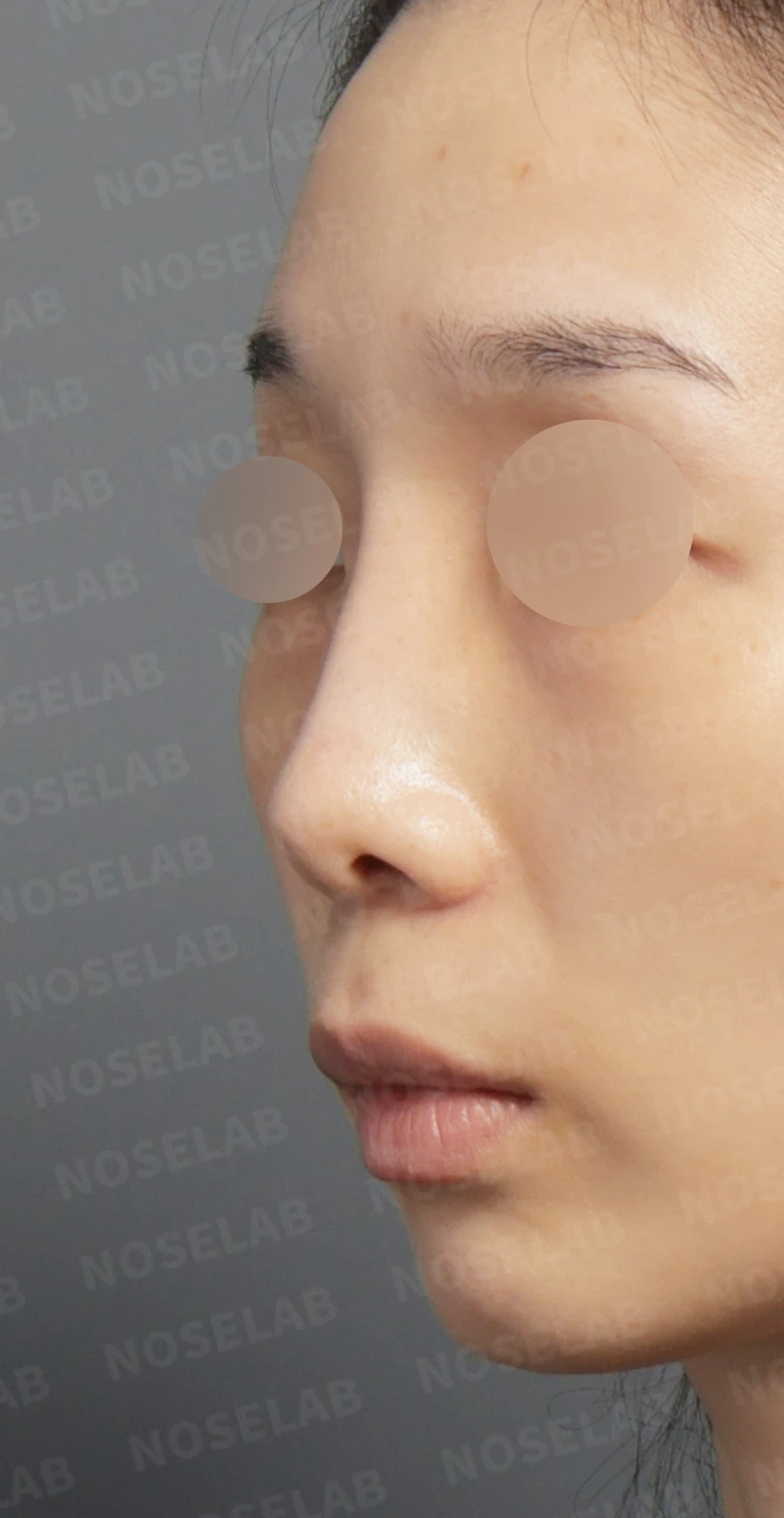
Surgical History
- Approximately seven years earlier: filler treatment to the bridge and a procedure to raise the tip.
- Approximately six years earlier: silicone implant placement and tip surgery using ear cartilage.
Repeated use of implants and cartilage can leave tissue adhesions, making careful dissection especially important during revision surgery.
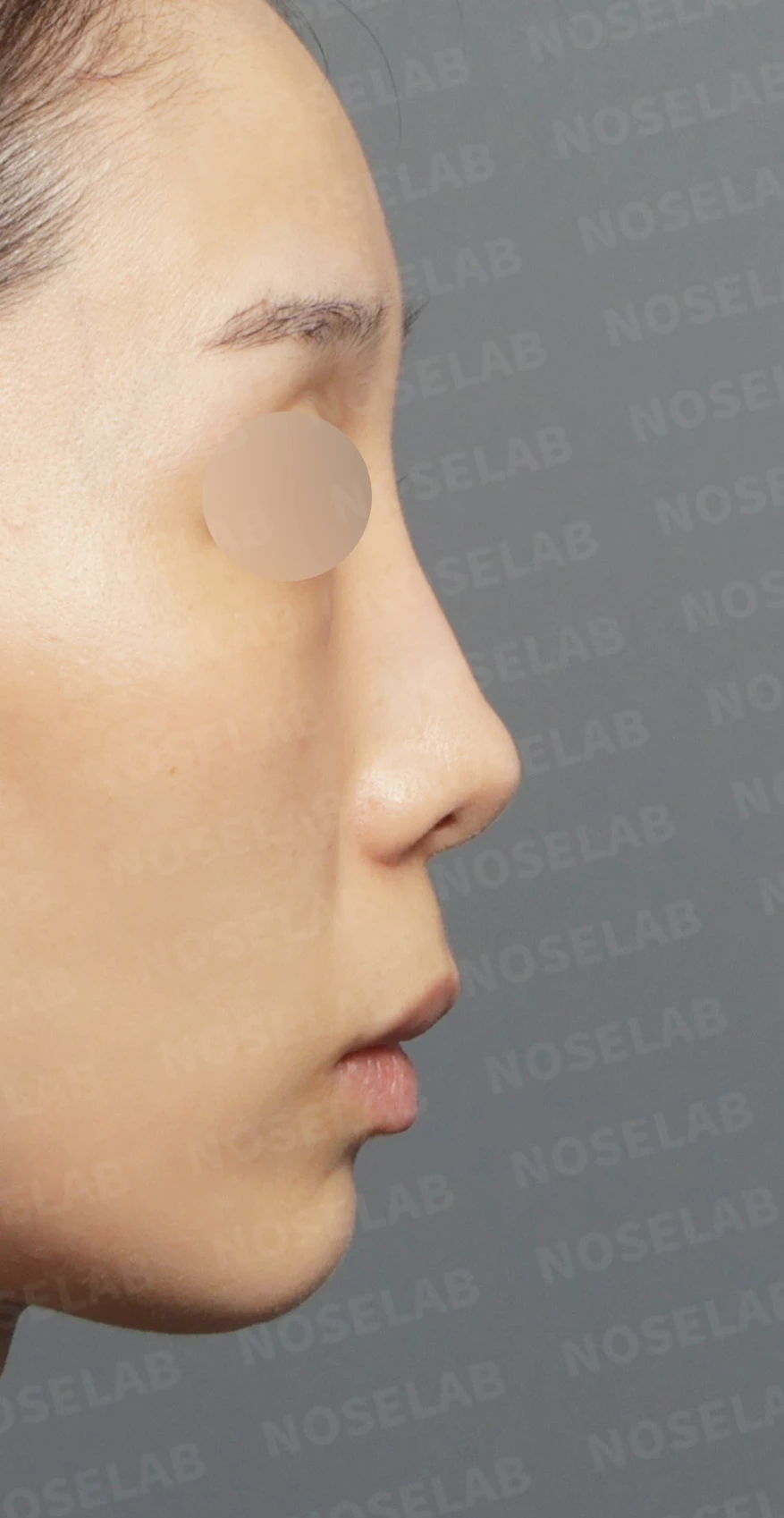
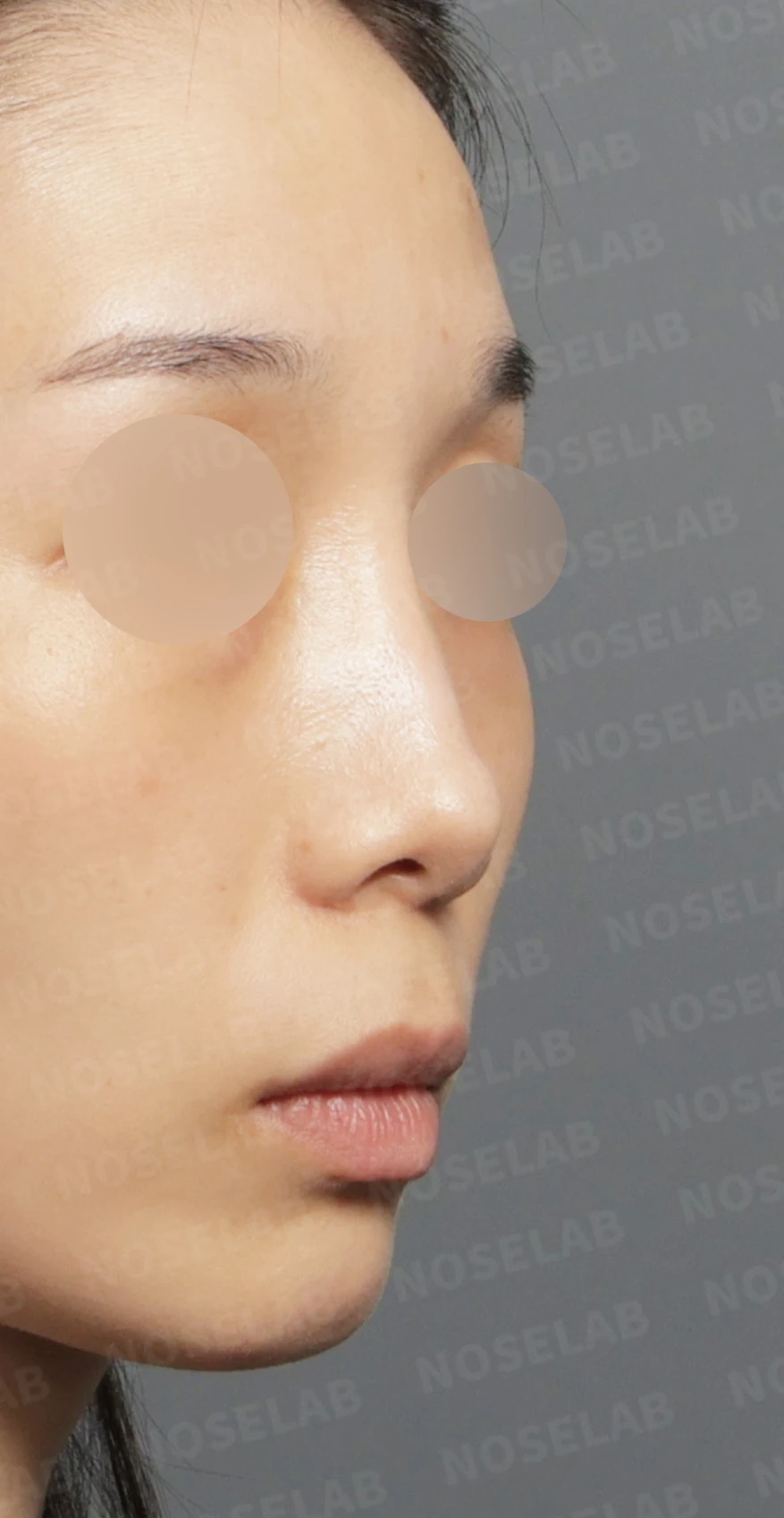
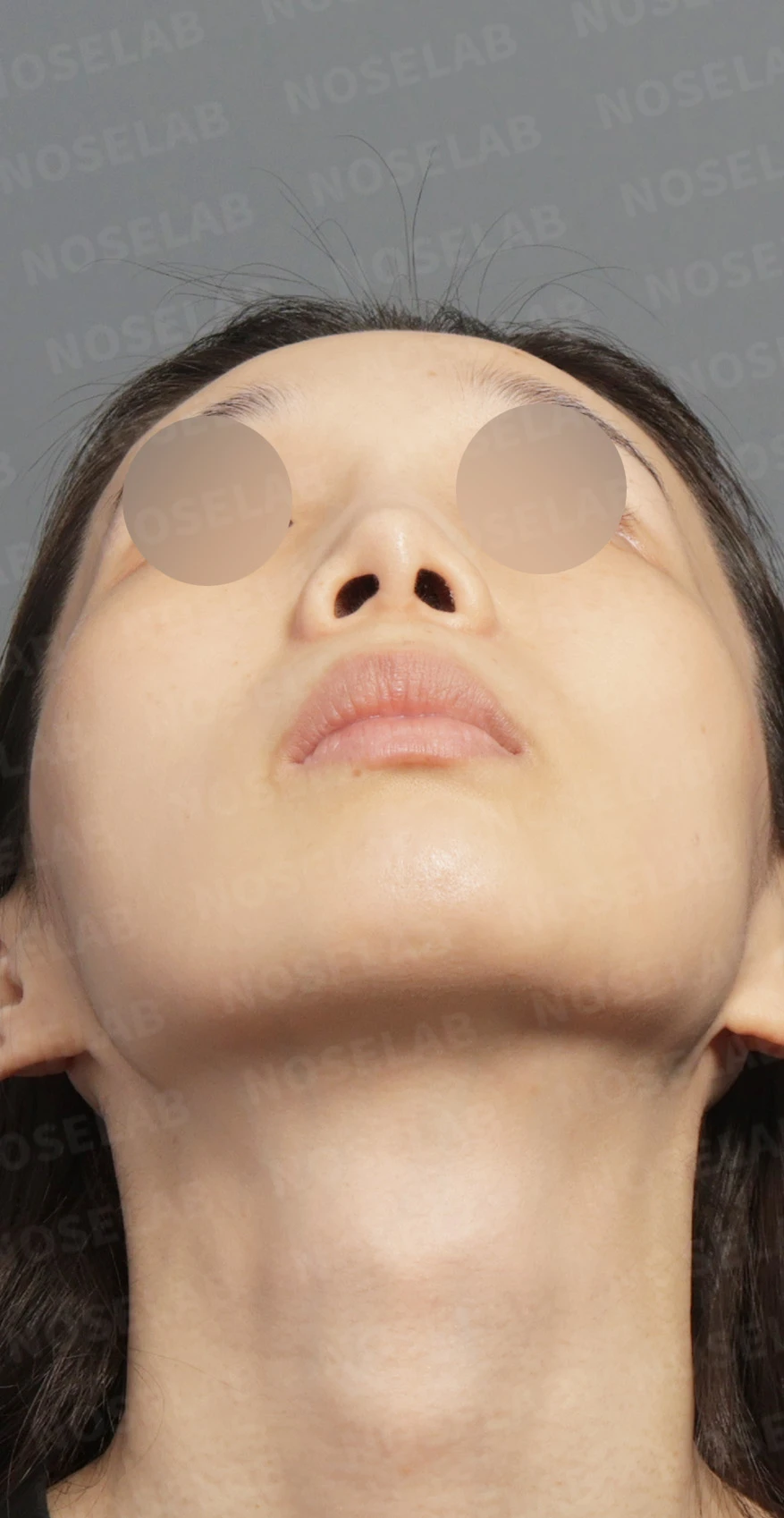
The Patient's Goals
- Make the long-looking nose appear more natural.
- Refine the broad bridge left after previous surgery.
- Improve nasal function so that breathing felt comfortable and unobstructed.
Surgical Plan and Procedure
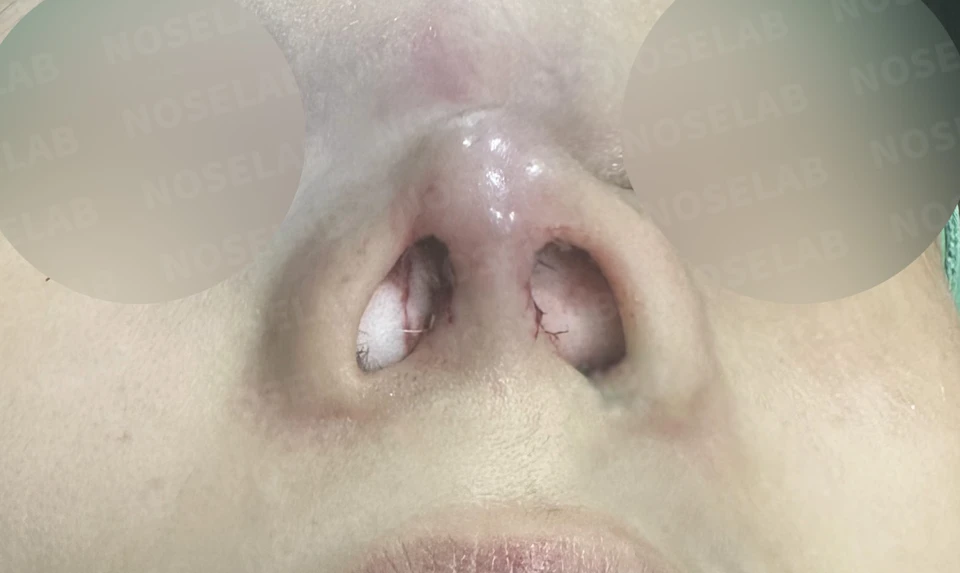
- Removal of foreign material and adjustment of the nasal starting point: The bridge began too high on the face. We removed the existing foreign material and lowered the starting point to approximately the level of the pupils for a more natural transition.
- Removal of previous support material: Artificial reinforcement material used in the earlier tip operation was carefully removed from both sides of the septal cartilage.
- Tip reconstruction with autologous rib cartilage: The patient's own rib cartilage was used to strengthen tip support and establish stable projection.
- Lateral osteotomies: The nasal bones were repositioned inward to refine and narrow the broad bridge.
- Septoplasty and surgery for nasal obstruction: The deviated septum and associated obstructive problems were addressed to improve nasal breathing.
- Dorsal implant placement: A silicone implant was precisely carved to fit the nasal bones and provide the intended bridge height.
Surgical Results
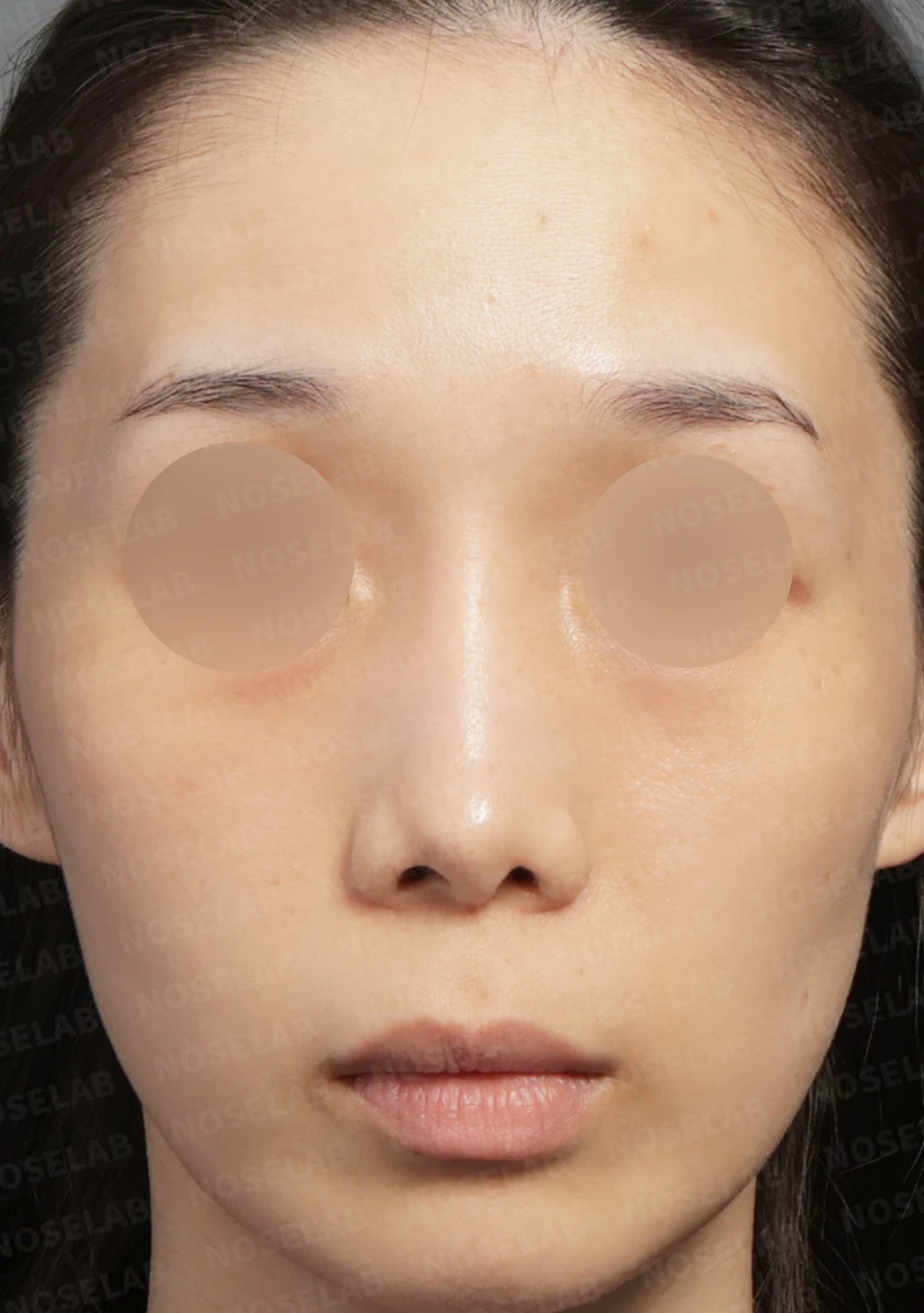
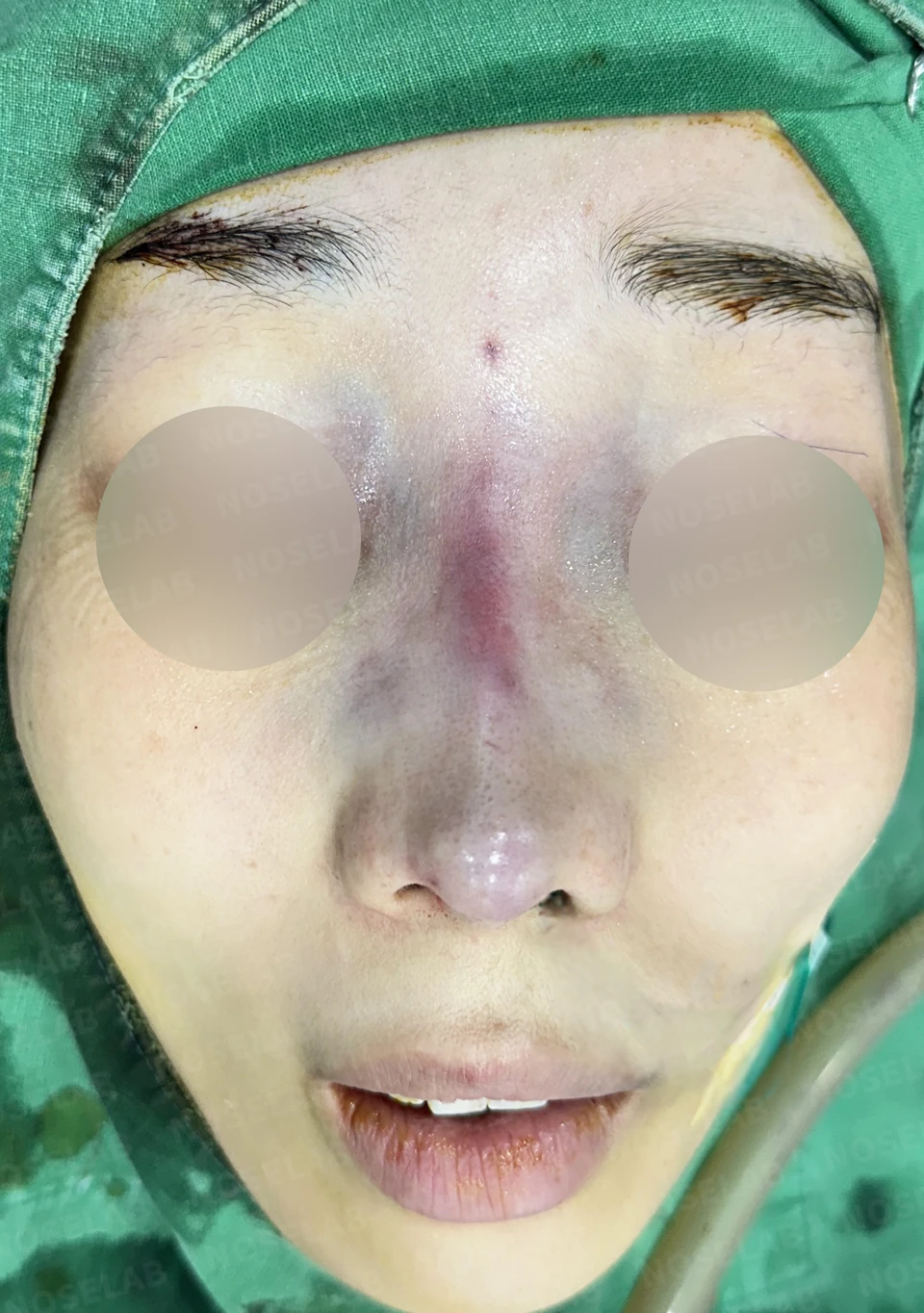
Frontal view
- The previously long-looking nose appeared more proportionate.
- A narrower bridge created a more defined appearance.
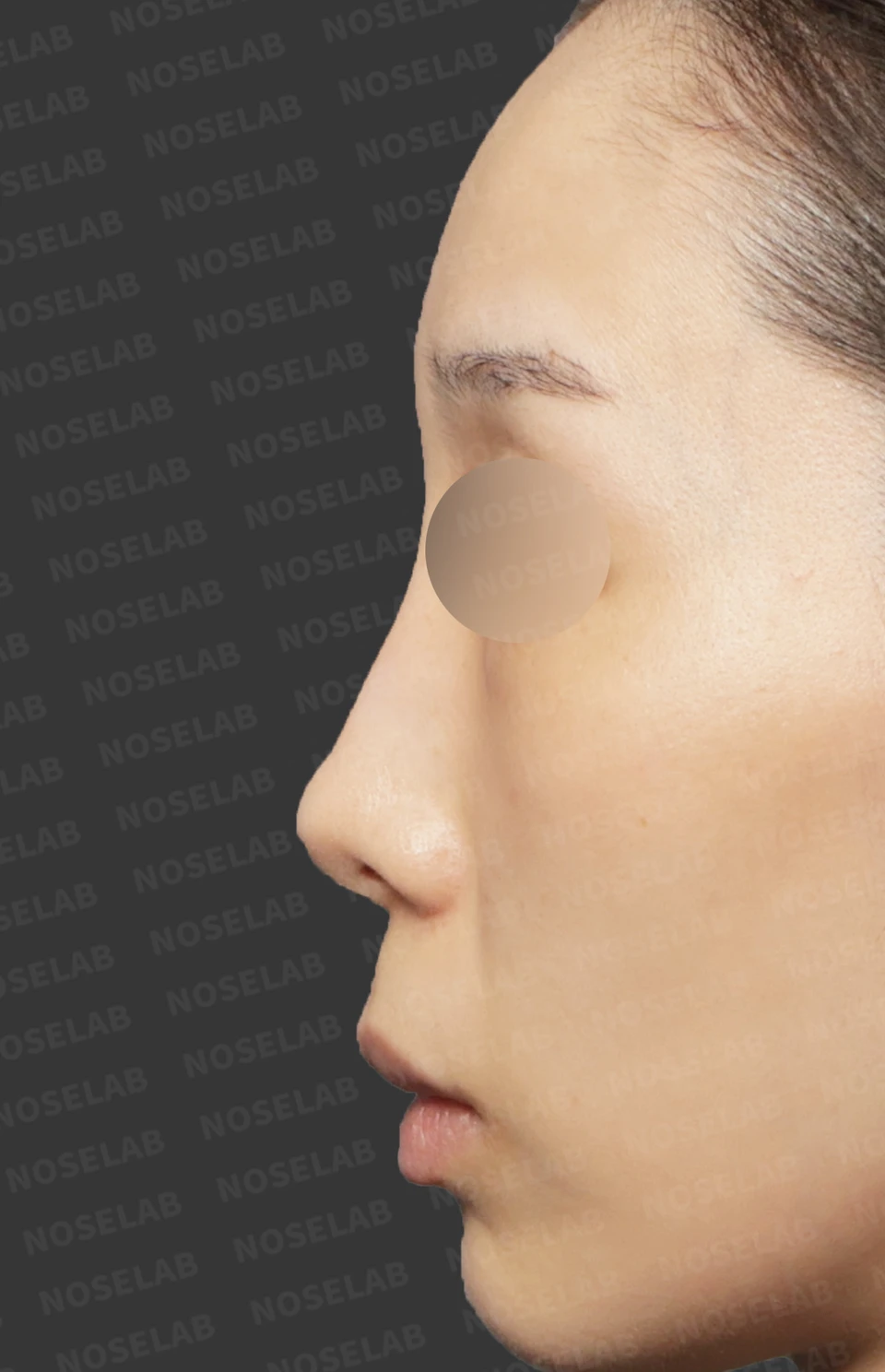
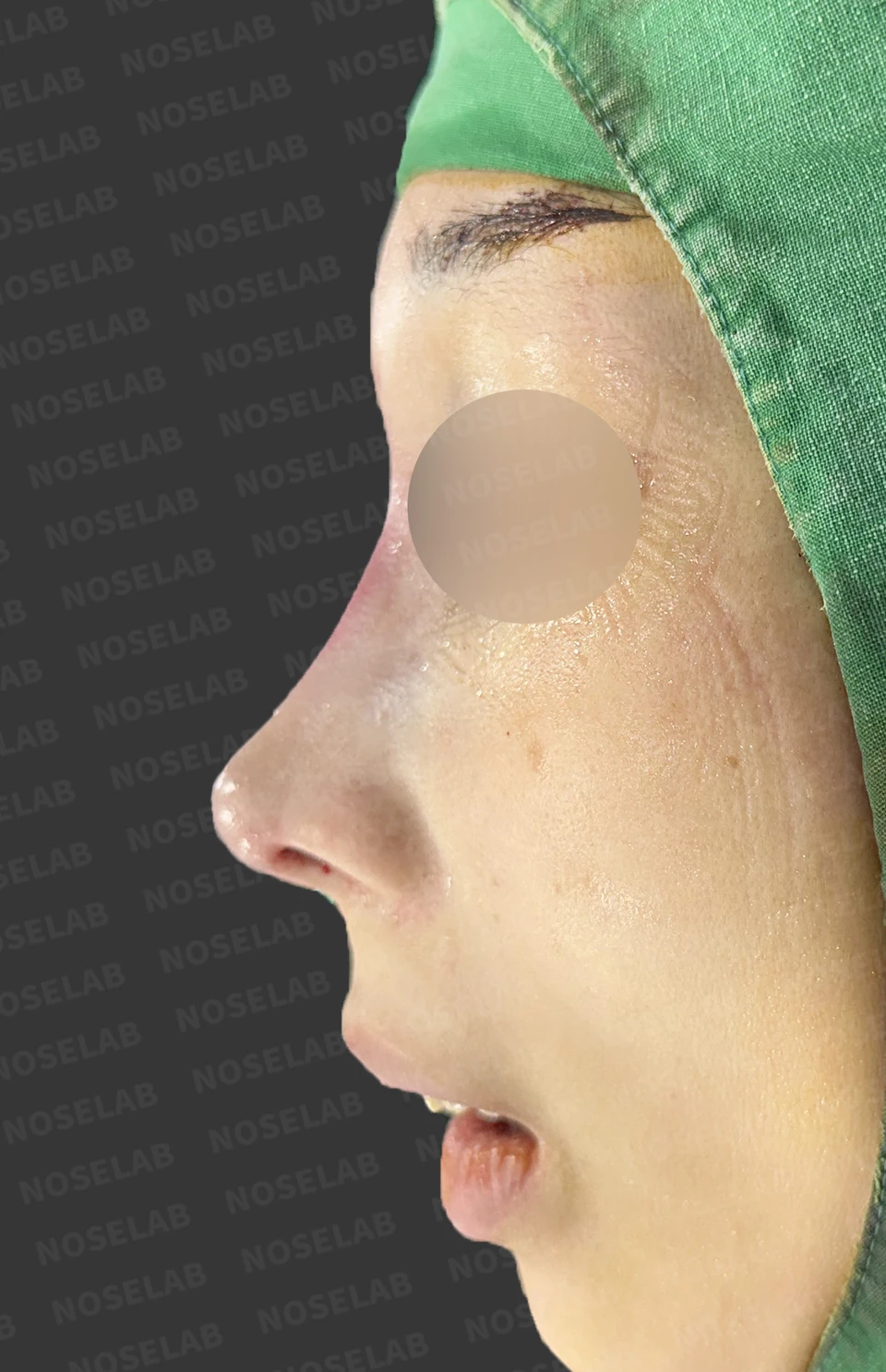
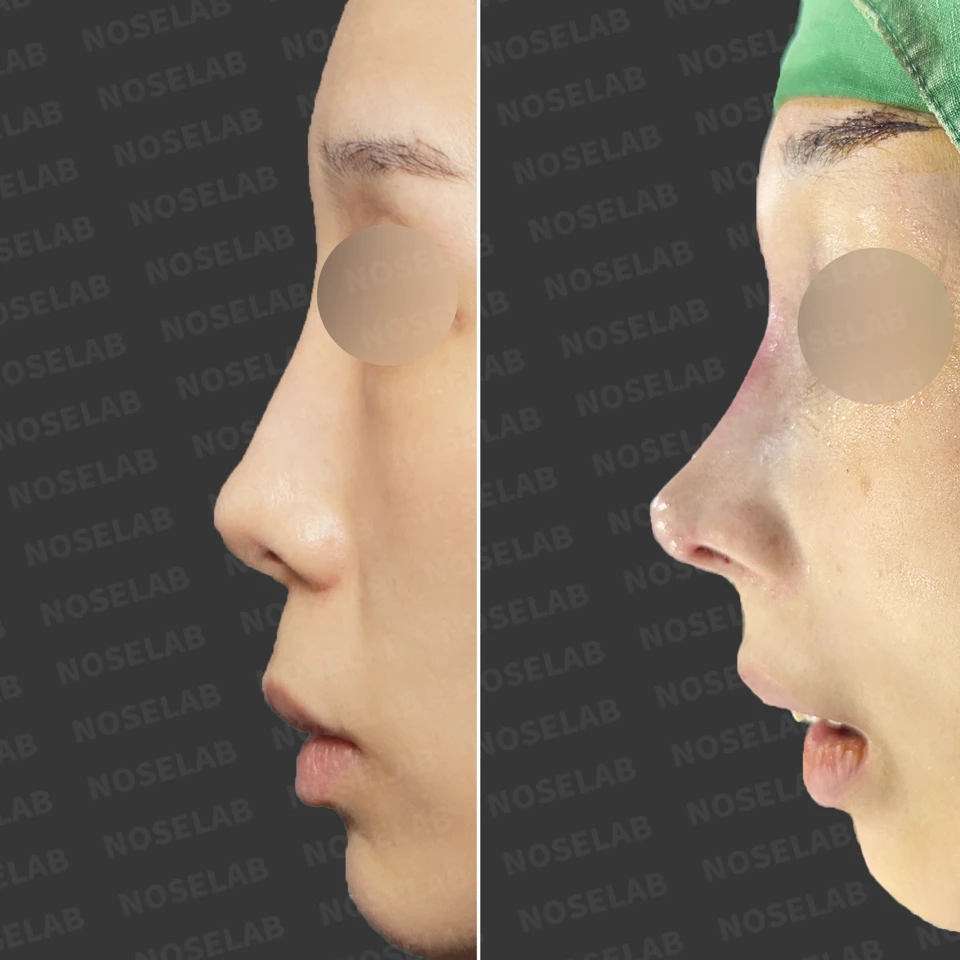
Profile view
- The bridge gained a natural contour.
- Stronger tip support provided a more stable profile.
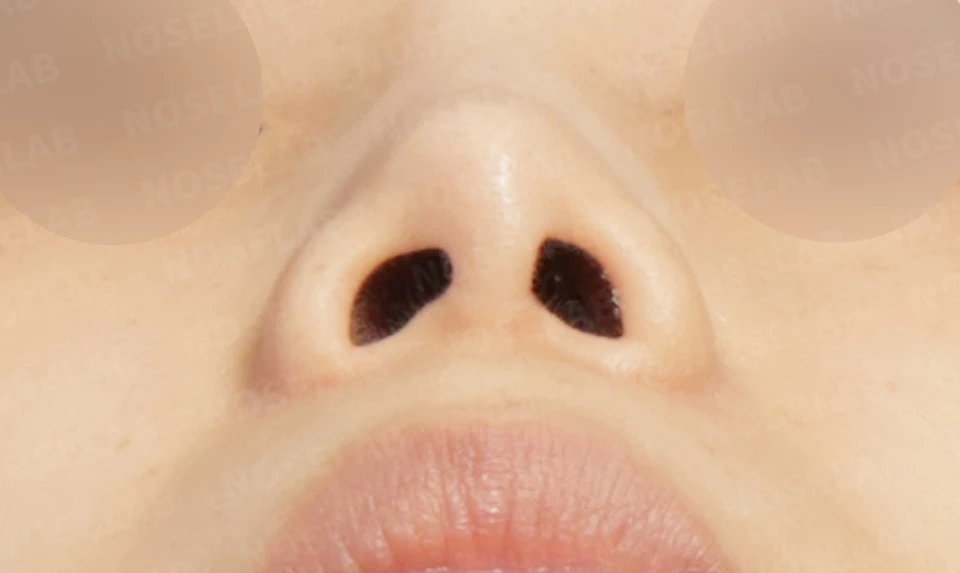
Functional changes
- Correction of the septal deviation improved nasal obstruction.
- Breathing became more comfortable.
Surgeon's Perspective
Repeated nasal treatments and operations can weaken tissues and create adhesions, increasing the difficulty of revision surgery. When foreign material and previous implants remain, they must be removed carefully while preserving structural stability.
In this case, we used the patient's own rib cartilage to rebuild tip support and osteotomies to refine the broad bridge, producing a natural, balanced contour. Septal surgery and treatment of the obstructive nasal tissues also addressed breathing alongside the cosmetic concerns.
Revision rhinoplasty requires consideration of nasal function and long-term support as well as shape. Careful assessment of the tissues and an individualized approach are essential. I hope this case is helpful to those with similar concerns.
Thank you for reading. I am Dr. Peter C. Kang, Medical Director of NOSELAB Clinic.
Information About These Photographs and Surgical Risks
These before-and-after photographs show an individual patient's results. Discuss your expected outcome with your doctor.
All surgery carries a risk of complications, including the following:
- Infection: Disinfection and injectable or oral antibiotics are used to help prevent infection. In rare cases (less than 0.5%), another operation may be required.
- Bleeding: Nasal packing is used for one to two days to help minimize bleeding. Bleeding may occasionally occur after surgery for nasal inflammation or obstruction.
- Allergic reactions.
- Residual asymmetry: Facial asymmetry and the condition of the nose may prevent complete correction, as explained during consultation.
- Insufficient cosmetic or functional improvement.
- Other complications, including excessive scar formation and skin necrosis.
Read the author’s background and the original case context. About these articles