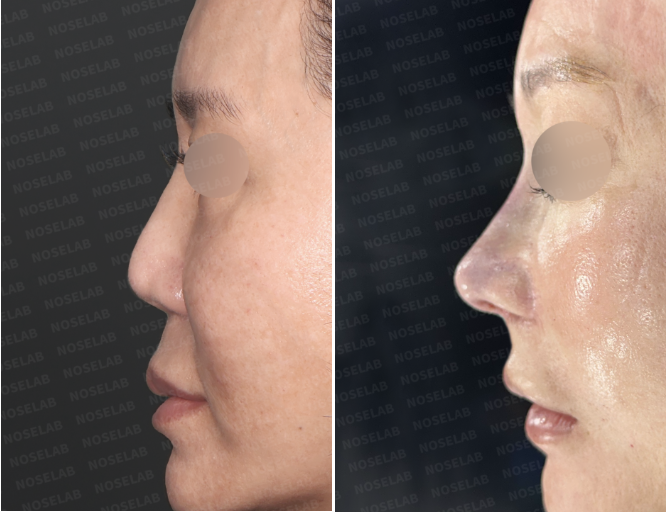
Removing a silicone nasal implant does not guarantee that your nose will return to its exact appearance before surgery. The result depends on the remaining cartilage and bone, the condition of the skin and scar tissue, and what was changed during earlier operations. Some patients can consider removal alone; others need a discussion about structural reconstruction.
Will my nose return to its original shape?
The implant adds height or changes the shape of the nose. Removing it changes that support, but the tissues underneath may also have changed since the original operation. Comparing photographs from before the first surgery with current photographs can help clarify your goals. An examination is needed to assess which changes are achievable.
A lower bridge after removal is different from a loss of tip or septal support. Ask your surgeon to explain which structures are intact and whether a concern involves contour, support, breathing, or more than one of these.
Removal alone or reconstruction: what should I ask?
- Removal alone: What shape and level of support would remain, and what limitations should I expect?
- Removal with reconstruction: Is a graft needed to support the tip or septum, and why? What are the trade-offs of the proposed graft material?
- A staged plan: Is the tissue condition suitable for reconstruction at the same operation, or would treatment and healing need to happen in stages?
There is no single plan that fits every implant removal. Signs of infection, skin problems, previous grafts and the amount of available cartilage all need individual assessment. The implant removal and restoration guide introduces the wider planning questions.
What do the published NOSELAB cases illustrate?
In one L-shaped silicone implant removal case, the patient had thinning tissue and an implant close to perforating the mucosa. The reported plan included removal and reconstruction with the patient’s rib cartilage. This is an example of a specific structural problem, not evidence that everyone needs rib cartilage.
A separate revision without a synthetic implant describes correction of an upturned nose and nostril asymmetry. By contrast, the silicone implant revision case includes implant replacement as well as reconstruction. These are different treatment choices; clarify whether your own goal is removal without replacement.
Case photographs show individual patients and may include immediate postoperative views. They do not predict your final result.
Recovery and when to contact your surgeon
Recovery depends on whether treatment involves removal alone or additional reconstruction. Follow your operating team’s instructions for wound care, activity, medication and follow-up. General rhinoplasty guidance from the American Society of Plastic Surgeons notes that swelling can fluctuate and the contour can take up to a year to refine; that is not a fixed recovery schedule for every implant removal.
Contact your operating clinic promptly for severe pain or unexpected symptoms, as advised by the NHS. Do not wait for a cosmetic consultation if you have an urgent postoperative concern.
Does a closed approach change the decision?
A closed, or endonasal, approach uses incisions inside the nostrils. The incision route alone does not determine whether removal alone is suitable, eliminate surgical risks, or guarantee a particular appearance. Discuss access, tissue condition and the reconstruction needed with your surgeon. Read more about closed rhinoplasty and its limitations in revision surgery.
Prepare for an international consultation
- List the dates of previous nasal operations and the implant or graft materials, if known.
- Bring previous operation reports and photographs from before the implant was placed, where available.
- Explain whether your main concern is appearance, discomfort, breathing, or avoiding another synthetic implant.
- Ask about expected limitations, follow-up, travel timing and what happens if further treatment is needed.
Read Dr. Kang’s background or arrange an international consultation with NOSELAB. An online enquiry can help prepare for an assessment; it cannot establish a surgical plan on its own.
Sources and further reading
This patient guide combines general rhinoplasty information with the individual NOSELAB case reports linked above. Treatment decisions require an individual assessment.