Case at a glance
- Previous treatment
- Surgical plan
- Graft & material details
- Photo timing
These details are excerpts from the original article and captions. Follow a detail to read it in context.
Over-osteotomy correction is a reconstructive rhinoplasty procedure that restores nasal bone stability and corrects deformity caused by excessive lateral osteotomy during previous surgery.
In this case, structural realignment of weakened nasal bones and nasal tip refinement using rib cartilage were performed to correct deviation, improve definition, and achieve long-term stability without external scars.
Author: Dr. Cha-Young Kang, Director, NoseLab Clinic
Published: 2026-01-31
Hello, this is Dr. Cha-Young Kang from NoseLab Clinic.
This case involves a patient who developed nasal twisting and a blunt nasal tip after prior rhinoplasty, requiring a structural revision rather than surface-level correction.
Patient Condition and Key Problems
The patient presented with nasal deviation caused by over-fracture of the lateral nasal bone and loss of tip definition.
Excessive osteotomy during the previous procedure weakened bony support, resulting in asymmetry of the bridge and a blunt, unstable nasal tip over time.

Surgical Background – Over-Osteotomy Correction with Closed Rhinoplasty Korea
Over-osteotomy deformity occurs when excessive lateral fracture disrupts nasal bone balance and compromises structural integrity.
For this reason, closed rhinoplasty korea was selected to allow precise internal correction of the nasal bones and tip while preserving soft tissue circulation and avoiding external scars.
Surgical history
3 years prior: Hump reduction, lateral osteotomy, and tip plasty using ear cartilage
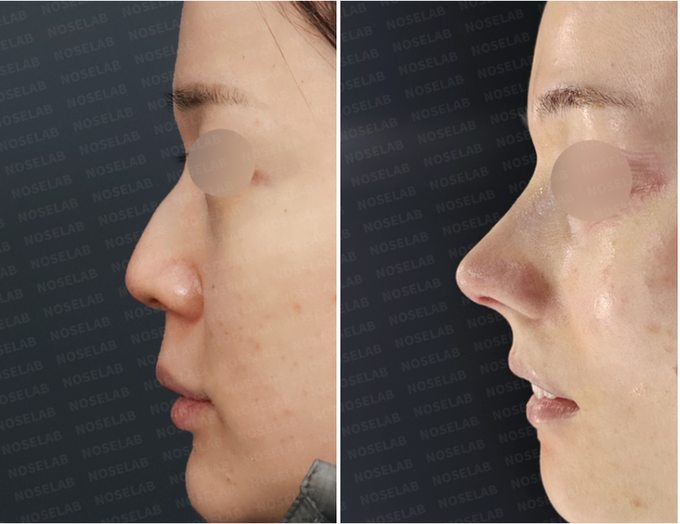
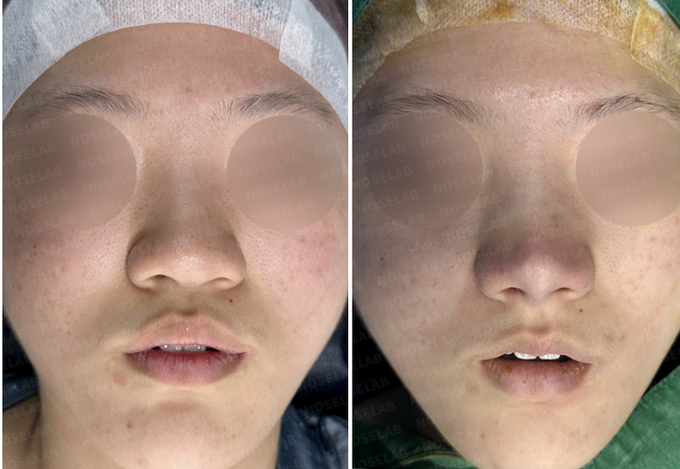
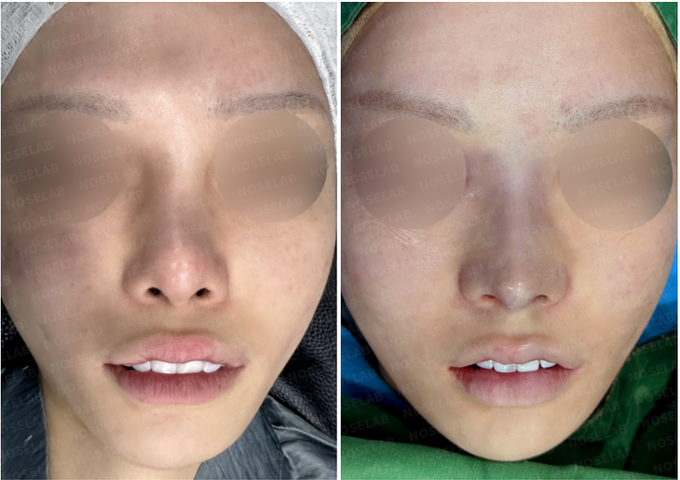
Postoperative complications: nasal twisting, bridge asymmetry, and blunt nasal tip
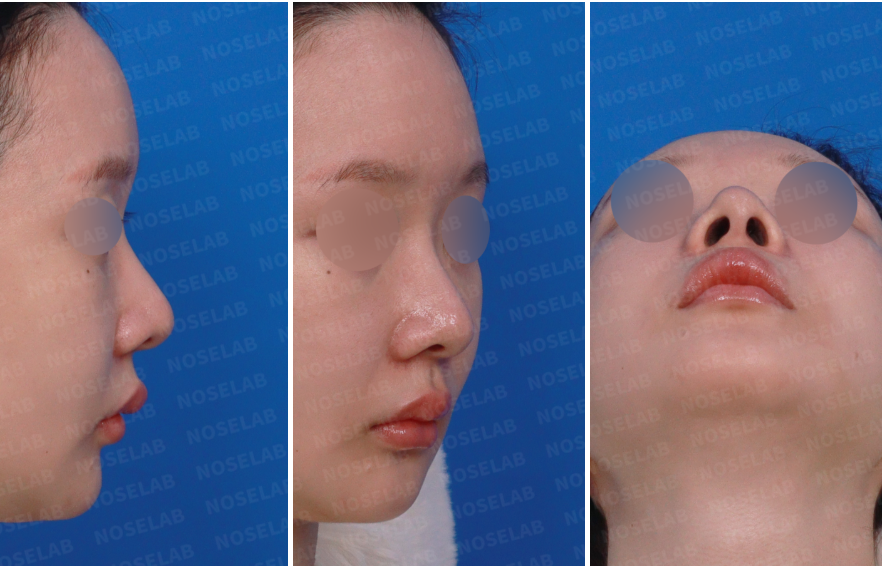
Surgical Plan – Structural Restoration and Tip Definition
The surgical plan focused on restoring bony symmetry and rebuilding stable nasal tip support.
Key procedures included:
Septal extension using autologous rib cartilage for durable tip support
Reconstruction of the over-osteotomized nasal bone to re-establish symmetry
Placement of a custom-carved silicone implant to match the corrected bone contour
Adjustment of the nasolabial angle to reduce nostril show and improve balance
This approach addressed the root structural failure rather than masking the deformity.
Surgical Results – Balanced Dorsum and Refined Tip
Postoperative evaluation demonstrated stable structural correction and refined nasal contours.

Frontal view:
The twisted bridge was realigned, and the blunt nasal tip achieved clearer definition.

Side profile:
A smooth dorsal line and improved nasolabial angle created a more refined silhouette.

Structural balance:
Restored nasal bone symmetry provided long-term stability without recurrent deviation.
Surgeon’s Commentary – Why Over-Osteotomy Requires Structural Revision
Over-osteotomy compromises nasal bone stability and cannot be corrected by implant replacement alone.
In this case, structural restoration of the nasal bones combined with rib cartilage rhinoplasty for tip support was essential to achieve a stable and durable outcome. Addressing the underlying bony imbalance prevented recurrence and allowed precise aesthetic refinement.
This surgery was performed by Dr. Cha-Young Kang, Chief Director of NoseLab Clinic, following a structure-first revision philosophy.
FAQ – Over-Osteotomy Revision Rhinoplasty
Q1. What is over-osteotomy in rhinoplasty?
Over-osteotomy occurs when excessive lateral nasal bone fracture weakens structural balance, leading to deviation or asymmetry over time.
Q2. Why can’t a blunt nasal tip be corrected by tip shaping alone?
When structural support is compromised, surface shaping fails to hold long-term; internal reinforcement is required for durable definition.
Q3. Why is rib cartilage used in over-osteotomy revision cases?
Rib cartilage provides strong, stable support that compensates for weakened bony and cartilaginous structures in complex revisions.
🎥 YouTube Reference
If you’re curious about Dr. Cha-Young Kang’s closed rhinoplasty approach, click to watch the video.

Read the author’s background and the original case context. About these articles