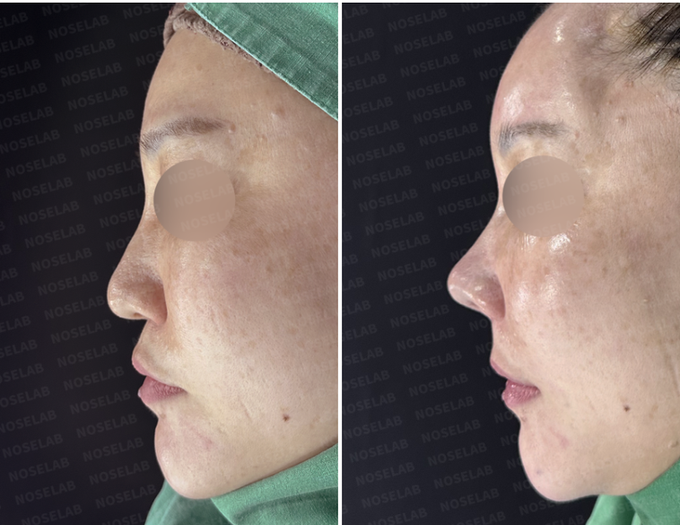
Case at a glance
- Concerns & goals
- Surgical plan
- Graft & material details
These details are excerpts from the original article and captions. Follow a detail to read it in context.
This case study documents a complex revision rhinoplasty performed to correct severe nasal deviation and an upturned nasal tip following multiple previous surgeries.
Through internal structural reconstruction and vascular-safe technique selection, nasal alignment, tip position, and nostril balance were restored while minimizing the risk of compromised blood supply.
Author: Dr. Cha-Young Kang, Chief Director, NoseLab Clinic
Published: October 26, 2024
Last Updated: January 14, 2026
Hello, this is Dr. Cha-Young Kang, Chief Director of NoseLab Clinic.
This case involves a patient with a long history of nasal procedures who continued to experience deviation, excessive nostril exposure, and instability, requiring a revision strategy focused on safety and internal reconstruction.
Patient’s Concerns and Clinical Background
The patient presented with persistent nasal asymmetry and an abnormally elevated nasal tip despite multiple prior interventions.
Medical and surgical history
Orthognathic surgery (1 year prior)
Nasal filler injections (5–6 years prior)
Rhinoplasty using donated rib cartilage and silicone
Additional rhinoplasty using autologous rib cartilage and silicone
Corrective surgery performed due to risk of tissue necrosis
Clinical observations
Frontal view: excessive nostril exposure and visible deviation
Profile view: elevated tip with high starting point
Nostril view: asymmetry, columellar scarring, and skin depression
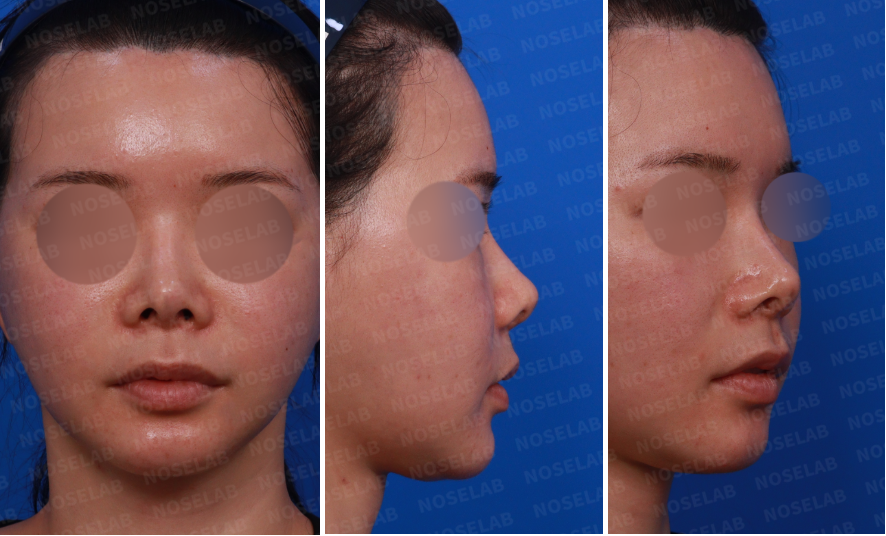
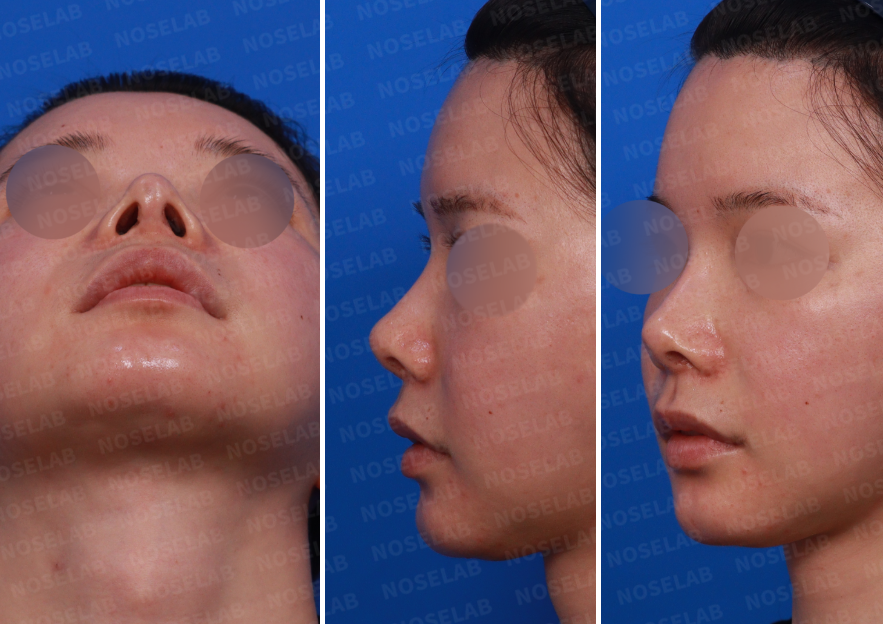
Surgical Planning – Crooked Nose Correction Using a Closed Approach
The primary surgical concern was compromised blood circulation at the nasal tip due to repeated operations and scar tissue.
For this reason, Crooked Nose Correction was planned using a closed rhinoplasty approach to minimize vascular disruption while allowing full internal reconstruction.
Key surgical objectives
Reconstruct the damaged septal framework with autologous rib cartilage
Lower and stabilize the elevated nasal tip
Realign the deviated nasal bridge
Refine the wide nasal base
Improve lip protrusion and nostril imbalance
Address scar-related skin depression
Surgical Strategy and Intraoperative Considerations
During surgery, signs of limited blood flow were observed, confirming the necessity of avoiding external incisions.
Internal septal reconstruction using rib cartilage provided structural support, while controlled realignment corrected deviation and stabilized tip position without further compromising circulation.
Surgical Outcomes and Structural Recovery
Postoperative evaluation demonstrated clear improvements in nasal balance and stability.




Observed outcomes
Reduced nostril exposure
Straightened nasal bridge
Natural tip position
Improved nasolabial angle (approximately 95°)
Refined nostril symmetry and columellar scarring
Educational Perspective – Why a Closed Revision Was Necessary
In revision rhinoplasty with vascular risk, technique selection is as critical as structural correction.
A closed approach allows internal reconstruction while preserving soft tissue circulation, making it particularly suitable for patients with extensive surgical histories and scar-related instability.
Final Thoughts
This case illustrates that even high-risk revision rhinoplasty can achieve stable and natural outcomes when surgical planning prioritizes vascular safety and internal structural repair.
Through careful septal reconstruction and controlled realignment, both form and function were restored without increasing the risk of tissue compromise.
FAQ
Q1. Why does nasal deviation persist after multiple surgeries?
Repeated procedures can weaken internal support and create scar-related distortion, making simple adjustments ineffective.
Q2. When is a closed approach preferred in revision cases?
A closed approach is preferred when blood supply is compromised or scar tissue is extensive, as it minimizes additional trauma.
Q3. Why is rib cartilage used in complex revisions?
Rib cartilage provides strong, reliable support when septal or ear cartilage is insufficient due to prior surgery.
🎥 Dr. Cha-Young Kang’s review video for this patient

Read the author’s background and the original case context. About these articles
Source updated .