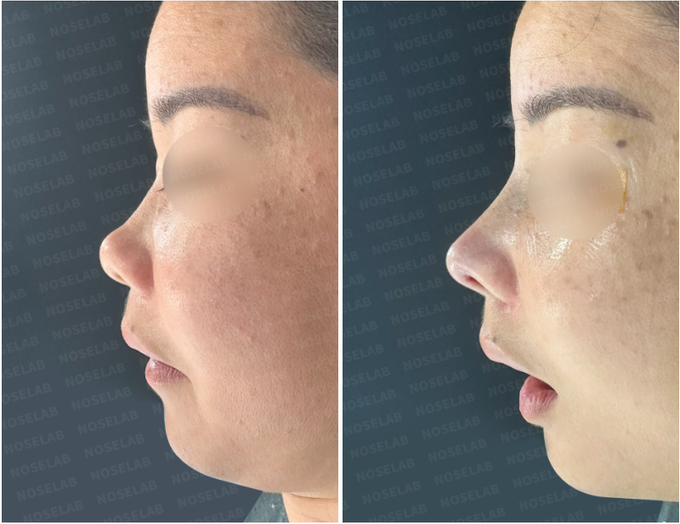
Case at a glance
- Surgical plan
- The patient presented clear nostril asymmetry, a slightly droopy nose tip, and an unbalanced bridge height.
- Through closed rhinoplasty focused on nostril asymmetry correction , we lowered the nasal starting point, refined the tip projection, and adjusted the nasal axis for better symmetry and proportion.
- Using internal incisions, the nostril asymmetry correction was performed by repositioning the lower lateral cartilage and fine-tuning the columella base.
These details are excerpts from the original article and captions. Follow a detail to read it in context.
Analysis and Surgical Plan for Nostril Asymmetry Correction
The patient presented clear nostril asymmetry, a slightly droopy nose tip, and an unbalanced bridge height.
Through closed rhinoplasty focused on nostril asymmetry correction, we lowered the nasal starting point, refined the tip projection, and adjusted the nasal axis for better symmetry and proportion.
Surgical Technique and Details of Nostril Asymmetry Correction
Using internal incisions, the nostril asymmetry correction was performed by repositioning the lower lateral cartilage and fine-tuning the columella base.
Autologous cartilage was sculpted to reshape the tip while keeping the bridge line soft and natural. No external scars were made during the procedure.
Results after Closed Rhinoplasty and Nostril Asymmetry Correction
After the nostril asymmetry correction, both nostrils now appear more even and balanced with improved nasal tip definition.
The overall facial symmetry and nasal profile became softer, and the bridge line now connects naturally from the forehead to the tip.


Read the author’s background and the original case context. About these articles
Source updated .