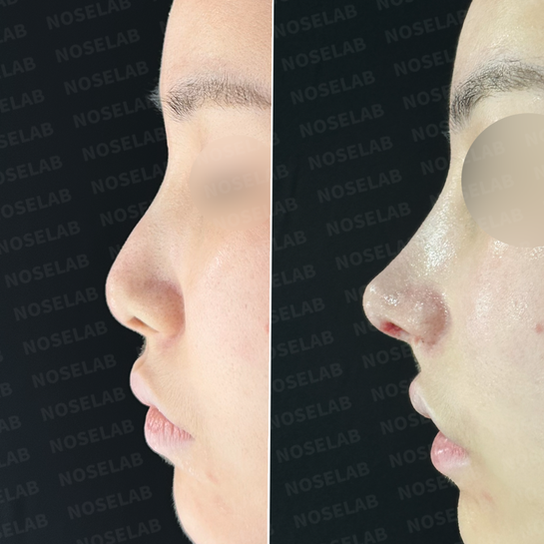
Can a nasal tip be refined without a synthetic implant? This case used the patient’s own septal and ear cartilage to address a short, drooping tip and mild deviation, alongside treatment for nasal obstruction.
Case at a glance
- Surgical plan
- Graft & material details
- Photo timing
These details are excerpts from the original article and captions. Follow a detail to read it in context.
Hello, this is Dr. Cha-Young Kang from Nose Lab Clinic.
In this case review, I’ll walk you through a successful implant-free rhinoplasty in Korea, using a closed rhinoplasty without implant to enhance nasal shape and improve function—while preserving the patient’s natural beauty.

Why Implant-Free Rhinoplasty Korea Was the Right Choice
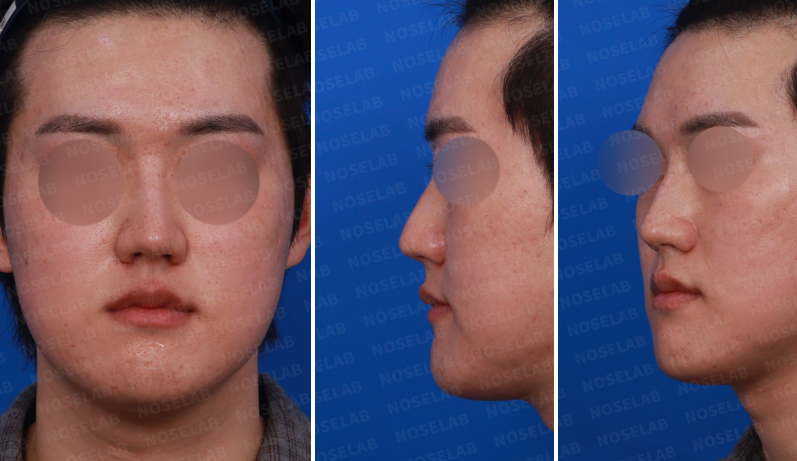
This patient was concerned about both function and aesthetics. She had mild nasal deviation, a short and droopy tip, and small nostrils—all contributing to a facial imbalance.Her main concern, however, was chronic rhinitis and nasal obstruction.
atient's Goals for Natural Nasal Tip Refinement
No visible or dramatic changes
Avoid use of implants
Maintain the natural dorsal line
Focus on subtle natural nasal tip refinement
Improve breathing and rhinitis symptoms
Closed Rhinoplasty Without Implant: Surgical Plan
We used a closed rhinoplasty without implant, performed internally with no visible scars. To reshape and refine the nasal structure, we used the patient’s own autologous cartilage (septal and ear).
Autologous Cartilage Nose Surgery Techniques
Tip projection and support with septal and auricular cartilage
Lateral osteotomy to correct the deviated nose
Minor dorsal hump reduction
Natural repositioning of the columella
Functional nasal surgery for rhinitis relief
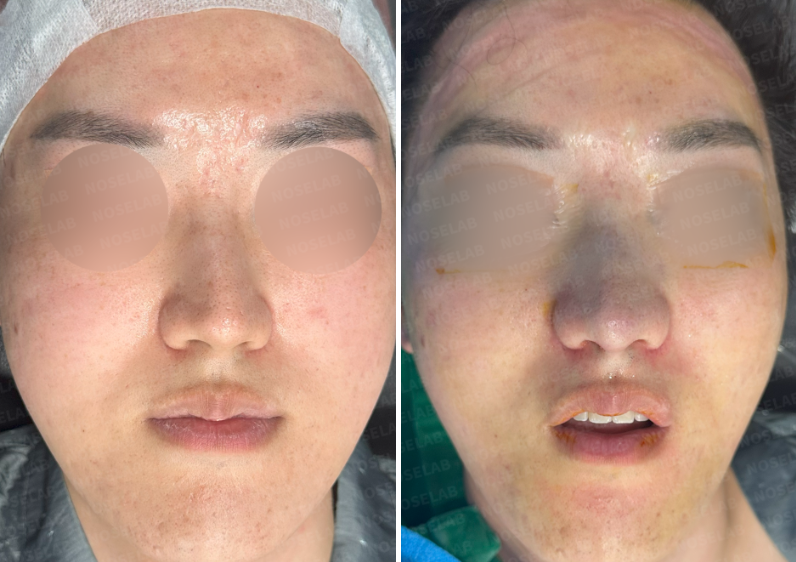
Rhinoplasty for Deviated Nose and Rhinitis: Results
The procedure delivered excellent results both functionally and aesthetically.
Frontal View
Improved nasal axis alignment
Harmonized nose-to-face proportion
Natural appearance with preserved nasal bridge
Side Profile
Smoother dorsal line
Raised nasal tip
Balanced columella position
Natural overall projection

Functional Outcome
Relief from nasal obstruction
Significant improvement in rhinitis symptoms


👨⚕️ Doctor’s Note


This case demonstrates the value of subtle, well-targeted correction. By using autologous cartilage and avoiding implants, we achieved both functional improvement and natural aesthetics through implant-free rhinoplasty in Korea.
The patient was particularly pleased with the natural nasal tip refinement and the absence of any artificial appearance.
For patients seeking conservative yet effective improvement, closed rhinoplasty without implant is an excellent option.
Thank you,Dr. Cha-Young Kang, Nose Lab Clinic

Read the author’s background and the original case context. About these articles
Source updated .