Case at a glance
- Previous treatment
- Surgical plan
- Graft & material details
- Photo timing
These details are excerpts from the original article and captions. Follow a detail to read it in context.
This case reviews long nose correction rhinoplasty in a patient with a long nose, droopy nasal tip, high glabella starting point, wide and blunt nasal tip, visible nasal deviation, bulbous nasal appearance, columella scar depression from previous open rhinoplasty, nostril asymmetry, nasal congestion, and a history of multiple non-prosthetic rhinoplasty procedures. Surgery focused on foreign body removal from the nasal bridge, lateral osteotomy, nasal bone shaving, silicone implant reshaping for starting point adjustment, donor rib cartilage tip correction, septoplasty, inferior turbinate reduction, and closed rhinoplasty structural correction.
Author: Dr. Cha-Young Kang
Clinic: NoseLab Clinic
Published: 2024
Last Updated: 2026
Introduction
Hello, this is Dr. Cha-Young Kang of NoseLab Clinic.
This case involves long nose correction rhinoplasty in a patient with a droopy nasal tip, high nasal bridge starting point, blunt and wide nasal tip, visible nasal deviation, nostril asymmetry, and nasal congestion.
The patient had undergone several non-prosthetic rhinoplasty procedures over the previous 11 years, and this was her 5th revision surgery.
Although the patient had not previously used a nasal implant, repeated procedures using filler, septal cartilage, ear cartilage, and donated rib cartilage had changed the nasal structure and created a complex revision setting.
The surgery was performed using a closed rhinoplasty / endonasal approach. The goal was to improve the long and droopy nasal appearance, refine the blunt nasal tip, lower the high starting point, address nostril asymmetry, remove bridge-related foreign material, and improve nasal obstruction factors.
Surgical History Before Long Nose Correction Rhinoplasty
The patient had a long history of nasal procedures without previous implant-based bridge augmentation.
11 years ago: Nose filler
10 years ago: Nasal hump osteotomy using septal cartilage through closed rhinoplasty, without implant
2020: Osteotomy and bulbous nose correction using ear cartilage and donated rib cartilage through open rhinoplasty, without implant
2020, 6 months later: Corrective rhinoplasty to improve a pinched nasal appearance, without implant
2022: Nostril lowering surgery using donated rib cartilage, without implant
Because the patient had undergone multiple surgeries, the revision plan needed to account for scar tissue, previous graft material, nasal bone changes, columella scar depression, and altered nasal support.
Preoperative Design Consultation for Long Nose Correction Rhinoplasty
Preoperative photos were reviewed from the frontal, side, oblique, and nostril views.
Frontal View: Wide Tip and Nasal Deviation
From the frontal view, the nasal tip appeared wide and blunt.
Visible nasal deviation was also observed.
Because repeated osteotomy and cartilage grafting can alter nasal bone width and lower nasal balance, the frontal structure was evaluated carefully before surgery.

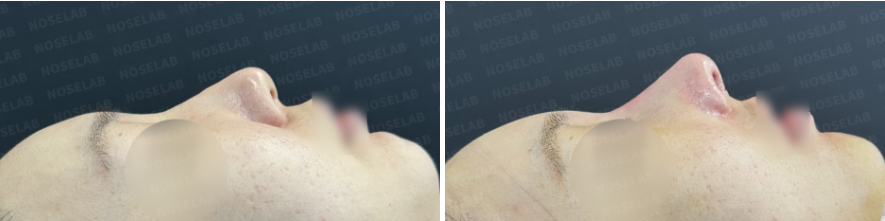
Side View: Long Nose, Droopy Tip, and High Starting Point
From the side profile, the nose appeared long, and the nasal tip appeared droopy.
The glabella starting point appeared high, which contributed to the impression of a long and heavy nasal profile.
A noticeable depression was also present in the columella scar area, likely related to the previous open rhinoplasty incision.

Oblique View: Blunt, Long, and Bulbous Nose
From the oblique view, the nose appeared blunt, long, and bulbous.
The overall impression appeared relatively heavy because of the long nasal shape, droopy tip, and high starting point.

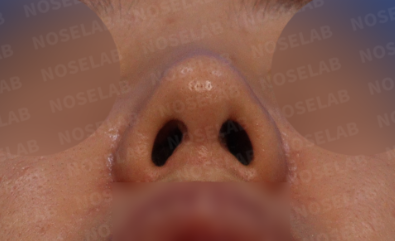
Nostril View: Bluntness and Nostril Asymmetry
From the nostril view, bluntness of the lower nasal structure was visible.
Nostril asymmetry was also observed.
Nostril balance was evaluated together with septal support, columella position, previous graft material, and scar tissue.
Surgical Plan for Long Nose Correction Rhinoplasty
The surgical plan was established based on the patient’s previous surgical history, nasal structure, airway findings, and aesthetic concerns.
1. Foreign Body Removal from the Nasal Bridge
Foreign material and previously transplanted tissue in the nasal bridge area were removed where needed.
In multiple non-prosthetic revision cases, irregular material in the bridge can contribute to uneven contour and make dorsal correction more difficult.
2. Lateral Osteotomy for Width Reduction
Lateral osteotomy was performed to reduce the broad nasal appearance and improve nasal axis balance.
This step was planned to address the wide nasal bridge and visible deviation.
3. Starting Point Adjustment with Nasal Bone Shaving and Silicone Implant Reshaping
The high glabella starting point was addressed by shaving the nasal bone and placing a carefully shaped silicone implant.
The implant was sculpted to help create a lower and smoother starting point while improving dorsal line continuity.
This approach was selected based on the patient’s nasal bone condition, previous surgical changes, and desired bridge line.
4. Nasal Tip Correction with Donor Rib Cartilage
The droopy and blunt nasal tip was corrected using donor rib cartilage.
Donor rib cartilage was used to support the nasal tip and improve lower nasal structure.
The goal was to reduce the long and heavy appearance while maintaining a natural-looking nasal contour.
5. Septoplasty
Septoplasty was performed to correct septal deviation and improve central nasal support.
Because the patient also had nasal congestion, functional airway factors were considered together with the external nasal correction.
6. Inferior Turbinate Reduction
Submucosal reduction of the inferior turbinates was performed using radiofrequency.
This was included to address turbinate-related narrowing.
Breathing changes should be evaluated over time because nasal airflow can be influenced by septal position, turbinate response, mucosal swelling, scar tissue, and healing response.
Surgical Results After Long Nose Correction Rhinoplasty
Frontal View: Nasal Width and Deviation
From the frontal view, the wide and blunt nasal appearance appeared more refined after osteotomy, tip correction, and structural adjustment.
The deviated nasal appearance appeared more balanced after nasal axis correction.
Overall frontal balance appeared improved within the patient’s anatomical limits.

Side Profile: Long Nose and Droopy Tip
From the side profile, the long nasal appearance appeared reduced after tip correction and starting point adjustment.
The droopy nasal tip appeared better supported with donor rib cartilage.
The glabella starting point appeared lower and smoother after nasal bone shaving and implant reshaping.
The depressed columella scar area appeared softened after lower nasal adjustment.
Oblique View: Bulbous and Blunt Nasal Shape
From the oblique view, the bulbous and blunt nasal appearance appeared more refined.
The nasal contour appeared smoother after bridge correction, tip support, and structural adjustment.

Nostril View: Nostril Asymmetry
From the nostril view, nostril asymmetry appeared improved after lower nasal framework correction.
Because nostril shape may change during healing, final nostril balance should be evaluated over time.

Surgeon’s Commentary on Non-Prosthetic Revision Rhinoplasty

This case shows some of the challenges that may occur after multiple non-prosthetic rhinoplasty procedures.
Even when implants are not used, the nasal bridge can become uneven due to filler, graft material, scar tissue, or previously transplanted tissue.
To correct this type of bridge irregularity, previously placed tissue or foreign material may need to be removed carefully.
Repeated nasal bone shaving or osteotomy can also change the nasal bone shape. In some cases, the nasal bone may become broader, blunter, or irregular, and the starting point may appear higher.
For this patient, the surgical plan included foreign body removal, nasal bone shaving, implant reshaping, septal reconstruction, tip correction, columella adjustment, septoplasty, and turbinate reduction.
A carefully sculpted silicone implant was used to adjust the high starting point and create a smoother bridge line.
This case shows that long nose correction rhinoplasty after multiple non-prosthetic revisions may require both structural reconstruction and functional airway evaluation.
All surgical planning should be individualized based on previous surgery history, nasal bone condition, graft material, scar tissue, airway structure, and healing response.
FAQ
What is long nose correction rhinoplasty?
Long nose correction rhinoplasty is a surgery that adjusts a long or droopy nasal appearance by correcting nasal tip position, starting point, bridge line, septal support, and overall nasal proportion.
Can a nose become longer-looking after multiple rhinoplasties?
A nose may appear longer after multiple surgeries if the nasal tip droops, the bridge starting point appears high, the nasal bone becomes irregular, or the lower nasal support changes.
Why can non-prosthetic rhinoplasty still need revision?
Non-prosthetic rhinoplasty can still require revision if filler, graft material, scar tissue, cartilage changes, nasal bone changes, or contour irregularity develops over time.
Why was a silicone implant used if the previous surgeries were non-prosthetic?
In this case, a carefully shaped silicone implant was used to adjust the high starting point and create a smoother bridge line. Material choice depends on nasal anatomy, previous surgical changes, and the patient’s goals.
Can nasal congestion be addressed during long nose correction?
Nasal congestion factors may be addressed when septal deviation, turbinate hypertrophy, or structural narrowing is present. Functional changes should be evaluated over time after surgery.
International Consultation
For international patients, a photo-based consultation may help clarify whether long nose correction rhinoplasty, multiple revision rhinoplasty, non-prosthetic rhinoplasty revision, donor rib cartilage tip correction, high glabella starting point correction, septoplasty, or turbinate reduction may be needed.
Read the author’s background and the original case context. About these articles


