Case at a glance
- Concerns & goals
- Graft & material details
- Photo timing
These details are excerpts from the original article and captions. Follow a detail to read it in context.
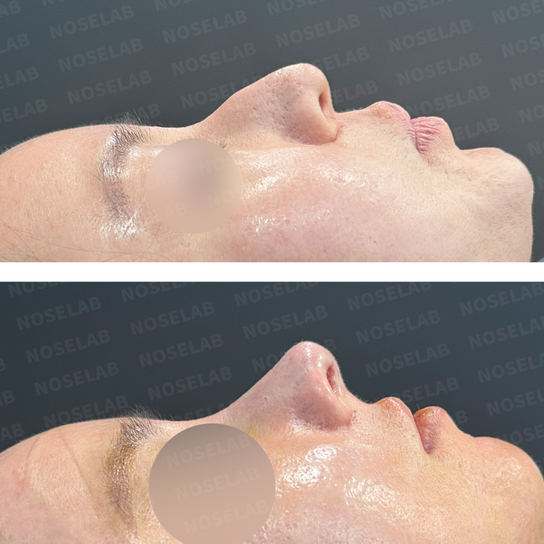
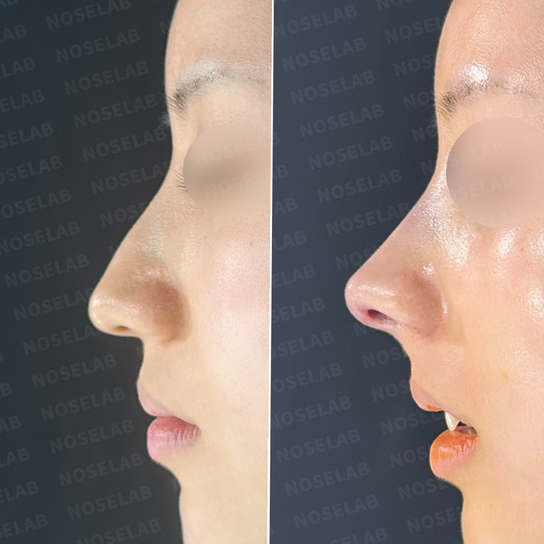
This case reviews autologous rib cartilage rhinoplasty in a patient with a prominent dorsal hump, structurally large nose, drooping and elongated nasal tip, acute nasolabial angle, right-sided septal deviation, inferior turbinate hypertrophy, and nasal obstruction. Surgery focused on dorsal hump reduction, septal reconstruction using autologous rib cartilage, lateral osteotomy, rib cartilage bridge contouring, nasolabial angle correction, tip support, nasal length control, turbinate reduction, and closed rhinoplasty structural correction.
Author: Dr. Cha-Young Kang
Clinic: NoseLab Clinic
Published: 2025
Last Updated: 2026
Introduction
Hello, this is Dr. Cha-Young Kang of NoseLab Clinic.
This case involves autologous rib cartilage rhinoplasty in a patient who had a prominent dorsal hump and significant nasal obstruction.
The patient wanted a natural correction using autologous tissue only, without synthetic implant augmentation. The surgical plan therefore focused on rib cartilage-based structural correction while addressing both nasal shape and breathing function.
The surgery was performed using a closed rhinoplasty / endonasal approach. The goal was to reduce the dorsal hump, reconstruct the deviated septum, improve nasal airflow, support the nasal tip, and create a more balanced nasal profile within the limits of the patient’s anatomy.
Why Autologous Rib Cartilage Rhinoplasty Was Needed
The patient had a structurally large nose with a prominent dorsal hump and drooping nasal tip. These features affected the overall nasal proportion and side profile.
The patient also had long-standing nasal obstruction related to right-sided septal deviation and inferior turbinate hypertrophy.
Because the patient wanted correction using autologous tissue only, rib cartilage was selected for septal reconstruction, bridge contouring, and tip support.
Initial Diagnosis and Patient Goals
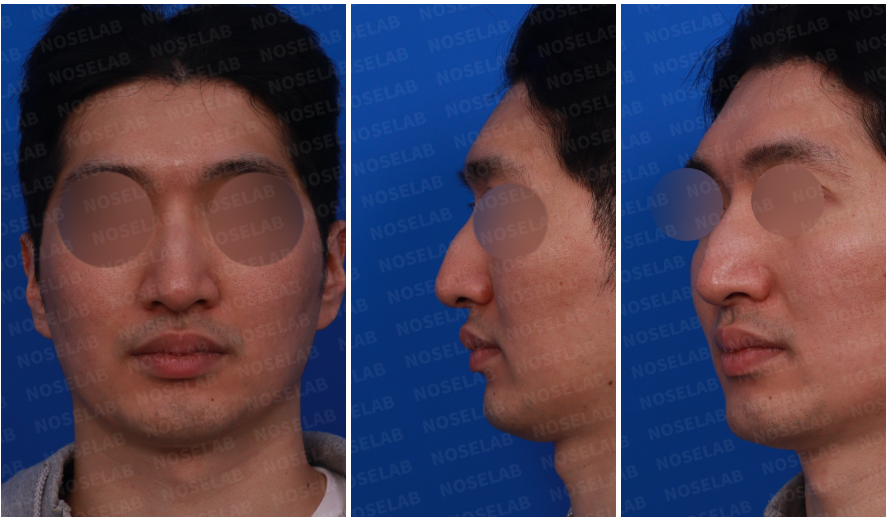
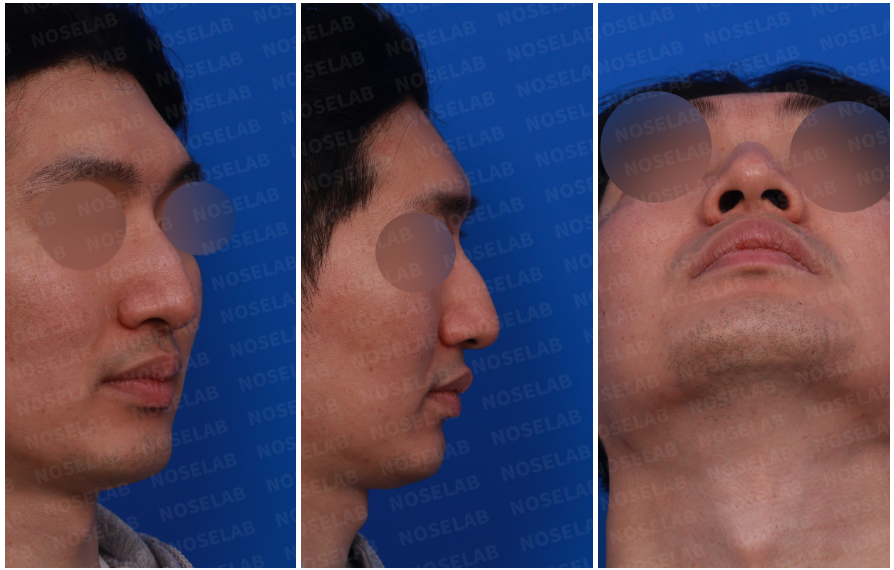
Preoperative design consultation photos were reviewed from the frontal, side, oblique, and nostril views. Nasal cavity findings were also evaluated to assess the internal airway.
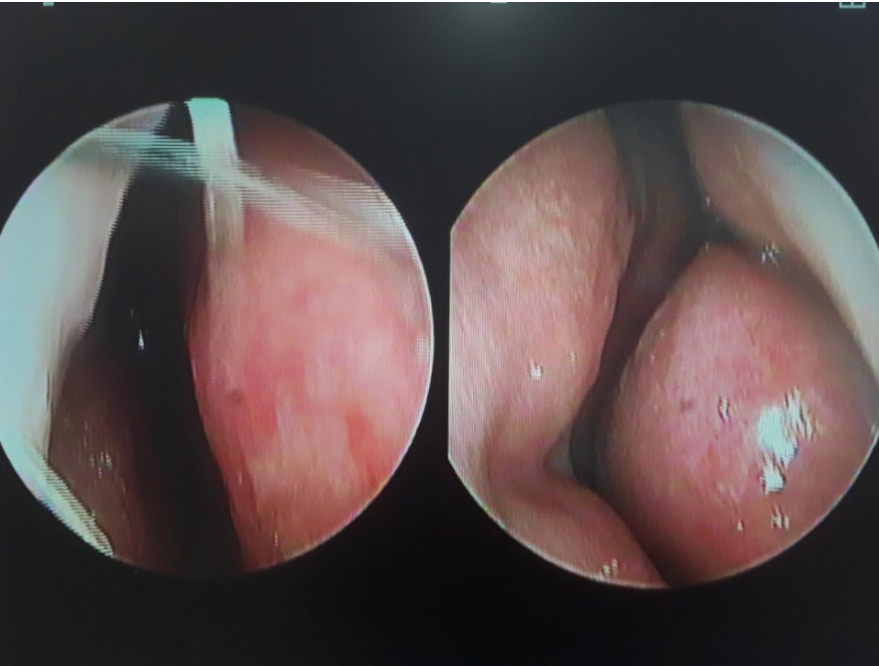
Preoperative Findings
The main findings included:
Large dorsal hump
Structurally large nasal appearance
Drooping and elongated nasal tip
Acute nasolabial angle
Right-sided septal deviation
Inferior turbinate hypertrophy
Nasal obstruction
Need for autologous tissue-based correction
Patient Goals
The patient’s goals included:
Use autologous tissue only
Reduce the dorsal hump
Improve nasal airflow through septal correction
Support and lift the nasal tip
Improve overall nasal balance
Avoid excessive reduction or an artificial appearance
Because the case involved both dorsal hump correction and airway obstruction, the surgical plan needed to combine structural and functional correction.
Surgical Plan Using Autologous Rib Cartilage
Functional Correction
Septoplasty was performed using autologous rib cartilage to reconstruct and support the deviated septum.
The deviated septal structure was corrected to improve the internal nasal passage.
Radiofrequency turbinate reduction was performed to address inferior turbinate hypertrophy and nasal obstruction.
Dorsal Hump Reduction
The dorsal hump was reduced carefully to improve the nasal bridge contour.
Because excessive hump reduction can create imbalance or irregularity, the amount of reduction was planned according to the nasal bone structure, cartilage support, and desired profile.
Lateral Osteotomy
Lateral osteotomy was performed to improve nasal bone alignment after hump reduction.
This step helped refine the nasal bridge and improve overall structural balance.
Rib Cartilage Bridge Contouring
Rib cartilage grafting was used to smooth and support the nasal bridge.
This allowed dorsal contour correction without using a synthetic implant.
Tip Support and Nasolabial Angle Correction
The nasal tip was supported with autologous cartilage to improve tip position and reduce the drooping appearance.
The nasolabial angle was adjusted to improve the relationship between the nasal tip, columella, and upper lip.
Nasal Length Control
The elongated nasal appearance was addressed through tip support and structural repositioning.
The goal was to improve nasal proportion without excessive shortening or over-rotation.
Postoperative Functional and Aesthetic Outcomes
Functional Outcome
Nasal obstruction was addressed through septal reconstruction and inferior turbinate reduction.
Because breathing changes depend on septal alignment, turbinate response, swelling, mucosal condition, and healing process, functional improvement should be evaluated over time.
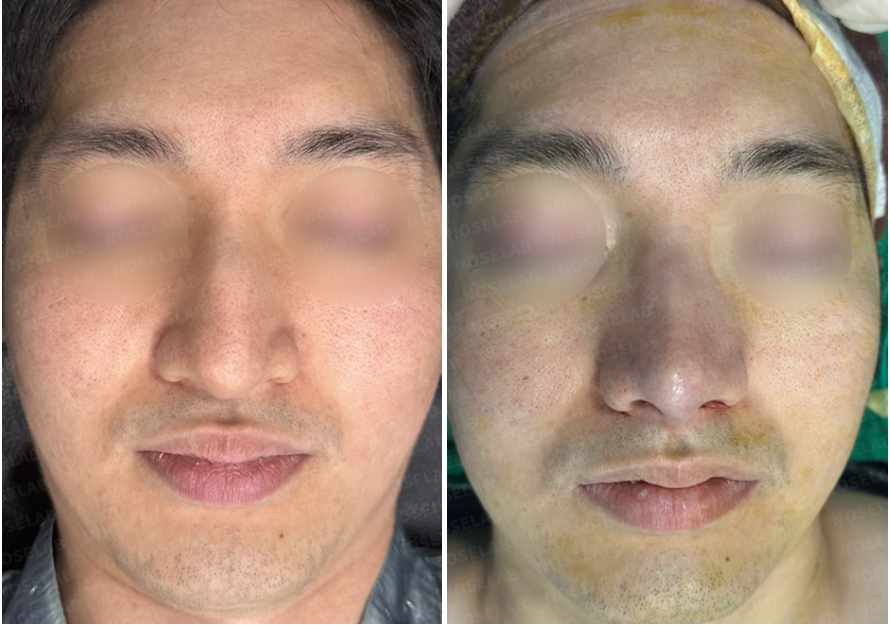
Dorsal Contour
The dorsal hump was reduced, and the nasal bridge contour appeared smoother after hump reduction, osteotomy, and rib cartilage contouring.
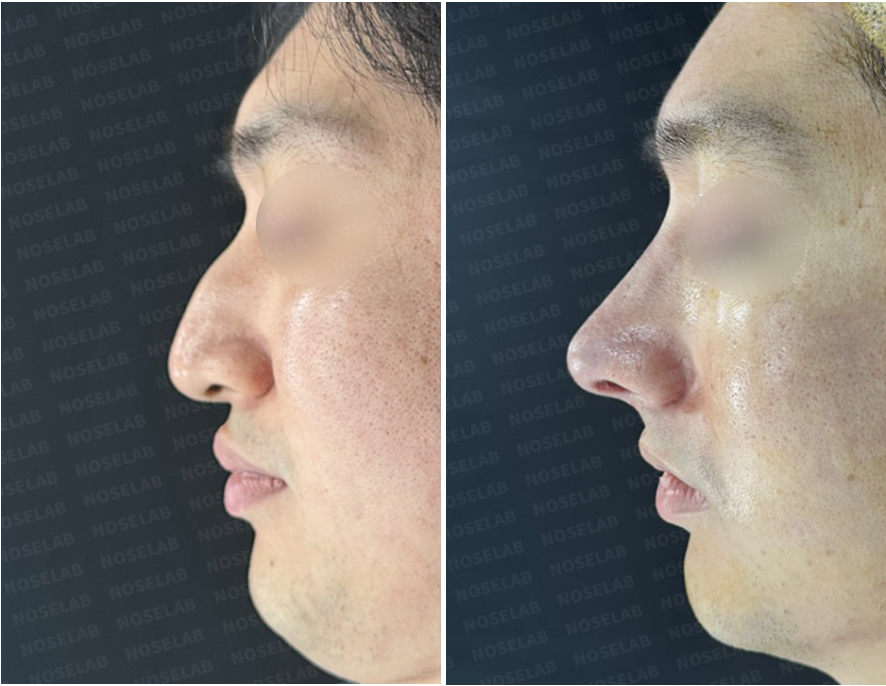
Tip Position
The nasal tip appeared better supported after autologous cartilage reconstruction.
Tip rotation and projection were adjusted within a controlled range to avoid an overly lifted or artificial appearance.
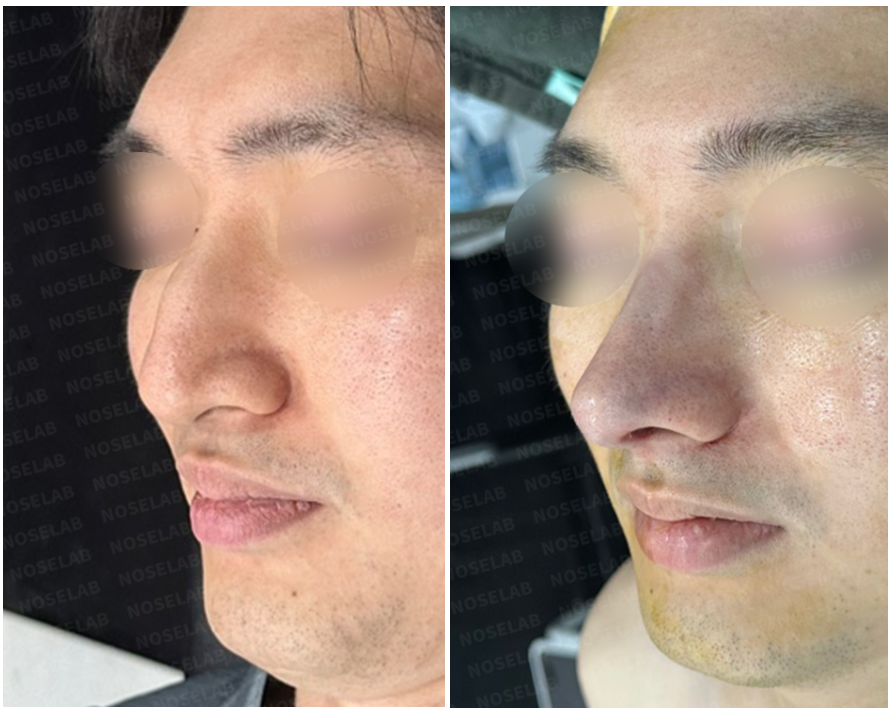
Overall Nasal Balance
The nasal bridge, tip, nasolabial angle, and airway structure were corrected together.
Because this case involved a large dorsal hump, septal deviation, turbinate hypertrophy, and a preference for autologous tissue only, the outcome was planned within the limits of cartilage availability, nasal bone structure, tissue condition, and healing response.
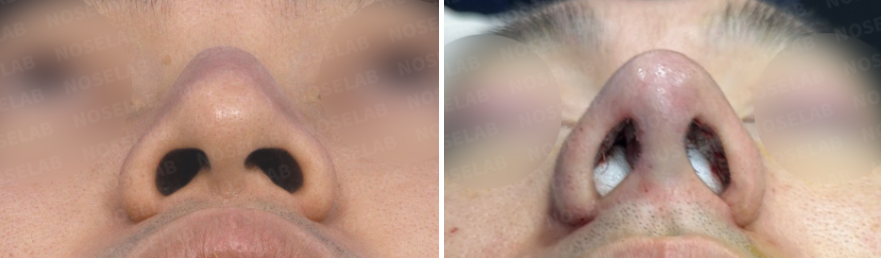
Key Considerations in Rib Cartilage-Based Rhinoplasty
Septal Deviation Required Structural Support
Extensive septal deviation required stronger support than simple septal trimming.
Autologous rib cartilage was used to reconstruct and support the septal framework.
Avoiding Excessive Hump Reduction
Dorsal hump reduction was planned carefully to avoid over-reduction, irregular contour, or imbalance between the bridge and tip.
Preventing an Elongated Appearance
The nasal tip was supported and repositioned to reduce the elongated appearance.
Tip support was important because a drooping tip can make the nose appear longer even after hump correction.
Surgeon’s Commentary
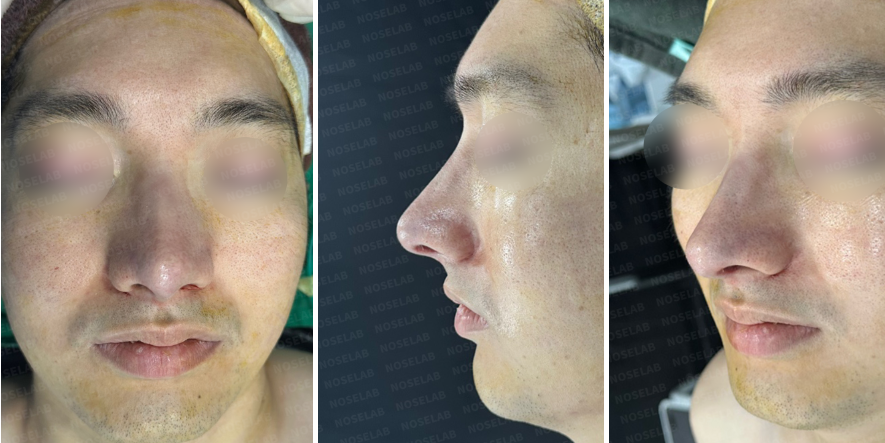
Autologous rib cartilage rhinoplasty can be considered when a patient wants structural correction without synthetic implant augmentation.
In this case, the patient had a prominent dorsal hump, drooping elongated tip, right-sided septal deviation, inferior turbinate hypertrophy, and nasal obstruction.
The surgical plan needed to address both form and function. Dorsal hump reduction alone would not have corrected the airway obstruction or the drooping tip.
Rib cartilage was used for septal reconstruction, bridge contouring, and tip support. This allowed structural correction using autologous tissue.
Septoplasty and turbinate reduction were performed because the patient had functional airway problems in addition to external nasal concerns.
This case shows that autologous rib cartilage rhinoplasty may require combined correction of the dorsal hump, deviated septum, turbinate hypertrophy, drooping tip, nasolabial angle, and nasal length when both aesthetic and functional concerns are present.
FAQ
What is autologous rib cartilage rhinoplasty?
Autologous rib cartilage rhinoplasty is nasal surgery using the patient’s own rib cartilage for structural support, reconstruction, or contour correction. It may be used when strong support is needed or when synthetic implant use is not preferred.
Can rib cartilage be used instead of a silicone implant?
Rib cartilage may be used for selected patients who prefer autologous tissue or need structural reconstruction. The choice depends on nasal anatomy, skin condition, surgical goals, and cartilage availability.
Can dorsal hump correction and breathing surgery be done together?
Yes. Dorsal hump correction may be combined with septoplasty, turbinate reduction, or other functional procedures when nasal obstruction is present.
Why is septal reconstruction needed in some hump nose cases?
Septal reconstruction may be needed when septal deviation is severe or when the septum cannot provide enough support for the nasal tip and airway structure.
Does autologous rib cartilage rhinoplasty guarantee a natural result?
No surgical material guarantees a specific result. The outcome depends on anatomy, tissue condition, surgical planning, healing response, and postoperative care.
International Consultation
For international patients, a photo-based consultation may help clarify whether autologous rib cartilage rhinoplasty, dorsal hump correction, septal reconstruction, lateral osteotomy, turbinate reduction, or tip support may be needed.
Read the author’s background and the original case context. About these articles