Case at a glance
- Concerns & goals
- Surgical plan
- The existing 8mm silicone implant was removed, along with surrounding granulation tissue, followed by saline irrigation.
- Scar tissue was removed, and rib cartilage was used for septal extension and nasal tip definition.
- The columella was repositioned, improving the nasolabial angle and reducing the prominence of the upper lip.
- Graft & material details
- Photo timing
These details are excerpts from the original article and captions. Follow a detail to read it in context.
Patient’s Concerns Before Blunt Nose Correction
A female patient visited Nose Lab Clinic suffering from severe discomfort caused by a 20-year-old L-shaped silicone implant. Her symptoms included:
Pain around the nasal bridge, especially when wearing glasses
Noticeable movement of the implant
Occasional headaches and nasal dorsum pain
Severe chronic rhinitis requiring long-term medication
Pre-Surgery Assessment

Frontal View Analysis:
Wide, swollen nasal bridge
Blunt and droopy nasal tip
Flared and droopy alar base
Elongated philtrum

Oblique View Analysis :
Blunt nasal tip with drooping shape
Upper lip protrusion

Side View Analysis :
Compressed, blunt nasal tip
Columellar retraction with protruding upper lip
Weak chin (microgenia)

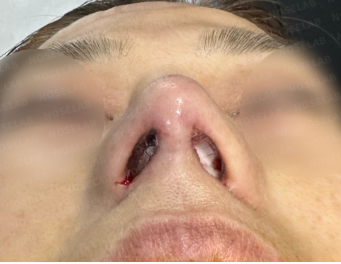
Nostril View Analysis :
Flattened, wide nostrils
Slight nostril asymmetry
Surgical Plan for Blunt Nose Correction
To address both functional and aesthetic concerns, we designed a plan that included:
Removal of the old silicone implant
Excision of excess tissue surrounding the implant
Placement of a thinner, broader implant
Rib cartilage graft for septal extension and tip refinement
Adjustment of the nasolabial angle
Limited septal correction for stability
Surgical Procedures
1. Removal of Existing Implant:
The existing 8mm silicone implant was removed, along with surrounding granulation tissue, followed by saline irrigation.
2. Nasal Tip Reconstruction with Rib Cartilage:
Scar tissue was removed, and rib cartilage was used for septal extension and nasal tip definition.
3. Nasolabial Angle Refinement:
The columella was repositioned, improving the nasolabial angle and reducing the prominence of the upper lip.
4. Placement of New Implant:
minimally elevated, broader silicone implant was inserted under the periosteum for better stability.
Results of Blunt Nose Correction

Frontal View:
The previously wide and swollen nasal bridge has slimmed down, and the swelling has reduced.
The blunt nasal tip has been elevated for a more refined appearance.
The flared alar base has been improved.

Oblique View:
The droopy nasal tip has been corrected, achieving a more balanced height.
The protruding appearance of the upper lip has been reduced.

Side View:
The nasal tip has been naturally elevated, eliminating the blunt appearance.
The columellar retraction has been corrected, and the nasolabial angle has been adjusted to a more natural position.
The overall balance of the nose and face has improved, reducing the prominence of the upper lip.

Nostril View:
Nostril asymmetry has been corrected.
The previously flattened nostrils now have a more rounded, natural shape.
Key Takeaways
This case demonstrates how Blunt Nose Correction can relieve chronic pain from outdated implants while achieving a more refined, natural nose. Implant replacement combined with rib cartilage reconstruction provides both stability and aesthetics.

Conclusion
For patients experiencing discomfort or cosmetic concerns from old implants, Blunt Nose Correction with rib cartilage reconstruction is a safe and effective solution. At Nose Lab Clinic, we prioritize both health and beauty for long-term satisfaction.
👉 Nose Lab Clinic performs all surgeries using a closed rhinoplasty approach.

Read the author’s background and the original case context. About these articles
Source updated .


