Case at a glance
- Surgical plan
- Graft & material details
- Photo timing
These details are excerpts from the original article and captions. Follow a detail to read it in context.
(Primary Rhinoplasty Case)
A crooked nasal bridge combined with a dorsal hump and nasal obstruction can affect both facial balance and breathing function.
In this case, osteotomy, hump reduction, rib cartilage tip reconstruction, and septoplasty were performed to correct structural deviation and restore nasal function using a closed rhinoplasty approach.
Author: Dr. Cha-Young Kang, Director, NoseLab Clinic
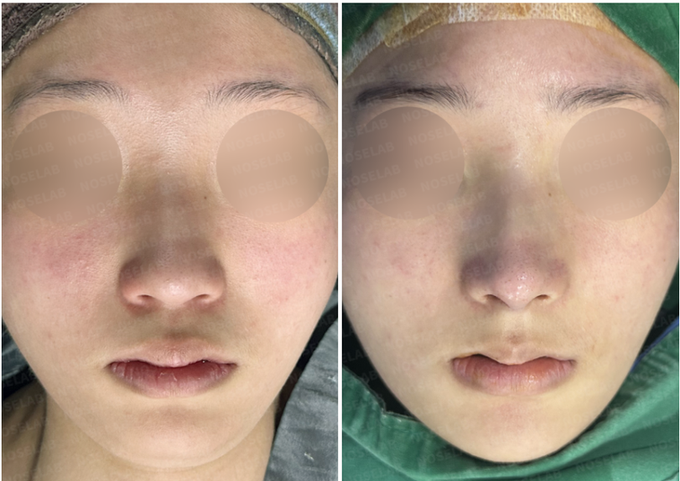
This case involves a primary rhinoplasty patient, a male in his early 20s, presenting with a deviated nasal bridge, dorsal hump, and chronic nasal obstruction.
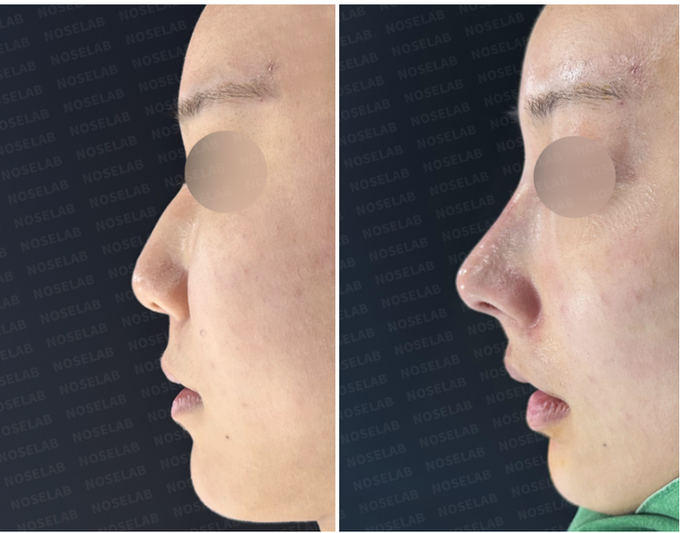
From the frontal view, the nasal bridge was deviated from the midline. From the lateral view, a prominent dorsal hump was present along the mid-vault. The patient also exhibited septal deviation, contributing to nasal obstruction.
Additionally, a retracted columella resulted in an unfavorable nasolabial angle and insufficient tip projection, affecting the overall profile.
The patient sought a natural and masculine nasal contour without excessive height or artificial appearance, along with functional improvement. Structural correction in this case was performed using closed rhinoplasty korea, focusing on alignment, hump correction, and functional improvement.
If you are experiencing similar issues such as a crooked nose, dorsal hump, or nasal obstruction, a structural evaluation is important to determine the appropriate surgical plan.
📩 International Consultation
Surgical Background – Closed Rhinoplasty Korea
Correction of a crooked nose and dorsal hump requires accurate repositioning of the nasal bones, dorsal contour correction, and stable nasal tip support.
For this reason, closed rhinoplasty korea was selected to allow precise internal osteotomy, septal correction, and tip reconstruction without external incisions. This approach is particularly important in male rhinoplasty, where subtle correction and preservation of natural proportions are critical.

Structural Problems Identified
Preoperative structural analysis revealed:
Deviated nasal bones
Dorsal hump deformity
Septal deviation
Chronic nasal obstruction
Retracted columella
Insufficient nasal tip projection
These structural issues required both functional and aesthetic correction.

Surgical Plan – Structural Alignment and Functional Correction
Osteotomy for Crooked Nasal Bones
Lateral osteotomy to reposition deviated nasal bones
Correction of asymmetry
Narrowing and straightening of the nasal bridge
Dorsal Hump Reduction
Removal of dorsal hump
Creation of smooth dorsal aesthetic line
Nasal Tip Reconstruction
Tip reconstruction using donor rib cartilage and septal cartilage
Reinforcement of nasal tip support
Adjustment of tip projection and rotation for a natural masculine profile
Septoplasty and Functional Nasal Surgery
Septoplasty to correct septal deviation
Turbinate reduction to improve airflow
Restoration of nasal breathing
Dorsal Augmentation and Columella Correction
Custom-carved implant for appropriate dorsal height
Correction of retracted columella
Adjustment of nasolabial angle to improve profile balance
Surgical Results

Frontal View
Straightened nasal bridge aligned with facial midline
Improved symmetry
Narrower nasal bridge
Lateral View
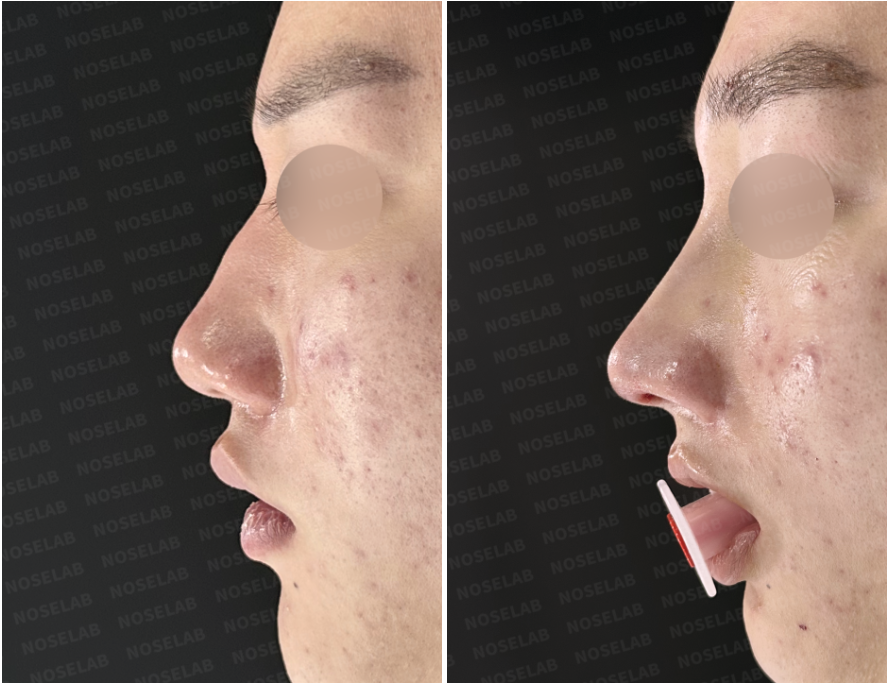
Smooth dorsal line after hump correction
Improved tip projection
Balanced nasolabial angle

Oblique (45°) View
Natural nasal contour
Balanced bridge-to-tip relationship

Functional Outcome
Significant improvement in nasal airflow
Relief of nasal obstruction
Surgeon’s Commentary – Male Rhinoplasty and Structural Alignment
Male rhinoplasty requires a different approach compared to female rhinoplasty. Maintaining a natural and masculine appearance is critical, and overcorrection—such as excessive tip rotation or overly high dorsal height—must be avoided.
In this case, multiple structural issues were addressed simultaneously. Osteotomy was used to correct the deviated nasal bones, while rib cartilage and septal cartilage were used to reconstruct and stabilize the nasal tip.
The dorsal contour was completed using a custom-carved implant tailored to the patient’s anatomy, ensuring a natural transition without excessive prominence.
Correction of the retracted columella and adjustment of the nasolabial angle were essential for improving the side profile and achieving overall facial balance.
By combining functional surgery with structural reconstruction, both breathing and aesthetic outcomes were significantly improved.
Male rhinoplasty focuses on structural alignment, functional improvement, and preservation of masculine facial proportions.
📩 International Consultation
Frequently Asked Questions (FAQ)
Is rhinoplasty different for male patients?
Yes. Maintaining a natural and masculine appearance is essential, avoiding over-rotation or excessive height.
Why is osteotomy necessary for a crooked nose?
It allows repositioning of nasal bones to restore symmetry and alignment.
Can functional problems be corrected during rhinoplasty?
Yes. Septoplasty and turbinate reduction can improve breathing along with aesthetic outcomes.
🎥 YouTube Reference
If you’re curious about Dr. Cha-Young Kang’s closed rhinoplasty approach, click to watch the video.

Read the author’s background and the original case context. About these articles