Case at a glance
- Surgical plan
- Graft & material details
- Photo timing
These details are excerpts from the original article and captions. Follow a detail to read it in context.
(Primary Rhinoplasty Case)
A drooping nasal tip caused by small alar cartilage requires structural reinforcement rather than simple tip suturing.
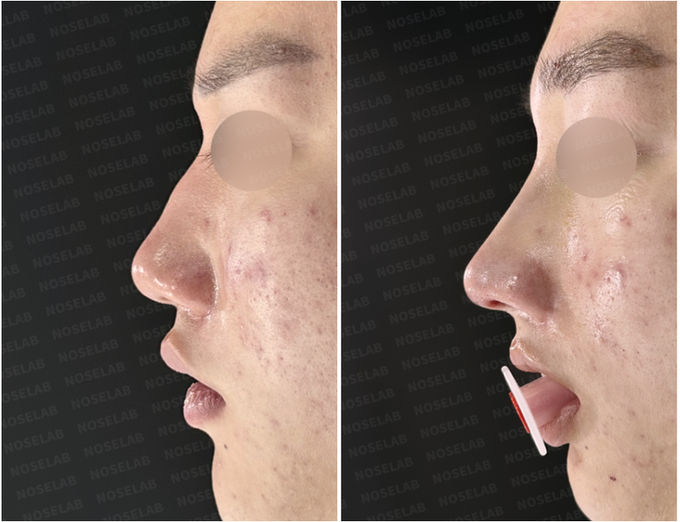
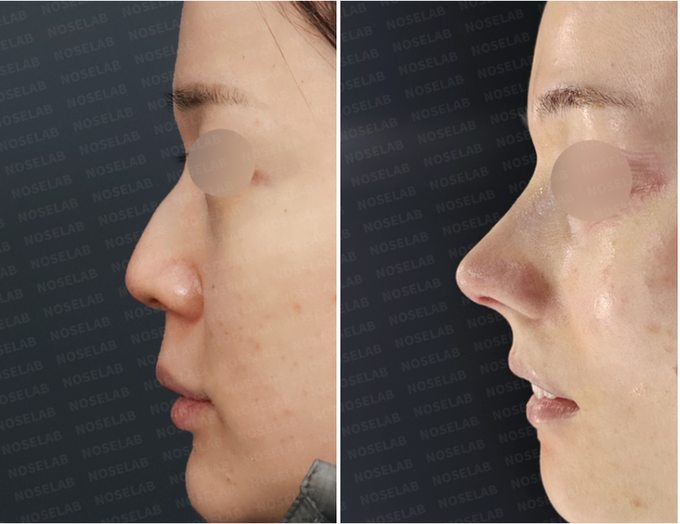
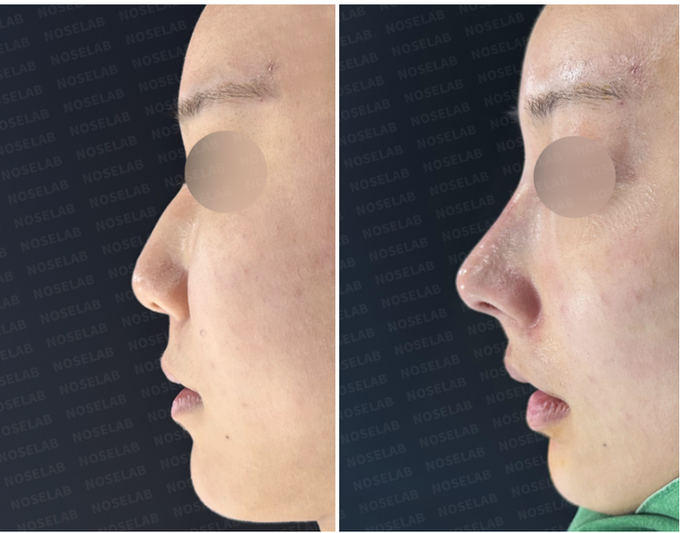
In this case, rib cartilage reconstruction and osteotomy corrected the drooping tip, crooked nasal bridge, and dorsal hump, resulting in a balanced nasal contour through a closed rhinoplasty approach.
Author: Dr. Cha-Young Kang, Director, NoseLab Clinic
This case involves a primary rhinoplasty patient presenting with a drooping nasal tip caused by very small alar cartilages, along with a crooked nasal bridge and dorsal hump.
The patient had no prior history of nasal surgery. Congenitally small alar cartilages resulted in insufficient structural support of the nasal tip, leading to tip ptosis and a blunt nasal appearance. In addition, the nasal bones were asymmetric, contributing to a deviated bridge and irregular dorsal contour.
The patient sought correction of both the dorsal hump and drooping nasal tip, with a preference for a natural and balanced nasal line.
In this case, structural reconstruction was performed through closed rhinoplasty korea, focusing on internal structural support and balanced dorsal line correction.
Drooping nasal tip associated with small alar cartilage requires structural reconstruction rather than simple correction techniques.
If you are experiencing a drooping nasal tip, crooked nasal bridge, or dorsal hump, a detailed structural evaluation is essential before determining the appropriate surgical plan.
📩 International Consultation
→ LINE Consultation (Japan only)
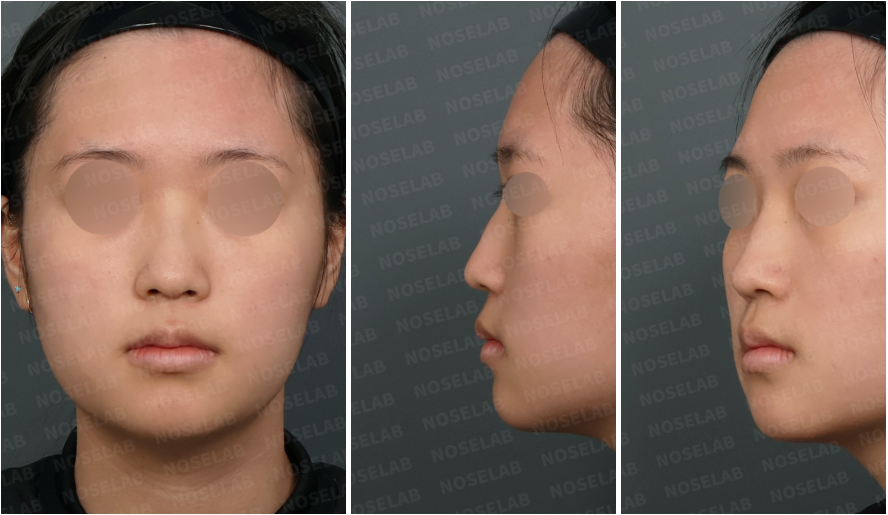
Surgical Background – Closed Rhinoplasty Korea
Correction of a drooping nasal tip caused by small alar cartilage requires structural reinforcement and bony alignment correction.
For this reason, closed rhinoplasty korea was selected to allow precise internal reconstruction of the nasal tip and accurate repositioning of the nasal bones without external incisions.
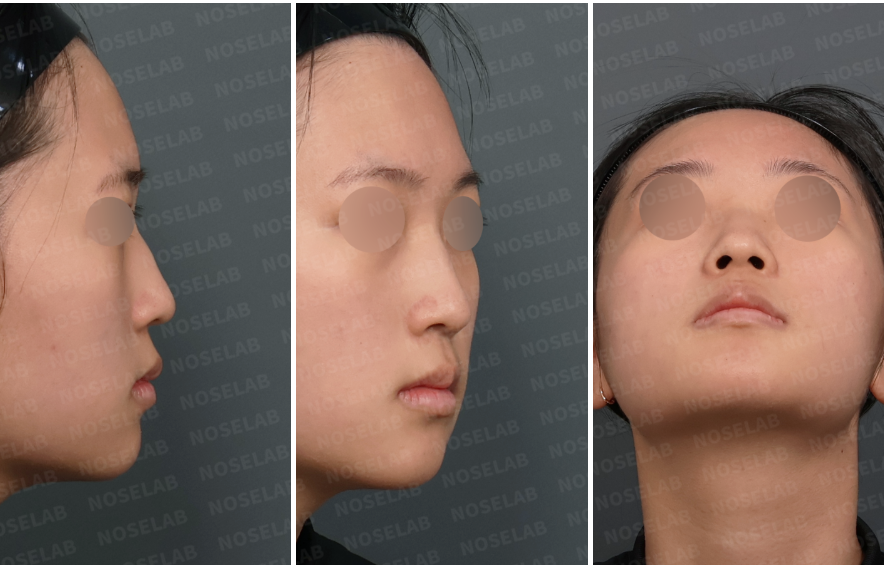
Structural Problems Identified
Preoperative evaluation revealed several structural causes:
Very small alar cartilages leading to weak tip support
Drooping nasal tip (tip ptosis)
Crooked nasal bones
Dorsal hump deformity
Irregular dorsal contour
These combined structural problems required comprehensive structural correction.
Surgical Plan – Structural Tip Reconstruction and Dorsal Correction
Nasal Tip Reconstruction with Rib Cartilage
Reconstruction using autologous rib cartilage
Reinforcement of tip support
Controlled elevation of the nasal tip
Adjustment of projection and rotation
Lateral Osteotomy
Repositioning of nasal bones
Correction of crooked bridge
Restoration of symmetry
Dorsal Hump Correction
Reduction of dorsal hump
Smoothing of irregular contour
Dorsal Augmentation
Custom-carved silicone implant
Creation of a smooth dorsal aesthetic line
Nasolabial Angle Adjustment
Balanced columellar line
Improved side profile harmony
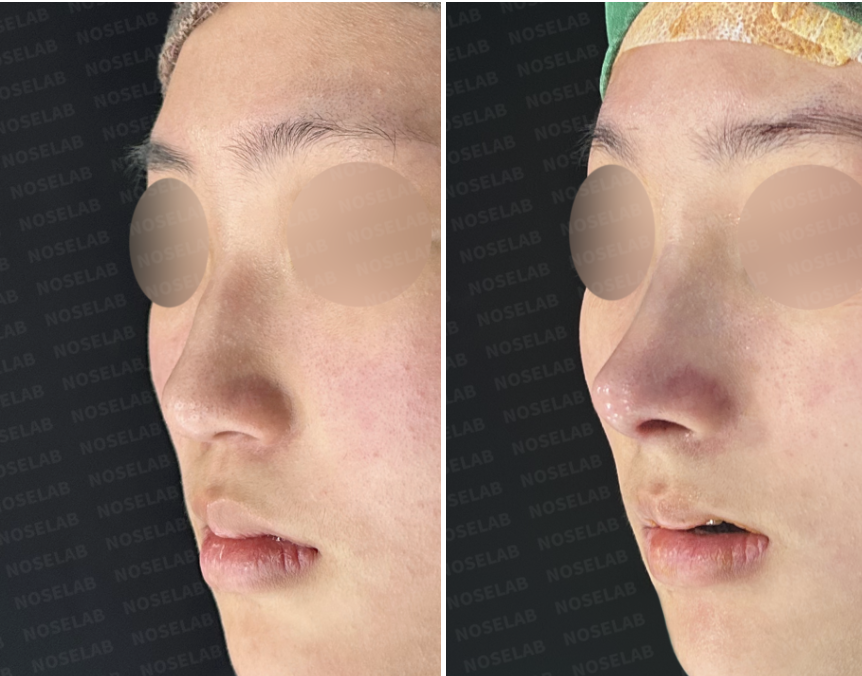
Surgical Results
Frontal View
Improved symmetry
Straightened nasal bridge
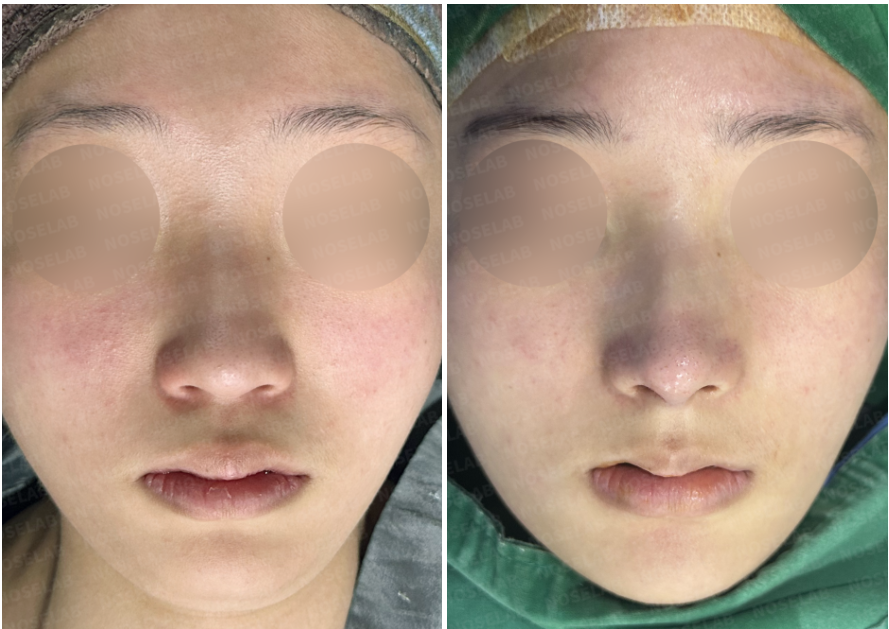
Lateral View
Elevated nasal tip
Corrected dorsal hump
Smooth dorsal line
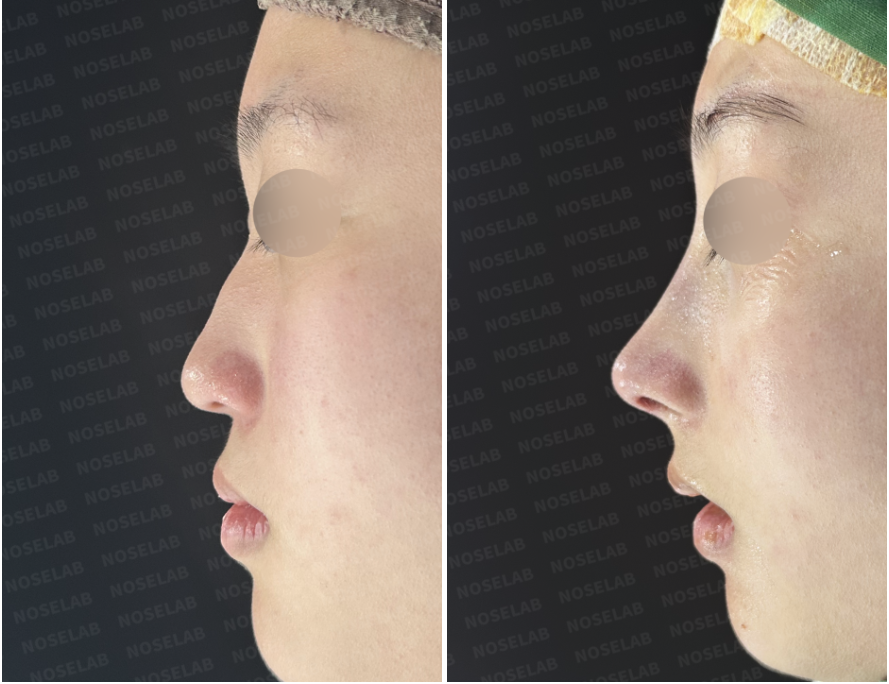
Oblique View
Balanced contour from multiple angles
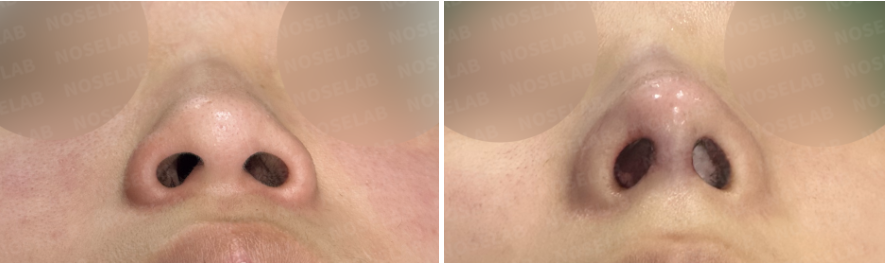
Basal View
Improved tip projection
Better nostril symmetry
Surgeon’s Commentary
When alar cartilages are congenitally small, the nasal tip lacks sufficient structural support, leading to drooping and poor definition.
In such cases, simple suturing is not sufficient. Structural reinforcement is required to maintain long-term tip position.
In this case, rib cartilage reconstruction provided strong internal support and allowed precise control of nasal tip position and shape.
Correction of the dorsal hump was achieved through both reduction and creation of a smooth dorsal line.
The key principle was restoring balance between the nasal bridge and tip rather than treating each deformity separately.
Because each patient has different structural characteristics, surgical planning must be based on precise anatomical analysis rather than a standardized approach.
If you are considering rhinoplasty for tip drooping, hump correction, or structural imbalance, a comprehensive evaluation is essential to determine the most appropriate surgical strategy.
📩 International Consultation
→ LINE Consultation (Japan only)
FAQ
Q1. Why does small alar cartilage cause a drooping tip?
Insufficient structural support leads to progressive tip ptosis.
Q2. Why is rib cartilage used?
It provides strong and durable support when native cartilage is insufficient.
Q3. Is osteotomy necessary for a crooked bridge?
Yes. It allows repositioning of the nasal bones to restore symmetry.
🎥 YouTube Reference
If you’re curious about Dr. Cha-Young Kang’s closed rhinoplasty approach, click to watch the video.
Read the author’s background and the original case context. About these articles