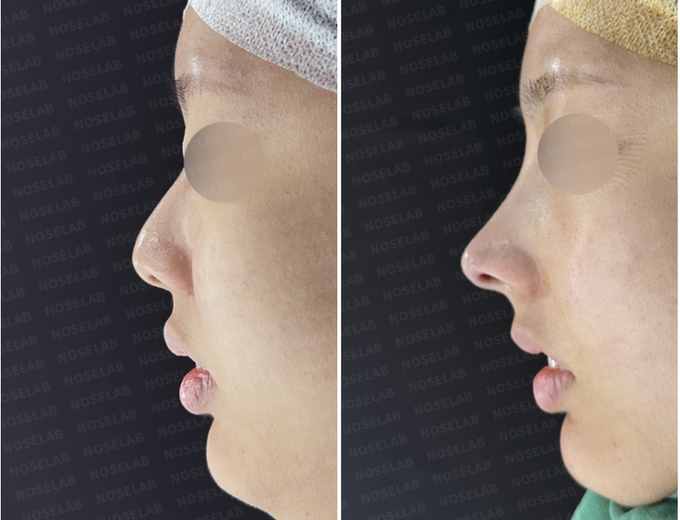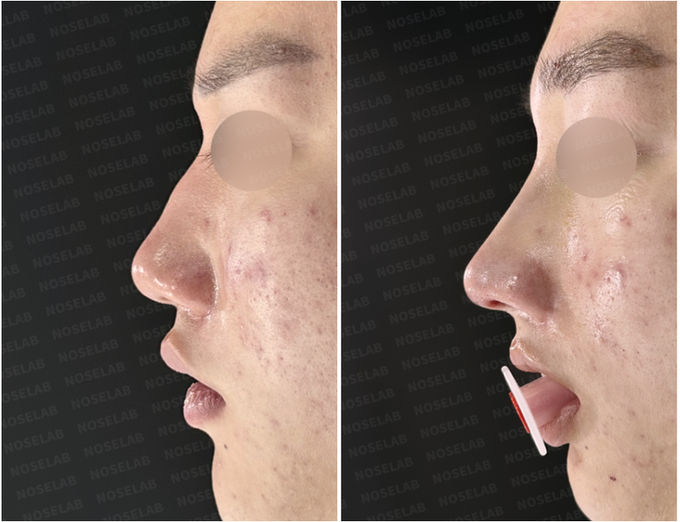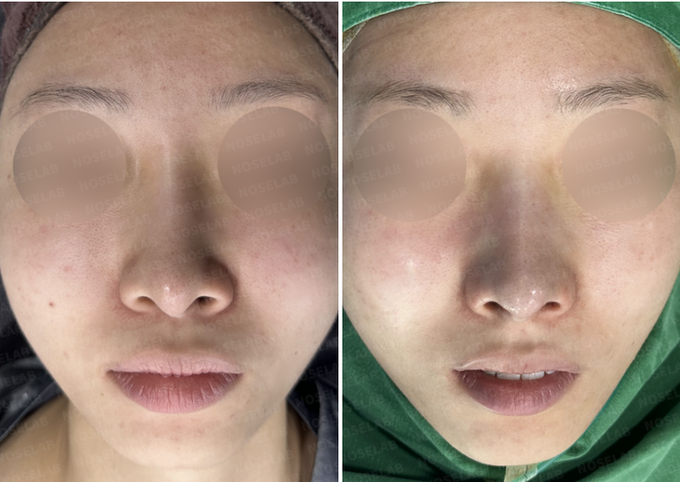
Case at a glance
- Photo timing
These details are excerpts from the original article and captions. Follow a detail to read it in context.
Non-surgical nasal procedures such as fillers or thread lifting can temporarily alter nasal appearance but cannot correct structural deformities like dorsal hump, tip ptosis, or airway obstruction.
In this case, surgical correction following filler removal restored structural nasal support using rib cartilage, eliminated the hump deformity, and improved breathing through a closed rhinoplasty approach.
This case involves a patient who previously underwent nasal filler injections and thread lifting procedures but continued to experience a drooping nasal tip and a prominent dorsal hump.
Although non-surgical treatments can provide temporary contour changes, they cannot correct structural issues such as tip ptosis, dorsal hump deformity, or internal airway obstruction. Because these concerns persisted, the patient chose surgical rhinoplasty for definitive correction.
In this case, structural correction was achieved through closed rhinoplasty korea, focusing on removal of residual materials and reconstruction of the internal nasal framework.
Non-surgical nasal treatments such as fillers cannot correct structural deformities, making surgical reconstruction essential for long-term stability.
If you are experiencing similar issues after nasal fillers or thread lifting, a detailed structural evaluation is essential before determining the appropriate surgical plan.
📩 International Consultation
→ LINE Consultation (Japan only)
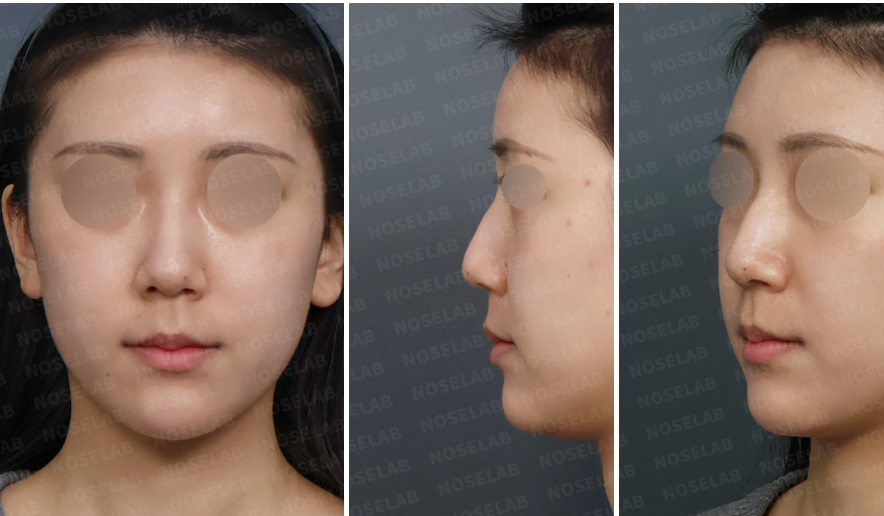
Surgical Background – Closed Rhinoplasty Korea
Rhinoplasty after nasal filler treatment requires careful removal of residual materials and structural reconstruction of the nasal framework.
For this reason, closed rhinoplasty korea was selected to allow precise internal correction while minimizing external tissue trauma and avoiding external incisions.
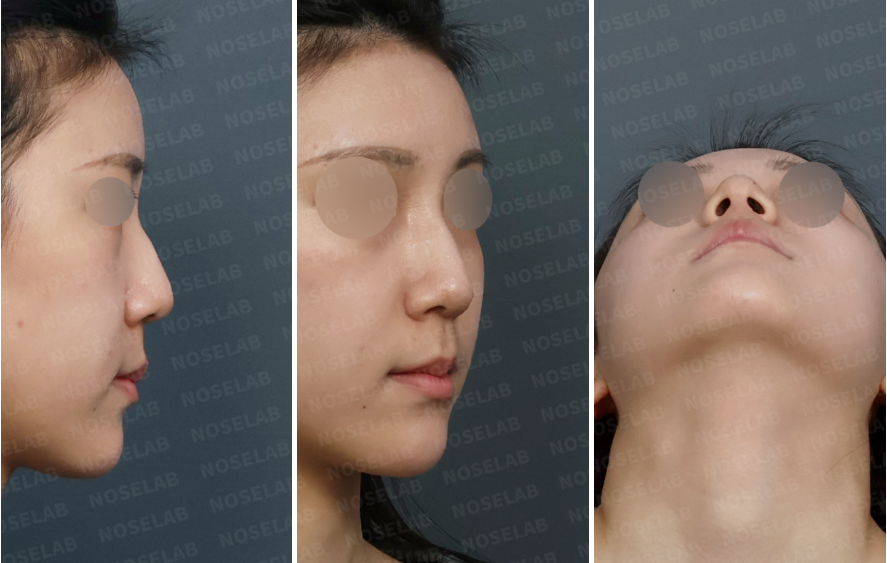
Surgical Plan – Structural Correction After Filler Removal
Removal of Nasal Fillers and Thread Materials
Before reconstructing the nasal framework, previously injected materials were removed.
Procedures performed:
Complete removal of nasal fillers
Removal of residual thread lifting materials
Establishment of a clean surgical field prior to reconstruction
This step was necessary to ensure stable long-term surgical results.
Nasal Tip Reconstruction with Autologous Rib Cartilage
The drooping nasal tip was corrected using autologous rib cartilage.
Procedures performed:
Structural reinforcement of nasal tip support
Controlled elevation of the drooping tip
Creation of a refined but natural tip contour
Autologous rib cartilage provides strong and durable support for maintaining long-term tip position.
Nasolabial Angle Adjustment
The nasolabial angle was refined using rib cartilage support.
This adjustment improved the relationship between the nose and upper lip, producing a more balanced side profile.
Nasal Bridge Augmentation
The nasal bridge was augmented using a custom-carved silicone implant.
Key principles:
Implant placement limited to the nasal dorsum
Smooth transition from forehead → bridge → tip
Creation of a natural straight-to-soft dorsal line
Functional Nasal Surgery
Because the patient also experienced nasal obstruction, functional nasal surgery was performed simultaneously.
Procedures included:
Septoplasty to correct septal deviation
Inferior turbinate reduction to relieve rhinitis symptoms
These procedures improved airflow and nasal breathing.
Surgical Results
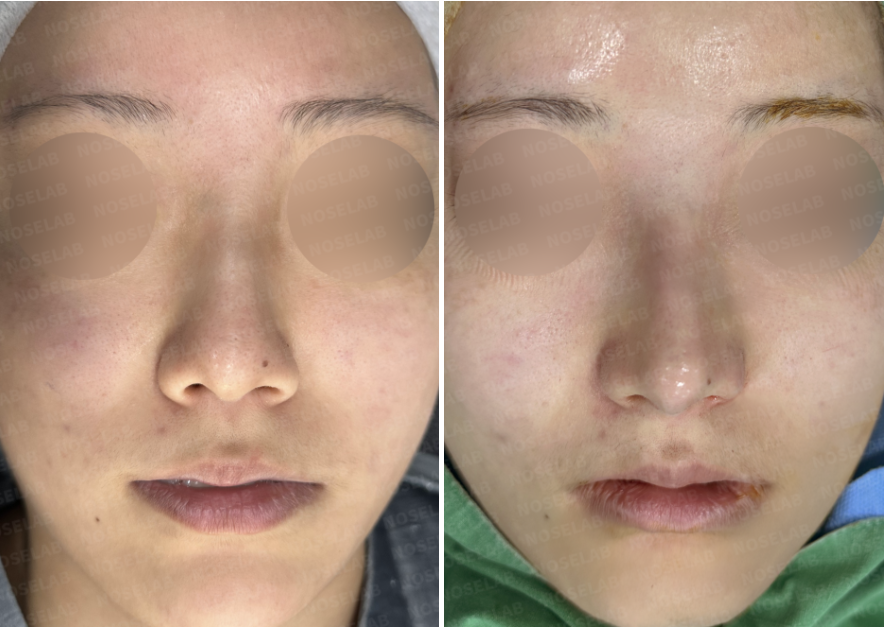
Frontal View
The dorsal hump was eliminated
The nasal tip was naturally elevated
Overall nasal balance improved
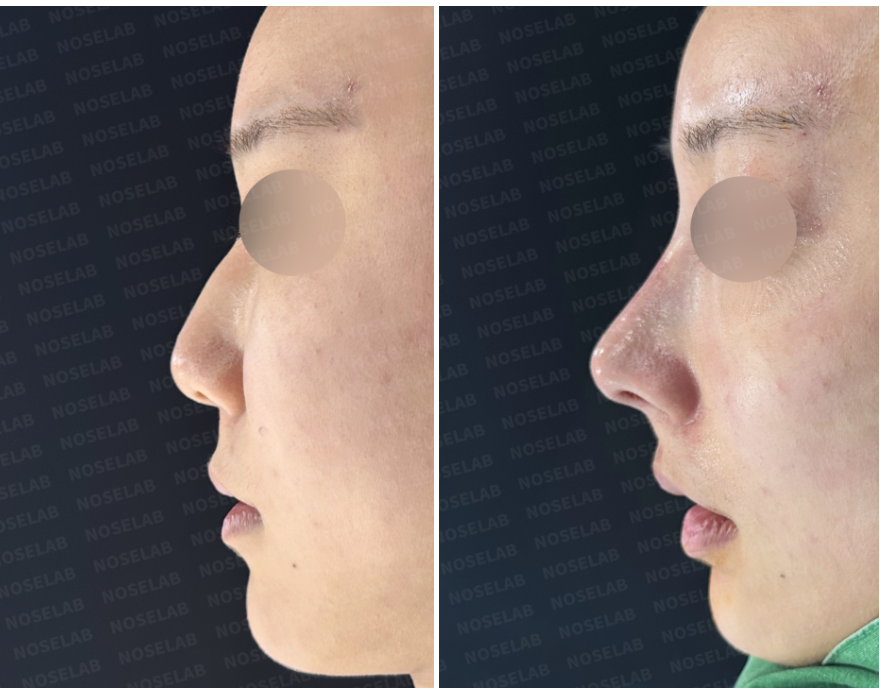
Lateral View
Drooping nasal tip corrected
Smooth nasal bridge line achieved
Improved nasolabial angle and facial harmony
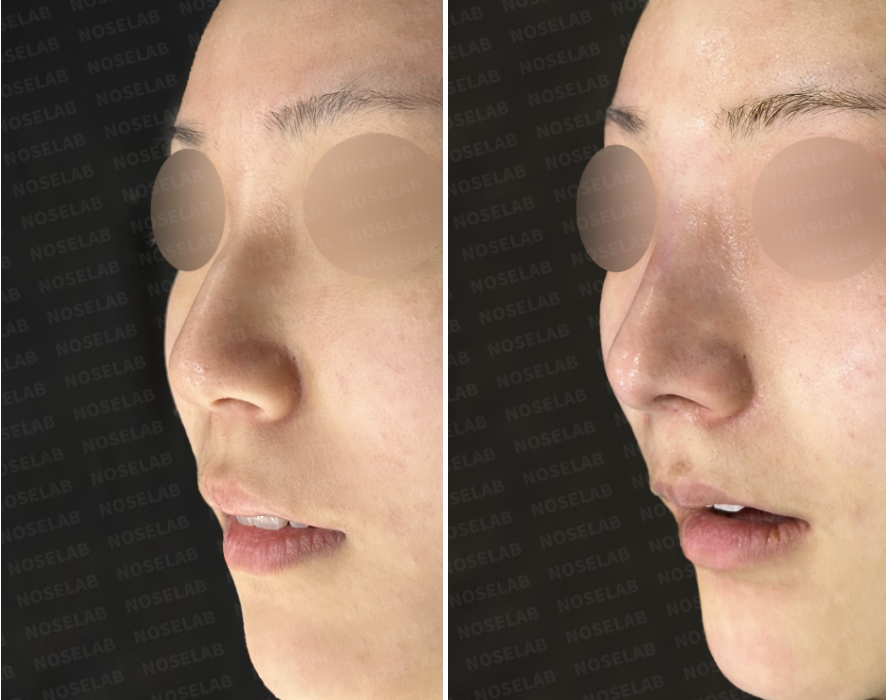
Oblique (45°) View
Natural nasal contour visible from multiple angles
Defined yet natural nasal tip
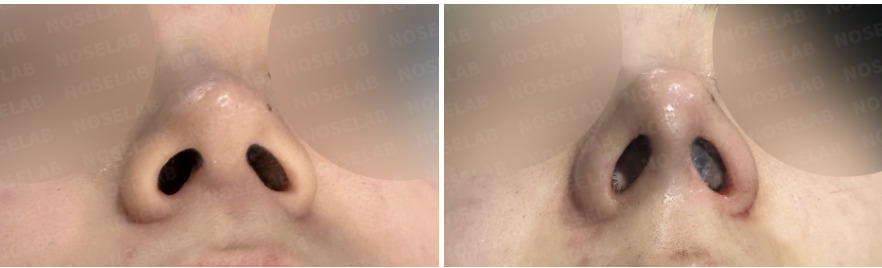
Basal (Nostril) View
Improved nostril symmetry
More refined nasal base contour
Surgeon’s Commentary – Rhinoplasty After Filler Procedures
Non-surgical nasal treatments such as fillers or thread lifting cannot correct structural deformities like:
Drooping nasal tip
Dorsal hump deformity
Structural airway obstruction
In such cases, surgical rhinoplasty becomes necessary to reconstruct the internal nasal framework.
In this patient, previously injected fillers and thread materials were completely removed before reconstruction. The nasal tip was reinforced using autologous rib cartilage, providing strong and reliable structural support.
The nasal bridge was augmented using a precisely carved silicone implant placed only along the dorsum, maintaining natural anatomical relationships.
Functional nasal surgery—including septoplasty and turbinate reduction—was also performed to improve nasal airflow.
Rhinoplasty following filler procedures requires careful evaluation of filler location, tissue response, and structural changes caused by previous treatments. Thorough preoperative assessment is essential for safe and effective correction.
Because rhinoplasty after filler procedures involves altered tissue conditions and residual materials, surgical planning must be based on precise structural analysis rather than a standardized approach.
If you are considering surgery after previous non-surgical treatments or have persistent structural and functional concerns, a comprehensive evaluation is essential to determine the most appropriate surgical strategy.
📩 International Consultation
→ LINE Consultation (Japan only)
(FAQ)
Q1. Can rhinoplasty be performed after nasal fillers?
Yes. Fillers can be removed during surgery before reconstructing the nasal structure.
Q2. Why is rib cartilage used for nasal tip reconstruction?
Rib cartilage provides strong structural support and long-term stability for maintaining nasal tip position.
Q3. Can breathing problems be treated during rhinoplasty?
Yes. Functional procedures such as septoplasty and turbinate reduction can be performed simultaneously to improve nasal airflow.
🎥 YouTube Reference
If you’re curious about Dr. Cha-Young Kang’s closed rhinoplasty approach, click to watch the video.
Read the author’s background and the original case context. About these articles
Source updated .