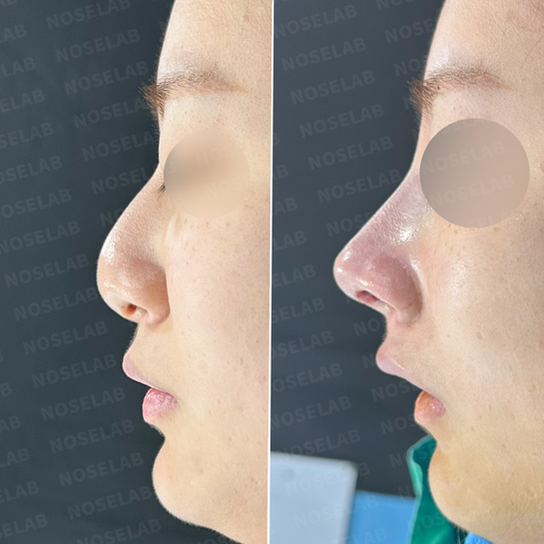
Case at a glance
- Concerns & goals
- Surgical plan
- Graft & material details
- Photo timing
These details are excerpts from the original article and captions. Follow a detail to read it in context.
A low nasal bridge combined with a bulbous nasal tip requires structural reinforcement rather than simple augmentation.
In this case, cartilage-based reconstruction using rib cartilage provided stable tip support, refined the bulbous tip, and created a natural dorsal line through a closed rhinoplasty approach.
Author: Dr. Cha-Young Kang, Director, NoseLab Clinic
This case involves a primary rhinoplasty patient seeking correction of a low nasal bridge and bulky nasal tip while maintaining a natural and harmonious appearance.
The patient presented with a low nasal bridge, thick soft-tissue envelope, broad lower lateral cartilages, and insufficient tip support.
Clinical analysis showed that simple augmentation would not correct the bulky appearance or maintain stable projection without internal reinforcement.
In this case, structural correction was achieved through closed rhinoplasty korea, focusing on controlled elevation of the nasal bridge and reinforcement of tip support for long-term stability
Low nasal bridge combined with a bulbous tip requires structural reinforcement rather than isolated height augmentation to achieve a balanced result.
If you are concerned about a low nasal bridge or a bulky nasal tip and want a natural-looking result, a detailed structural evaluation is essential before determining the appropriate surgical plan.
📩 International Consultation
→ LINE Consultation (Japan only)
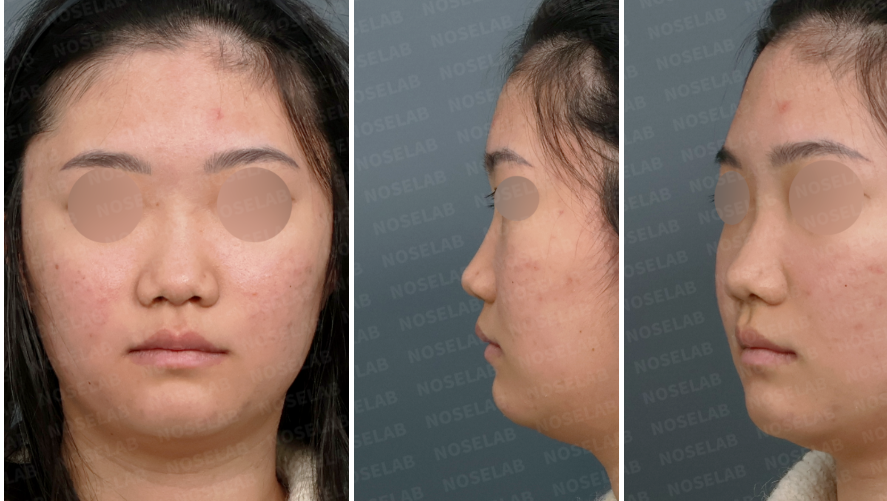
Surgical Background – Closed Rhinoplasty Korea
Primary correction of a low nasal bridge and bulbous tip requires reinforcement of the internal nasal framework rather than surface-level augmentation.
For this reason, closed rhinoplasty korea was selected to allow precise internal structural modification without external incisions.
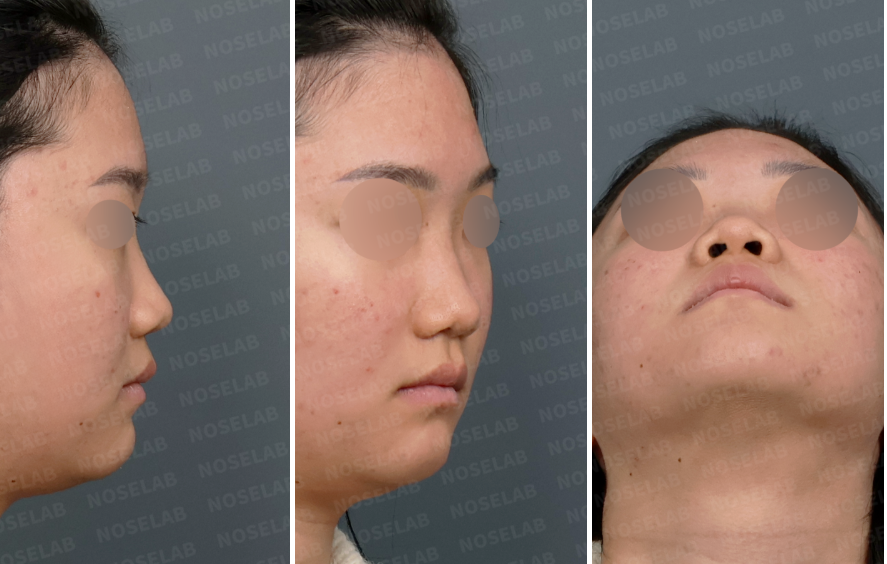
Structural Problems Identified
Preoperative analysis revealed multiple contributing factors:
Low nasal bridge
Bulbous nasal tip due to broad lower lateral cartilages
Thick soft tissue envelope
Insufficient tip support
Retracted columella
These structural issues required combined correction for a balanced outcome.
Surgical Plan – Structural Elevation and Proportional Refinement
Nasal Bridge Elevation with Rib Cartilage
Structural elevation using autologous rib cartilage
Creation of a natural dorsal line
Avoidance of excessive artificial height
Nasal Tip Reconstruction
Reinforcement using rib cartilage
Controlled projection and definition
Stabilization of long-term tip position
Bulbous Tip Refinement
Controlled reshaping of lower lateral cartilages
Reduction of tip bulk without over-resection
Columella Repositioning
Correction of retracted columella
Improved nostril symmetry
Nasolabial Angle Adjustment
Balanced relationship between nose and upper lip
Septal Reinforcement
Prevention of long-term tip drooping
Surgical Results
Frontal View
Narrower and more refined nasal tip
Improved overall nasal balance
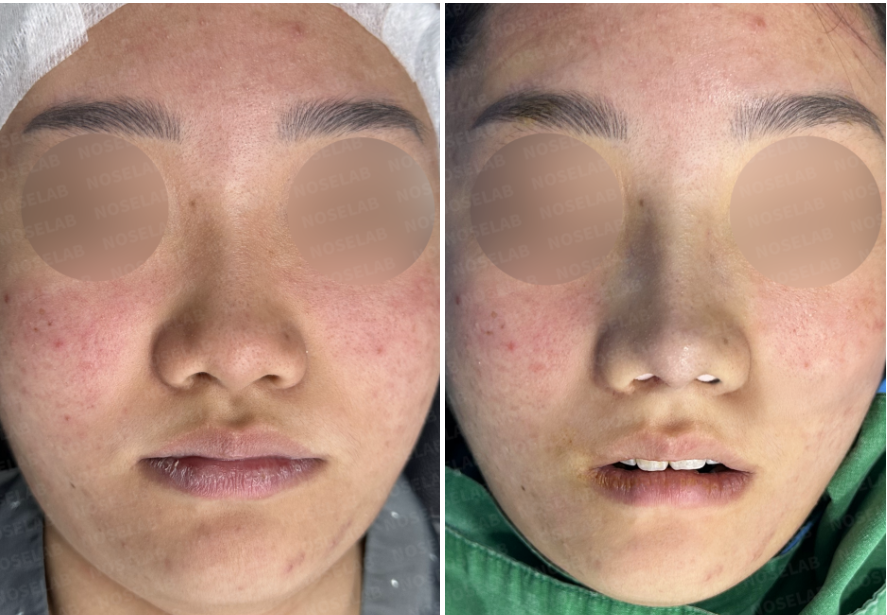
Lateral View
Natural elevation of nasal bridge
Smooth bridge-to-tip transition
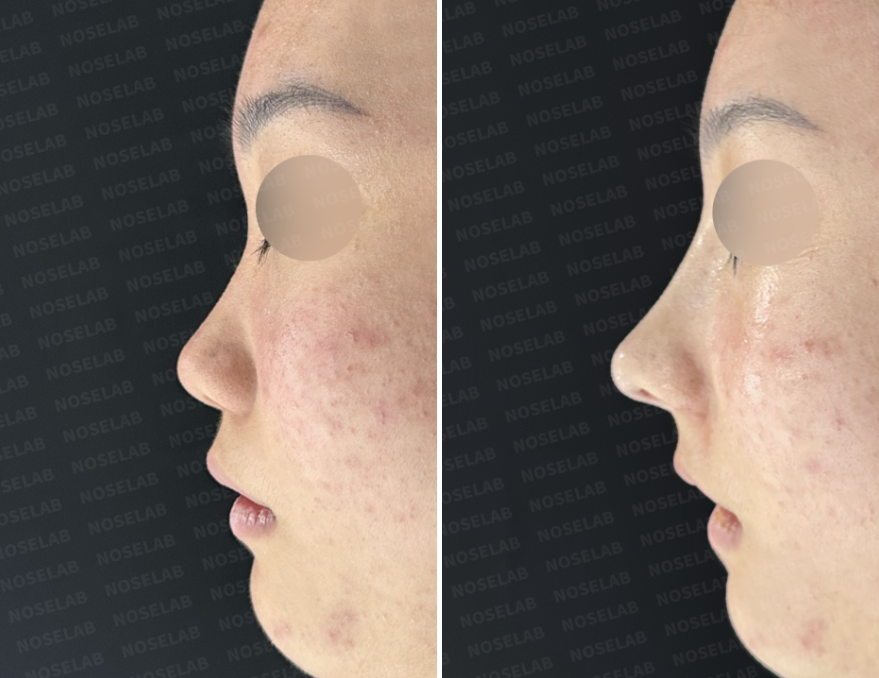
Oblique View
Harmonious contour from multiple angles

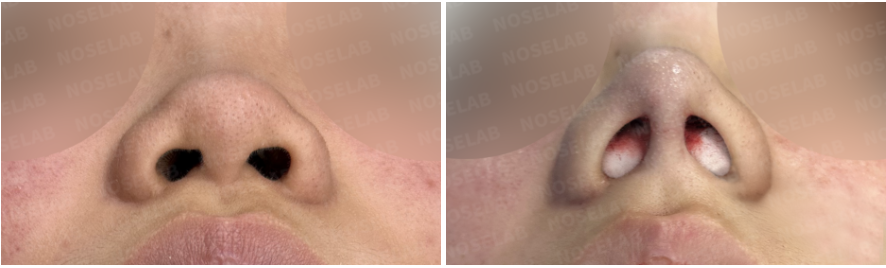
Basal (Nostril) View
Reduced nostril show
Improved symmetry and columellar support
Surgeon’s Commentary
Low nasal bridge and bulbous nasal tip cannot be corrected by adding height alone.
When tip support is weak and the columella is retracted, simple augmentation may result in an unnatural appearance or long-term instability.
In this case, autologous rib cartilage was used to reinforce both the nasal bridge and tip, providing strong internal support and controlled structural elevation.
The goal was not excessive projection, but balanced proportions and natural contour.
A structure-first approach allows stable, predictable, and long-term results in primary rhinoplasty cases involving low bridge and bulbous tip deformities.
Because each patient has different structural characteristics, surgical planning must be based on precise anatomical analysis rather than a standardized approach.
If you are considering rhinoplasty for both shape refinement and structural stability, a comprehensive evaluation is essential to determine the most appropriate surgical strategy.
📩 International Consultation
→ LINE Consultation (Japan only)
(FAQ)
Q1. Can a low nasal bridge and bulbous tip be corrected together?
Yes. Structural elevation and tip refinement can be performed simultaneously.
Q2. Why is rib cartilage used in primary rhinoplasty?
Rib cartilage provides strong structural support and long-term stability.
Q3. Will the result look natural?
Yes. The goal is balanced proportion and controlled structural refinement, not excessive projection.
🎥 YouTube Reference
If you’re curious about Dr. Cha-Young Kang’s closed rhinoplasty approach, click to watch the video.

Read the author’s background and the original case context. About these articles
Source updated .