Case at a glance
- Surgical plan
- Graft & material details
- Photo timing
These details are excerpts from the original article and captions. Follow a detail to read it in context.
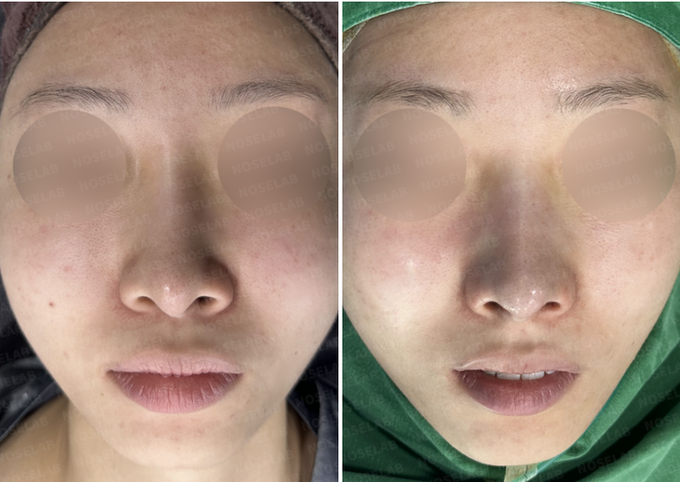
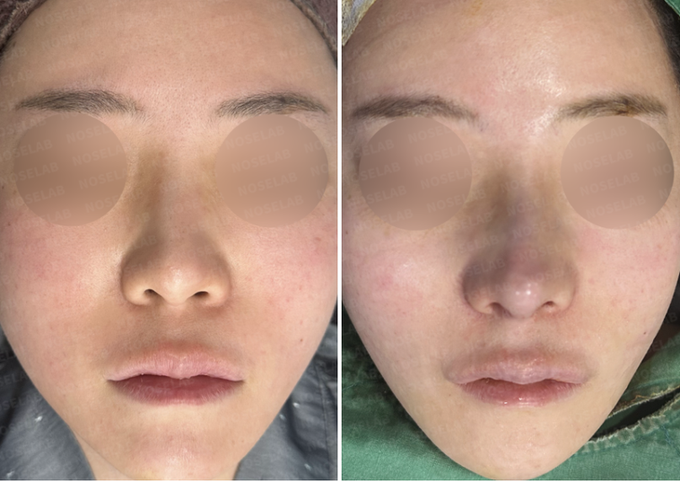
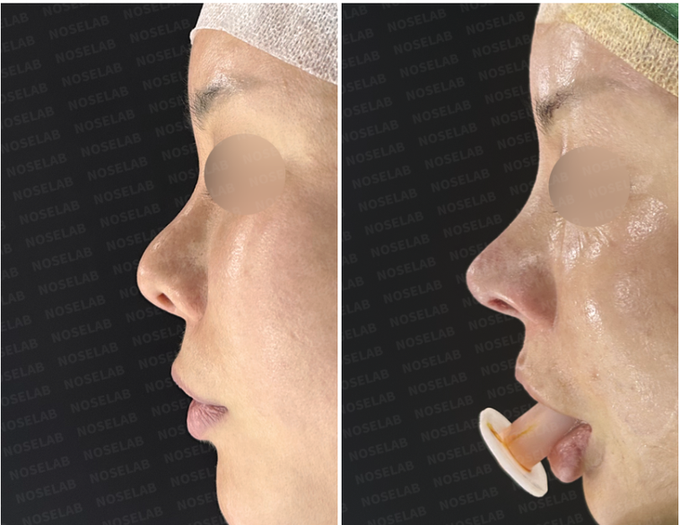
This clinical case presents a patient undergoing primary rhinoplasty to address a wide nasal bridge and a blunt nasal tip. The primary goal of surgery was to achieve structural refinement while maintaining a natural nasal appearance suited to the patient’s facial balance.
Patient Condition and Key Problems
The patient was concerned about a nasal bridge that appeared wide and a nasal tip that lacked definition. Rather than seeking a sharp or exaggerated contour, the patient preferred a soft, rounded tip with an overall natural shape. Functional nasal concerns were also considered during preoperative evaluation.
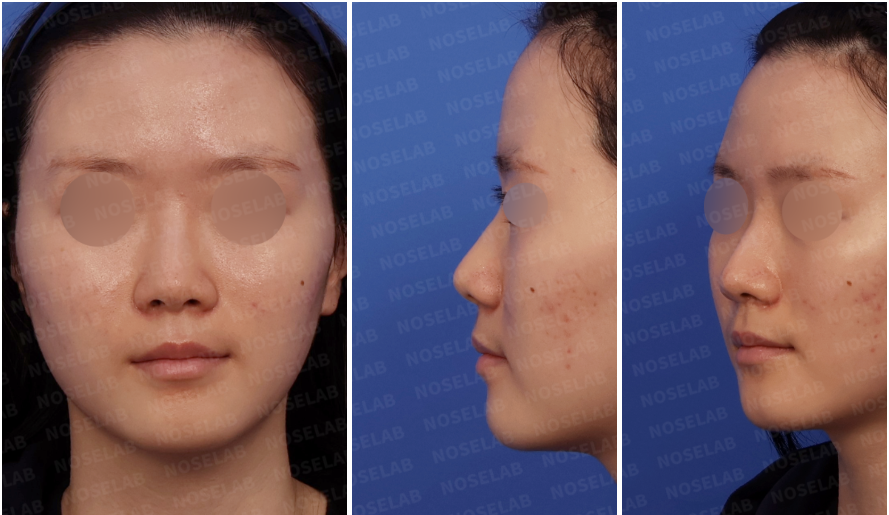
Surgical Background – closed rhinoplasty korea
This was the patient’s first rhinoplasty procedure. Intraoperative assessment revealed a deviated septal cartilage that was thin and limited in volume. Because the septal cartilage alone was insufficient to provide stable nasal tip support, a closed rhinoplasty korea approach was selected, allowing structural correction while preserving nasal function and minimizing tissue disruption.
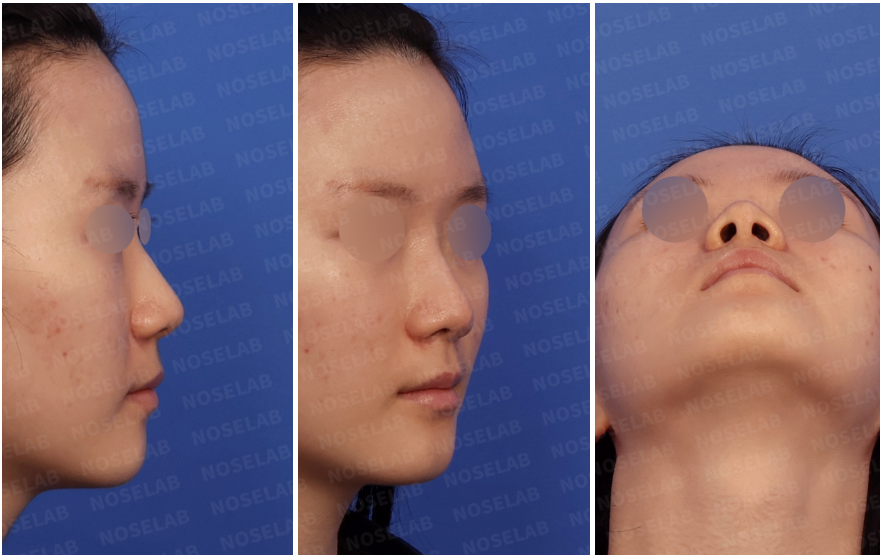
Surgical Plan – Structural & Functional Approach
Structure-first Philosophy
Only the deviated portion of the septal cartilage was selectively corrected to preserve structural integrity and nasal function. To achieve stable and durable tip support, autologous rib cartilage was chosen as the primary graft material.
Long-term Stability and Revision Prevention
Rib cartilage was used to construct a stable nasal tip framework, reducing the risk of postoperative tip weakness over time. Lateral osteotomy was performed to narrow the nasal bones and correct the widened bridge. A customized silicone implant was carefully sculpted to match the patient’s nasal bone anatomy, ensuring smooth transition between the bridge and tip. Nasolabial angle adjustment was added to improve lateral profile balance.
Surgical Results – Functional and Structural Outcome
Postoperatively, the nasal bridge appeared narrower and more refined, while the nasal tip gained definition without becoming overly sharp. The transition between the nasal bridge and tip was smooth and natural. Structural support of the nasal tip was securely established, contributing to long-term stability and balanced facial harmony.
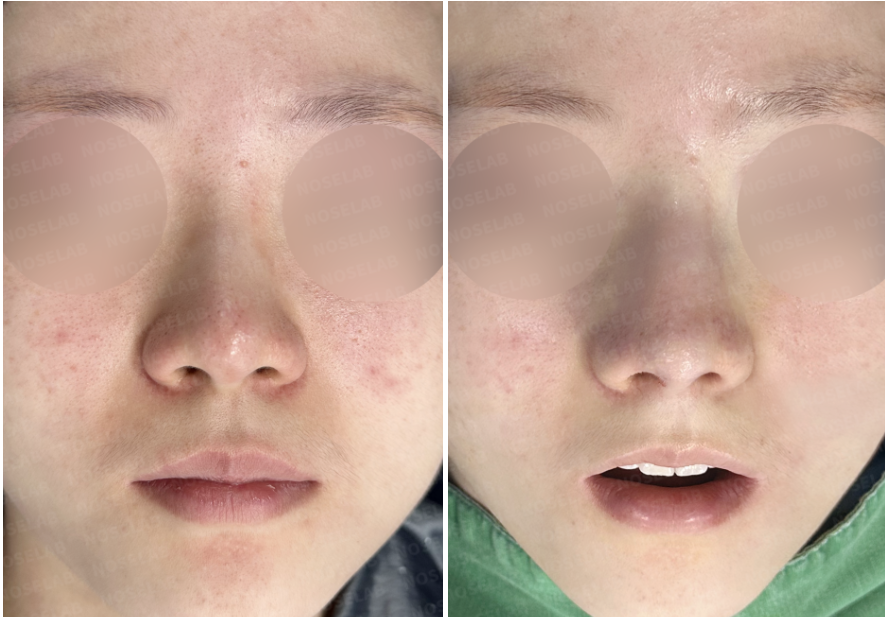
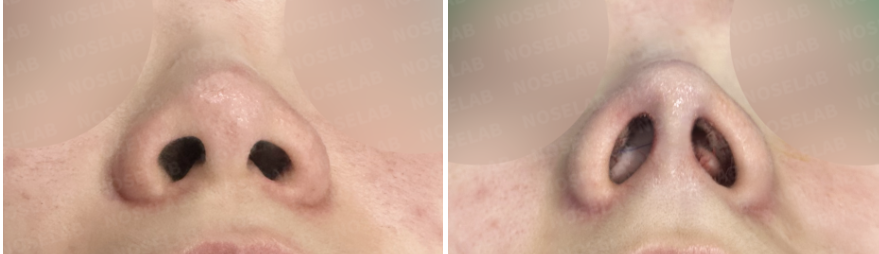
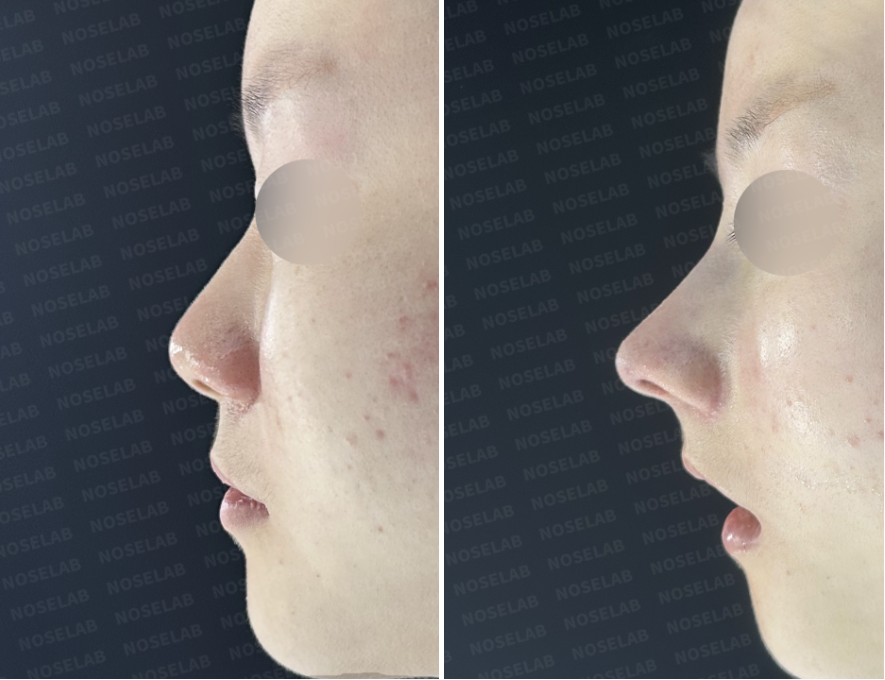
Surgeon’s Commentary
The condition of the septal cartilage plays a critical role in surgical planning for rhinoplasty. In this patient, the septal cartilage was thin and limited, making sole reliance on septal support inappropriate. Using autologous rib cartilage allowed for reliable structural reinforcement of the nasal tip, reducing the likelihood of postoperative tip descent. For a widened nasal bridge, lateral osteotomy combined with precise implant shaping is essential to achieve a refined contour while maintaining structural harmony. Rhinoplasty should prioritize facial balance and structural integrity rather than exaggerated projection.
Frequently Asked Questions (FAQ)
Q1. Why is rib cartilage sometimes used in primary rhinoplasty?
Rib cartilage is used when septal cartilage is insufficient to provide stable structural support, particularly for nasal tip reconstruction requiring long-term durability.
Q2. Can osteotomy improve a wide nasal bridge?
Yes. Lateral osteotomy narrows the nasal bones and is an effective method for correcting a wide nasal bridge while maintaining nasal structure.
Q3.How is a natural nasal tip shape achieved during rhinoplasty?
A natural tip is achieved by balancing structural support and soft tissue contouring, avoiding excessive sharpening while maintaining adequate support.
🎥 YouTube Reference
If you’re curious about Dr. Cha-Young Kang’s closed rhinoplasty approach, click to watch the video.
Read the author’s background and the original case context. About these articles