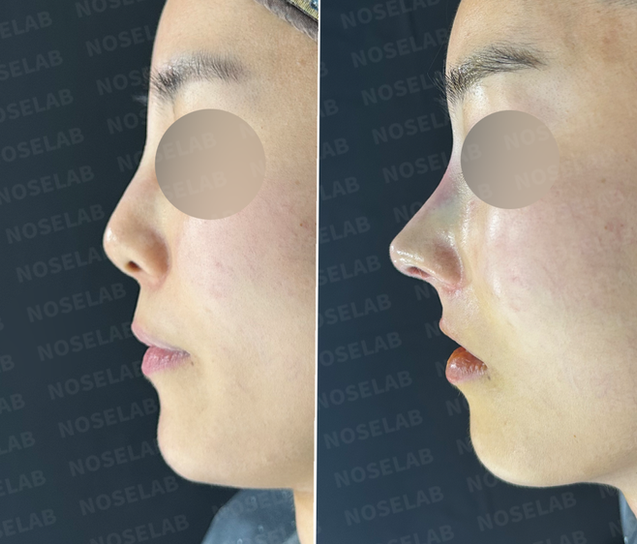
Case at a glance
- Previous treatment
- Surgical plan
- Graft & material details
- Photo timing
These details are excerpts from the original article and captions. Follow a detail to read it in context.
This case reviews drooping nasal tip correction rhinoplasty in a patient with multiple previous rhinoplasty procedures, nasal tip drooping, nasal obstruction, tip translucency, dorsum-tip indentation, deviated nasal axis, nostril asymmetry, wide nasal tip, mild dorsal hump, high nasal starting point, deviated septum, and hypertrophic inferior turbinates. Surgery focused on donor rib cartilage septal extension grafting, nasal tip support, dermal grafting, silicone implant refinement, septoplasty, turbinate reduction, nostril balance correction, and closed rhinoplasty structural correction.
Author: Dr. Cha-Young Kang
Clinic: NoseLab Clinic
Published: 2025
Last Updated: 2026
Introduction
Hello, this is Dr. Cha-Young Kang of NoseLab Clinic.
This case involves drooping nasal tip correction rhinoplasty in a patient who had undergone several previous nasal surgeries and later developed a drooping tip, tip translucency, dorsum-tip indentation, and nasal obstruction.
The patient was concerned not only about the appearance of the nasal tip but also about breathing difficulty related to rhinitis, septal deviation, and inferior turbinate hypertrophy.
Because the case involved both aesthetic and functional concerns, the surgical plan was designed to address nasal tip support, dorsal contour, nostril balance, septal alignment, and turbinate-related airway narrowing.
The surgery was performed using a closed rhinoplasty / endonasal approach. The goal was to improve nasal tip position, support the weakened tip structure, soften the dorsum-tip indentation, correct nasal obstruction factors, and improve overall nasal balance.
Surgical History Before Drooping Nasal Tip Correction Rhinoplasty
The patient had a history of multiple previous rhinoplasty procedures.
Previous Surgical History
The previous surgeries included:
15 years ago: silicone implant with auricular cartilage graft
November 2021: septal cartilage graft with silicone implant, followed by a longer nasal appearance
August 2022: osteotomy and reused silicone implant carving, followed by drooping nasal tip and translucency
Because the patient had undergone multiple previous procedures, the revision plan needed to consider scar tissue, implant history, cartilage condition, tip support, and airway structure.
Preoperative Analysis for Drooping Nasal Tip Correction Rhinoplasty
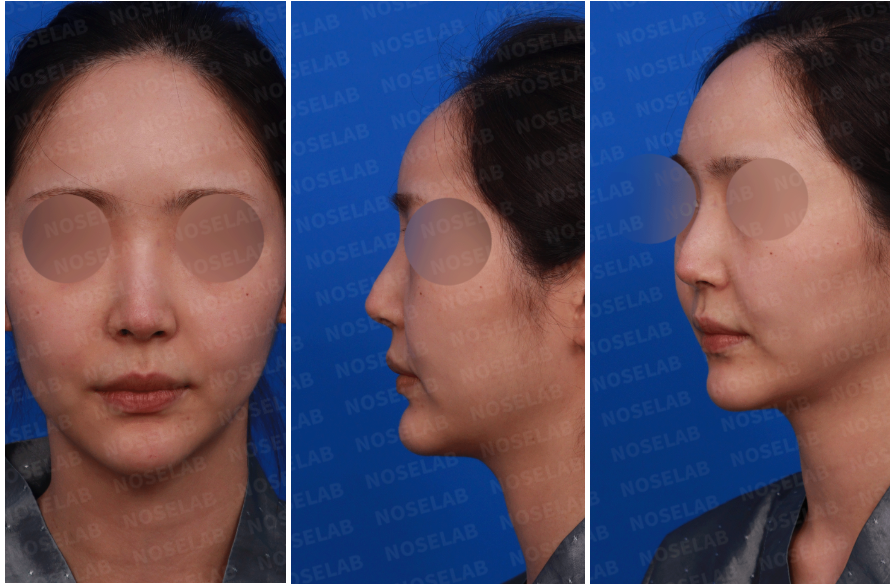
Preoperative design consultation photos were reviewed from the frontal, side, oblique, and nostril views.
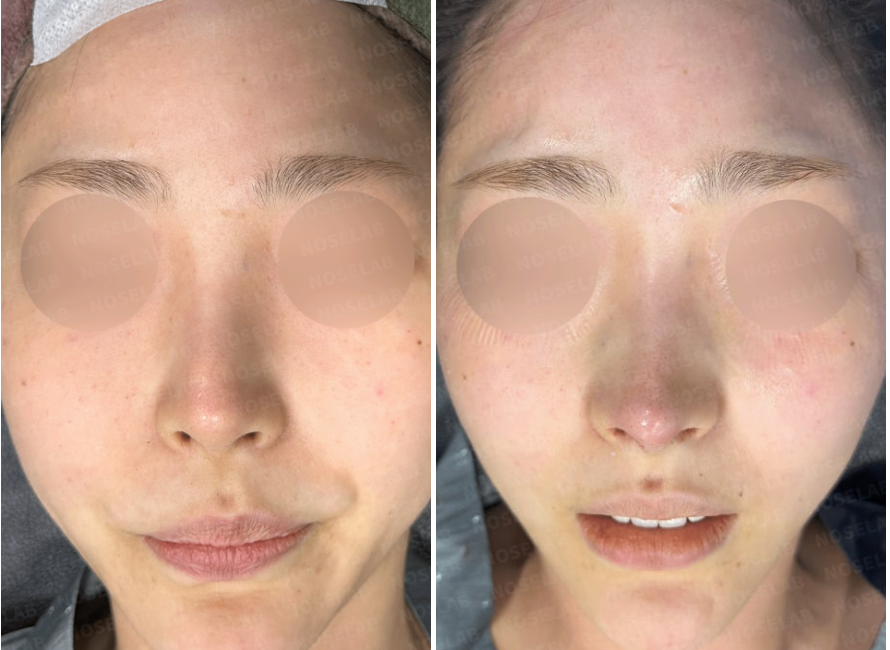
Frontal View: Deviated Axis, Wide Tip, and Nostril Asymmetry
From the frontal view, the nasal axis appeared deviated.
The nostrils were asymmetric, and the nasal tip appeared wide.
These findings suggested that both the central nasal framework and lower nasal structure needed to be assessed during surgery.
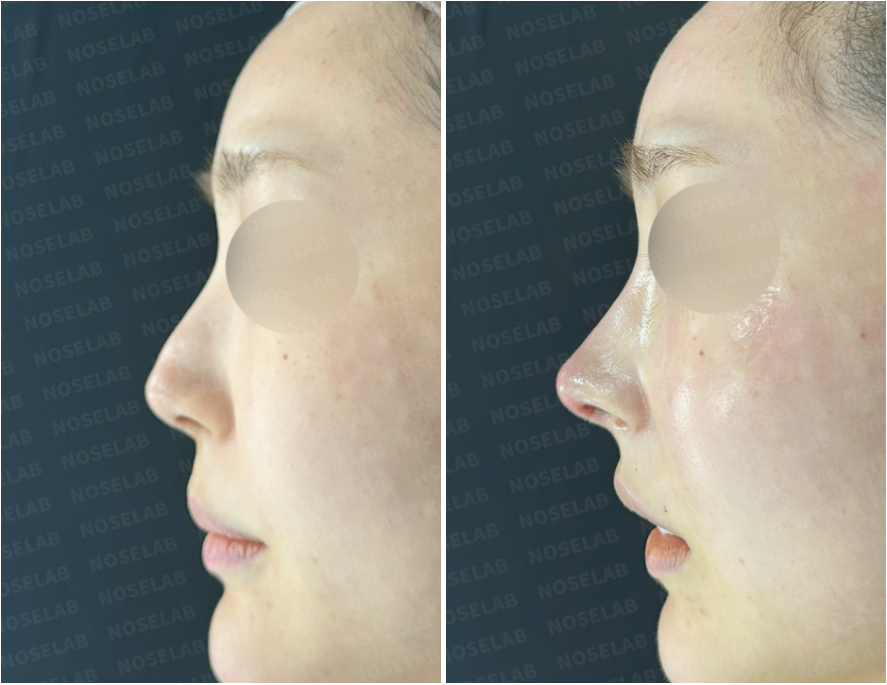
Side View: Drooping Tip and Dorsum-Tip Indentation
From the side view, the nasal tip appeared drooping.
An indentation was visible at the junction between the nasal dorsum and tip, and a slight dorsal hump was also observed.
The nasal starting point appeared relatively high, which affected the overall side profile balance.
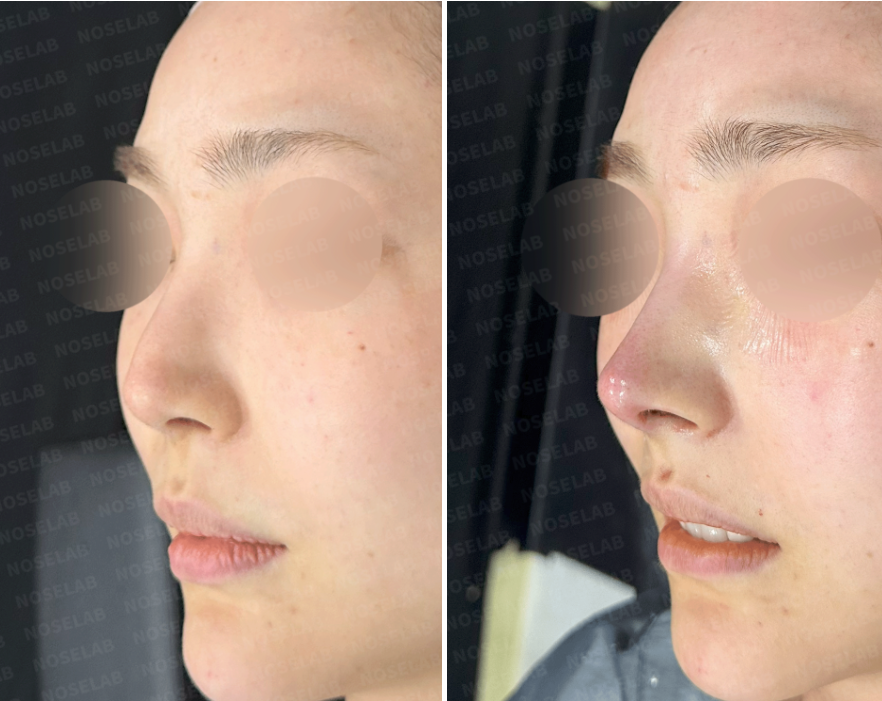
Oblique View: Dorsum-Tip Transition
From the oblique view, the indentation between the dorsum and tip was more noticeable.
The downward rotation of the nasal tip affected the continuity between the bridge and the tip.
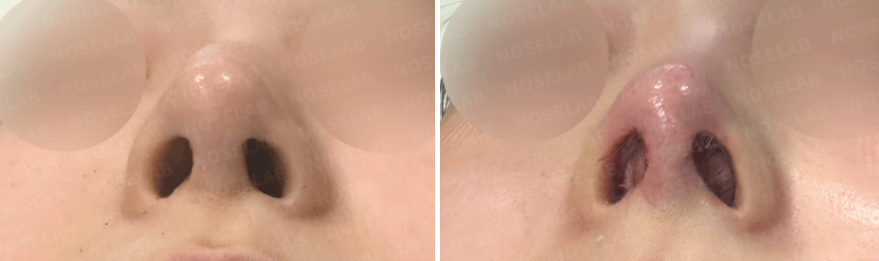
Nostril View: Columella Tilt and Nostril Asymmetry
From the nostril view, nostril asymmetry was observed.
The columella appeared tilted toward the left, suggesting lower nasal framework imbalance.
Because nostril symmetry depends on septal support, columella position, alar cartilage balance, and scar tissue, correction was planned within the patient’s anatomical limits.
Patient Concerns Before Drooping Nasal Tip Correction Rhinoplasty
The patient’s main concerns included both visible contour problems and functional breathing concerns.
Main Concerns
The patient reported the following issues:
Drooping nasal tip
Nasal obstruction related to rhinitis
Tip translucency
Indentation between the nasal dorsum and nasal tip
Nostril asymmetry
Wide nasal tip
Deviated nasal axis
In this type of revision case, the nasal tip and airway should be evaluated together because structural support, septal deviation, and turbinate condition can influence both appearance and breathing.
Functional Findings Before Nasal Obstruction Rhinoplasty
CT scans and nasal endoscopy were used to evaluate the patient’s breathing concerns.
The main functional findings included a deviated septum and bilateral hypertrophic inferior turbinates.
These findings supported the need for functional nasal correction in addition to aesthetic revision rhinoplasty.
Deviated Septum
The deviated septum was considered one of the structural factors contributing to nasal obstruction.
Hypertrophic Inferior Turbinates
Both inferior turbinates were hypertrophic, which may contribute to airway narrowing.
Because turbinate size and mucosal swelling can vary over time, functional outcome should be evaluated throughout the healing process.
Surgical Plan for Drooping Nasal Tip Correction Rhinoplasty
Septal Extension Graft Using Donor Rib Cartilage
A septal extension graft using donor rib cartilage was planned to support and reposition the drooping nasal tip.
This step was important because the nasal tip needed structural support rather than simple surface contour adjustment.
The goal was to improve tip position and projection while avoiding excessive rotation or an artificial-looking tip.
Dermal Grafting for Dorsum-Tip Indentation
Dermal grafting was used to address the depressed area between the nasal dorsum and tip.
This helped soften the transition between the bridge and tip and reduce visible contour irregularity.
Silicone Implant Refinement for Dorsal Line
A silicone implant was used to create a smoother and straighter dorsal line.
The implant plan was adjusted according to the patient’s nasal structure, previous implant history, and dorsal contour needs.
Septoplasty for Deviated Septum
Septoplasty was performed to address the deviated septum.
This was planned as part of the functional correction because septal deviation can contribute to nasal obstruction.
Turbinate Reduction for Inferior Turbinate Hypertrophy
Submucosal reduction of the hypertrophic inferior turbinates was performed using radiofrequency.
This was planned to address turbinate-related airway narrowing while preserving the mucosal lining as much as possible.
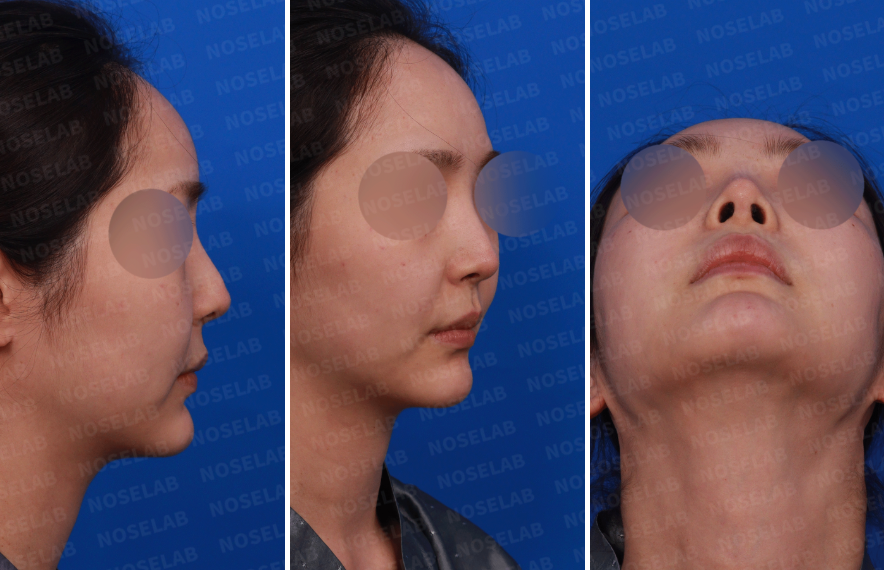
Surgical Results
Frontal View:
From the frontal view, the nasal axis appeared more balanced after structural correction.
The nasal tip appeared more refined, and the nostril balance appeared improved after lower nasal framework correction.
Side View:
From the side view, the drooping nasal tip appeared better supported after septal extension grafting.
The transition between the dorsum and tip appeared smoother after dermal grafting and dorsal line correction.
The slight dorsal hump also appeared less prominent in relation to the revised nasal contour.
Oblique View:
From the oblique view, the indentation between the dorsum and tip appeared softened.
The dorsal and tip lines appeared more continuous after grafting and structural support.
Nostril View:
From the nostril view, the nostril shape appeared more balanced after correction of the lower nasal framework.
The columella tilt appeared improved within the limits of scar tissue, cartilage condition, and healing response.
Functional Outcome After Septoplasty and Turbinate Reduction
Nasal obstruction factors were addressed through septoplasty and inferior turbinate reduction.
Breathing changes should be evaluated over time because postoperative swelling, mucosal condition, turbinate response, and healing process can affect airway symptoms.
Surgeon’s Commentary

This drooping nasal tip correction rhinoplasty case required both aesthetic and functional planning.
The patient had undergone multiple prior rhinoplasties and developed drooping of the nasal tip, tip translucency, and an indentation between the dorsum and tip.
At the same time, CT and endoscopic findings showed septal deviation and bilateral inferior turbinate hypertrophy, which were related to the patient’s nasal obstruction concerns.
In this type of revision case, it is important to correct the nasal tip structure and airway structure together.
A donor rib cartilage septal extension graft was used to support and reposition the drooping tip.
Dermal grafting was used to address the depressed area between the dorsum and tip, while silicone implant refinement was used to improve the dorsal line.
Septoplasty and radiofrequency turbinate reduction were performed to address functional airway narrowing.
This case shows that drooping nasal tip correction rhinoplasty may require combined correction of tip support, dorsal contour, nostril asymmetry, septal deviation, turbinate hypertrophy, and overall nasal balance.
FAQ
What causes a drooping nasal tip after revision rhinoplasty?
A drooping nasal tip may occur when tip support is weakened by previous surgery, scar tissue, cartilage changes, or insufficient structural support. In revision cases, the nasal tip often requires structural reinforcement.
Why was donor rib cartilage used in this case?
Donor rib cartilage may be considered when additional support is needed for septal extension grafting and nasal tip repositioning. The choice of graft material depends on the patient’s anatomy, surgical history, and available cartilage.
Can rhinoplasty address nasal obstruction?
Rhinoplasty may be combined with functional procedures such as septoplasty or turbinate reduction when nasal obstruction is related to septal deviation, turbinate hypertrophy, or structural airway narrowing.
Why was dermal grafting used?
Dermal grafting was used to soften the indentation between the nasal dorsum and tip. It may help improve contour irregularity when soft tissue support is needed.
Can this type of surgery be performed with a closed approach?
A closed rhinoplasty / endonasal approach may be used depending on the patient’s previous surgery history, scar tissue, cartilage condition, airway structure, and surgical goals.
International Consultation
For international patients, a photo-based consultation may help clarify whether drooping nasal tip correction rhinoplasty, donor rib cartilage septal extension, dermal grafting, silicone implant refinement, septoplasty, turbinate reduction, or nostril asymmetry correction may be needed.

Read the author’s background and the original case context. About these articles