Case at a glance
- Concerns & goals
- Previous treatment
- Surgical plan
- Graft & material details
- Photo timing
These details are excerpts from the original article and captions. Follow a detail to read it in context.
🟦 Nostril Asymmetry Correction Case: Background and Patient Goals
🟧 Patient’s Surgical History

10 years ago: Hiko thread lift
7 years ago: “Pearl nose” (silicone implant)
6 years ago: Silicone removal
1 year ago: Filler injection (not dissolved)
🟧 nitial Diagnosis – Focus on Nostril Asymmetry and Drooping Tip
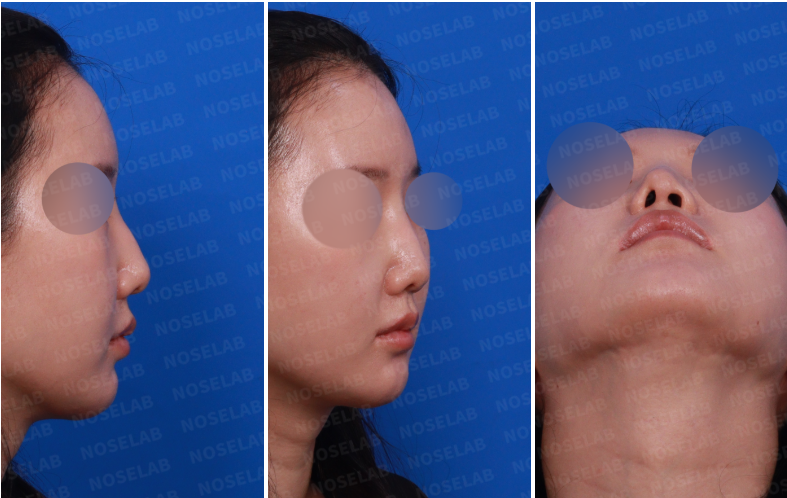
Congenital nostril asymmetry
Sagging nasal tip
Residual silicone shifted to right
Undissolved filler remaining in soft tissue
🟧 Aesthetic Goals for Nostril Asymmetry Correction
Improve uneven nostrils (highest priority)
Lift drooping tip without looking artificial
Preserve natural appearance
Avoid using autologous rib cartilage
🟦 Surgical Plan for Nostril Asymmetry Correction and Tip Elevation
🟧 Structural Reconstruction Strategy
Septal extension using donated rib and patient’s own septal cartilage
Hybrid method to reduce warping/resorption risk
Removal of all residual filler and silicone
Adjustment of nasolabial angle for better profile harmony
🟧 Aesthetic Refinement and Nostril Shape Balance
Correct nostril asymmetry within congenital anatomical limits
Subtle lifting of the nasal tip
Maintain soft contours and overall facial harmony
🟦 Postoperative Results of Nostril Asymmetry Correction

Frontal View – Natural Symmetry Achieved
Significantly improved nostril symmetry
Balanced nasal shape
Natural and familiar appearance preserved

Side View – Drooping Tip Lifted Naturally
Ideal nasolabial angle
Elevated but soft nasal tip projection
Smooth, rounded contour

Nostril View – Harmonized Asymmetry
Enhanced symmetry within anatomical limits
Stable, supportive nostril structure
No tension or distortion

🟦 Expert Commentary: Strategies for Effective Nostril Asymmetry Correction


This case demonstrates the complexity of correcting nostril asymmetry, especially when compounded by prior non-surgical procedures and congenital imbalance.
By combining donated rib cartilage with septal cartilage, we ensured a stable structure without using the patient’s own rib cartilage.
Careful tip projection and nasolabial angle adjustment allowed us to meet the patient’s desire for a natural look.
Even though full symmetry wasn’t anatomically possible, we achieved a visually pleasing, natural result that met both aesthetic and structural goals.
Thank you for reading.
This has been Dr. Cha-Young Kang from NOSELAB Clinic.

Read the author’s background and the original case context. About these articles
Source updated .


