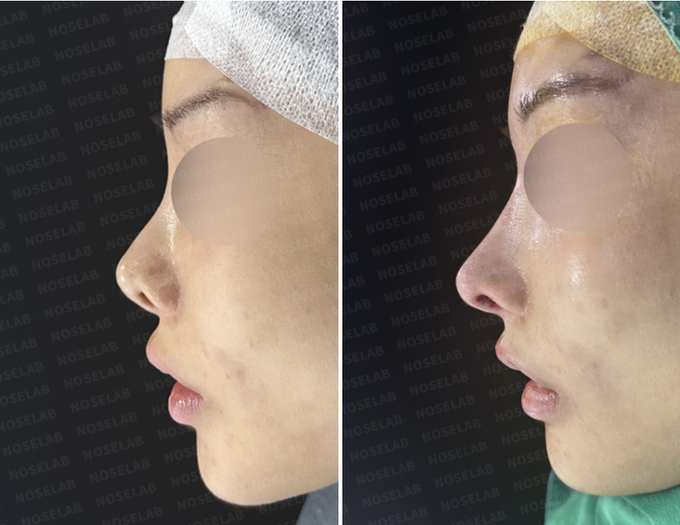
Case at a glance
- Previous treatment
- Surgical plan
- Graft & material details
- Residual silicone, mesh fragments, displaced cartilage grafts, and inflammatory tissue were removed. This step was necessary to reduce ongoing irritation and create a cleaner foundation for reconstruction.
- Rib cartilage was used to reconstruct the nasal tip and septal support. The goal was to rebuild a stable framework after previous implant-related inflammation and tissue damage.
- Photo timing
These details are excerpts from the original article and captions. Follow a detail to read it in context.
This case reviews residual foreign substance rhinoplasty in a patient with contracted nose deformity, chronic inflammation, nasal tip collapse, pain, and left nasal obstruction after multiple previous rhinoplasty procedures. Surgery focused on removing residual silicone, mesh, displaced cartilage grafts, and inflammatory tissue, followed by structural reconstruction using rib cartilage and functional airway correction.
Author: Dr. Cha-Young Kang
Clinic: NoseLab Clinic
Published: 2024
Last Updated: 2026
Introduction
Hello, this is Dr. Cha-Young Kang of NoseLab Clinic.
This case involves residual foreign substance rhinoplasty in a patient who developed inflammation, pain, nasal obstruction, and contracted nose deformity after several previous rhinoplasty procedures.
The surgery was performed using a closed rhinoplasty / endonasal approach. The goal was to remove residual foreign materials and inflammatory tissue, rebuild the damaged nasal framework, improve nasal tip support, correct nostril asymmetry, and restore functional airway stability.
Patient’s Surgical History
The patient had undergone several nasal surgeries involving silicone implants, ear cartilage, mesh, rib cartilage, dermis, and periosteum.
Previous Surgical History
The surgical history included:
2007: L-shaped silicone implant
2021: Silicone implant and ear cartilage, followed by inflammation
2023 November: Silicone implant, mesh, and “cat nose” surgery, followed by an upturned nose
2023 November: Silicone implant, rib cartilage, dermis, and periosteum, followed by inflammation and 16 PRP sessions
Despite multiple procedures, the patient continued to experience inflammation-related symptoms, nasal shape distortion, and functional obstruction.
Main Symptoms of Contracted Nose
The patient presented with both structural and functional problems. The main issue was not simply nasal shape dissatisfaction; residual foreign materials and chronic inflammatory tissue were contributing to pain, deformity, and obstruction.
Structural and Inflammatory Problems
The main structural and inflammatory problems included:
Contracted nose caused by chronic inflammation
Persistent swelling related to residual foreign materials
Nasal tip depression caused by an implant extending toward the tip
Pain and tenderness around the upper lip and columellar area
Left nasal obstruction related to mesh remnants and septal deviation
In this type of revision case, identifying and removing the source of inflammation is essential before reconstruction can be performed safely.

Preoperative Design and Analysis
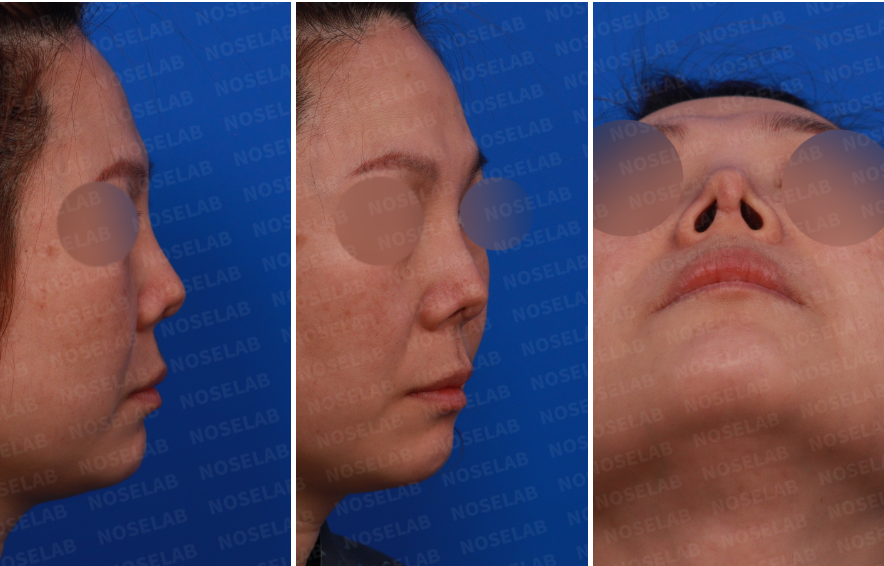
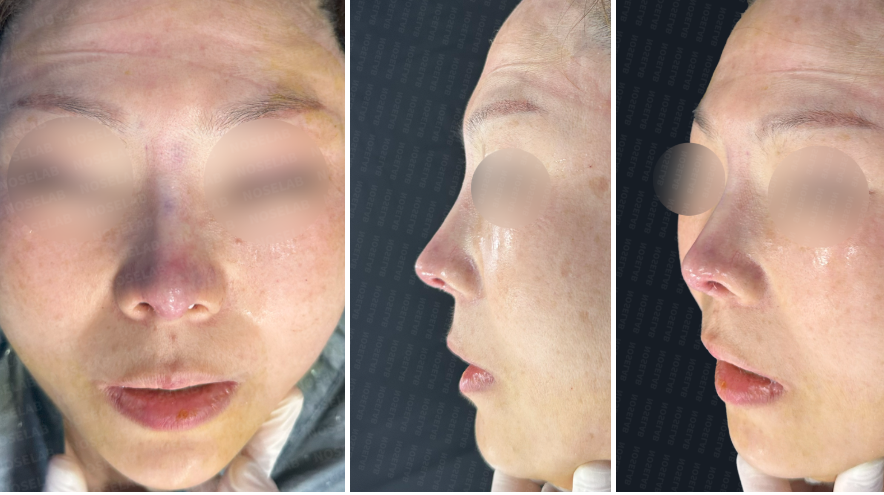
Preoperative design consultation photos were reviewed from the frontal, side, oblique, and nostril views.
Frontal View
The frontal view showed nostril retraction, pinched alar base shape, asymmetry, and a crooked nasal bridge.
Side View
The side view showed a high nasal starting point, short and collapsed nasal tip, and an excessive nasolabial angle.
Nasal Base View
The nasal base view showed asymmetrical nostrils, deviation of the columella, and retraction of the nasal base.
These findings confirmed that the patient required foreign material removal, contracture release, structural reconstruction, and functional airway correction.
Surgical Plan for Contracted Nose Correction
The surgical plan focused on removing residual foreign substances, treating inflamed tissue, rebuilding structural support, improving nasal coverage, and correcting functional obstruction.
Removal of Residual Foreign Substances
Residual silicone, mesh fragments, displaced cartilage grafts, and inflammatory tissue were removed. This step was necessary to reduce ongoing irritation and create a cleaner foundation for reconstruction.
Structural Reconstruction with Rib Cartilage
Rib cartilage was used to reconstruct the nasal tip and septal support. The goal was to rebuild a stable framework after previous implant-related inflammation and tissue damage.
Nostril Base Lowering and Nasolabial Angle Correction
Nostril base lowering and nasolabial angle correction were planned to improve the retracted and upturned appearance of the nasal base.
Skin Grafting and Soft Tissue Coverage
A postauricular skin graft was used to repair contracted tissue and improve soft tissue coverage. This helped protect the reconstructed framework in an area affected by previous inflammation and contraction.
Functional Airway Correction
Septoplasty was performed to correct septal deviation. Submucosal resection with high-frequency laser turbinate reduction was also performed to improve nasal airflow.
Intraoperative Findings
During surgery, several residual materials and inflammatory changes were identified. These findings explained the patient’s persistent symptoms and structural deformity.
Silicone Implant Malposition
The silicone implant extended toward the nasal tip and was located just beneath the depressed skin. This position contributed to tissue thinning, inflammation, and nasal tip depression.
Residual Mesh in the Septal Mucosa
Mesh remnants were found within the septal mucosa and were removed. These remnants were associated with left nasal obstruction and local inflammatory reaction.

Displaced Rib Cartilage Grafts
Rib cartilage grafts from a previous “cat nose” surgery were found to be tilted and misaligned toward the right side. This displacement was associated with pain below the right columella, so the problematic graft was removed.
Chronic Inflammatory Tissue
Chronic reactive tissue was identified and removed. This was important because persistent inflammatory tissue can contribute to swelling, pain, and recurrent contracture.
Septal Damage
The septum showed major structural absence and deviation. Rib cartilage was used to reconstruct the damaged septal support.
Postoperative Outcomes After Contracted Nose Correction

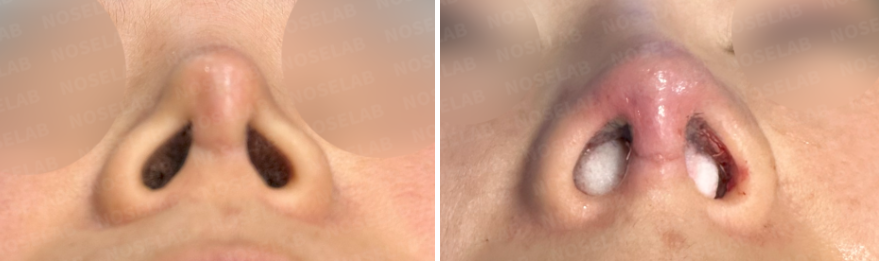
Frontal View
From the frontal view, nostril retraction was reduced, alar base asymmetry improved, and the nasal bridge appeared more balanced.

Side View
From the side view, the nasal starting point appeared lower, the nasal tip gained more stable support, and the nasolabial angle became more balanced.

Nasal Base View
From the nasal base view, nostril symmetry improved, the columella became more centered, and the nostril shape appeared more balanced.
Functional Outcome
Left nasal obstruction improved after mesh removal, septal correction, and turbinate reduction. Functional improvement was addressed together with structural reconstruction.
Specialist Considerations in Residual Foreign Substance Rhinoplasty
This case shows the importance of identifying and removing residual foreign substances during complex contracted nose correction. When silicone, mesh, displaced cartilage, or inflammatory tissue remains, symptoms may continue even after revision surgery.
Residual Silicone and Mesh
Residual silicone and mesh fragments were removed to reduce ongoing inflammation and obstruction. In this case, the mesh was found within the septal mucosa and was related to internal nasal symptoms.
Rib Cartilage Reconstruction
Rib cartilage provided structural support after the damaged septum and nasal tip were reconstructed. Stable support was necessary because the original framework had been weakened by previous procedures and inflammation.
Skin Grafting
Postauricular skin grafting was used to improve tissue coverage in contracted areas. This helped reinforce the soft tissue envelope over the reconstructed nasal framework.
Recovery and Maintenance
Postoperative care focused on controlling inflammation, supporting tissue recovery, and monitoring structural stability.
The recovery plan included:
Antibiotic treatment to control inflammation
Regenerative treatment to support tissue healing and reduce scar-related problems
Continuous monitoring of nasal structure, airway function, and soft tissue condition
In complex revision cases with foreign material reaction and inflammation, postoperative monitoring is important because healing may be less predictable than in primary rhinoplasty.
Surgeon’s Commentary
This was a complex revision rhinoplasty case involving contracted nose deformity, residual foreign substances, chronic inflammation, nasal tip depression, pain, and functional obstruction.
The most important step was identifying and removing the actual sources of irritation. In this case, silicone implant malposition, residual mesh in the septal mucosa, displaced cartilage grafts, and chronic inflammatory tissue all contributed to the patient’s symptoms.
After removal, the nose required structural rebuilding. Rib cartilage was used to reconstruct septal and tip support, while skin grafting helped improve soft tissue coverage in contracted areas.
This case demonstrates that contracted nose correction with residual foreign materials should be approached as a combined removal, reconstruction, and functional airway surgery. The goal is not only to change the external shape, but also to address the internal causes of inflammation, pain, obstruction, and instability.
FAQ
Why can residual foreign substances cause problems after rhinoplasty?
Residual foreign substances such as silicone, mesh, or displaced graft material can irritate surrounding tissue. They may contribute to inflammation, swelling, pain, obstruction, or recurrent contracture.
How is residual foreign substance rhinoplasty different from standard revision rhinoplasty?
Residual foreign substance rhinoplasty requires careful identification and removal of remaining materials before reconstruction. The surgery often includes scar tissue management, structural rebuilding, and functional airway correction.
Why was rib cartilage used after removing silicone and mesh?
Rib cartilage was used because the nasal septum and tip support were severely damaged. It provided the structural strength needed to rebuild the framework after foreign material removal.
Can nasal obstruction improve after foreign material removal?
Nasal obstruction can improve when mesh remnants, septal deviation, turbinate enlargement, or scar-related narrowing are corrected. The degree of improvement depends on the internal nasal findings.
International Consultation
For international patients, a photo-based consultation may help clarify whether residual foreign substance removal, contracted nose correction, rib cartilage reconstruction, or functional airway correction may be needed.

Read the author’s background and the original case context. About these articles
Source updated .