Case at a glance
- Previous treatment
- Surgical plan
- Graft & material details
- Photo timing
These details are excerpts from the original article and captions. Follow a detail to read it in context.
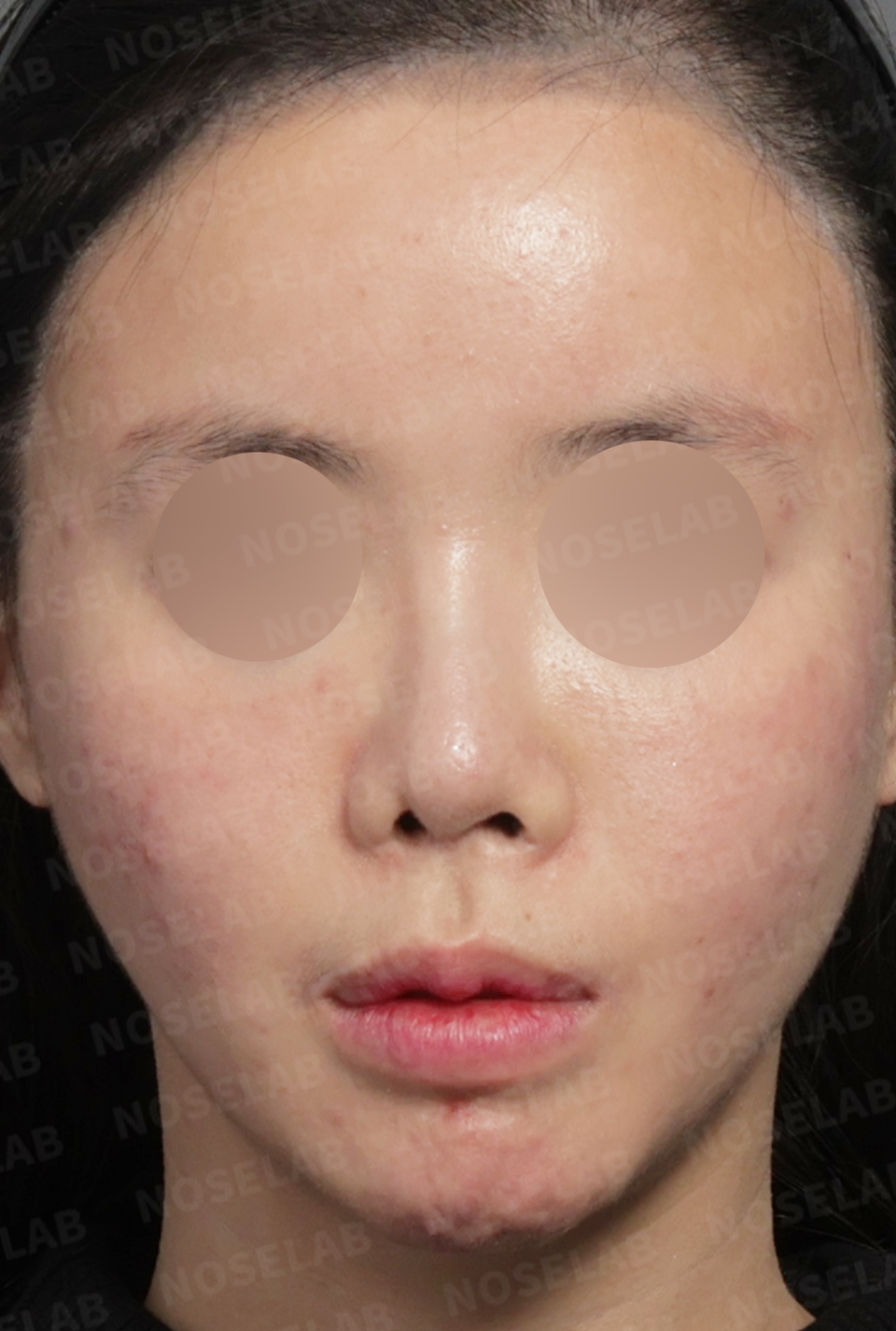
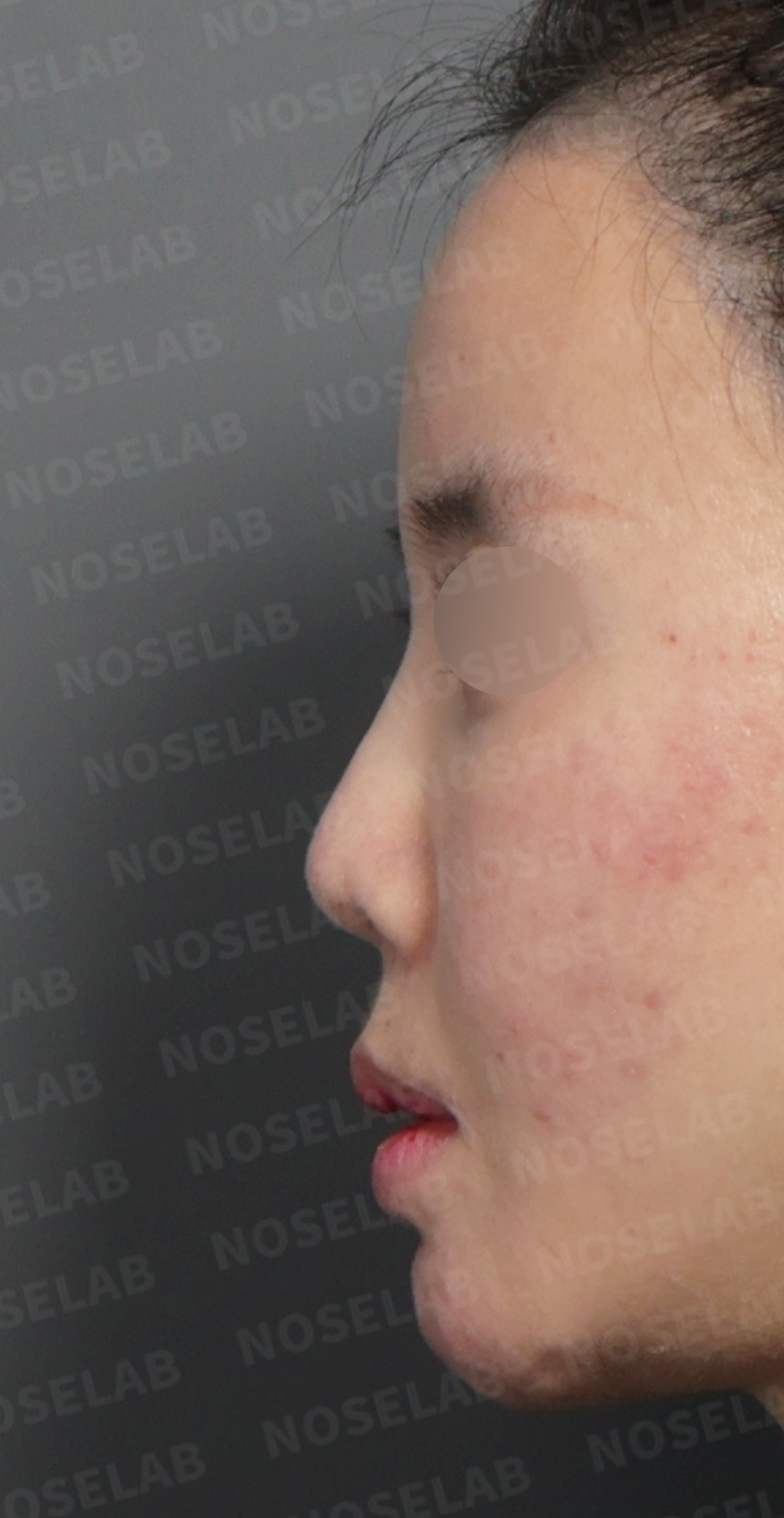
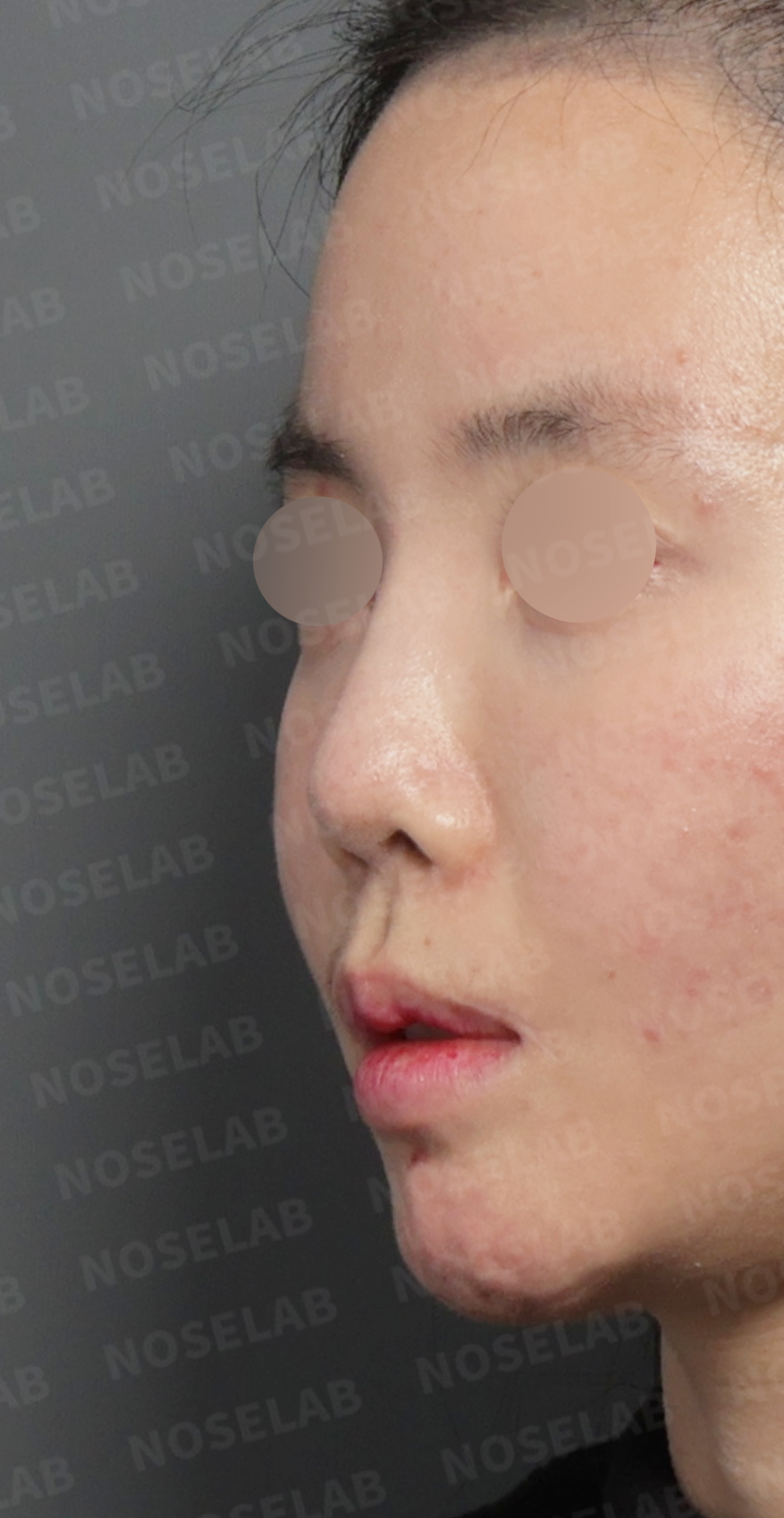
Hello, I am Dr. Peter C. Kang, Medical Director of NOSELAB Clinic. Today, I would like to share a revision case that combined correction of an upturned tip and a crooked nose with enlargement of a narrowed nostril after multiple previous nasal operations.
Surgical History
The patient had an extensive and complex surgical history:
Nasal filler treatment, followed by filler dissolution and nasal surgery.
Double-jaw surgery and subsequent removal of fixation plates and screws.
Several revision rhinoplasties involving silicone implants, ear cartilage, donor rib cartilage, and autologous rib cartilage.
Rib cartilage harvest and a nostril-lowering procedure at another clinic. The patient reported that nasal height began to decrease one month later and that a refund was provided.
Alar base reduction, although the exact timing was unclear.
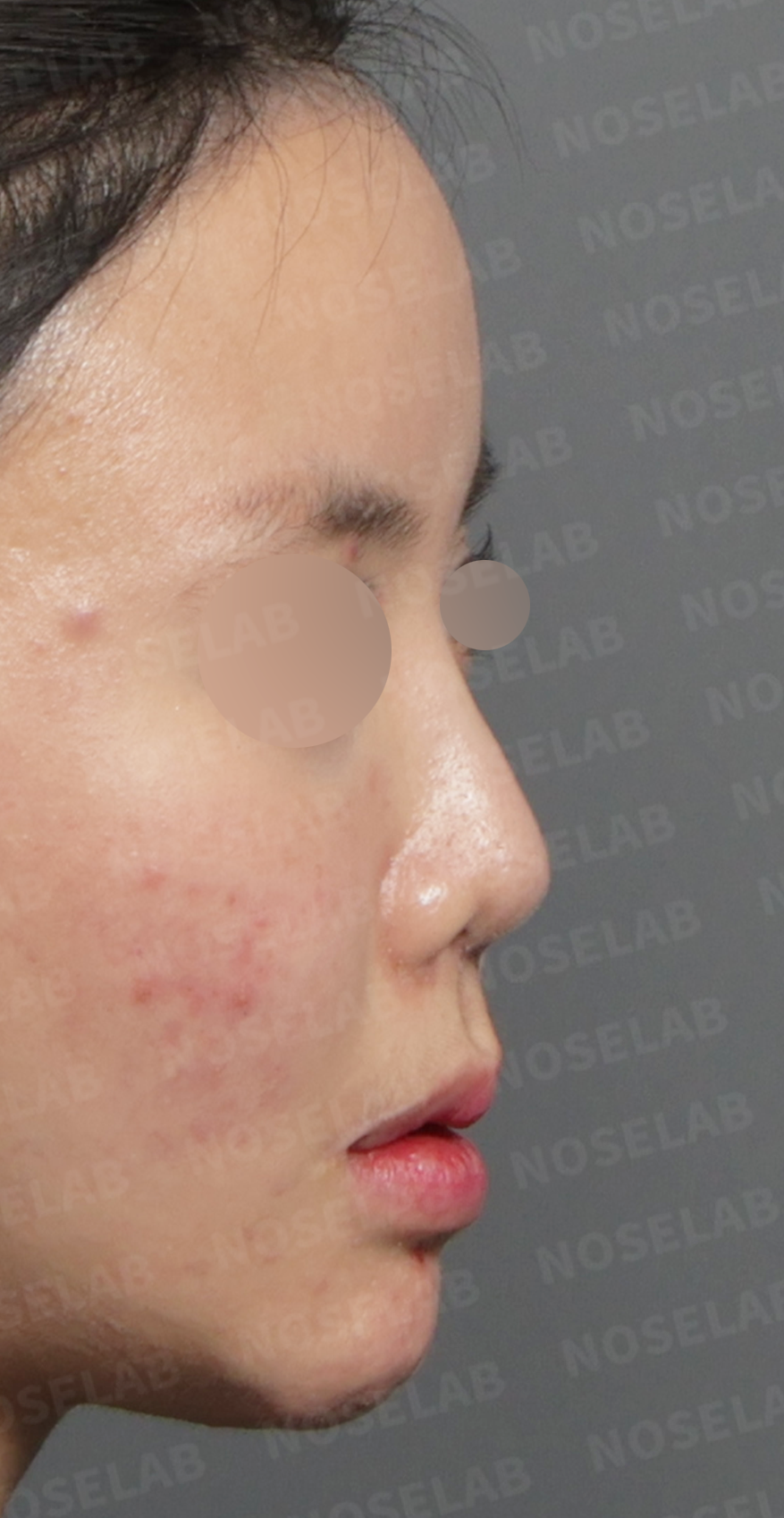
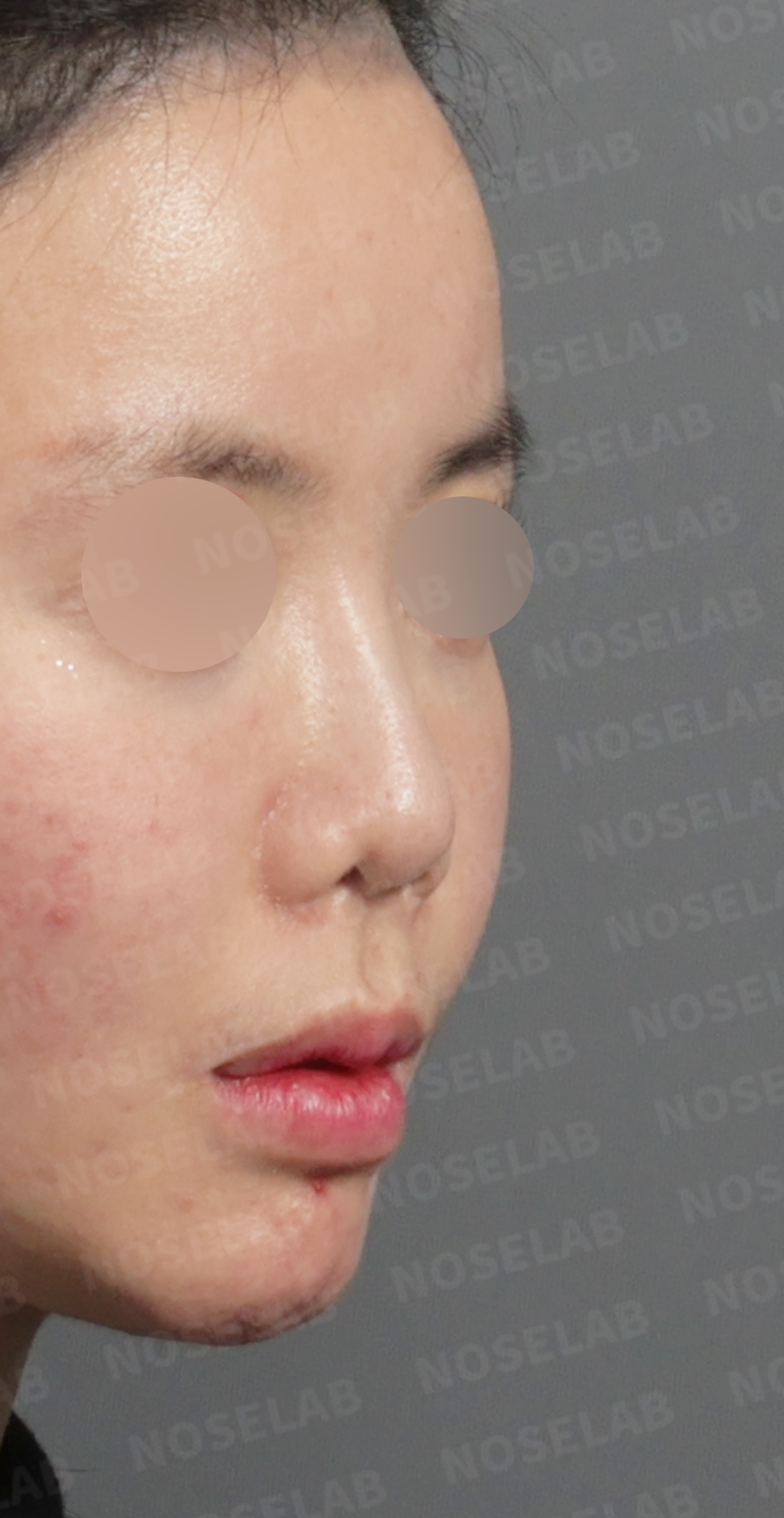
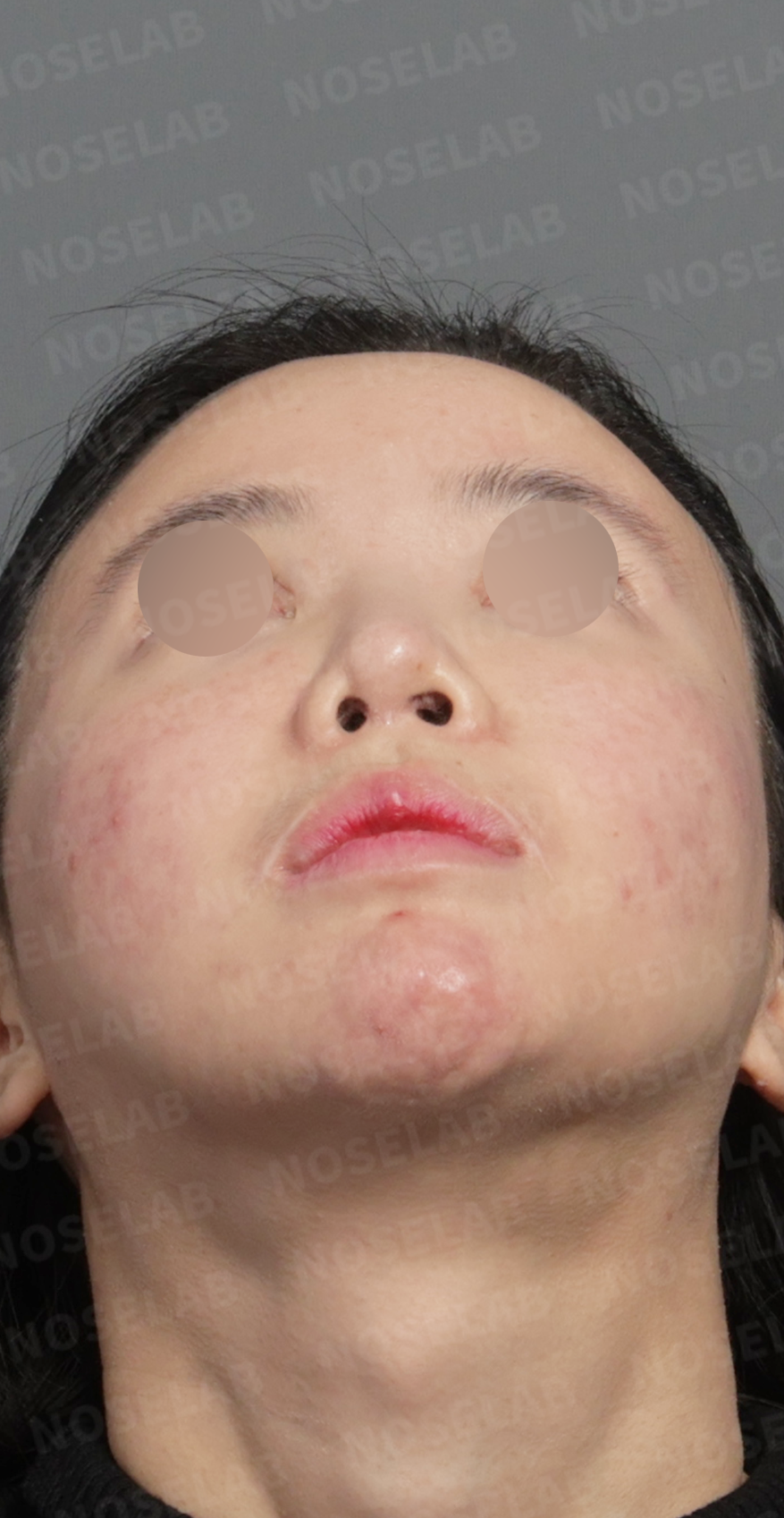
The Patient's Goals
Improve the upturned tip.
Reduce visible nostril show.
Straighten the crooked nose.
Create a more defined, refined nasal contour.
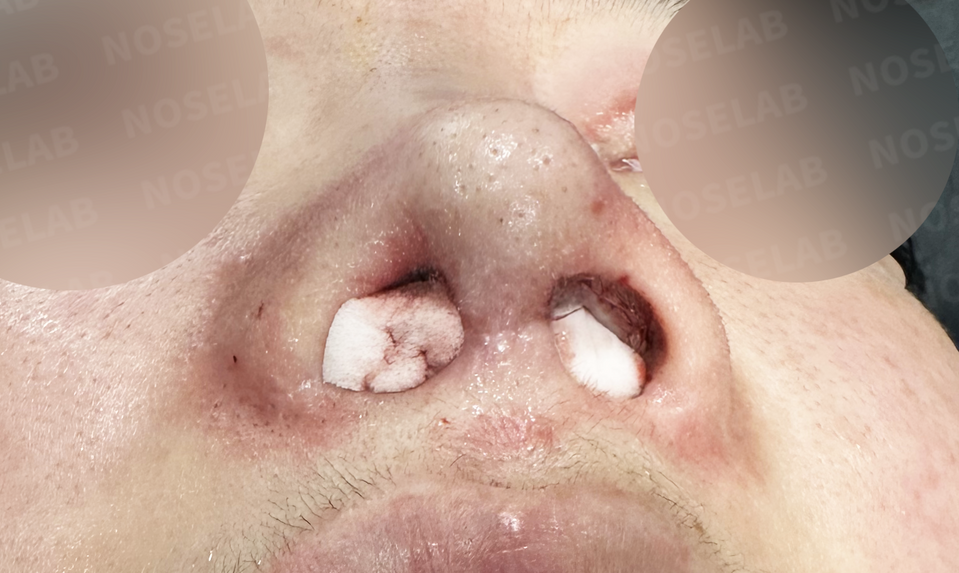
The right nostril was substantially narrowed following extensive alar base reduction and a lip-lift procedure. We explained the limitations imposed by the available skin and planned the greatest feasible improvement within those tissue limits.
Surgical Plan and Procedure
1. Rib cartilage harvest and septal reconstruction
Multiple nasal operations and double-jaw surgery had left a significant deficiency in the front portion of the septal cartilage. Newly harvested autologous rib cartilage was used to reconstruct the septum and rebuild the structural foundation of the nose.
2. Z-plasty to enlarge the right nostril
The right nostril had become markedly narrowed after alar base reduction and lip shortening. Z-plasty was used to enlarge the opening as much as the tissues would allow and improve the balance between the nostrils.
3. Tip correction and adjustment of the nasolabial angle
The upturned tip was lowered and the angle between the nose and upper lip adjusted to create the defined contour the patient wanted.
4. Custom silicone implant replacement
The existing silicone implant was removed. A new implant was carefully carved to fit the shape of the nasal bones before placement.
5. Septoplasty and turbinate surgery
Septoplasty and turbinate reduction were performed together to address nasal obstruction and symptoms associated with turbinate enlargement and nasal inflammation.
Surgical Results
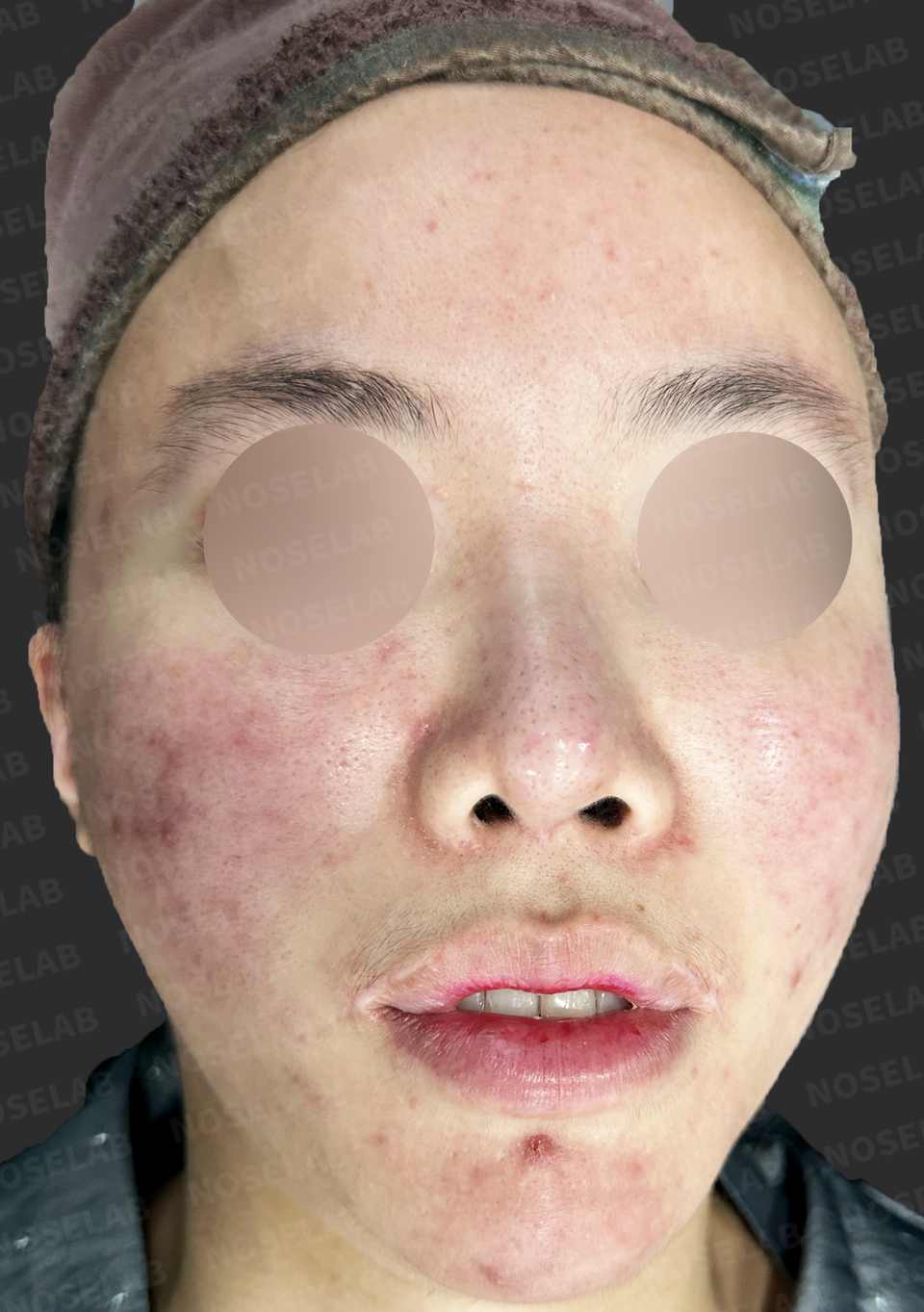
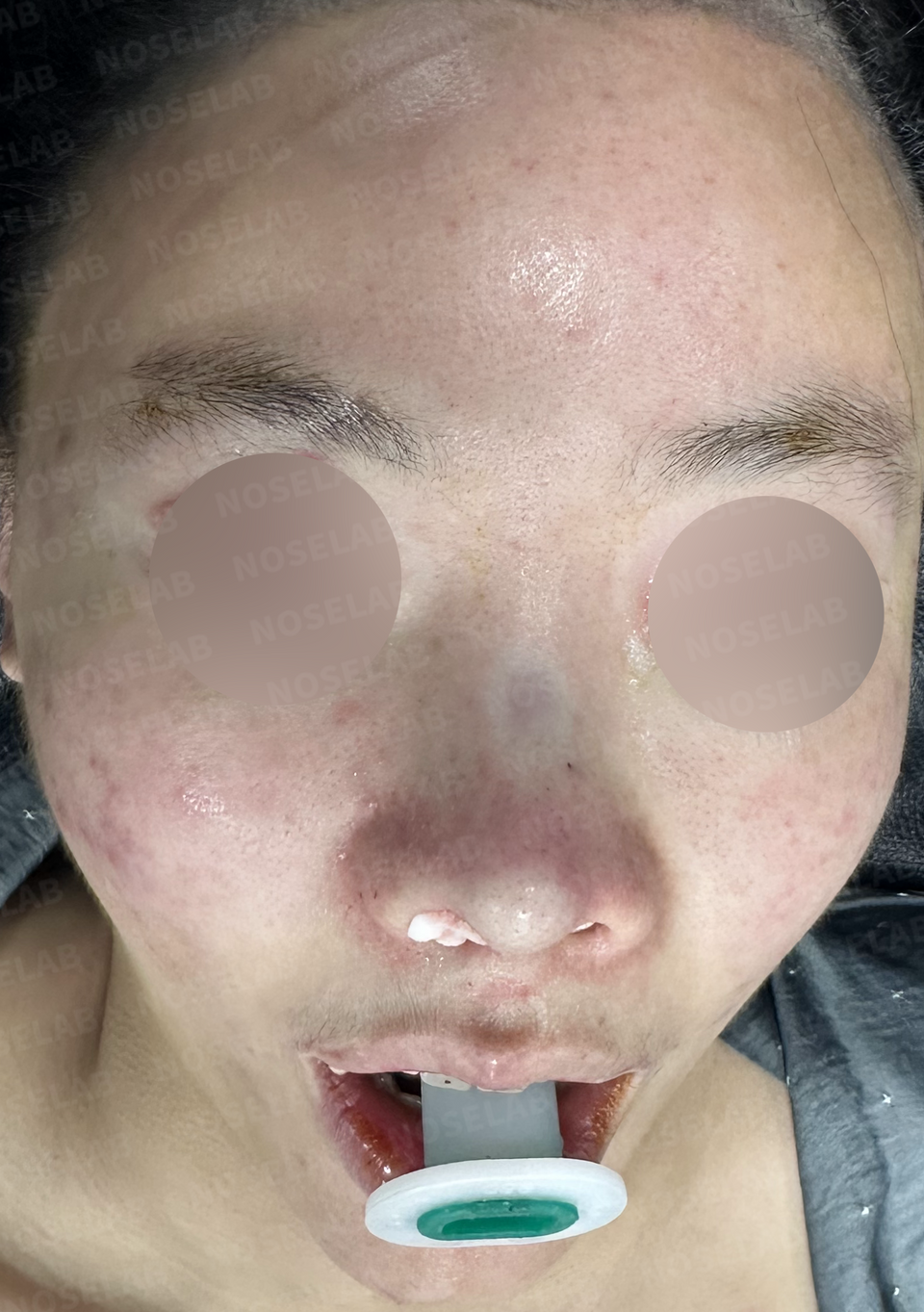
Frontal view
Straightening the nose substantially improved frontal symmetry.
Enlargement of the right nostril improved the balance between the two openings.
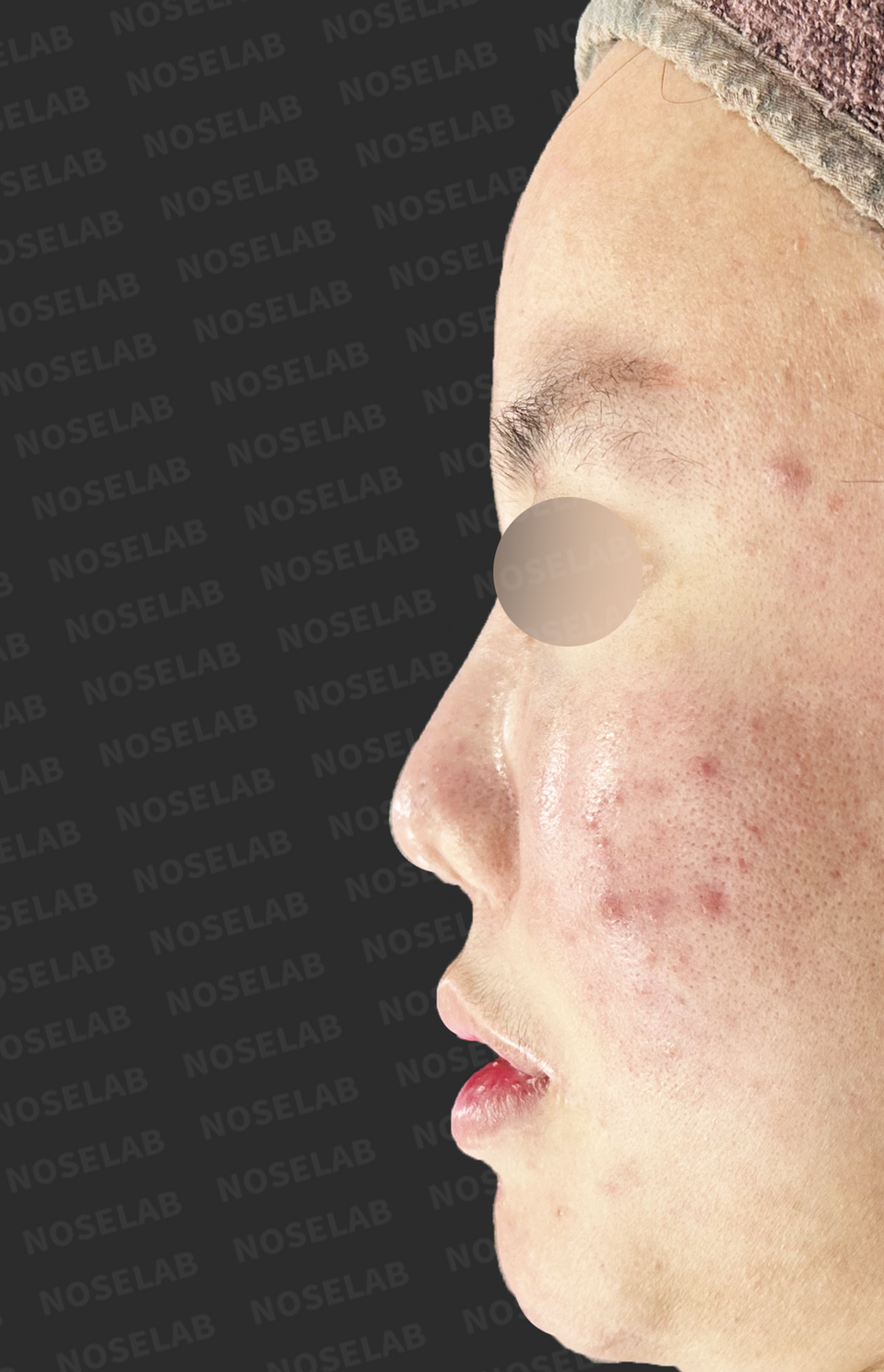
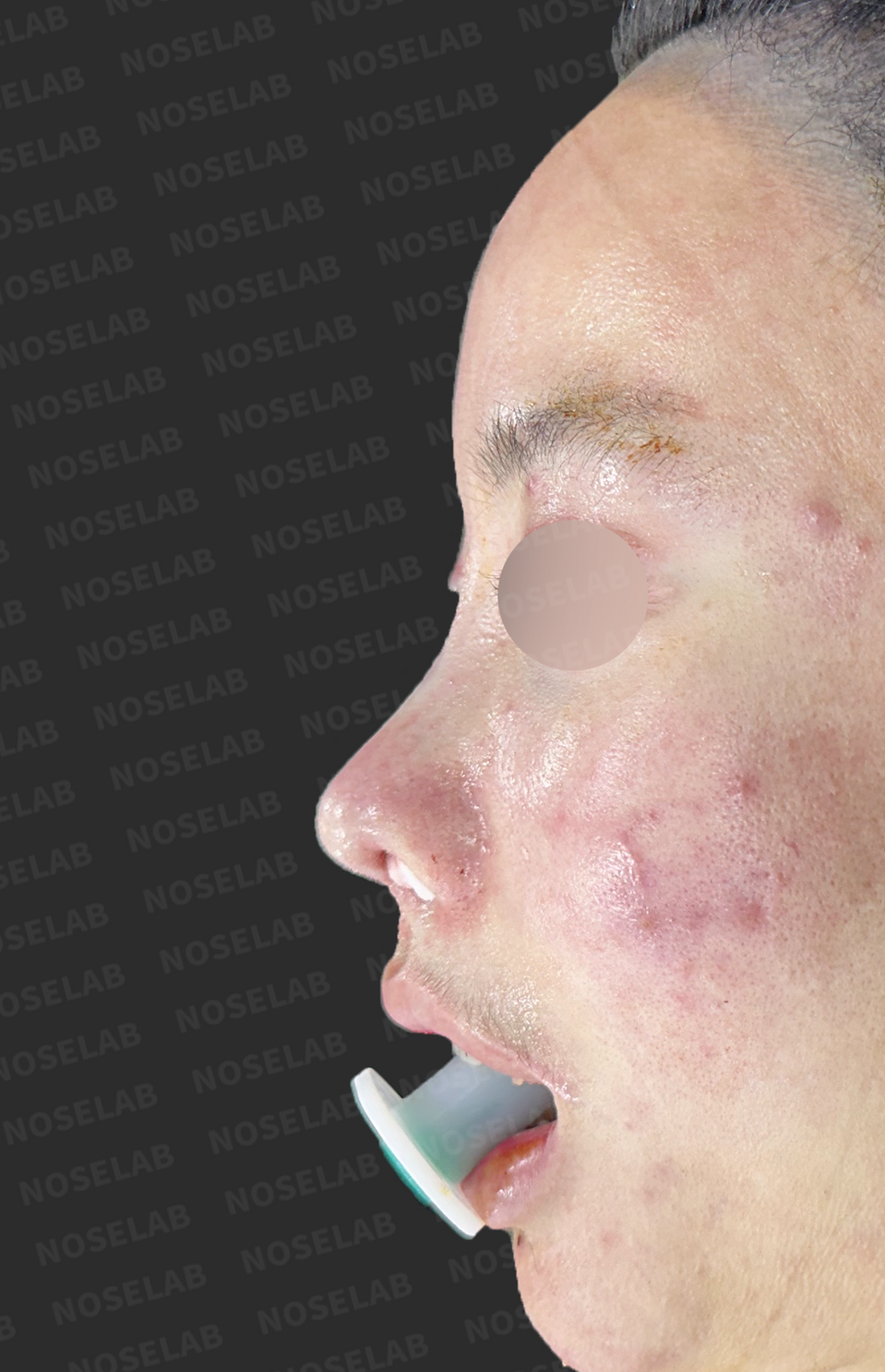
Profile view
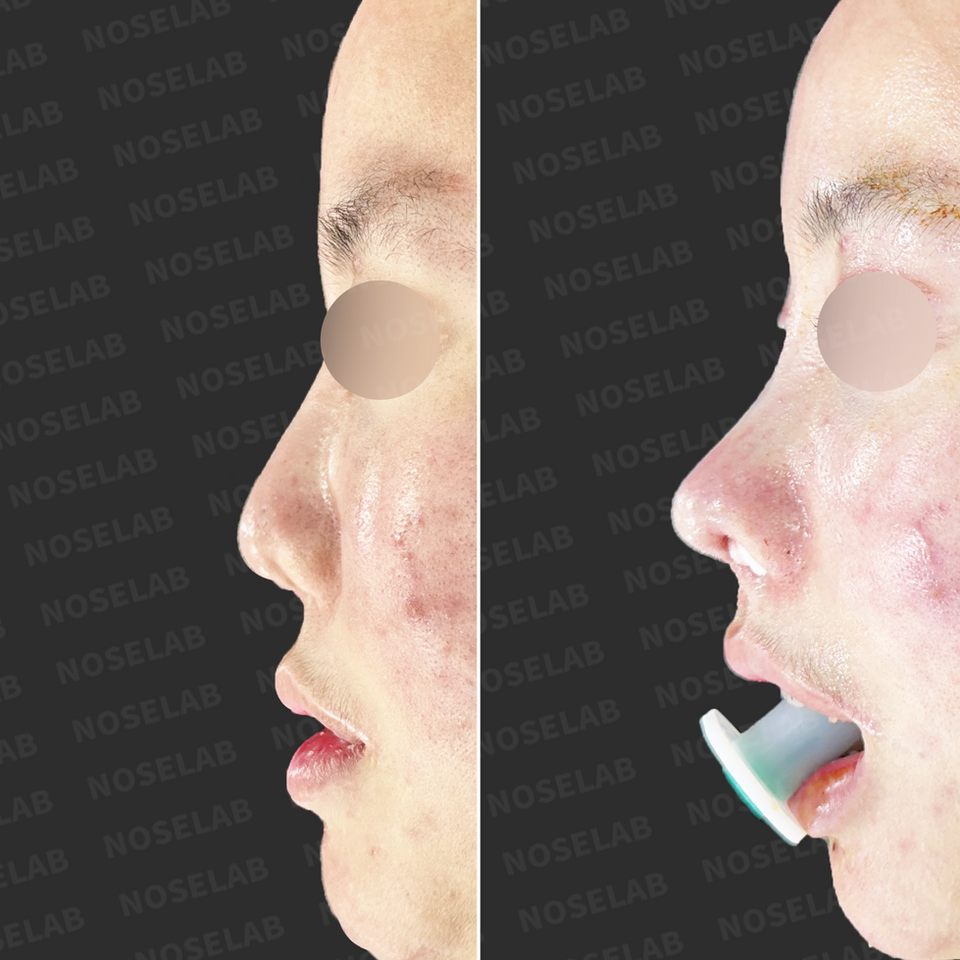
The upturned tip and nasolabial angle became more natural.
A more defined profile was achieved within the limits of the skin and soft tissues.
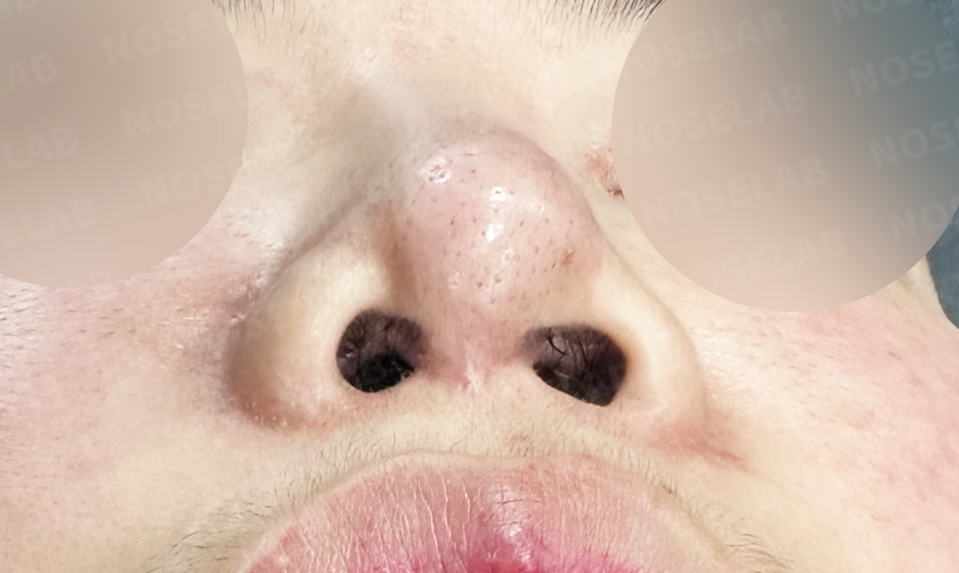
Nostril changes
Z-plasty enlarged the excessively narrowed right nostril.
Reduced nostril show from the front is expected to improve the overall appearance.
Surgeon's Perspective
The central challenge was to restore structural damage from repeated revision procedures while accommodating the patient's aesthetic goals within safe tissue limits.
With so much septal cartilage missing, reconstruction using autologous rib cartilage was an essential step in rebuilding the nose's foundation. Z-plasty was appropriate for this case because it allowed expansion of the narrowed nostril while limiting additional scarring.
We plan to reassess the nose after at least six months, once the septal reconstruction has stabilized. Additional adjustment of nasal height can be considered if needed.
Thank you for reading. I am Dr. Peter C. Kang, Medical Director of NOSELAB Clinic.
Information About These Photographs and Surgical Risks
These before-and-after photographs show an individual patient's results. Discuss your expected outcome with your doctor.
All surgery carries a risk of complications, including the following:
Infection: Disinfection and injectable or oral antibiotics are used to help prevent infection. In rare cases (less than 0.5%), another operation may be required.
Bleeding: Nasal packing is used for one to two days to help minimize bleeding. Bleeding may occasionally occur after surgery for nasal inflammation or obstruction.
Allergic reactions.
Residual asymmetry: Facial asymmetry and the condition of the nose may prevent complete correction, as explained during consultation.
Insufficient cosmetic or functional improvement.
Other complications, including excessive scar formation and skin necrosis.
Read the author’s background and the original case context. About these articles


