Case at a glance
- Concerns & goals
- Previous treatment
- Surgical plan
- Septal reconstruction with autologous rib cartilage: The existing septal cartilage was too thin and damaged to use on its own.
- Restoring tip volume and refining cartilage beneath thin skin: Rib cartilage was used to restore areas with insufficient tip volume.
- Nasolabial angle correction: We adjusted the upturned tip and the angle between the nose and upper lip to create a more natural relationship.
- Graft & material details
- Photo timing
These details are excerpts from the original article and captions. Follow a detail to read it in context.
Hello, I am Dr. Peter C. Kang, Medical Director of NOSELAB Clinic. Today, I would like to share the case of a patient who came to NOSELAB after longstanding concerns about an upturned tip, uneven nostrils, a crooked nose, and thin nasal skin.


Surgical History
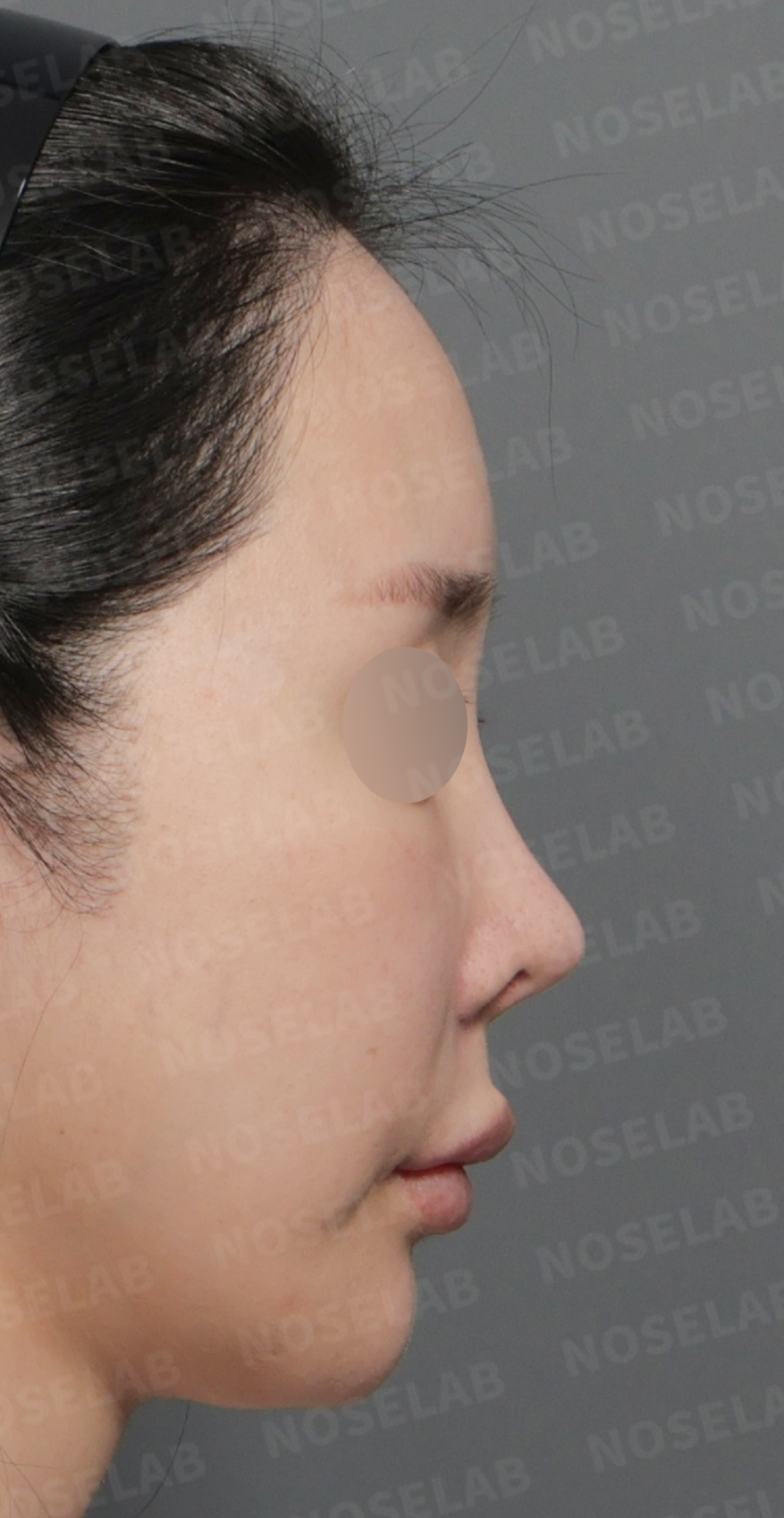
The patient had undergone rhinoplasty previously. Persistent tip upturn, nostril asymmetry, and nasal deviation led the patient to consider revision surgery. During surgery, we found that the septal cartilage was extremely thin and severely damaged. The remaining cartilage alone could not provide stable structural support.


The Patient's Goals
Lower the upturned tip to a natural position.
Improve the balance between the two nostrils.
Straighten the overall nasal contour.
Address visible cartilage contours beneath thin nasal skin.
Surgical Plan and Procedure
Septal reconstruction with autologous rib cartilage: The existing septal cartilage was too thin and damaged to use on its own. We harvested the patient's own rib cartilage and rebuilt the septum, establishing a stable foundation for the nose.
Restoring tip volume and refining cartilage beneath thin skin: Rib cartilage was used to restore areas with insufficient tip volume. We also carefully thinned and shaped the cartilage to reinforce the contour while reducing the risk of visible edges beneath the thin skin.
Nasolabial angle correction: We adjusted the upturned tip and the angle between the nose and upper lip to create a more natural relationship.
Skin grafting: During closure, we identified a shortage of skin at the right nasal ala. Skin harvested locally from the same alar region was grafted into the deficient area, helping correct the asymmetry associated with inadequate skin coverage.
Silicone implant replacement: The existing silicone implant was removed and replaced to give the bridge a natural increase in height.
Surgical Results
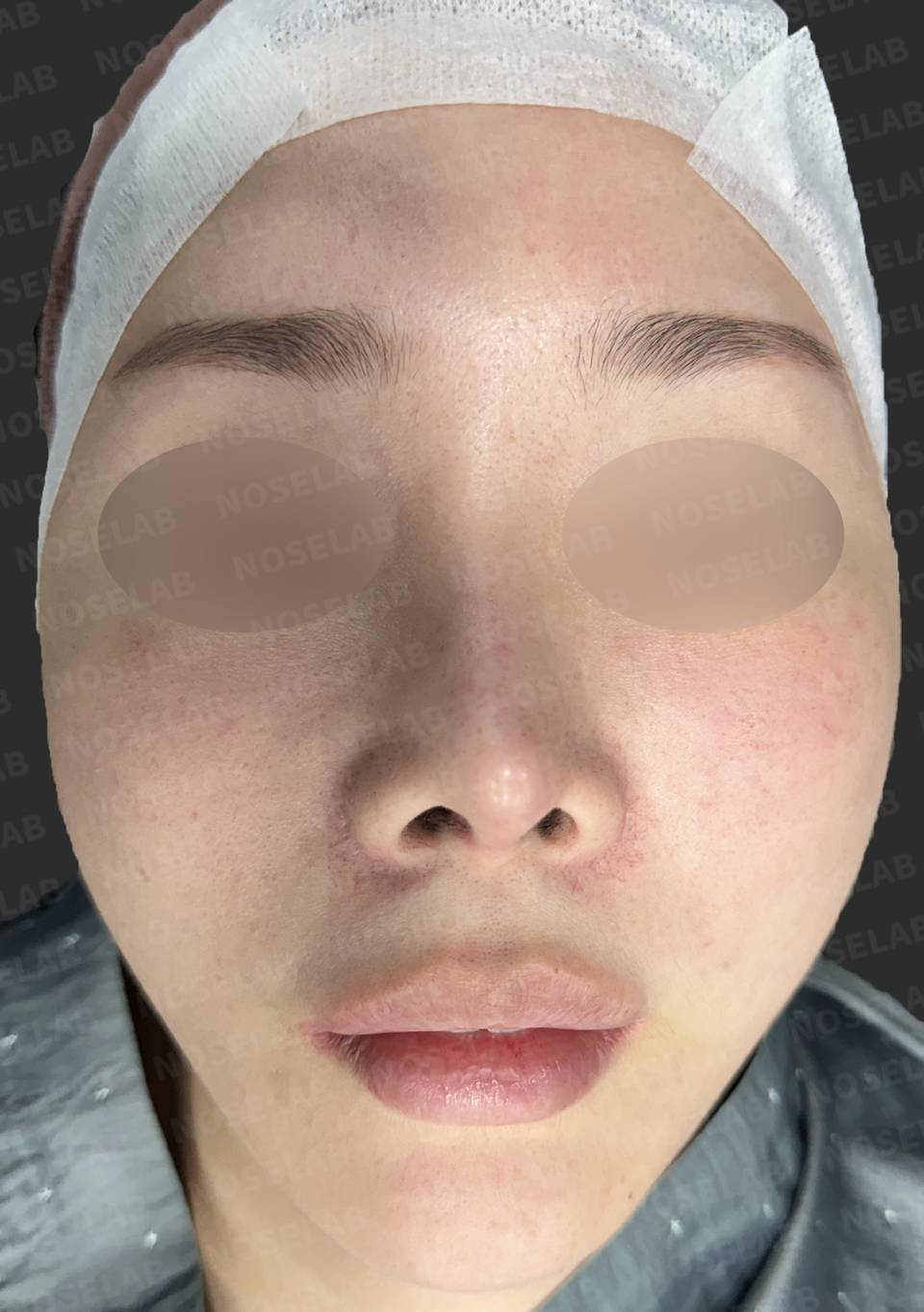

Frontal view
The shape and size of the nostrils became more balanced.
Correction of the deviation created a straighter overall nasal contour.
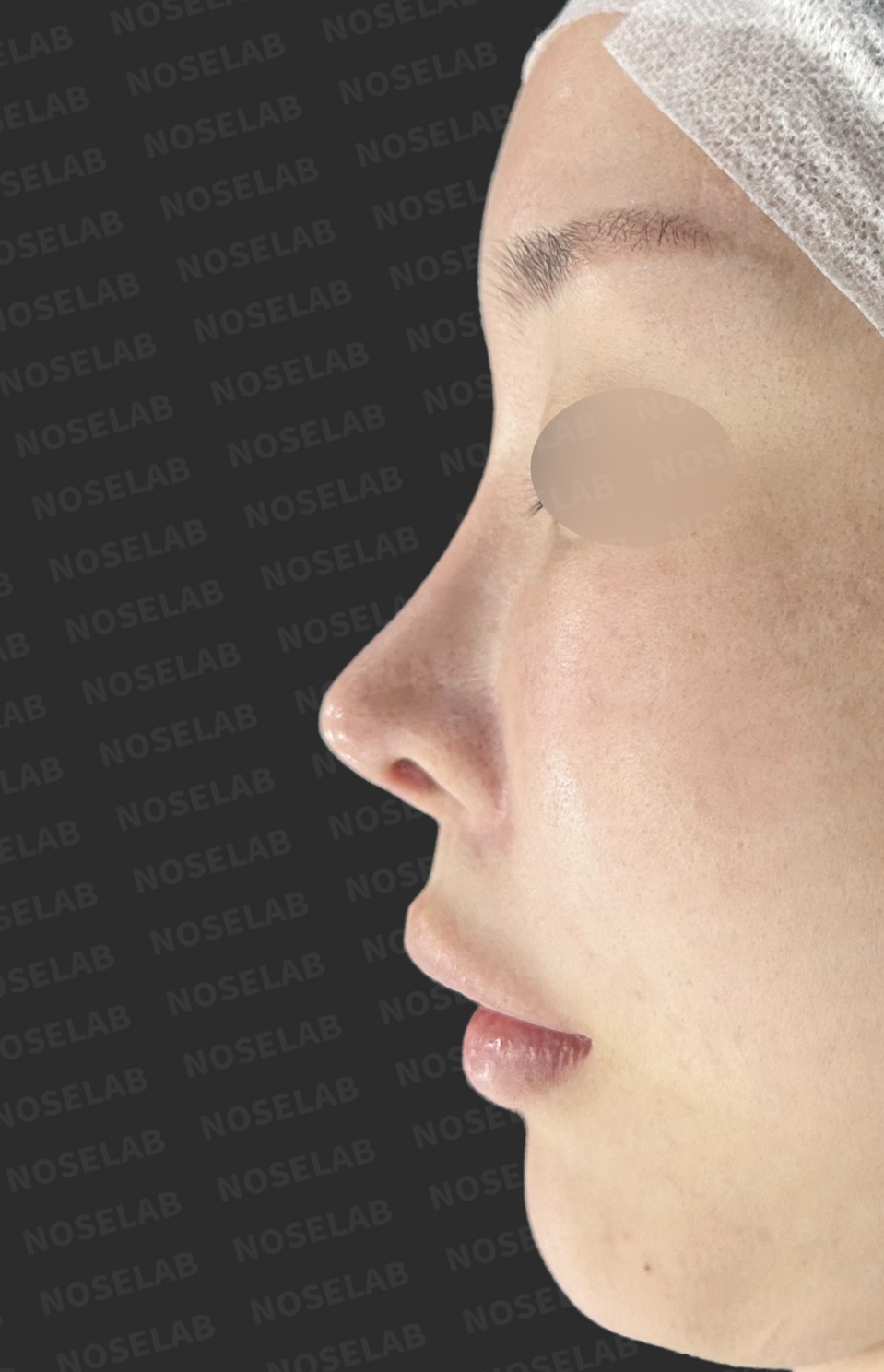

Profile view
The upturned tip was lowered to a more natural angle, producing a softer profile.
The replacement implant provided a natural increase in bridge height.


Overall appearance
Careful cartilage refinement and reinforcement improved the visibility of cartilage through the thin skin.
Skin grafting provided sufficient coverage for stable closure around the nostril and improved overall balance.
Surgeon's Perspective
The severe damage to the septal cartilage made this a case that could not be managed by routine contour adjustment alone. Reconstructing the septum with the patient's own rib cartilage was essential to restoring structural stability throughout the nose.
An unexpected skin shortage also became apparent during surgery and was addressed with skin grafting. Revision surgery requires the flexibility to respond to findings that arise during the operation, and that principle guided our approach in this case.
Thank you for reading. I am Dr. Peter C. Kang, Medical Director of NOSELAB Clinic.
Information About These Photographs and Surgical Risks
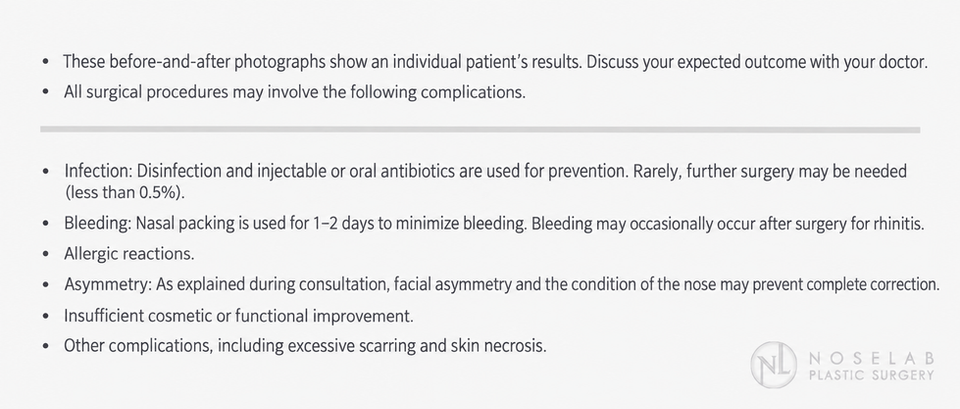
These before-and-after photographs show an individual patient's results. Discuss your expected outcome with your doctor.
All surgery carries a risk of complications, including the following:
Infection: Disinfection and injectable or oral antibiotics are used to help prevent infection. In rare cases (less than 0.5%), another operation may be required.
Bleeding: Nasal packing is used for one to two days to help minimize bleeding. Bleeding may occasionally occur after surgery for nasal inflammation or obstruction.
Allergic reactions.
Residual asymmetry: Facial asymmetry and the condition of the nose may prevent complete correction, as explained during consultation.
Insufficient cosmetic or functional improvement.
Other complications, including excessive scar formation and skin necrosis.

Read the author’s background and the original case context. About these articles


