Case at a glance
- Concerns & goals
- Previous treatment
- Surgical plan
- Graft & material details
- Photo timing
These details are excerpts from the original article and captions. Follow a detail to read it in context.
Hello, I am Dr. Peter C. Kang, Medical Director of NOSELAB Clinic.
Today, I would like to share the case of a patient who had been concerned for many years about an upturned nose and a low bridge after double-jaw surgery 16 years earlier.
Surgical History
Double-jaw surgery approximately 16 years earlier.
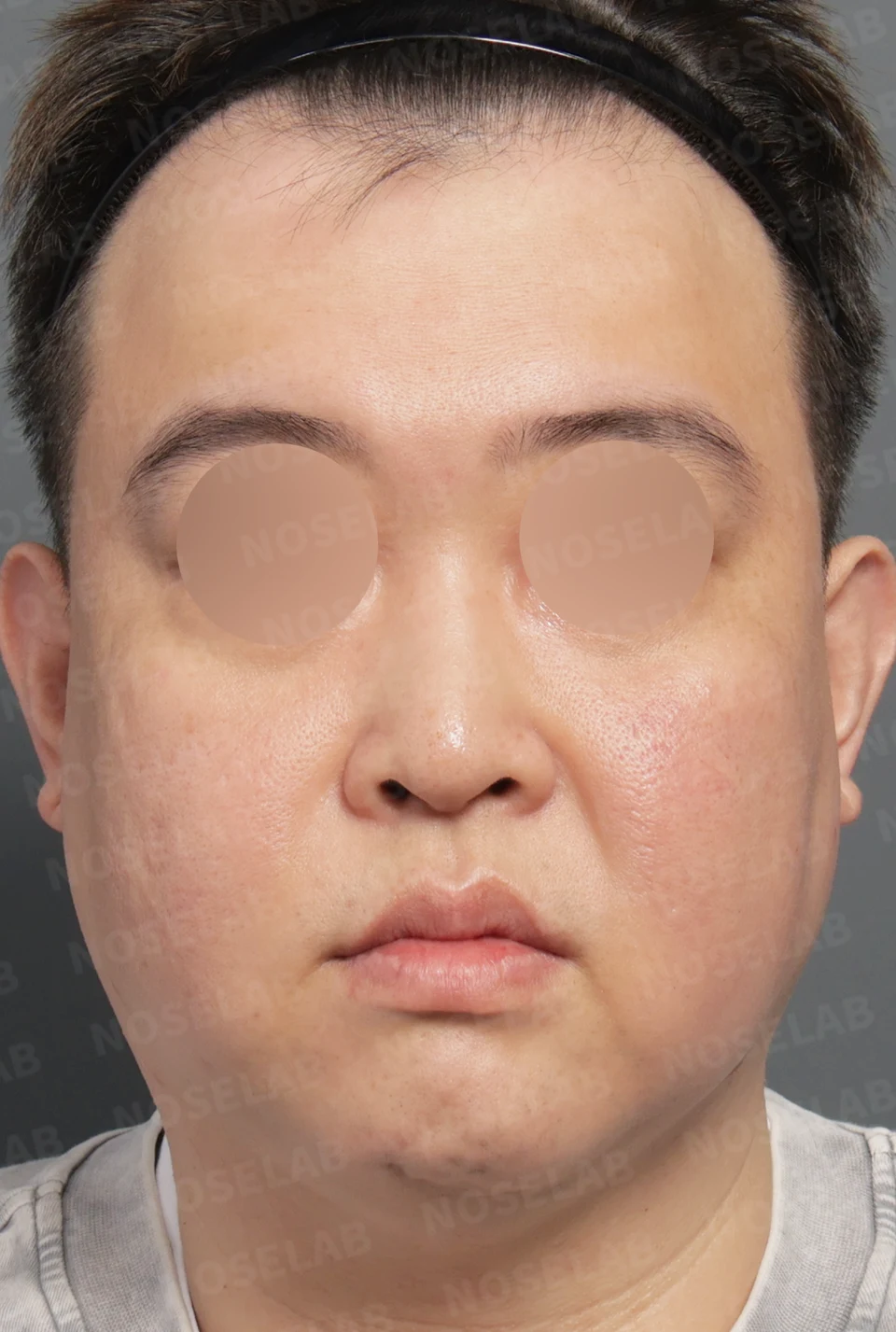
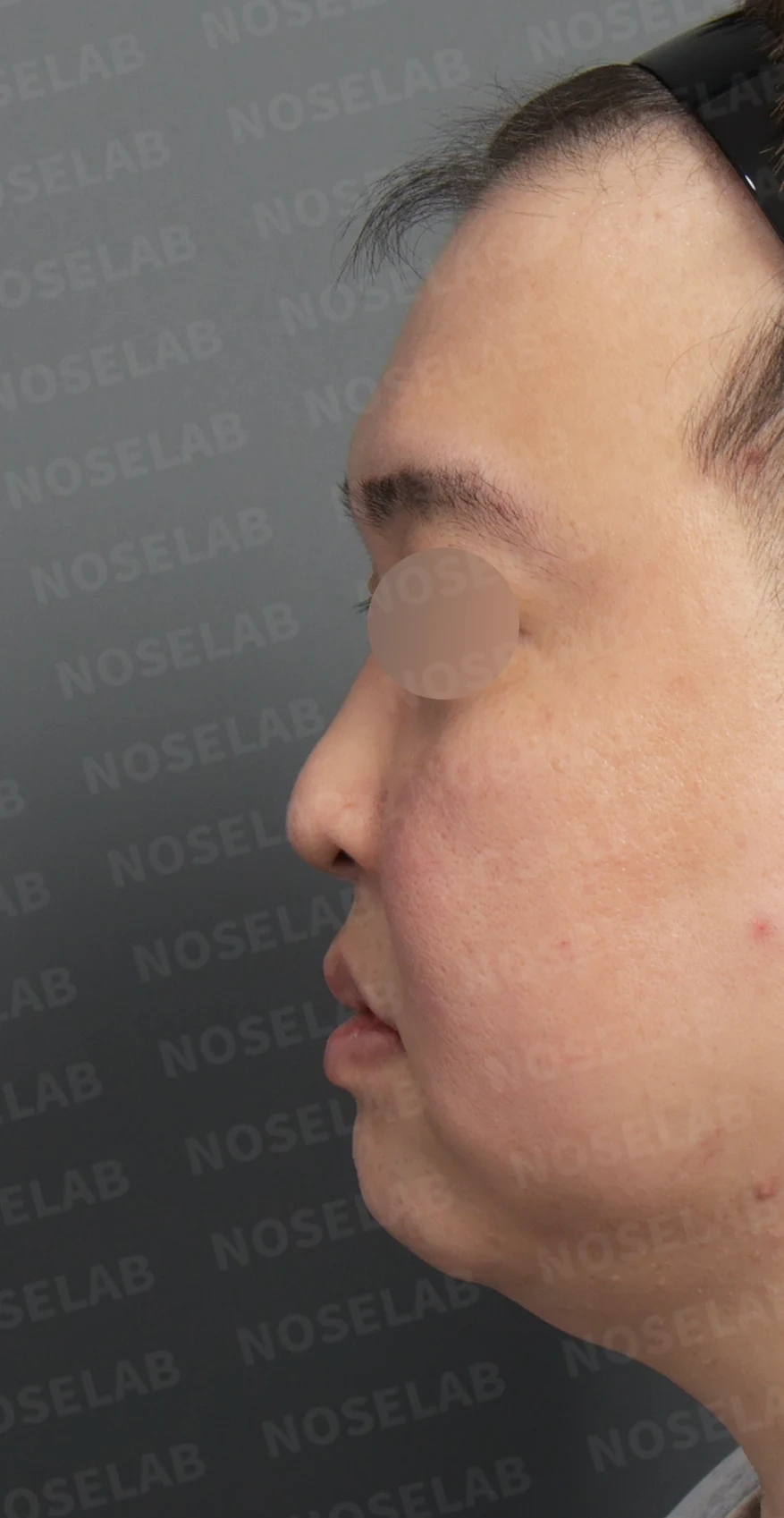
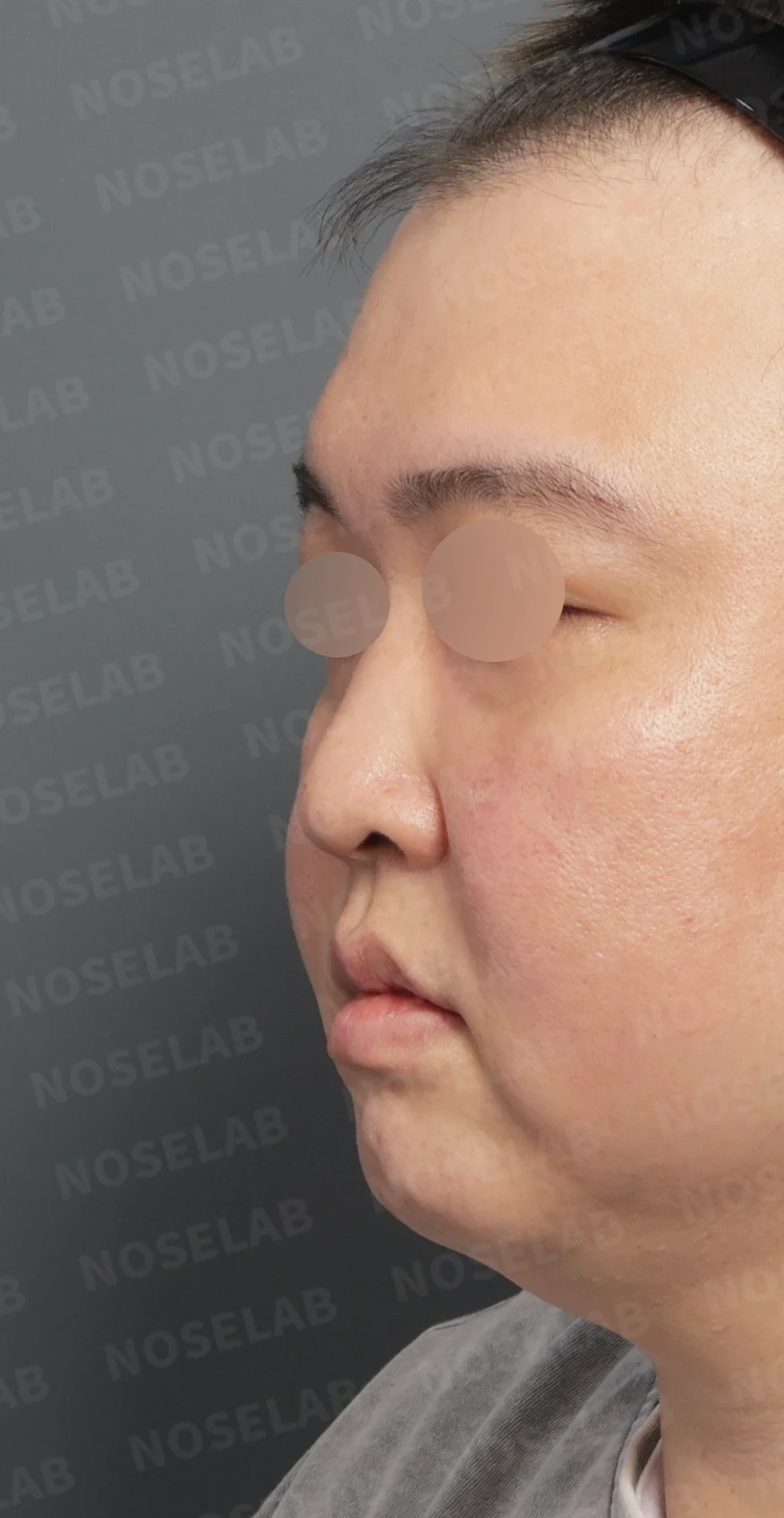
Preoperative design consultation: frontal, left profile, and oblique views.
The Patient's Goals
Correct the upturned nose and low bridge.
Create a straight nasal contour from the front.
Reduce nostril show.
Define the columella, the tissue between the nostrils.
Improve obstruction on both sides of the nose.
Achieve a natural result using the patient's own rib cartilage.
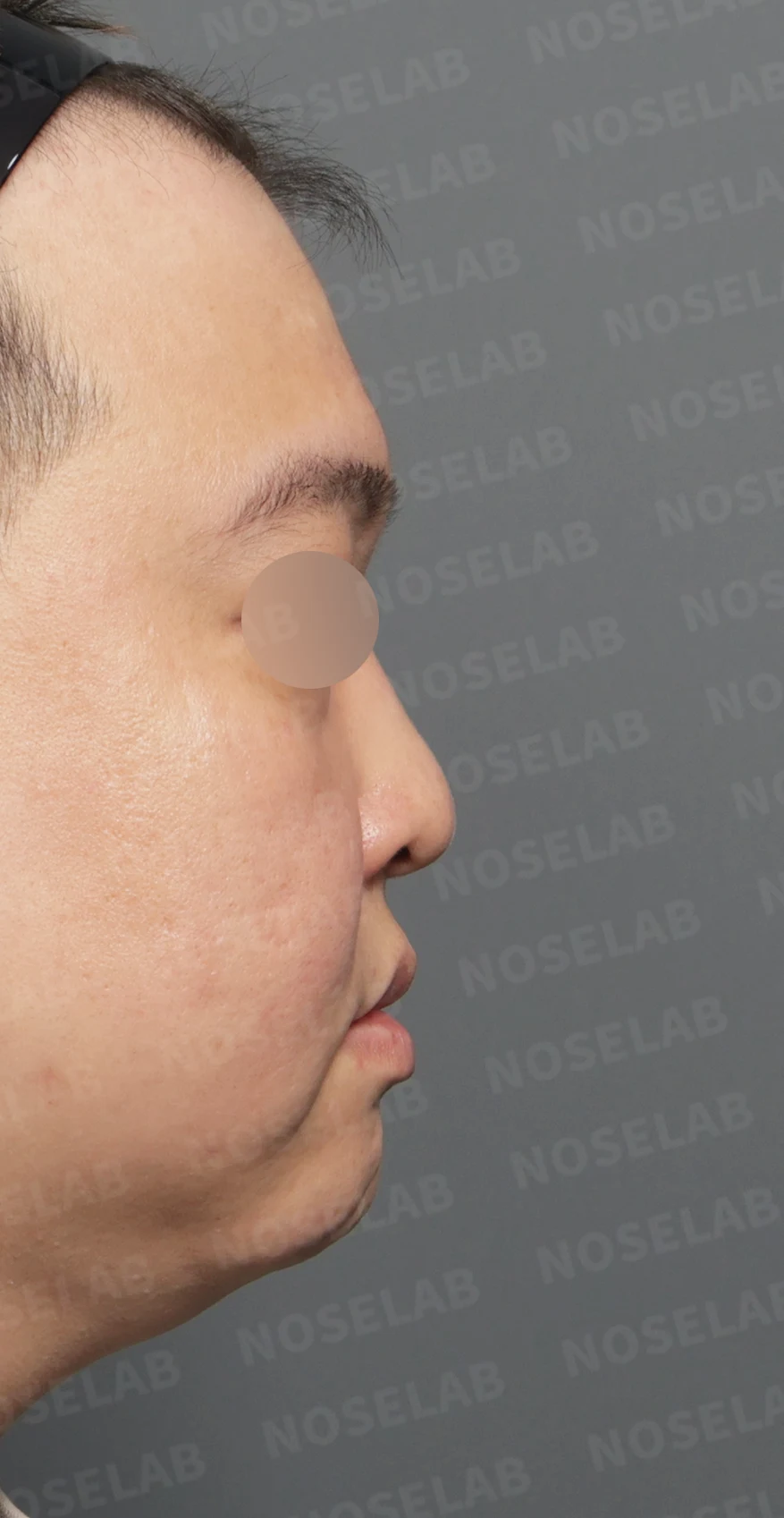
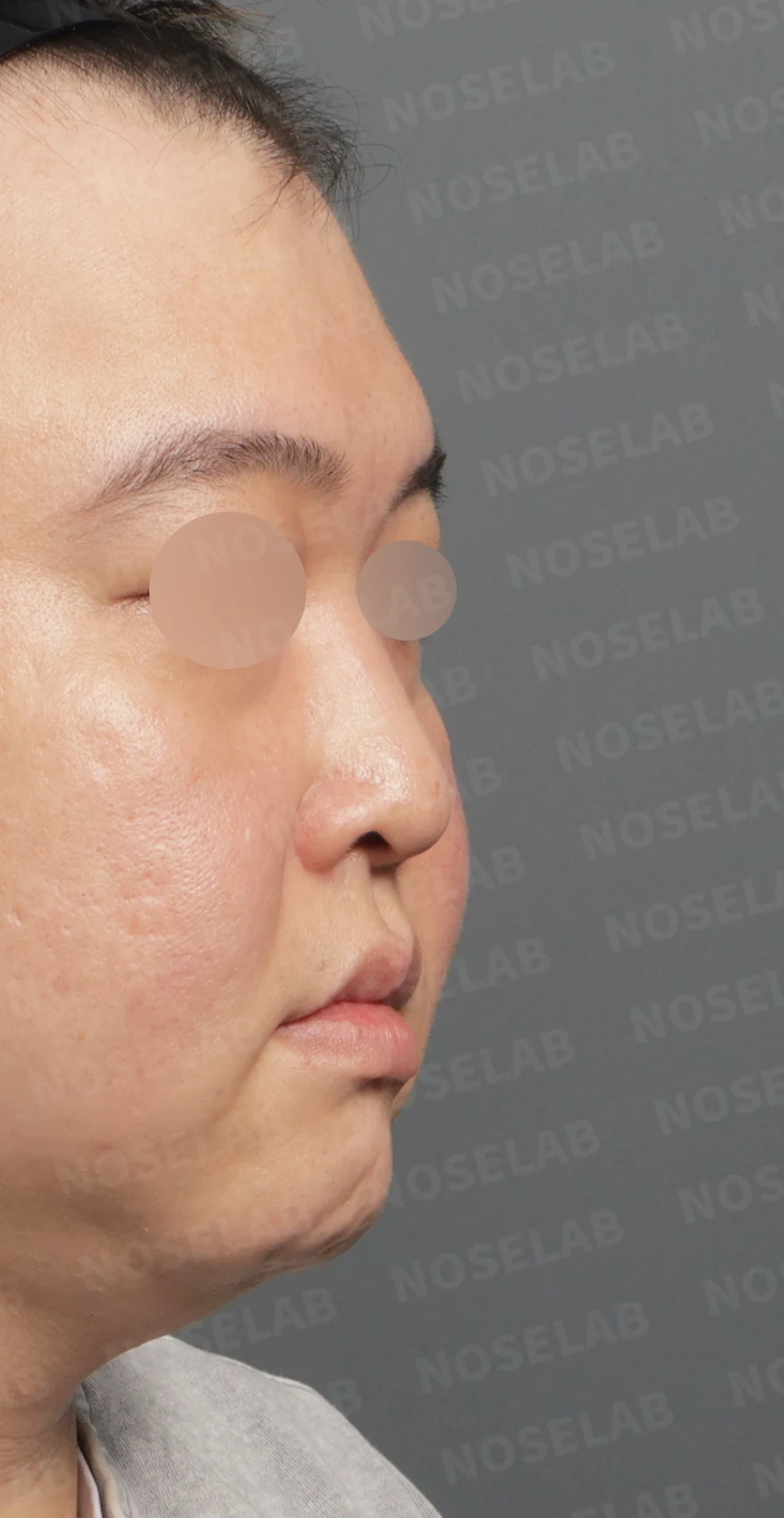
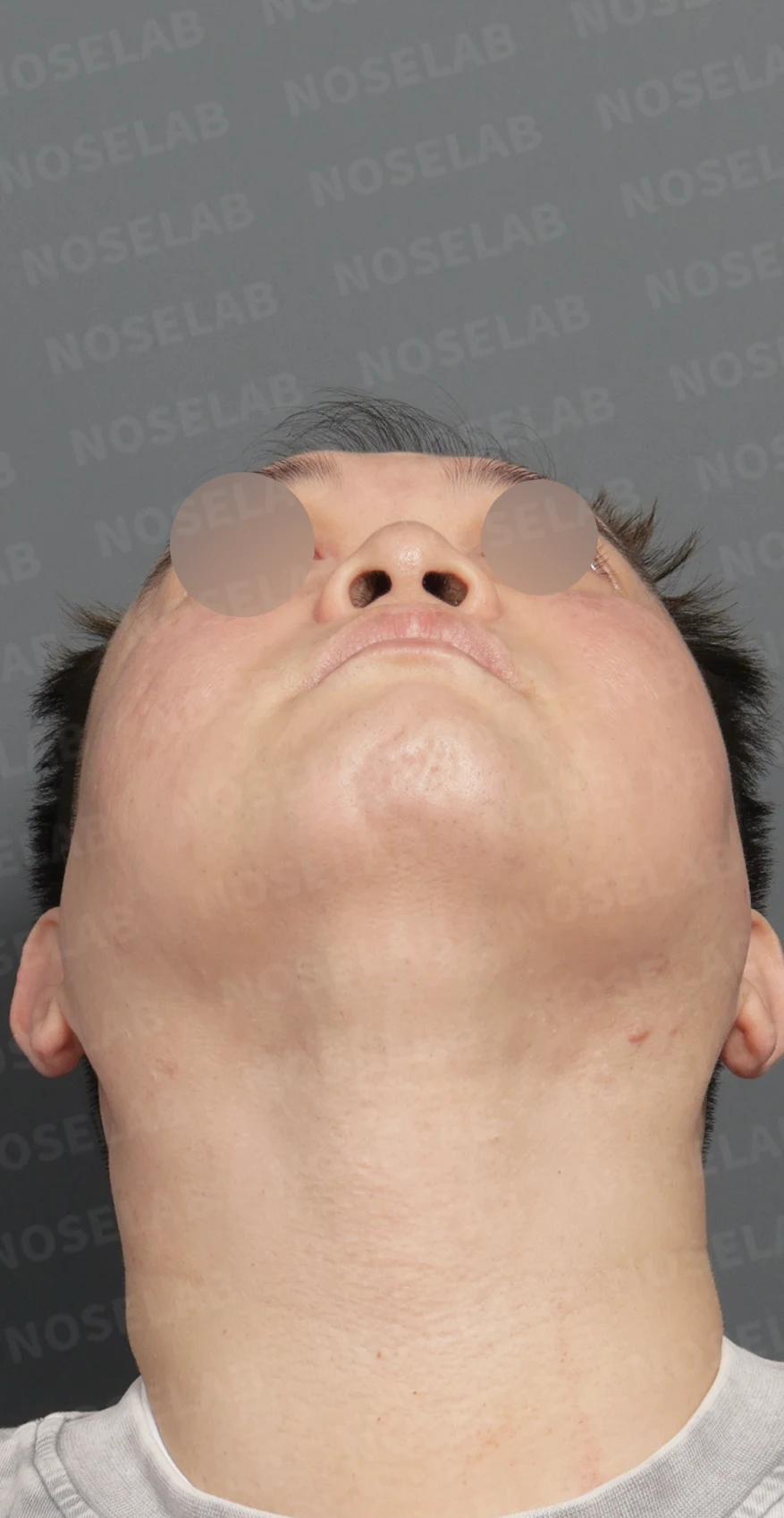
Preoperative design consultation: right oblique, profile, and nostril views.
Surgical Plan and Procedure
During surgery, we found that the lower third of the septal cartilage had already been removed. This appeared to be related to the double-jaw operation 16 years earlier. The remaining septal cartilage was no longer firmly attached to the upper jaw, leaving the tip with very weak support.
Septal reconstruction with autologous rib cartilage
Correction of the upturned nose
Repositioning and suturing the alar cartilages
Bridge augmentation with a silicone implant
Septoplasty and turbinate surgery
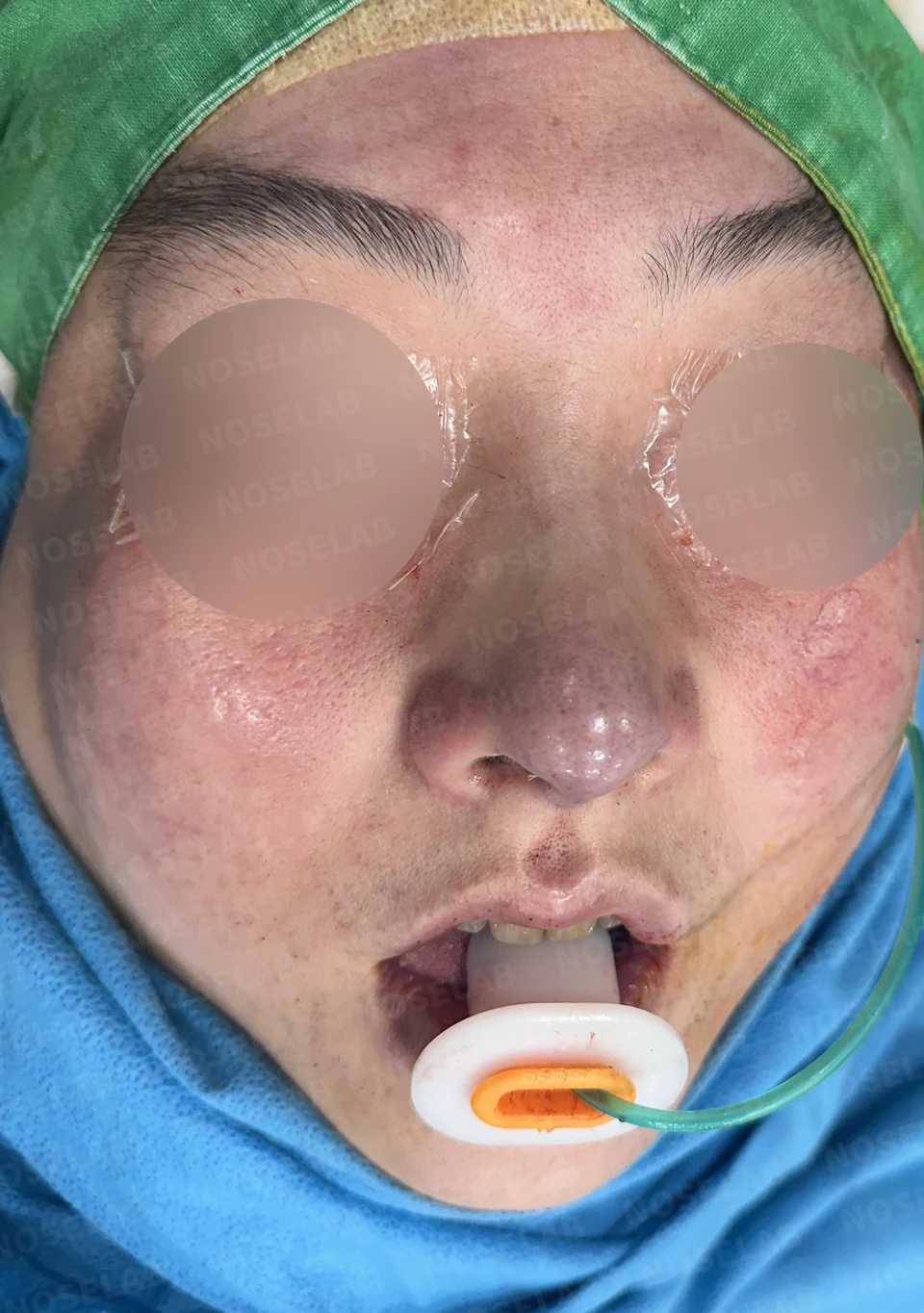
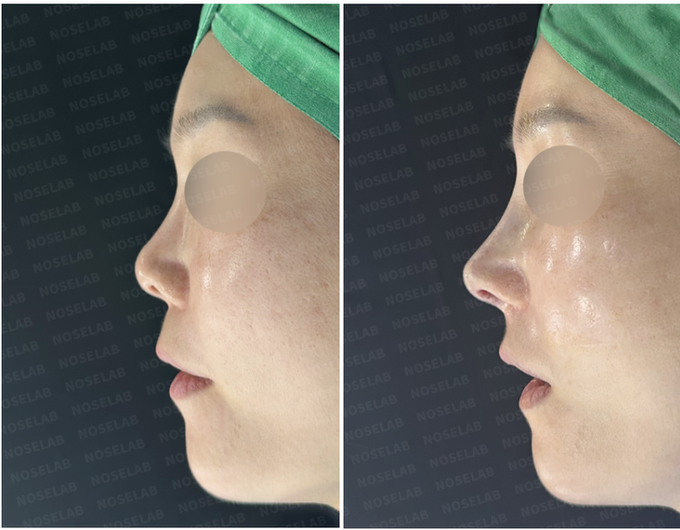
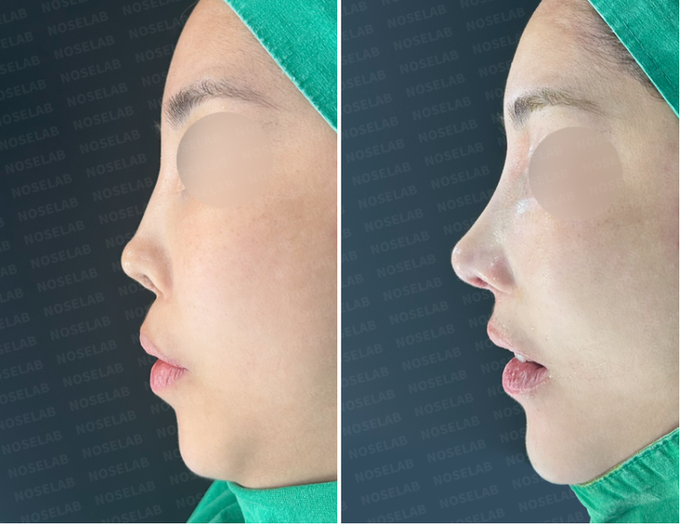
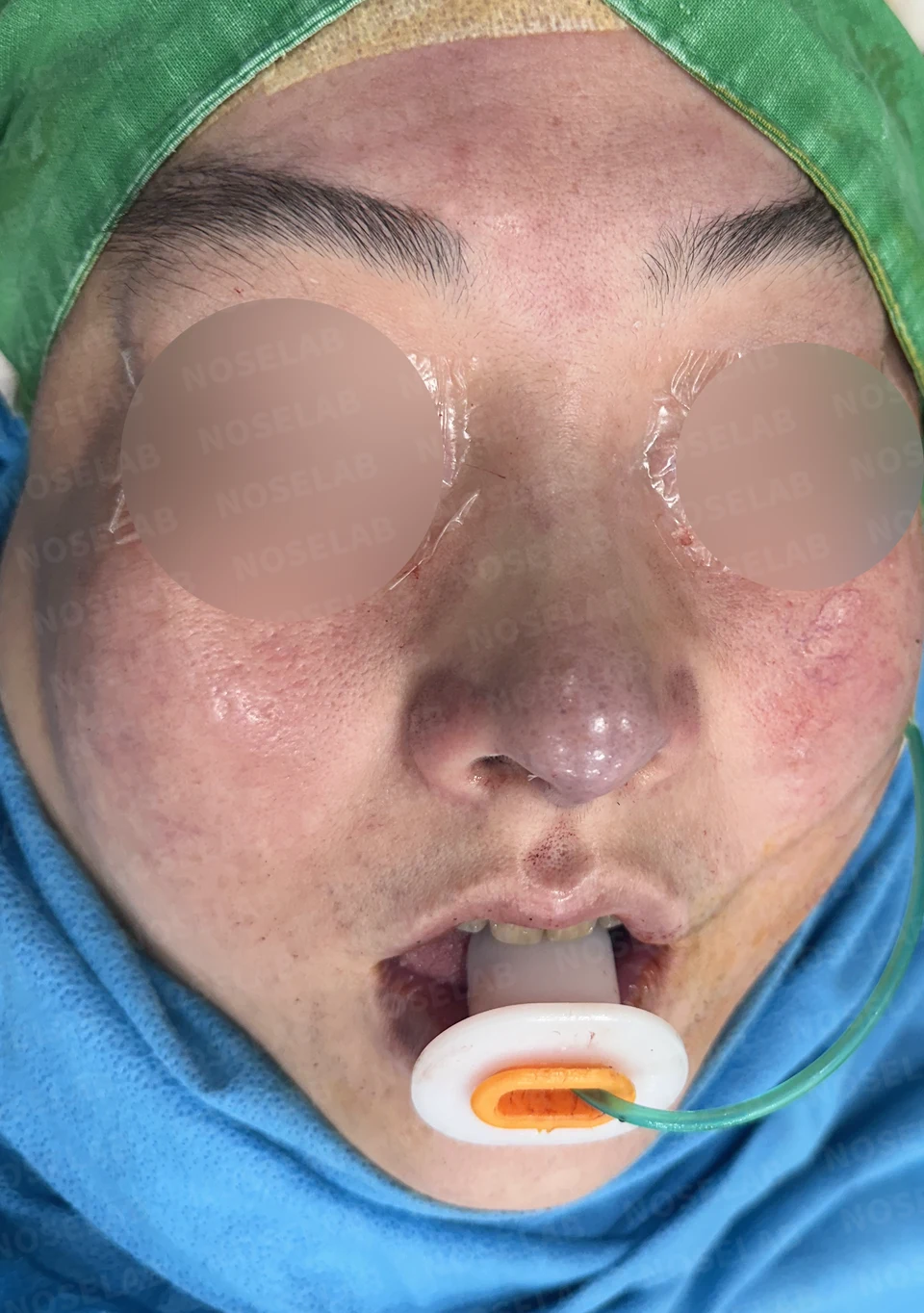
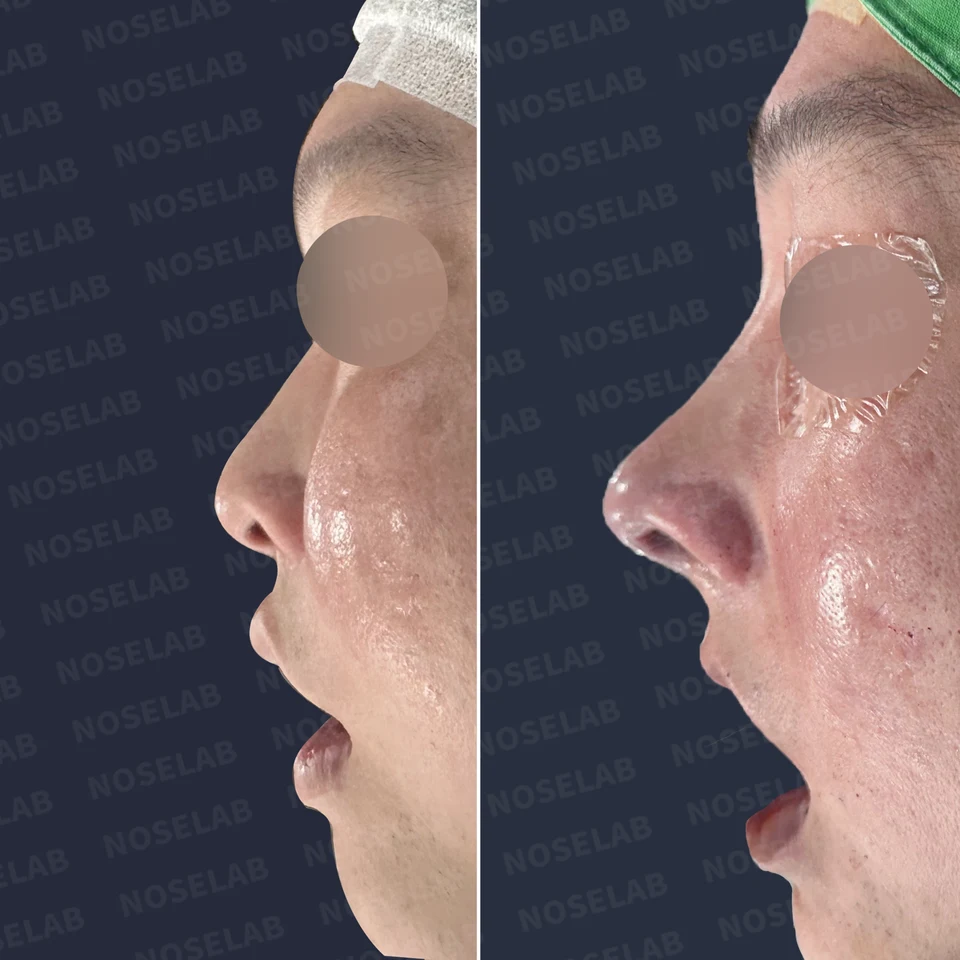
Before surgery (left), immediately after surgery (right).
Surgical Results
Frontal view
The low, upturned tip was repositioned with appropriate projection.
A clearer columellar contour restored balance.
The nose appeared straighter from the front.
Profile view
The tip gained a natural angle with stable support against drooping.
The low bridge was raised to an appropriate height.
The profile combined a largely straight bridge with a gentle curve toward the tip.
Overall changes
Excessive nostril show was reduced.
The case record notes improved nasal breathing. The photographs document appearance immediately after surgery.
A stable support framework was established for the tip.
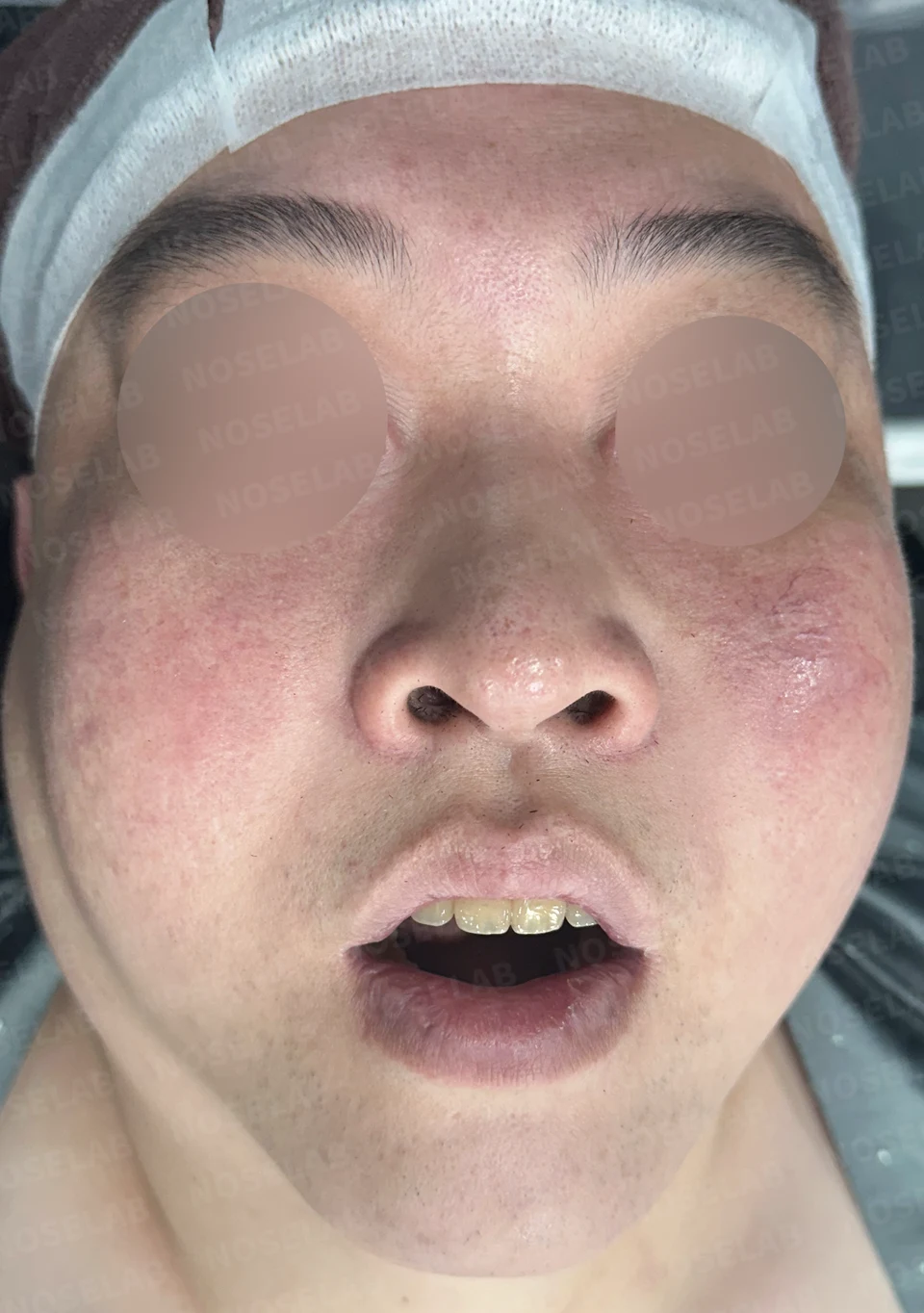
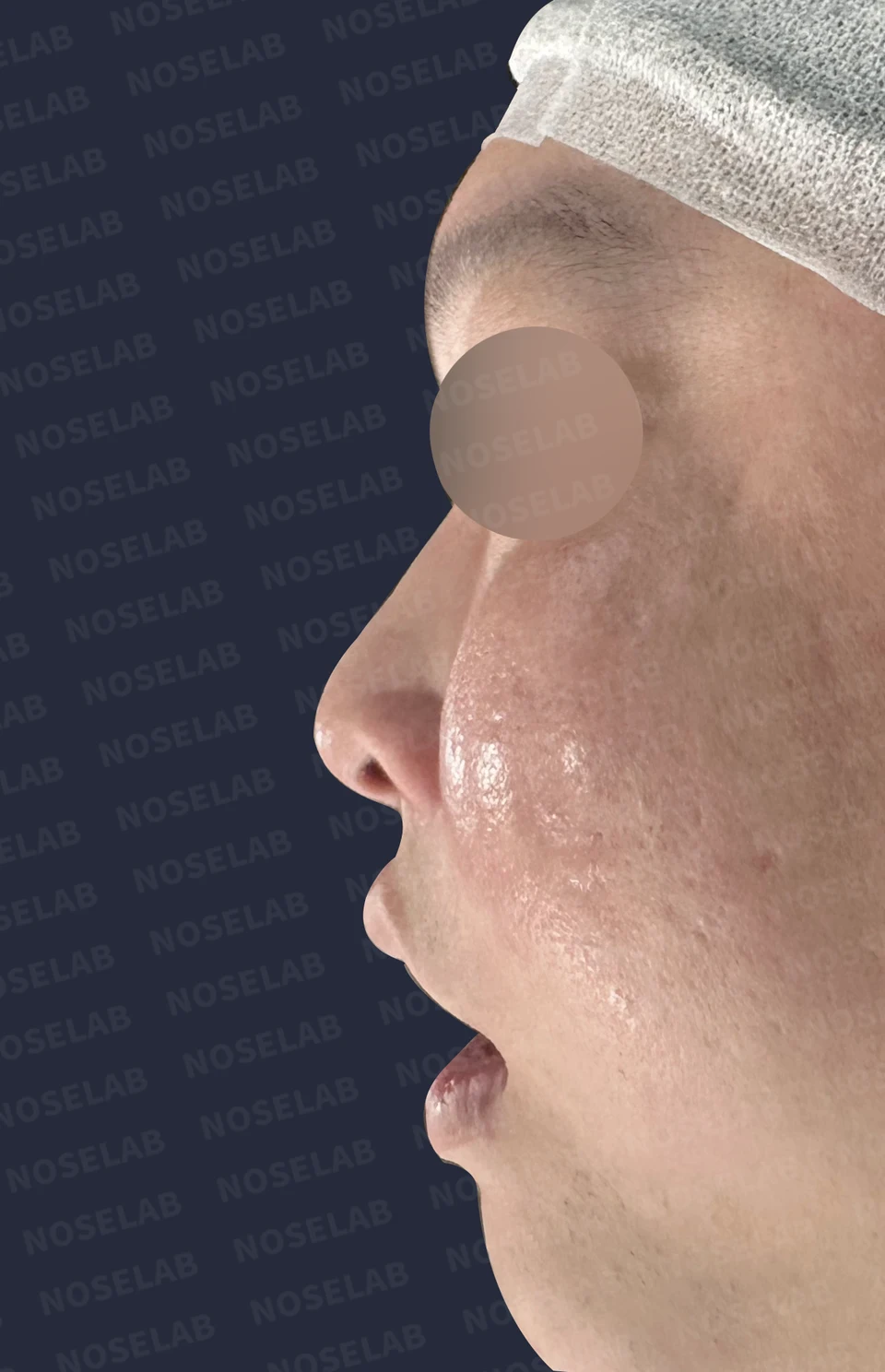
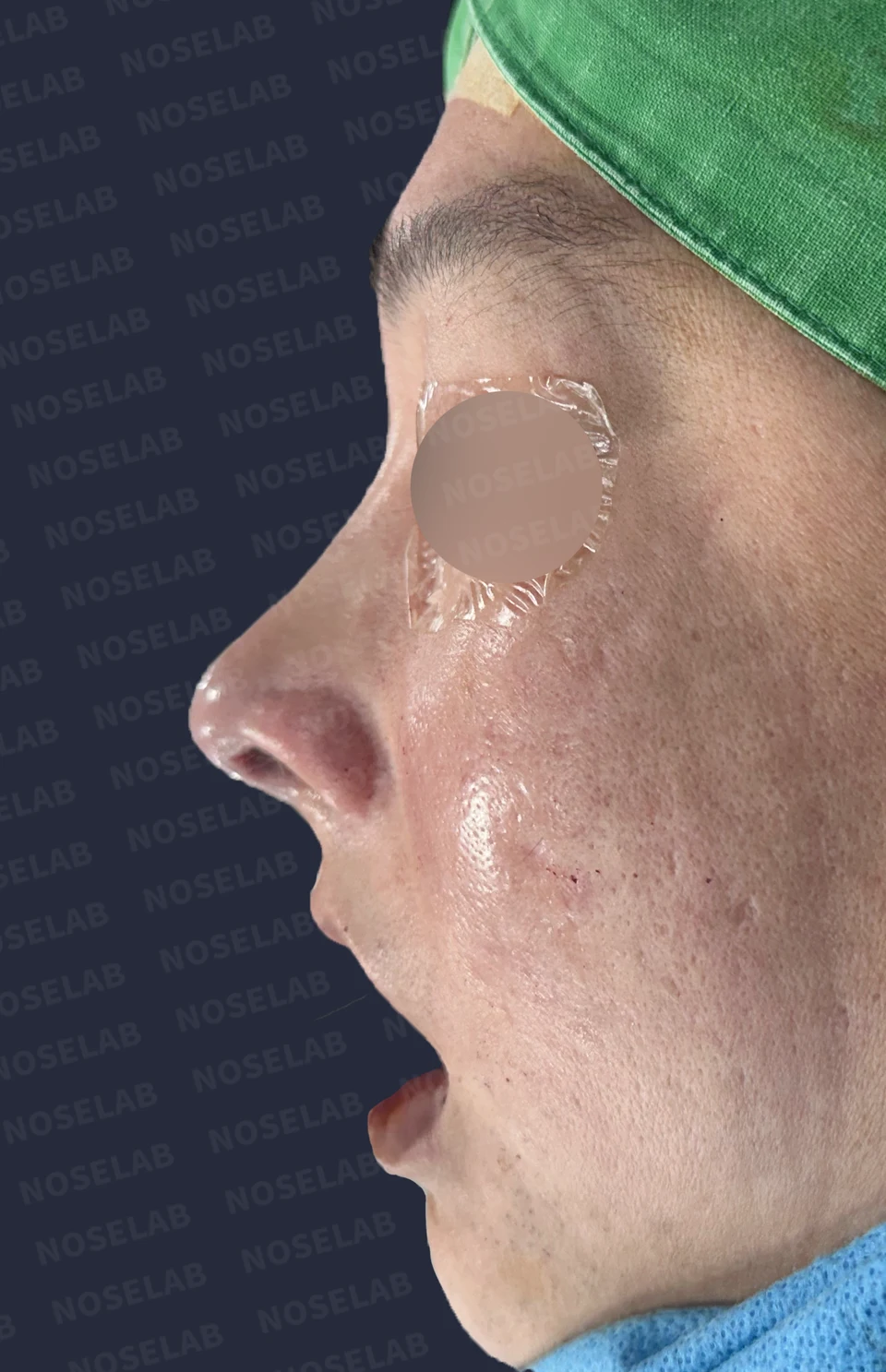
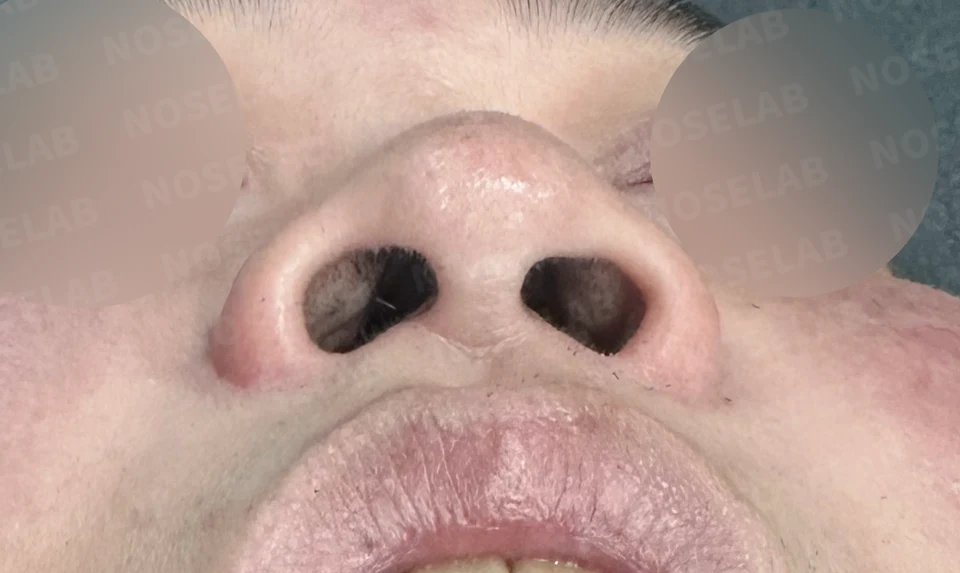
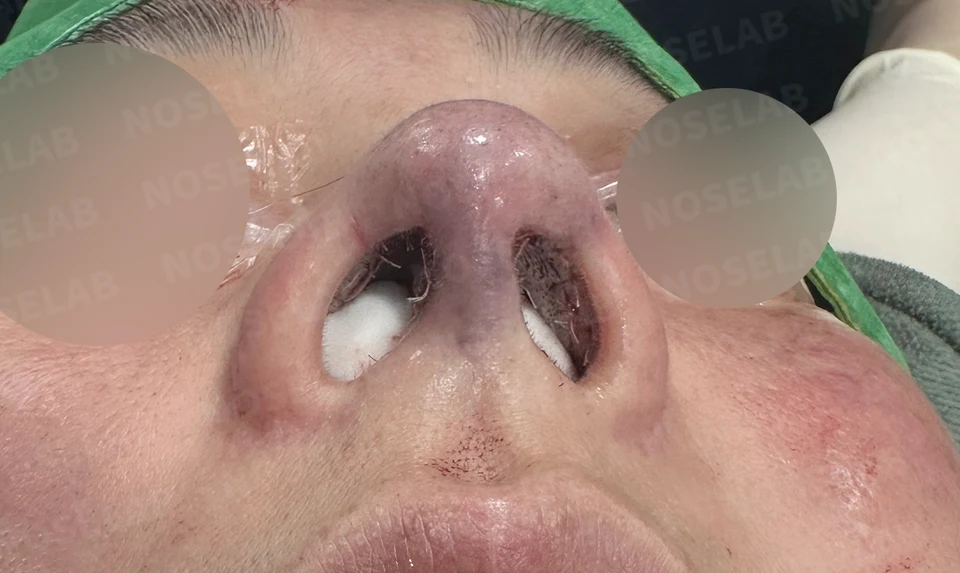
Comparison of frontal, profile, and nostril views.
Surgeon's Perspective
Some patients notice changes in their nose after double-jaw surgery. Portions of the septal cartilage may be removed or injured during that procedure. Because the septum acts as a central supporting pillar for the tip, weakening it can contribute to a progressively upturned or short-looking nose.
In this patient, the lower third of the septal cartilage was absent and its connection to the upper jaw had been lost. Reshaping the surface alone would not have provided stable support. Reconnecting the septum to the upper jaw with autologous rib cartilage established a firm foundation and allowed us to reposition the tip.
When septal deviation and obstruction accompany changes after jaw surgery, septoplasty and turbinate surgery can address breathing alongside appearance.
At NOSELAB Clinic, we take the effects of previous operations into account when planning structural reconstruction, with attention to both stability and the patient's goals.
Thank you for reading. I am Dr. Peter C. Kang, Medical Director of NOSELAB Clinic.
Information About These Photographs and Surgical Risks
These before-and-after photographs show an individual patient's results. Discuss your expected outcome with your doctor.
All surgery carries a risk of complications, including the following:
Infection may require antibiotics and, in some cases, another operation.
Bleeding: Nasal packing is used for one to two days to help minimize bleeding. Bleeding may occasionally occur after surgery for nasal inflammation or obstruction.
Allergic reactions.
Residual asymmetry: Facial asymmetry and the condition of the nose may prevent complete correction, as explained during consultation.
Insufficient cosmetic or functional improvement.
Other complications, including excessive scar formation and skin necrosis.
Read the author’s background and the original case context. About these articles