
REBUILDING NASAL SUPPORT
Rib cartilage rhinoplasty & nasal reconstruction in Seoul.
Rib cartilage is one graft option used in nasal reconstruction and revision rhinoplasty. Review published cases to understand why additional support was needed, which material was used and how the reconstruction was planned.
Why might rib cartilage be considered for revision rhinoplasty?
Previous surgery can reduce the amount of septal cartilage available for rebuilding support. The published guides discuss rib cartilage as one option when a reconstruction needs additional material. The relevant question is what structure must be rebuilt and why the proposed graft is appropriate, rather than whether one material is best for everyone.
Are a patient’s own rib cartilage and donated cartilage the same?
They are different sources. Autologous rib cartilage comes from the patient; donated rib cartilage comes from a donor source. The archive contains cases discussing both. Confirm the exact material proposed for you, its source, the reasons for choosing it and the associated risks. A case title should not be treated as a complete explanation of graft selection.
What should I ask about the limitations of cartilage grafting?
Ask how the graft will support the nose, how contour and alignment are planned, and what changes may occur during healing. The published asymmetry guide discusses displacement and warping as considerations in revision planning. If your own rib cartilage is proposed, the consultation should also cover the donor site and recovery.
How can the case library help me prepare?
Compare the indication for the graft: a damaged septum, contracted nose, unstable tip or previous implant problem. Read the original surgical history and follow-up context alongside the photographs. The amount and arrangement of graft material depend on the individual reconstruction, so a similar appearance does not mean the same operation is needed.
TAKE THESE TO YOUR CONSULTATION
Make your questions specific.
- Which structures need additional support?
- What graft source is proposed, and what are the alternatives?
- What material-specific and donor-site considerations should I understand?
Patient information summarised from the published guides below. Edited . Individual assessment is needed before treatment. Sources and editorial approach.
READ THE ORIGINAL GUIDES
A closer look.
FROM THE CASE LIBRARY
See the individual context.
Read each case for its history and photograph timing. Cases describe individual treatment; results and recovery vary.
 CASEBOOK
Case Study: Severe Contracted Nose Revision with Autologous Rib Cartilage – Nose Lab Clinic
Severe contracted nose revision with autologous rib cartilage at Nose Lab Clinic. This case study shows structural reconstruction to correct…
 CASEBOOK
Donated Rib Cartilage Rhinoplasty: Revision Surgery for Crooked Nose and Filler Removal
Discover how donated rib cartilage rhinoplasty was used to correct a crooked nose, relieve nasal obstruction, and enhance nasal aesthetics t…
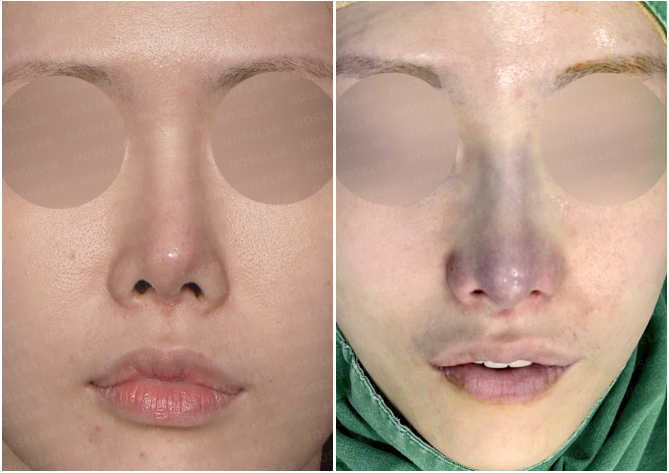 CASEBOOK
Implant Visibility Revision Rhinoplasty with Rib Cartilage Reconstruction
Revision rhinoplasty case for implant visibility and asymmetry using implant removal, autologous rib cartilage reconstruction, septal rebuil…