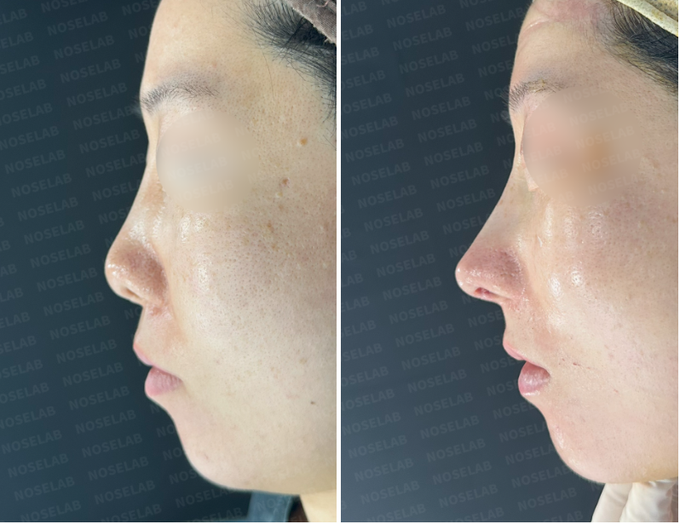
Case at a glance
- Concerns & goals
- Photo timing
These details are excerpts from the original article and captions. Follow a detail to read it in context.
Rhinoplasty Korea – Key Symptoms and Patient Requests
Nasal congestion on the left side, particularly severe at night
Temporary relief with decongestants
Desire for improvement of a bulbous nasal tip
Interest in lowering the columella
Correction of the nasolabial angle
Prioritization of functional improvement
Preference for retaining nasal hump
No implant preferred, if possible

Rhinoplasty Korea – Preoperative Analysis
Frontal View:
Low and flat nasal bridge, bulbous/asymmetric nasal tip, deviated nasal bridge, asymmetric nostrils
Side View:
Uneven nasal bridge contour, low radix, low nasal projection, protruding mouth
Oblique View:
Flat nasal bridge emphasized by brow ridges, lack of definition, emphasized mouth projection
Nostril View:
Flared nostrils, overall asymmetry

Rhinoplasty Korea – Surgical Outcomes
Frontal View Improvements:
Elevated and defined nasal bridge, refined nasal tip, straighter bridge, improved nostril symmetry
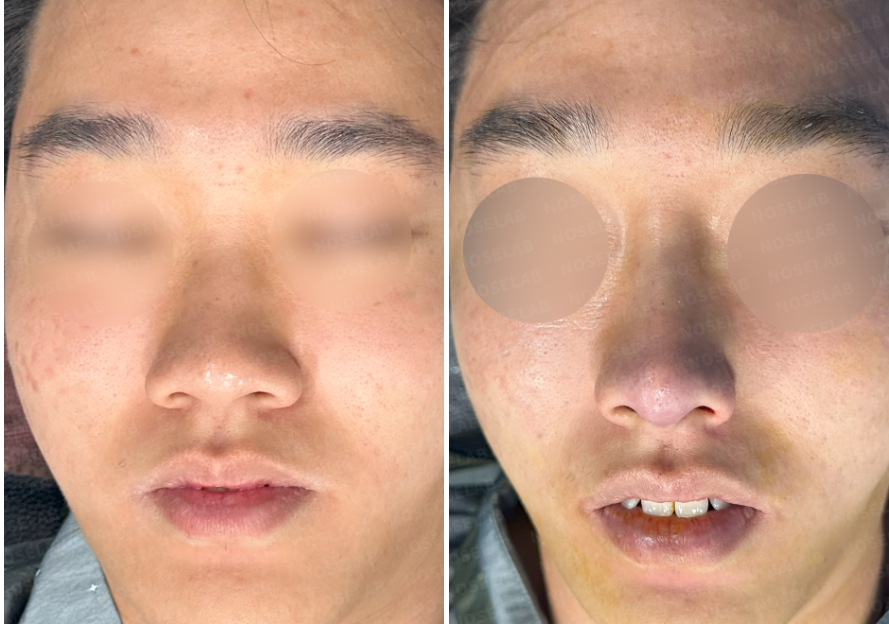
Side View Improvements:
Natural radix height, corrected nasolabial angle, masculine linear contour
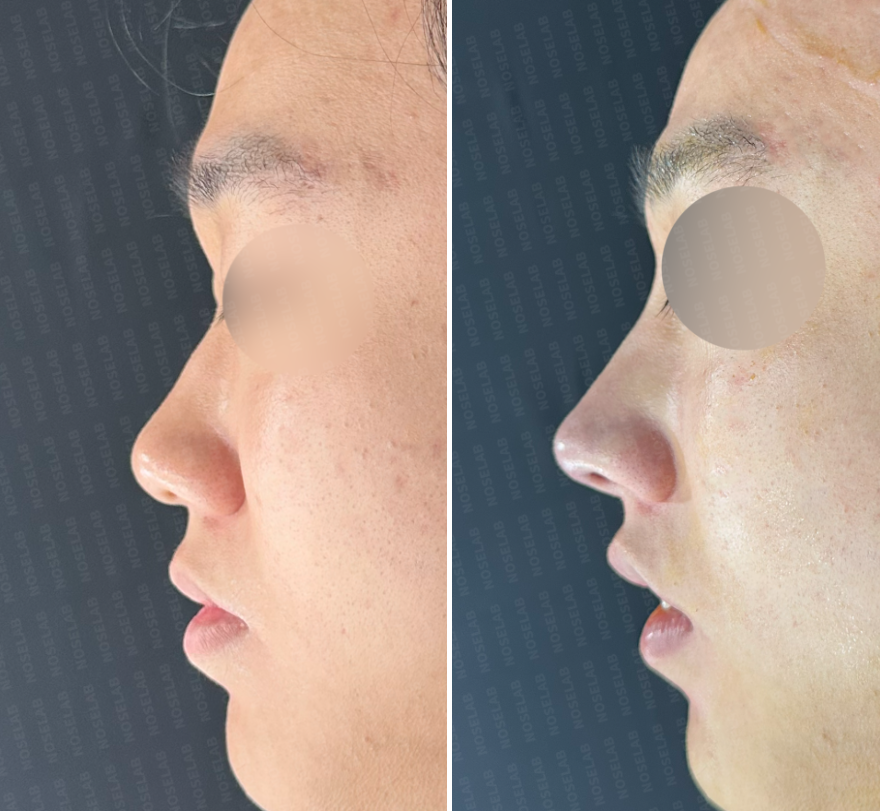
Oblique View Improvements:
Balanced nasal tip projection, gradual radix elevation, reduced mouth projection

Nostril View Improvements:
Reduced flare, defined nasal tip, improved nostril symmetry
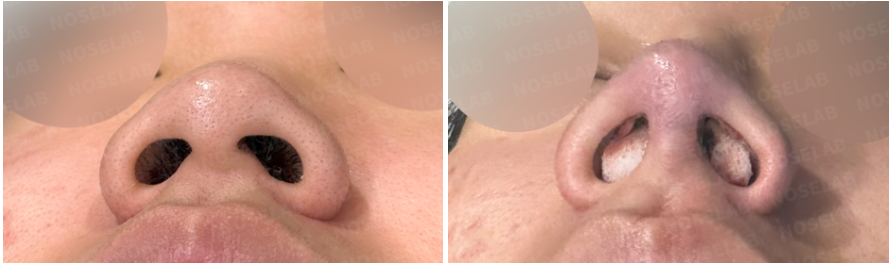
Functional Outcomes:
Correction of septal deviation
Turbinate reduction for obstruction relief
Significant improvement in breathing
Rhinoplasty Korea – Specialist Insights on Material Selection
Septal cartilage: stable and ideal when straight and robust
Auricular cartilage: excellent for additional nasal tip support
Donor rib cartilage / autologous rib cartilage: valuable for major reconstruction
Rhinoplasty Korea – Closing Remarks


This case demonstrates the importance of personalized Rhinoplasty Korea approaches in achieving both functional and aesthetic goals.
At Nose Lab Clinic, we are committed to providing customized rhinoplasty solutions that prioritize both health and beauty.
All surgeries at Nose Lab are performed with a closed rhinoplasty approach.

Read the author’s background and the original case context. About these articles
Source updated .