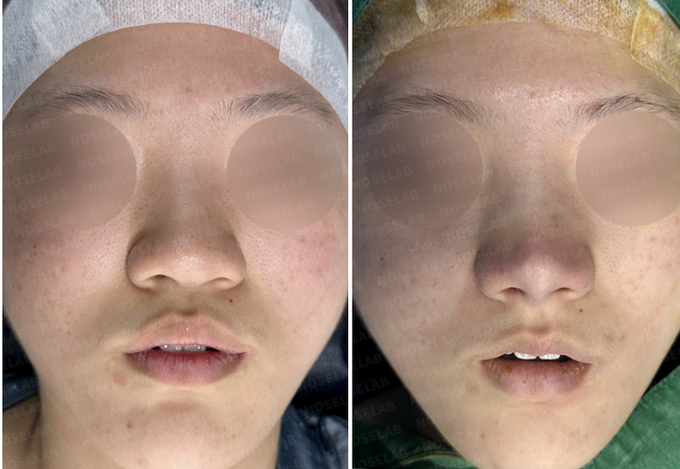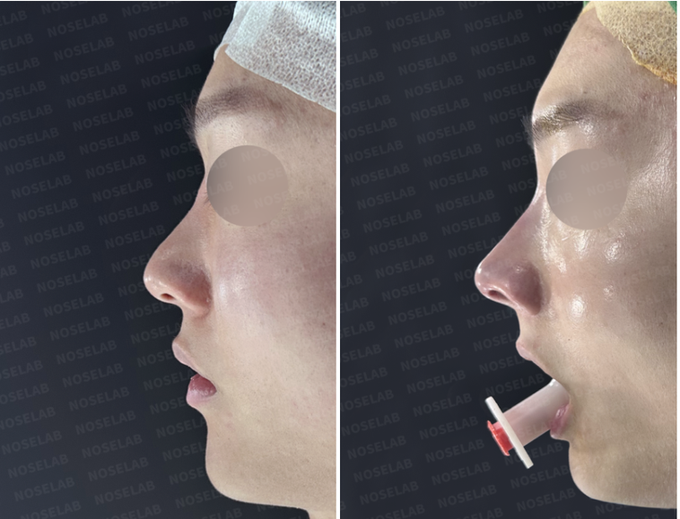
This case examines a split, poorly defined nasal tip together with a wide, curved bridge and nasal congestion. The plan combined tip-cartilage repositioning and septal extension with bridge alignment, septoplasty and turbinate reduction.
Case at a glance
- Photo timing
These details are excerpts from the original article and captions. Follow a detail to read it in context.
This case reviews split nasal tip correction rhinoplasty in a patient with a split and blunt nasal tip, wide nasal structure, curved nasal bridge, flattened nasal tip contour, nostril asymmetry, bulbous nasal appearance, nasal congestion, rhinitis symptoms, and functional airway narrowing. Surgery focused on lower lateral cartilage repositioning, septal extension grafting, tip projection correction, subcutaneous tissue refinement, osteotomy, septoplasty, turbinate reduction, nostril symmetry correction, and closed rhinoplasty structural correction.
Author: Dr. Cha-Young Kang
Clinic: NoseLab Clinic
Published: 2024
Last Updated: 2026
Introduction
Hello, this is Dr. Cha-Young Kang of NoseLab Clinic.
This case involves split nasal tip correction rhinoplasty in a patient who had a split nasal tip, wide nasal structure, bulbous nasal appearance, nostril asymmetry, and nasal congestion related to rhinitis.
The split appearance of the nasal tip created a divided and poorly defined tip contour. The patient also had a wide and curved nasal bridge, flattened tip contour, and functional nasal symptoms.
The surgery was performed using a closed rhinoplasty / endonasal approach. The goal was to improve nasal tip definition, reposition separated tip cartilage, support the nasal tip with septal extension, refine the wide and curved nasal bridge, improve nostril balance, and address functional airway narrowing.
Case Background
A split nasal tip can occur when the lower lateral cartilages are separated, weak, or poorly supported.
When the nasal tip framework lacks central support, the tip may appear wide, blunt, divided, or flattened. In this case, the patient also had nasal congestion and rhinitis symptoms, so functional evaluation was included in the surgical plan.
Key Concerns
The main concerns included:
Split and blunt nasal tip
Wide nasal structure
Wide and curved nasal bridge
Flattened nasal tip contour
Nostril asymmetry
Bulbous nasal appearance
Nasal congestion and rhinitis
Functional airway narrowing
Weak nasal tip support
These findings suggested that the case required structural tip correction rather than simple surface reshaping.

Surgical Background: Split Nasal Tip Correction Through Closed Rhinoplasty
A split nasal tip is usually related to the shape, position, and support of the lower lateral cartilages.
When these cartilages are separated or weak, the nasal tip can appear broad and divided. Tip definition may also be limited.
In this case, a closed rhinoplasty / endonasal approach was used to reposition and reinforce the nasal tip cartilage through internal incisions.
The surgical plan also included septal extension, subcutaneous tissue refinement, osteotomy, septoplasty, and turbinate reduction because the patient had both aesthetic and functional concerns.
Structural Problems Identified
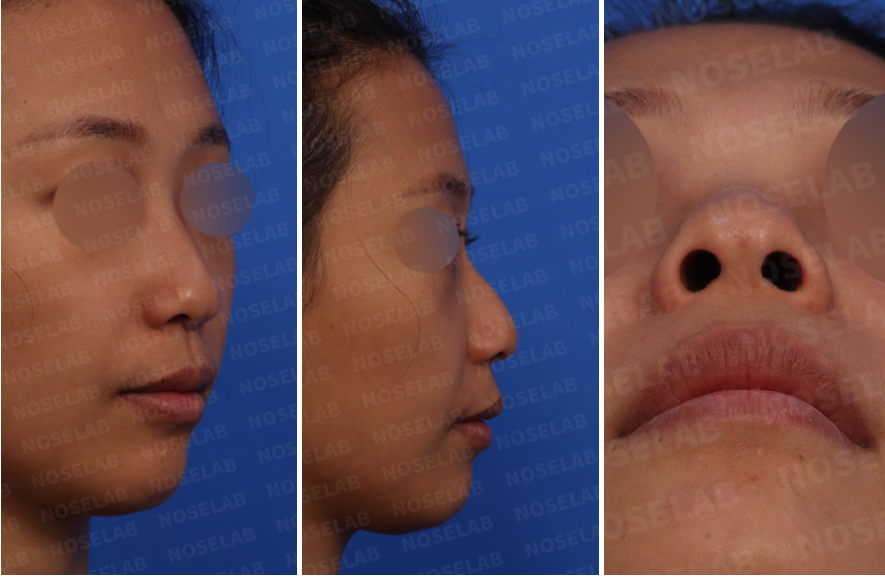
Preoperative design consultation photos were reviewed from the frontal, side, oblique, and nostril views.
Main Structural Problems
The main structural problems included:
Separation of nasal tip cartilage
Weak nasal tip support
Bulbous and wide nasal tip
Asymmetric nostrils
Flattened tip contour
Curved nasal bridge
Functional airway narrowing
Because the tip, nostrils, bridge, and airway were all involved, the surgery was planned as a combined structural and functional correction.
Surgical Plan
1. Cartilage Repositioning
The separated nasal tip cartilages were repositioned and sutured to improve central tip definition.
This helped reduce the split appearance and create a more unified nasal tip contour.
2. Septal Extension Graft
A septal extension graft was used to support the nasal tip.
This helped improve the relationship between the nasal tip, columella, nostrils, and lower nasal framework.
3. Tip Projection Correction
Tip projection was adjusted to improve nasal tip height and definition.
The goal was to refine the tip without excessive projection or an overly sharp appearance.
4. Subcutaneous Tissue Refinement
Subcutaneous tissue was refined to improve the nasal tip contour.
In bulbous tip cases, soft tissue thickness should be managed carefully because excessive reduction may affect skin and soft tissue healing.
5. Osteotomy
Osteotomy was performed to improve the curved nasal bridge and refine bridge alignment.
This helped improve the relationship between the nasal bridge and tip.
6. Functional Correction
Septoplasty and turbinate reduction were performed to address functional airway narrowing, congestion, and rhinitis-related obstruction.
Functional improvement depends on septal alignment, turbinate response, mucosal condition, swelling, and healing process.
Surgical Results
Frontal View
From the frontal view, the nasal tip appeared more unified after cartilage repositioning and septal extension.
Nasal symmetry improved, and the bulbous appearance was reduced within a controlled range.

Oblique View
From the oblique view, tip definition appeared improved, and the nasal contour appeared smoother.
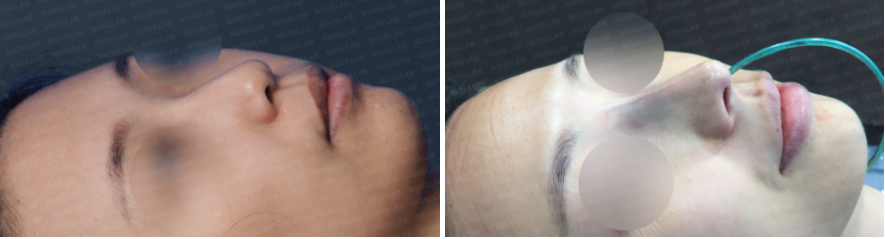
Lateral View
From the lateral view, tip projection appeared more balanced after structural support.
The nasal profile appeared more proportionate after bridge and tip correction.
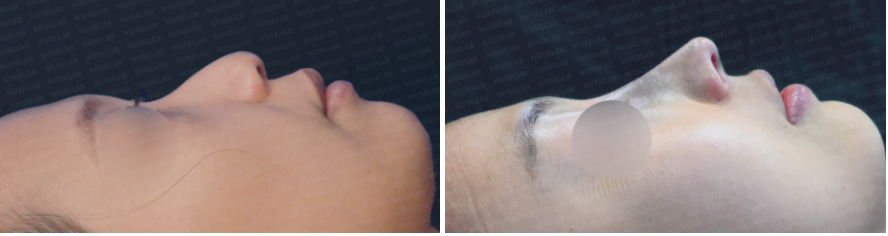
Nasal Base View
From the nasal base view, nostril symmetry improved after lower nasal framework correction.
The tip structure appeared more refined after cartilage repositioning and support.

Functional Outcome
Nasal airflow concerns were addressed through septoplasty and turbinate reduction.
Because congestion and breathing changes can be affected by rhinitis, mucosal swelling, septal alignment, turbinate response, and healing process, functional results should be evaluated over time.
Surgeon’s Commentary
A split nasal tip is not only a surface contour issue. It is often related to cartilage separation, weak tip support, and lower nasal framework imbalance.
In this case, the nasal tip appeared divided, blunt, and wide because the tip cartilages were separated and insufficiently supported.
Cartilage repositioning and septal extension were used to improve tip definition and support the lower nasal framework.
Because the patient also had nostril asymmetry, a curved nasal bridge, congestion, and rhinitis symptoms, the surgical plan included nostril correction, osteotomy, septoplasty, and turbinate reduction.
This case shows that split nasal tip correction rhinoplasty may require combined correction of tip cartilage position, septal support, soft tissue thickness, nostril symmetry, bridge alignment, and functional airway structure.
FAQ
What causes a split nasal tip?
A split nasal tip may occur when the lower lateral cartilages are separated, weak, or poorly supported. This can make the nasal tip appear divided, wide, or poorly defined.
Can a split nasal tip be corrected without surgery?
A structurally split nasal tip usually requires surgical evaluation because the underlying cartilage position and support need to be corrected.
Why is septal extension used in split nasal tip correction?
Septal extension may be used to support the nasal tip, improve projection, and help stabilize the relationship between the tip, columella, and nostrils.
Can breathing improve during split nasal tip correction?
Breathing may improve when septal deviation, turbinate enlargement, or airway narrowing is corrected at the same time. The degree of improvement depends on airway anatomy, rhinitis condition, swelling, and healing.
Is closed rhinoplasty possible for split nasal tip correction?
A closed rhinoplasty / endonasal approach may be used in selected cases to reposition cartilage, refine the tip, support the septum, and perform functional correction through internal incisions.
International Consultation
For international patients, a photo-based consultation may help clarify whether split nasal tip correction rhinoplasty, cartilage repositioning, septal extension grafting, bulbous tip refinement, nostril asymmetry correction, osteotomy, septoplasty, or turbinate reduction may be needed.

Read the author’s background and the original case context. About these articles