Case at a glance
- Previous treatment
- Surgical plan
- Graft & material details
- Photo timing
These details are excerpts from the original article and captions. Follow a detail to read it in context.
This case reviews upturned nose correction rhinoplasty in a patient who had undergone four nasal surgeries over 18 years and later developed a short upturned nose, nostril asymmetry, deviated nasal bridge, high nasion, retracted columella, long philtrum appearance, protruding upper lip impression, columella scar tissue, and severe loss of alar cartilage support. Surgery focused on autologous rib cartilage reconstruction, lateral crus reconstruction, septal extension grafting, columella lengthening, nasolabial angle correction, nostril asymmetry correction, nasal bridge adjustment, and functional planning for rhinitis.
Author: Dr. Cha-Young Kang
Clinic: NoseLab Clinic
Published: 2025
Last Updated: 2026
Introduction
Hello, this is Dr. Cha-Young Kang of NoseLab Clinic.
This case involves upturned nose correction rhinoplasty in a patient who had undergone multiple nasal surgeries over an 18-year period.
The patient had a short and upturned nasal appearance, severe nostril asymmetry, retracted columella, deviated nasal bridge, and scar tissue around the upper columella. Nasal endoscopy was also performed to evaluate the internal nasal condition.
The surgery was performed using a closed rhinoplasty / endonasal approach. The goal was to rebuild lost lower nasal support, correct the upturned nasal tip, improve nostril balance, lengthen the columella region, and plan functional correction with attention to rhinitis and allergy history.
Surgical History and Initial Assessment
The patient had undergone four previous nasal surgeries over 18 years. The nasal shape and support structure had changed after repeated operations.
Surgical History Overview
The surgical history included:
18 years ago: AlloDerm, silicone implant, and ear cartilage graft
Suspected infection after the first surgery, followed by upturned nasal change
17 years ago: Septal cartilage, ear cartilage, and silicone revision
6 months later: Silicone implant removal
3 months later: Revision with silicone implant and cartilage graft
Because the patient had a long revision history, the surgical plan needed to consider scar tissue, remaining cartilage, previous implant use, and internal nasal condition.

Preoperative Assessment
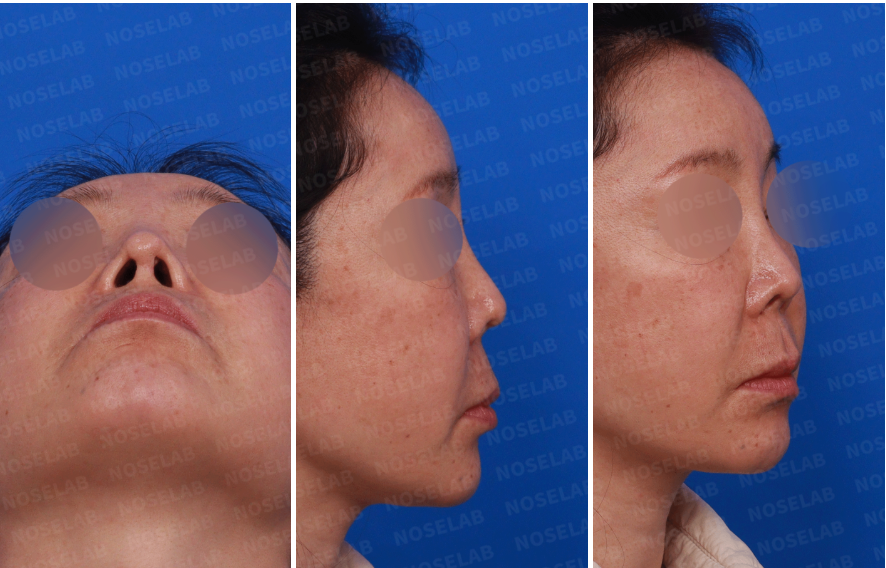
Preoperative design consultation photos were reviewed from the frontal, side, oblique, and nostril views. Nasal endoscopy photos were also reviewed to assess the internal airway and mucosal condition.
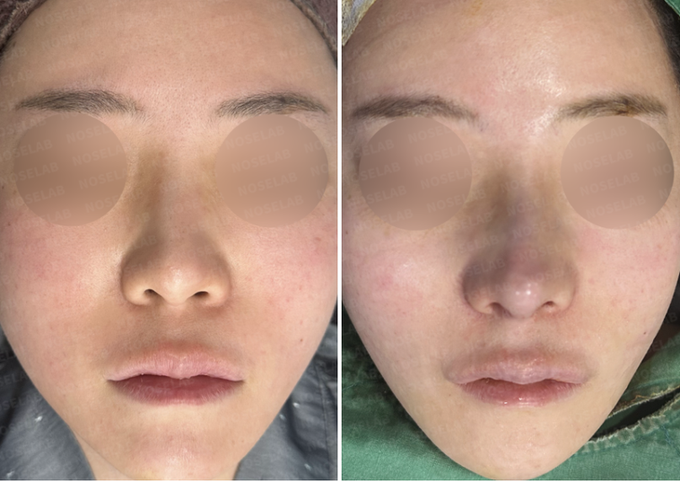
Frontal View
The frontal view showed an upturned nasal tip, nostril asymmetry, and deviated nasal bridge.
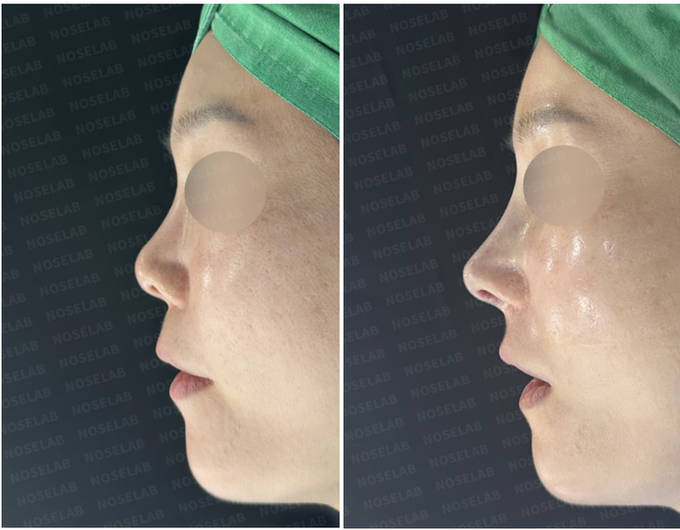
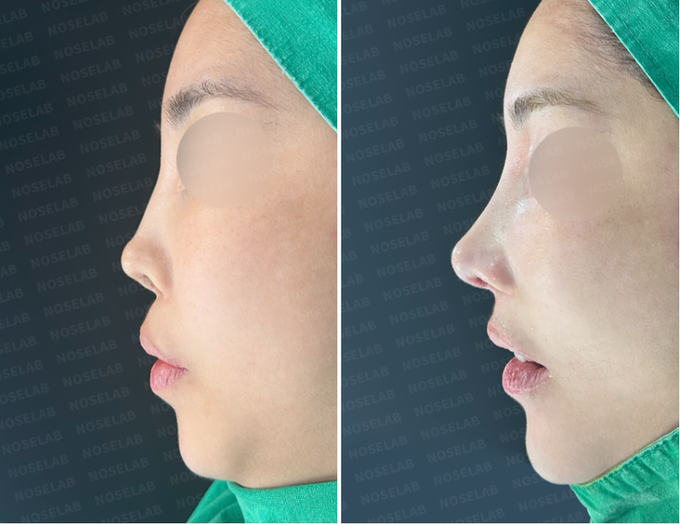
Side View
The side view showed a short and upturned nose, high nasion, retracted columella, long philtrum appearance, and protruding upper lip impression.
Oblique and Nostril Views
The oblique and nostril views showed severe nostril asymmetry, leftward columella deviation, and scar tissue on the upper columella.
Nasal Endoscopy
Nasal endoscopy was used to evaluate internal nasal conditions, including rhinitis-related findings and airway status.
Because the patient had both external deformity and functional symptoms, the surgical plan required structural reconstruction and functional consideration together.
Surgical Plan for Upturned Nose Correction Rhinoplasty
The surgical plan focused on rebuilding lower nasal support, correcting the upturned tip, improving nostril symmetry, and addressing columella retraction.
Intraoperative Findings
During surgery, more than two-thirds of the alar cartilages were found to have been removed during previous surgeries.
Other findings included:
Shallow nasolabial angle
Severe columella retraction
Scar formation around the columella
Loss of lower lateral cartilage support
Need for rib cartilage reconstruction
These findings confirmed that the upturned nasal appearance was closely related to loss of structural support rather than surface shape alone.
Lateral Crus Reconstruction with Rib Cartilage
Autologous rib cartilage was used to reconstruct the lateral crura.
This was necessary because a large portion of the original alar cartilage support had been removed in prior surgeries.
Septal Extension Graft
A septal extension graft was used to support and reposition the nasal tip.
This helped improve nasal tip support and reduce the upturned appearance.
Columella Lengthening
Columella lengthening was performed to improve columella retraction and lower nasal balance.
This step was important for improving the relationship between the nasal tip, columella, and upper lip.
Nasolabial Angle Correction
The nasolabial angle was adjusted to reduce the shallow and upturned appearance.
This helped improve the side profile and reduce the impression of excessive upper lip protrusion.
Nostril Asymmetry and Bridge Correction
Nostril asymmetry and nasal bridge deviation were corrected as part of the overall reconstruction.
The nasal bridge height and nasal tip position were adjusted while considering facial balance and previous surgical changes.
Allergy and Rhinitis Planning
The patient had a cephalosporin allergy and rhinitis history. These factors were considered during surgical planning and postoperative medication planning.
Results After Upturned Nose Correction

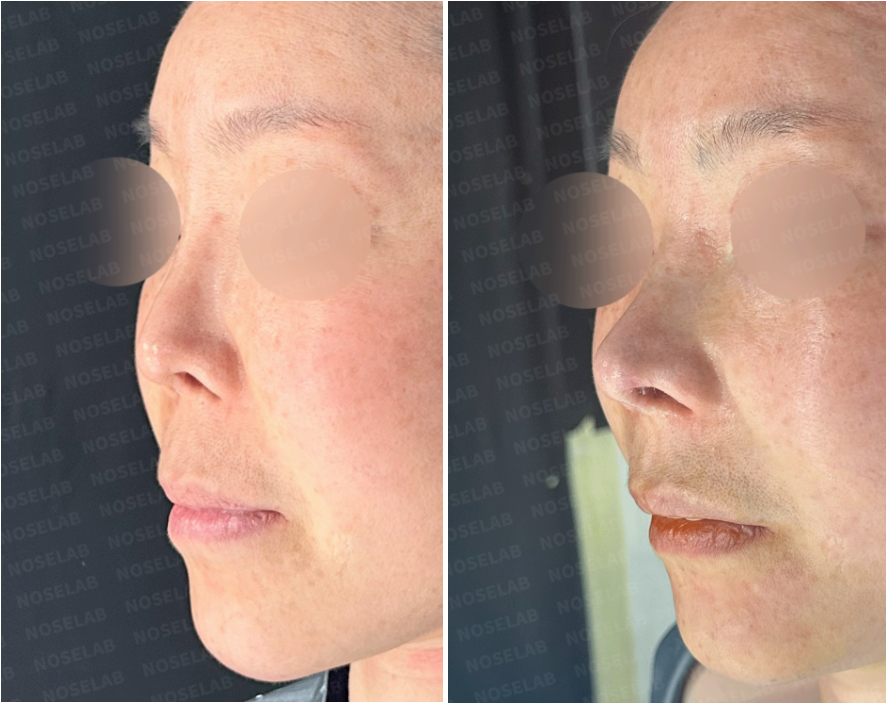
Frontal View
From the frontal view, nasal symmetry improved, nostril show was reduced, and the nasal bridge appeared straighter after reconstruction.

Side View
From the side view, the nasal starting point appeared lower, and nasal tip projection improved after rib cartilage support.
The philtrum appeared shorter in visual proportion after columella lengthening and nasolabial angle correction.
Nostril View
From the nostril view, nostril balance improved after alar cartilage reconstruction and columella correction.
Scar visibility around the columella region appeared reduced after soft tissue adjustment.

Structural Outcome
The lower nasal framework was reconstructed using autologous rib cartilage. The lateral crura, nasal tip support, columella position, and nostril balance were corrected together.
Because this was a complex revision case with multiple previous surgeries and cartilage loss, the outcome was planned within the limits of scar tissue, remaining support, skin condition, allergy history, rhinitis condition, and healing response.
Surgeon’s Commentary
This case shows the complexity of upturned nose correction after multiple previous nasal surgeries.
The upturned appearance in this patient was not mainly related to contracture. Instead, it was strongly associated with loss of structural support, especially severe loss of alar cartilage.
A septal extension graft was used to reposition and support the nasal tip. Columella lengthening and nasolabial angle correction helped improve the relationship between the nasal tip and upper lip.
Nostril asymmetry, columella deviation, and bridge deviation were corrected as part of the same reconstruction plan.
The patient’s cephalosporin allergy and rhinitis history were considered during planning. In complex revision rhinoplasty, both structural and medical factors should be reviewed before surgery.
This case shows that upturned nose correction rhinoplasty should be planned according to the cause of the deformity. When cartilage support has been lost, reconstruction of the framework may be more important than simple reshaping.
FAQ
What causes an upturned nose after previous rhinoplasty?
An upturned nose after previous rhinoplasty may occur due to scar contracture, loss of cartilage support, excessive cartilage removal, infection-related changes, implant removal, or repeated surgical alteration of the nasal framework.
Why is rib cartilage used for upturned nose correction?
Rib cartilage may be used when strong structural support is needed, especially when septal cartilage or alar cartilage has been removed or weakened during previous surgeries.
What is lateral crus reconstruction?
Lateral crus reconstruction rebuilds the outer part of the alar cartilage, which supports the nostril rim and nasal tip. It may be needed when the original alar cartilage has been removed or collapsed.
Can columella retraction be corrected during revision rhinoplasty?
Columella retraction may improve when lower nasal support, septal extension, columella lengthening, and soft tissue release are performed together. The degree of improvement depends on scar tissue and tissue flexibility.
Can nostril asymmetry improve after upturned nose correction?
Nostril asymmetry can improve when the alar cartilages, nasal tip support, columella position, and septal framework are corrected together. The result depends on tissue condition and healing response.
International Consultation
For international patients, a photo-based consultation may help clarify whether upturned nose correction rhinoplasty, rib cartilage reconstruction, lateral crus reconstruction, septal extension grafting, columella lengthening, or nostril asymmetry correction may be needed.

Read the author’s background and the original case context. About these articles