Understanding your options
Nasal implant removal & reconstruction in Seoul.
Concerns about a nasal implant need an assessment of the implant, surrounding tissue and underlying support. Removal and reconstruction are separate decisions that may be planned together or in stages.
What implant concerns appear in the case library?
Published cases describe visible implant edges, thin tip skin, displacement, contracture and concerns after silicone or filler treatment. Similar-looking problems can have different causes. When searching, include both what you notice and what you know about earlier treatment, such as “visible implant”, “silicone removal” or “filler and upturned nose”.
Will the nose return to its original shape after removal?
Removing an implant does not guarantee a return to the pre-surgery shape. Prior surgery, scarring and the condition of the supporting structures can affect what remains. The restoration guide discusses why assessment includes bridge contour, tip support and the surrounding soft tissue, rather than just the decision to remove the implant.
Can removal and reconstruction happen together?
Some published cases combine removal with reconstruction. In other circumstances the medical team may recommend allowing tissue to recover before another procedure, particularly where inflammation or infection is a concern. The plan must be based on an examination and clinical history. It should include the reasoning for the timing and the proposed material.
What should I bring to the consultation?
Bring available implant or filler details, dates of previous procedures, operative records and a description of how symptoms have changed. Tell the team about previous infections, removal attempts and breathing concerns. Do not rely on a photograph or a similar online case to determine the condition of your own implant.
TAKE THESE TO YOUR CONSULTATION
Make your questions specific.
- What is the current condition of the implant and surrounding skin?
- What change in shape or support might follow removal?
- Is immediate reconstruction appropriate, and what alternatives are available?
Patient information summarised from the published guides below. Edited . Individual assessment is needed before treatment. Sources and editorial approach.
READ THE ORIGINAL GUIDES
A closer look.
FROM THE CASE LIBRARY
See the individual context.
Read each case for its history and photograph timing. Cases describe individual treatment; results and recovery vary.
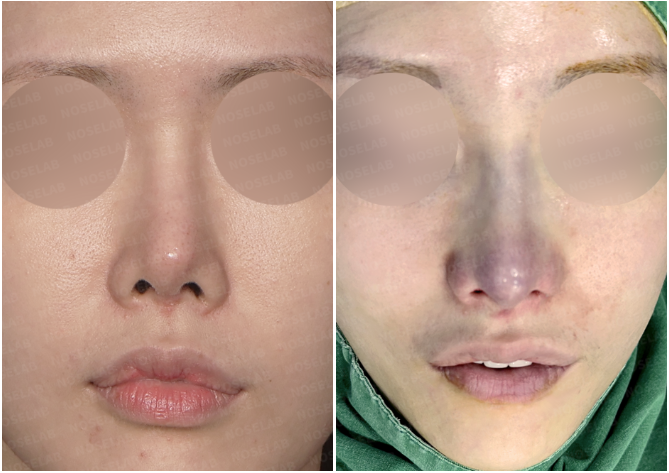 CASEBOOK
Implant Visibility Revision Rhinoplasty with Rib Cartilage Reconstruction
Revision rhinoplasty case for implant visibility and asymmetry using implant removal, autologous rib cartilage reconstruction, septal rebuil…
 CASEBOOK
Complete Illegal Filler Removal and Total Septal Reconstruction Using Autologous Rib Cartilage
Safe illegal filler removal and total septal reconstruction with autologous rib cartilage for natural, stable nasal restoration at NOSELAB.
 CASEBOOK
Blunt Nose Correction: Revision Rhinoplasty with Rib Cartilage Reconstruction
Discover how Nose Lab Clinic performs safe and natural Blunt Nose Correction using rib cartilage reconstruction and implant replacement. Lea…