Case at a glance
- Previous treatment
- Surgical plan
- Graft & material details
- Photo timing
These details are excerpts from the original article and captions. Follow a detail to read it in context.
Surgical Background – Autologous Rib Cartilage Revision Rhinoplasty
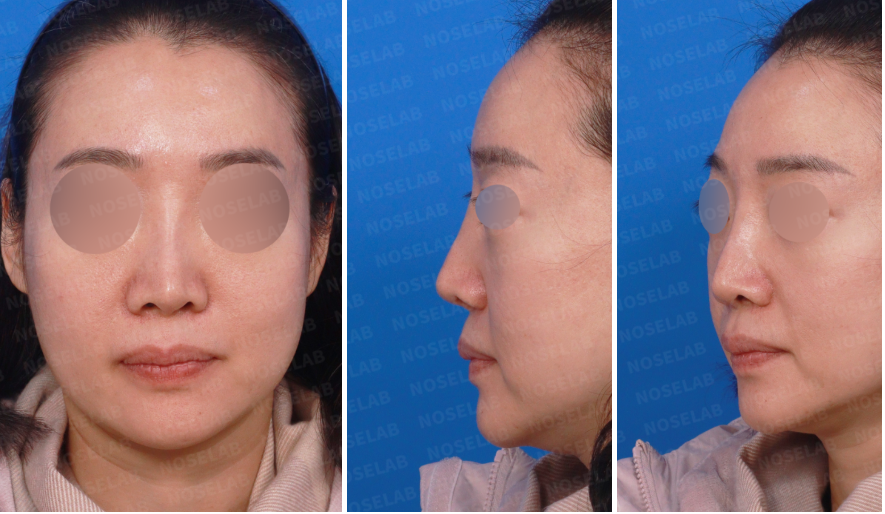
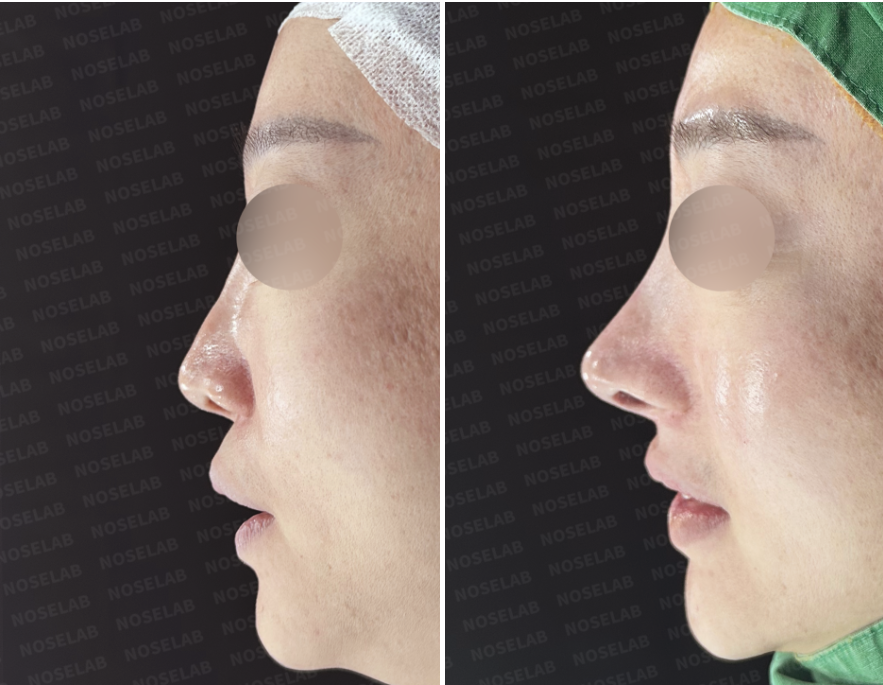
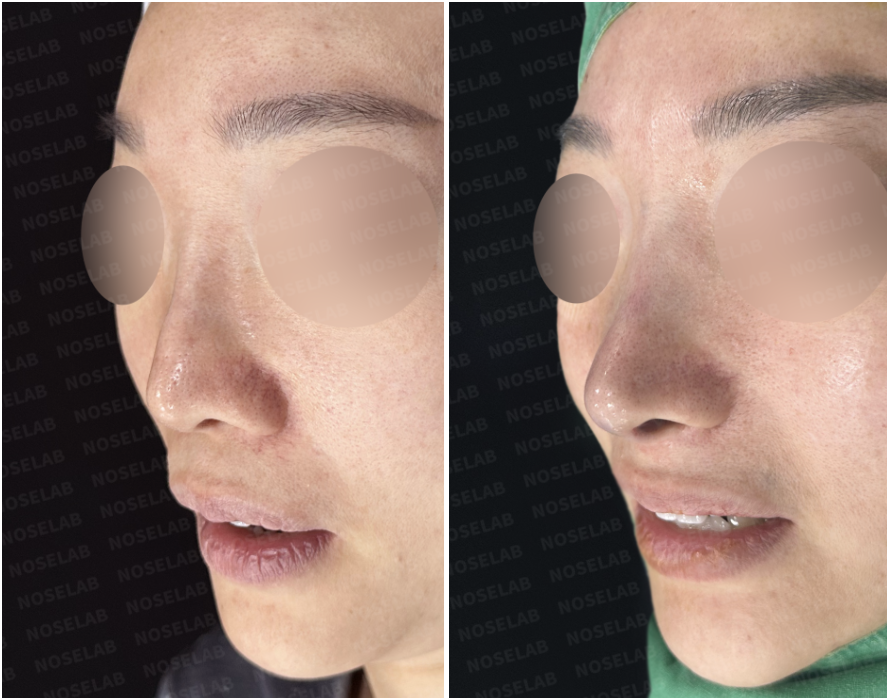
This case involves a patient who visited our clinic with both aesthetic deformity and functional impairment following multiple prior nasal surgeries. The main concerns included a deviated nasal bridge, an elongated and drooping nasal tip, and a completely collapsed septum. Because the original septal support had been severely damaged, autologous rib cartilage revision rhinoplasty was required to rebuild the nasal framework and restore airway stability.
Surgical history:
First rhinoplasty: 21 years ago
Second rhinoplasty: 4 years ago
The patient sought revision surgery due to dissatisfaction with appearance and persistent breathing difficulties.
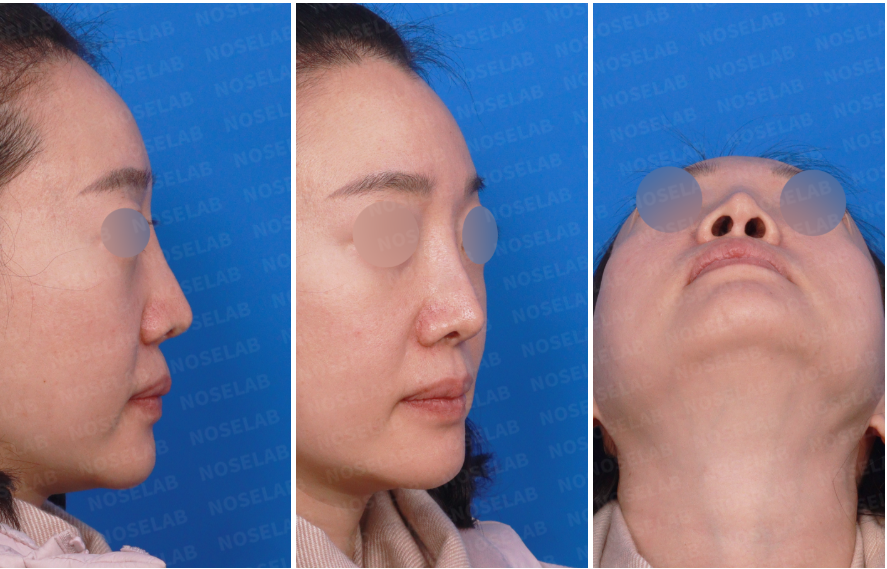
Surgical Plan – Septal Reconstruction with Rib Cartilage
The surgical plan focused on complete structural reconstruction using rib cartilage to achieve long-term stability and functional recovery.
Key procedures included:
Full septal reconstruction with rib cartilage to reposition the septum to the midline
Reinforcement of nasal tip support to correct drooping
Right alar rebuilding using cartilage grafts to correct asymmetry
Repair of mucosal defects with perichondrial grafting
Removal and recarving of the previous silicone implant to match the nasal bone contour
Correction of the nasolabial angle for a refined side profile
Each step was carefully planned to restore both form and function.
Surgical Results – Functional and Aesthetic Improvement
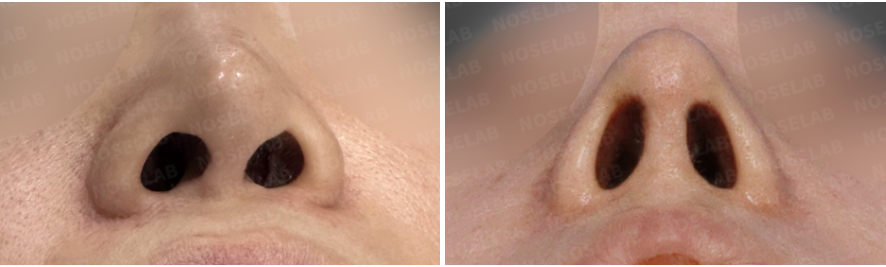
Postoperative evaluation showed clear improvements in nasal symmetry, proportion, and airflow.
Frontal view: straightened nasal bridge, balanced nostrils, corrected columella deviation
Side view: lifted nasal tip, shorter and more harmonious nasal length, refined dorsal line
Nostril view: improved symmetry and natural tip position
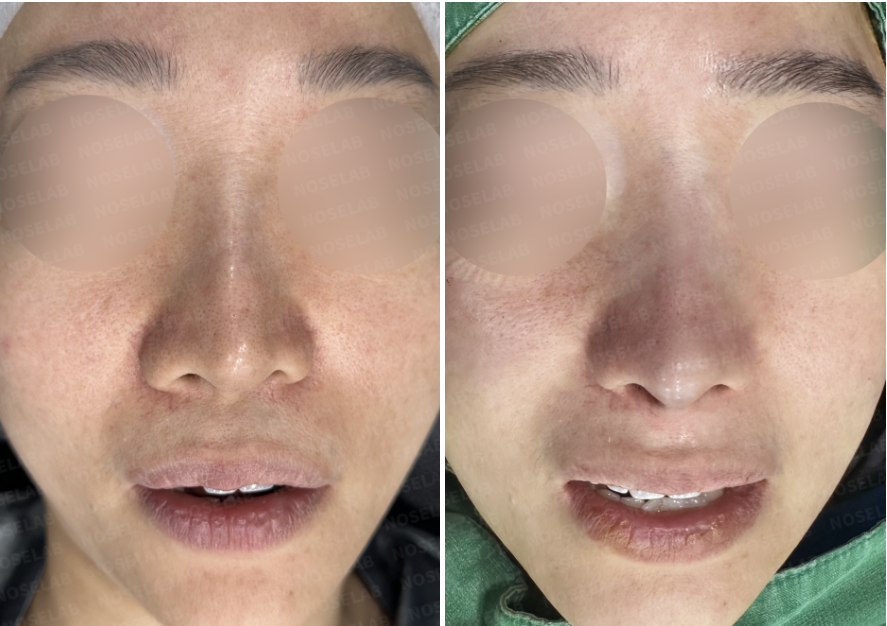
Endoscopic view: septum repositioned to midline, widened right nasal airway, restored mucosa
The reconstructed nasal framework demonstrated excellent stability.
Surgeon’s Commentary – Why Rib Cartilage Was Necessary
This procedure was not a simple cosmetic revision, but a reconstructive surgery addressing a completely collapsed septum. When septal support is lost, breathing difficulty, chronic rhinitis, and sleep-related issues often follow. In this case, the right nasal airway was nearly obstructed, making rib cartilage reconstruction essential.
Successful autologous rib cartilage revision rhinoplasty must prioritize durable structural support, airway restoration, and natural aesthetics. True success lies in achieving both long-term stability and comfortable breathing.
This surgery was performed by Cha-Young Kang, Chief Director of NoseLab Clinic, using a personalized, patient-centered approach.
Read the author’s background and the original case context. About these articles


