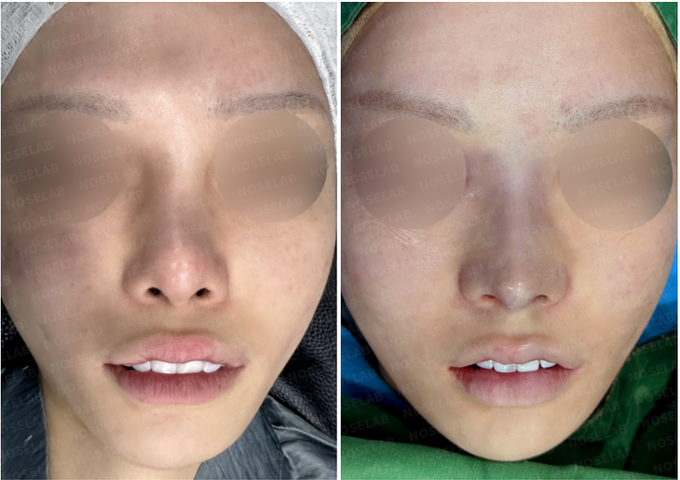
Case at a glance
- Surgical plan
- Graft & material details
- Photo timing
These details are excerpts from the original article and captions. Follow a detail to read it in context.
Surgical Background of Deviated Nose Revision Rhinoplasty Korea
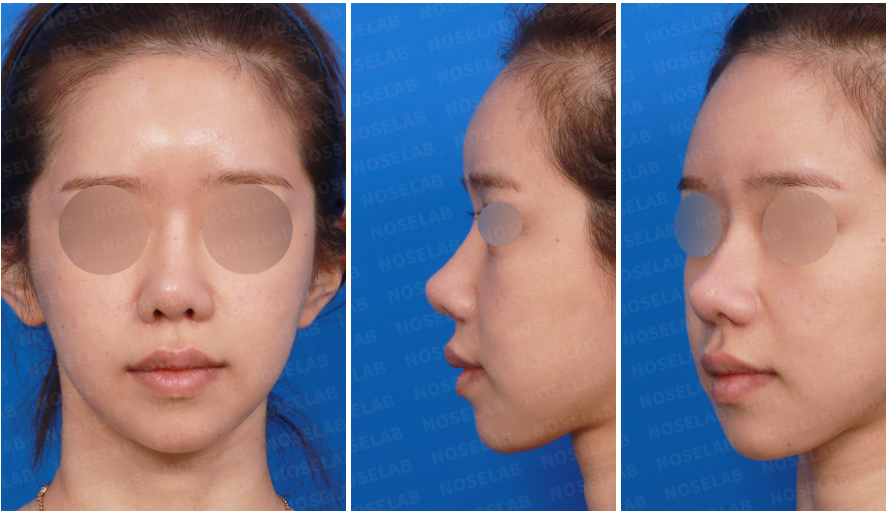
The patient had undergone multiple nasal surgeries over several years, yet continued to suffer from severe nasal obstruction and visible deviation of the nose.
Despite previous aesthetic corrections, the core structural problem—septal weakness and deviation—had not been properly addressed.
In complex revision cases, especially after repeated surgeries, scar tissue and weakened cartilage often cause both functional failure and aesthetic relapse.
This case required a fundamental reconstructive approach, not a superficial correction.

Surgical Planning and Approach
Septal Reconstruction with Autologous Rib Cartilage
In this Deviated Nose Revision Rhinoplasty Korea case, the nasal septum had lost its structural integrity due to previous procedures.
Autologous rib cartilage was used to rebuild a strong central support, forming the foundation for both breathing improvement and long-term stability.
Septoplasty and Nasal Airway Restoration
The septum was deviated to the left, causing severe obstruction—particularly on the right side.
Septoplasty was performed to realign the septum to the midline, restoring balanced airflow.
Lateral Osteotomy for Nasal Bone Realignment
The deviated nasal bones were corrected using precise lateral osteotomy.
This step was essential to restore facial symmetry and achieve a natural frontal appearance.
Turbinate Reduction with Radiofrequency
Chronic rhinitis and turbinate hypertrophy further narrowed the nasal airway.
Submucosal turbinoplasty using radiofrequency effectively widened the internal space while minimizing recovery time.
Nasolabial Angle and Columella Refinement
To harmonize the nose with the upper lip—especially after a prior lip lift—the nasolabial angle and columella position were carefully refined, improving the side profile.
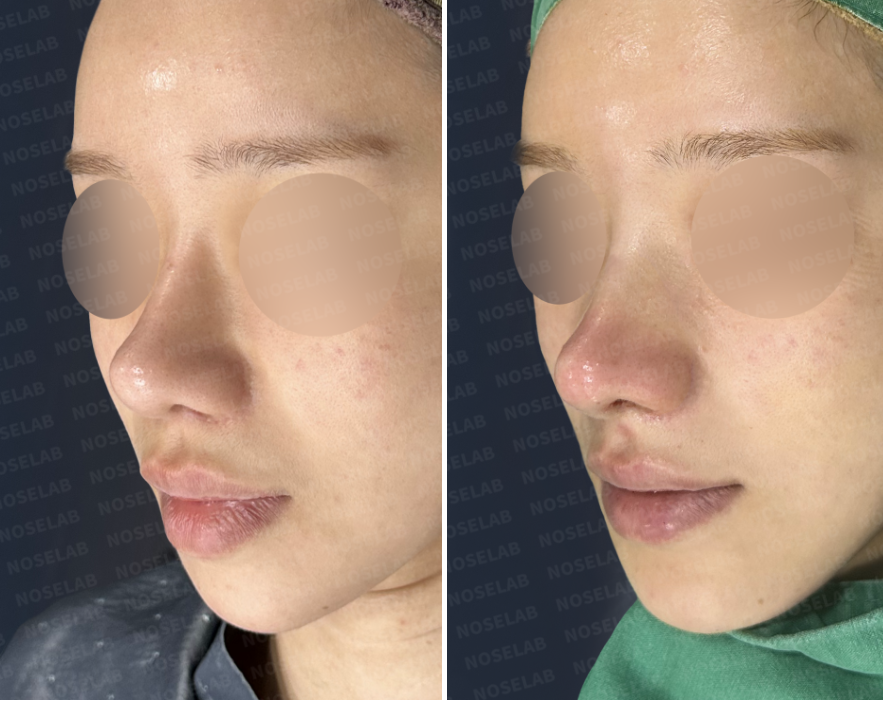
Surgical Results
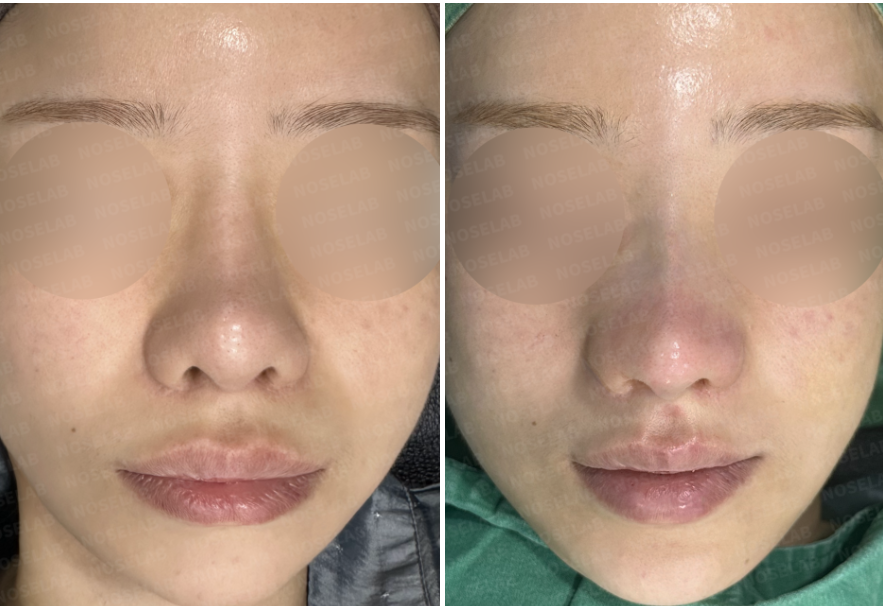
Nasal septum reconstructed with rib cartilage for long-term stability
Deviated septum corrected, restoring bilateral airflow
Nasal bones realigned for frontal symmetry
Significant improvement in chronic nasal obstruction
Natural dorsal line and balanced side profile achieved
Final outcome:
A stable, straight nose with restored breathing and refined aesthetics.


Surgeon’s Commentary
In Deviated Nose Revision Rhinoplasty Korea, the most critical factor is septal integrity.
Without rebuilding the septum, aesthetic corrections alone cannot last.
Autologous rib cartilage is the most reliable material in complex revision cases. It provides sufficient strength, volume, and durability—without the risks associated with implants or weakened native cartilage.
This case demonstrates that successful revision rhinoplasty must prioritize function first, structure second, and aesthetics last.
Only with this sequence can long-term satisfaction be achieved.
At NoseLab, we focus on root-cause correction rather than temporary visual improvement—especially in high-risk revision cases.
Read the author’s background and the original case context. About these articles