
Case at a glance
- Surgical plan
- Graft & material details
- Photo timing
These details are excerpts from the original article and captions. Follow a detail to read it in context.
Surgical Background – Autologous Rib Cartilage Rhinoplasty
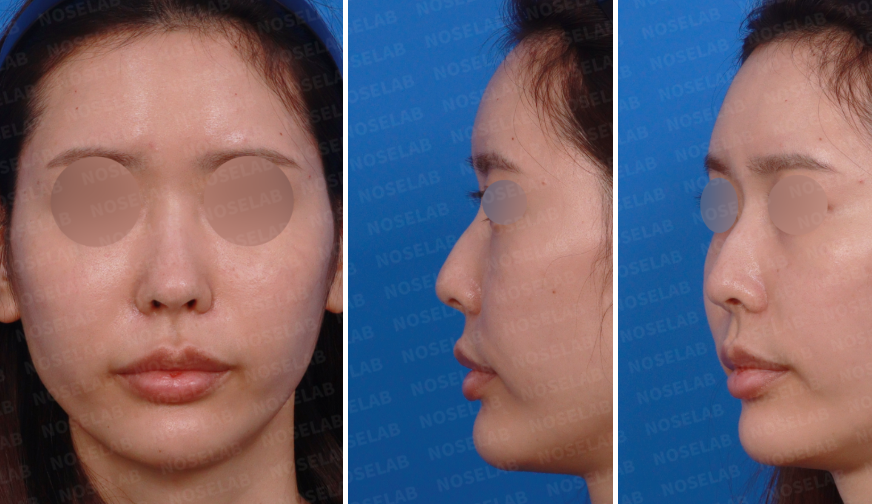
This case involves a patient who visited our clinic with concerns about a small, drooping nose accompanied by chronic nasal congestion. In addition to aesthetic dissatisfaction, she experienced breathing discomfort caused by a deviated septum and long-standing rhinitis. As this was her first nasal surgery, the treatment plan focused on achieving natural aesthetics while simultaneously restoring nasal function through autologous rib cartilage rhinoplasty.
Surgical background:
No prior rhinoplasty
Chronic rhinitis and nasal obstruction
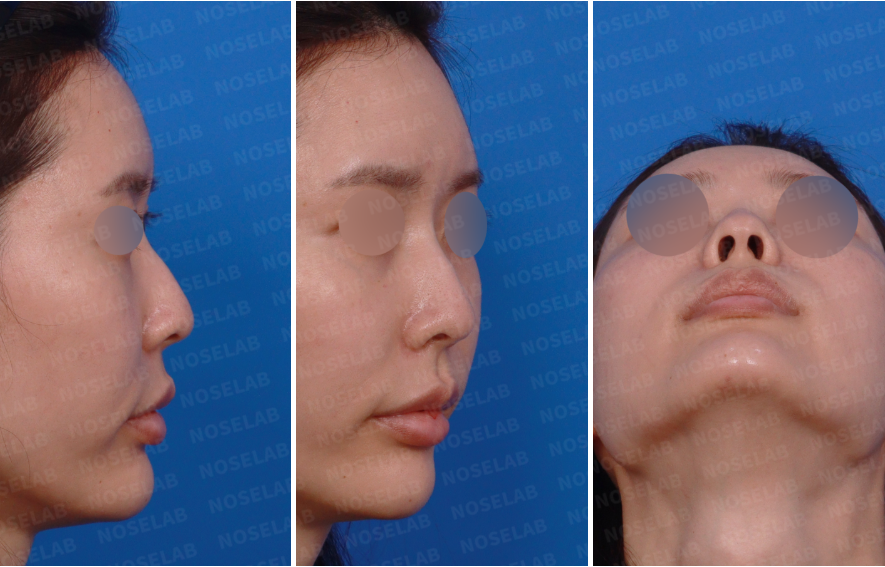
Surgical Plan – Structural Support and Functional Correction
A closed rhinoplasty approach was selected to minimize external scarring while addressing both cosmetic and functional concerns. Autologous rib cartilage was used to provide strong internal support and long-term stability.
Key procedures included:
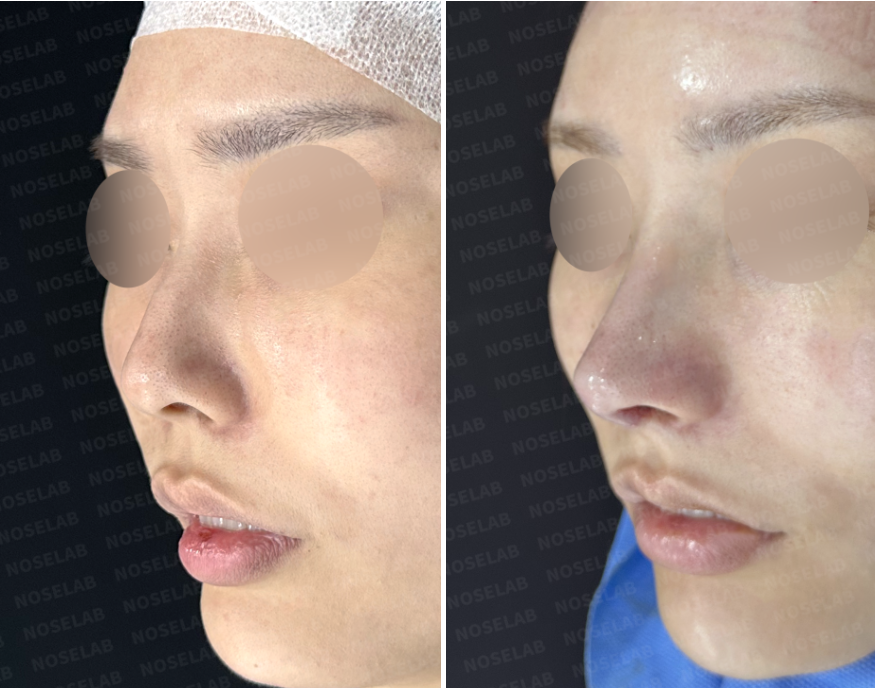
Nasal tip projection using rib cartilage to correct drooping
Nasolabial angle correction to improve side profile balance
Septoplasty to straighten the deviated septum
Turbinoplasty to reduce inferior turbinate hypertrophy caused by rhinitis
Each step was carefully coordinated to improve nasal airflow while enhancing overall facial harmony.
Surgical Results – Aesthetic Balance and Breathing
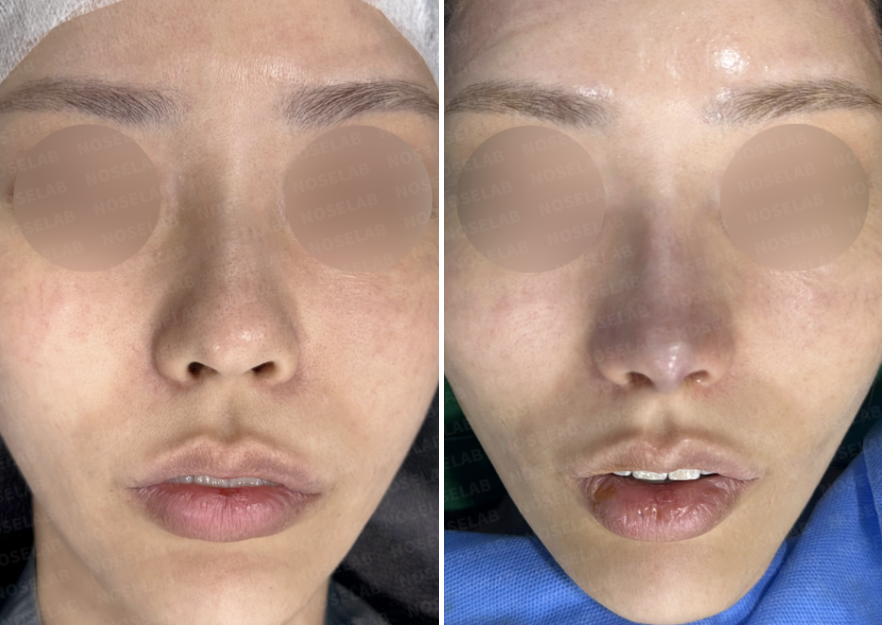
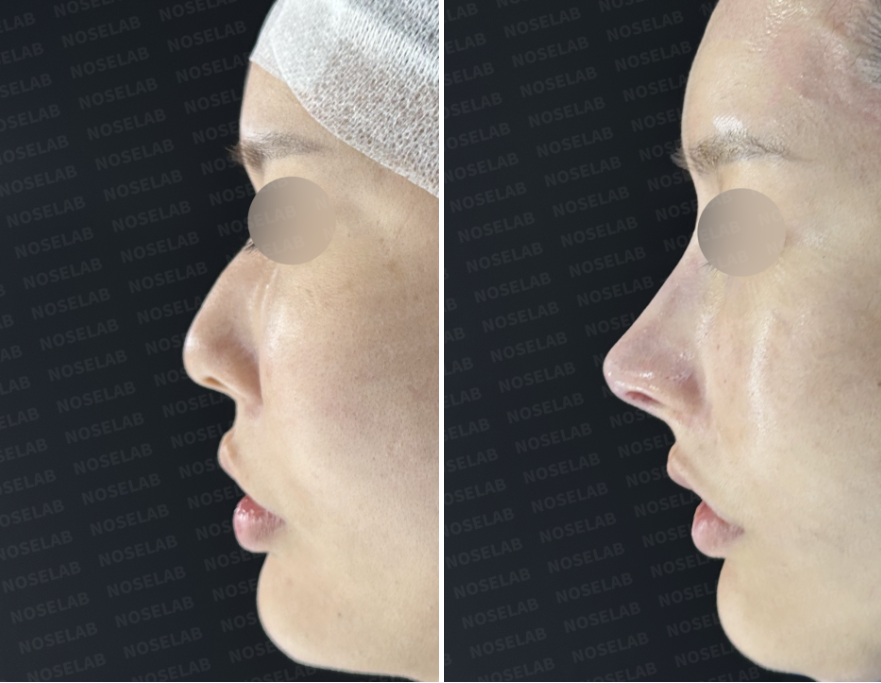
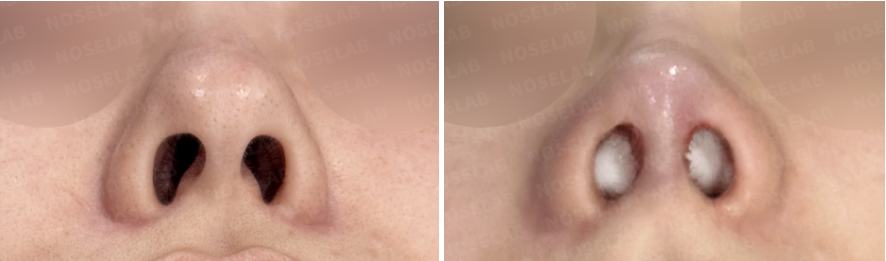
Postoperative evaluation showed improvement in both appearance and nasal function.
Frontal view: the nasal tip is lifted, creating better facial balance
Side profile: a refined nasolabial angle and naturally projected tip
Nostril view: improved symmetry and structured nasal base
The nose now appears more defined while maintaining a soft, natural contour.
Surgeon’s Commentary – Combining Aesthetic and Functional Rhinoplasty
Correcting a small, drooping nose requires more than simply increasing height. Structural balance, nasal harmony, and long-term support are essential. In this case, autologous rib cartilage provided durable internal support, allowing for natural tip projection without overcorrection.
At the same time, addressing nasal obstruction through septoplasty and turbinoplasty significantly improved breathing. Many patients worry that rhinoplasty may worsen nasal congestion, but when performed correctly, autologous rib cartilage rhinoplasty can enhance both appearance and quality of life.
This surgery was performed by Cha-Young Kang, Chief Director of NoseLab Clinic, using a personalized, patient-centered approach.
Read the author’s background and the original case context. About these articles


