Case at a glance
- Surgical plan
These details are excerpts from the original article and captions. Follow a detail to read it in context.
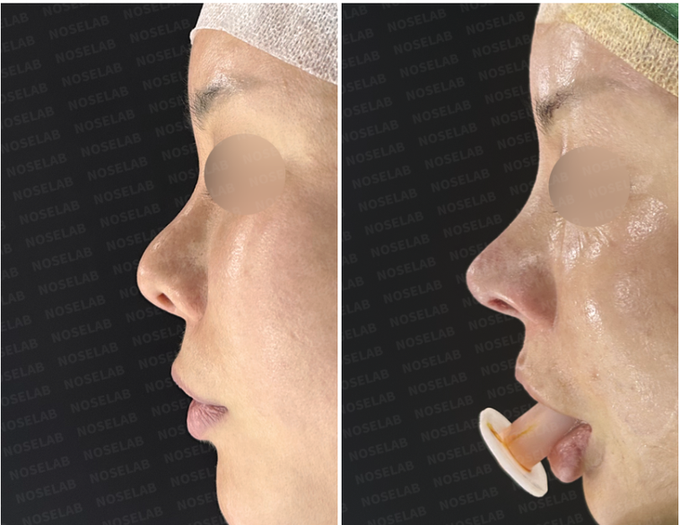
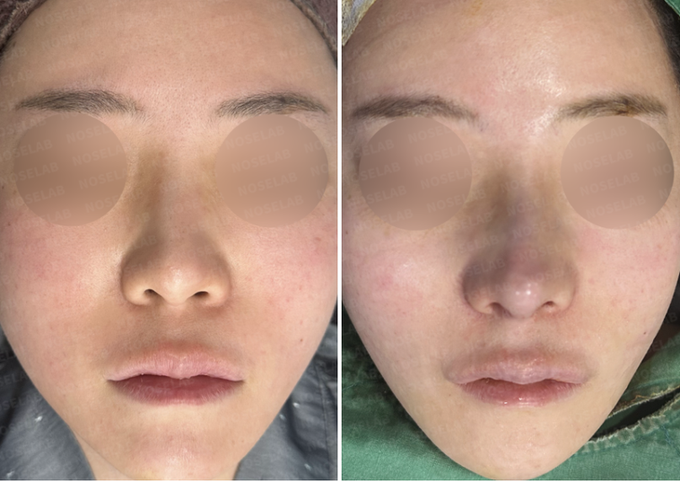
This case demonstrates closed rhinoplasty Korea for a 3rd revision rhinoplasty patient with columella retraction, nostril asymmetry, and structural instability. Rib cartilage reconstruction restored nasal support, improved facial balance, and achieved long-term stability.
✅ Author / Published / Updated
Dr. Cha-Young Kang , NoseLab Clinic
Published: 2025
Last Updated: 2026
✅ Case Background
This patient presented after undergoing three previous rhinoplasty procedures over a period of more than 20 years.
The main concerns included columella retraction, bulbous nasal tip, protruding mouth, and significant nostril asymmetry, all of which were aggravated by previous surgeries and post-surgical trauma.
In this closed rhinoplasty Korea case, the goal was to restore structural integrity, correct the retracted columella, and improve both aesthetic balance and nasal function.
Key concerns included:
Severe columella retraction
Bulbous and asymmetrical nasal tip
Nostril asymmetry
Protruding mouth
Structural instability from repeated surgeries
Functional airway compromise
This case required full structural reconstruction rather than simple cosmetic refinement.
If you are experiencing similar issues after multiple rhinoplasty procedures, a detailed structural evaluation is essential.
📩 International Consultation

✅ Surgical Approach – 3rd Revision Rhinoplasty Korea Using Closed Rhinoplasty Korea
In multiple revision rhinoplasty cases, structural damage and cartilage loss are common.
Columella retraction often occurs when septal support is weakened or lost, requiring reconstruction rather than simple repositioning.
Closed rhinoplasty Korea allows precise internal reconstruction while minimizing additional trauma to previously operated tissues.

✅ Structural Problems Identified
Severe columella retraction due to loss of septal support
Bulbous nasal tip with poor definition
Nostril asymmetry caused by alar imbalance
Deviated nasal structure
Protruding mouth related to nasolabial imbalance
Scar tissue and contracture from previous surgeries
Functional airway compromise
✅ Surgical Plan
1. Cartilage Harvesting
Autologous rib cartilage and ear cartilage harvesting
2. Septal Reconstruction
Rebuilding septal support using rib cartilage
3. Septal Extension Graft
Correction of columella retraction and tip support
4. Nasal Tip Reconstruction
Refinement of bulbous tip and structural stabilization
5. Columella Correction
Lowering and repositioning without over-lengthening
6. Nostril Reconstruction
Correction of asymmetry using alar cartilage repositioning
7. Nasolabial Angle Adjustment
Balancing protruding mouth and facial harmony
✅ Surgical Results
Frontal View
Improved nostril symmetry
Refined nasal tip
Balanced alignment

Lateral View
Improved columella visibility
Balanced nasolabial angle
Reduced mouth protrusion

Oblique View
Enhanced contour
Improved tip definition

Nasal Base View
Corrected nostril asymmetry
Straightened columella

✅ Functional Outcome
Improved nasal airflow
Stabilized nasal structure
Reduced obstruction
✅ Surgeon’s Commentary
Third revision rhinoplasty cases are among the most challenging due to cumulative structural damage and scar formation.
Columella retraction is not simply a positional issue but a structural problem caused by loss of septal support.
In this case, rib cartilage reconstruction was essential to restore a stable framework and allow proper positioning of the nasal tip and columella.
Balancing the nasolabial angle also played a critical role in correcting the protruding mouth and achieving facial harmony.
Closed rhinoplasty Korea allows precise correction while minimizing additional surgical trauma.
Long-term stability depends on proper structural reconstruction rather than repeated superficial corrections.
📩 International Consultation
✅ FAQ
Q1. Why is third revision rhinoplasty more difficult?
Repeated surgeries cause cartilage loss and scar tissue, making reconstruction more complex.
Q2. Why is rib cartilage used in revision cases?
It provides strong and stable support when native cartilage is insufficient.
Q3. Can columella retraction be permanently corrected?
Yes, with proper structural reconstruction and support.
✅ YouTube Reference
If you’re curious about Dr. Cha-Young Kang’s closed rhinoplasty approach, click to watch the video.

Read the author’s background and the original case context. About these articles
Source updated .