Case at a glance
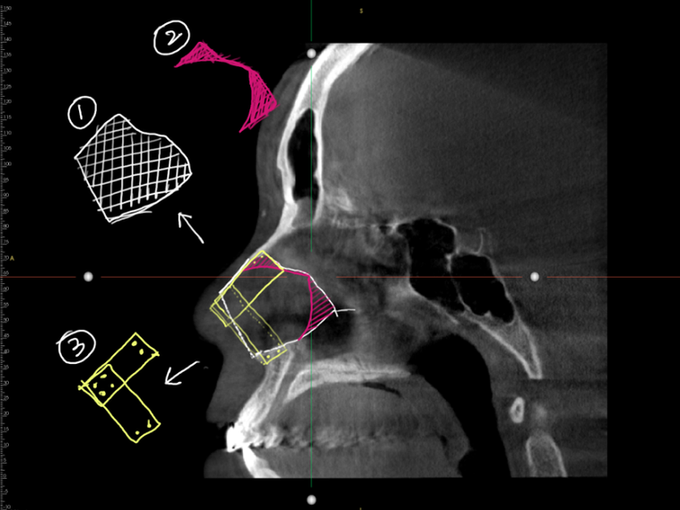
- Surgical plan
- Graft & material details
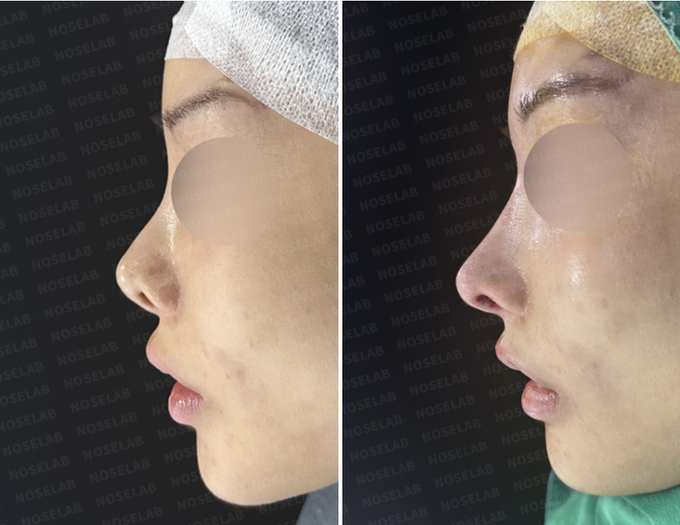
- Photo timing
These details are excerpts from the original article and captions. Follow a detail to read it in context.
This case demonstrates Closed Rhinoplasty Korea for contracted nose correction combined with nasal congestion improvement. Rib cartilage reconstruction and functional surgery restored nasal structure, improved airflow, and achieved long-term stability and natural balance.
Author: Dr. Cha-Young Kang, Director, NoseLab Clinic
✅ Case Background
This patient presented with severe nasal contracture and functional breathing impairment following multiple rhinoplasty procedures.
Repeated surgeries, implant use, and structural damage resulted in septal cartilage loss, nasal shortening, and chronic nasal congestion.
In this Closed Rhinoplasty Korea case, the goal was to reconstruct the nasal framework, correct the contracted structure, and simultaneously improve nasal airflow and breathing function.
Key concerns included:
Contracted and shortened nose
Upturned nasal tip
Retracted columella
Excessive nostril exposure
Nostril asymmetry
Nasal bone asymmetry
Severe nasal congestion and airway obstruction
This case required both structural reconstruction and functional correction.
If you are experiencing breathing difficulty or worsening nasal shape after multiple surgeries, a detailed structural evaluation is essential.
📩 International Consultation


✅ Surgical Approach – Contracted Nose Correction Using Closed Rhinoplasty Korea
Contracted nose combined with nasal congestion is a complex condition involving both structural collapse and airway obstruction.
Loss of septal cartilage support and scar contracture can deform the nose externally while simultaneously narrowing the internal airway.
Closed Rhinoplasty Korea allows precise structural reconstruction and functional correction without additional external incisions.

✅ Structural Problems Identified
Severe scar contracture
Loss of septal cartilage
Short and upturned nasal structure
Nostril asymmetry
Columella retraction
Nasal bone asymmetry
Internal airway obstruction
Inferior turbinate hypertrophy
✅ Surgical Plan
1. Preoperative Tissue Preparation
Stem cell therapy to improve skin condition
Reduction of inflammation and fibrosis
2. Implant Removal
Safe removal of silicone implant
Elimination of inflammatory source
3. Septal Reconstruction
Reconstruction using autologous rib cartilage
Restoration of structural support
4. Tip and Columella Reconstruction
Correction of upturned nasal tip
Realignment of columella
5. Osteotomy
Correction of nasal bone asymmetry
Improvement of nasal width
6. Functional Surgery
Septoplasty for airway correction
Turbinate reduction using high-frequency laser
✅ Surgical Results
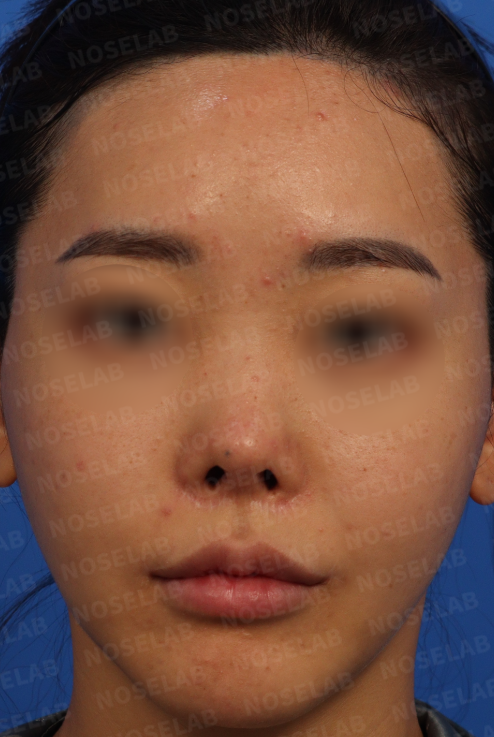
Frontal View
Reduced nostril exposure
Improved symmetry

Lateral View
Improved nasal length
Balanced tip position

Oblique View
Restored contour
Improved projection

Nasal Base View
Improved nostril symmetry
Reduced scar visibility

Functional Outcome
Significant improvement in nasal airflow
Reduced nasal congestion
Stabilized internal nasal structure
✅ Surgeon’s Commentary

Contracted nose combined with nasal congestion represents one of the most complex scenarios in revision rhinoplasty.
Structural collapse and airway obstruction often occur simultaneously due to septal cartilage loss and scar contracture.
In this case, rib cartilage reconstruction was essential to restore structural support, while septoplasty and turbinate reduction addressed functional breathing problems.
Preoperative stem cell therapy helped improve soft tissue condition, reducing the risk of complications and recurrence.
Closed Rhinoplasty Korea allows precise reconstruction and functional correction while minimizing additional trauma to already compromised tissue.
Long-term success depends on restoring both structural integrity and airway function.
✅ FAQ
Q1. Why does nasal congestion occur after rhinoplasty?
It is often due to septal damage and airway narrowing.
Q2. Can both function and appearance be corrected together?
Yes, through combined structural and functional surgery.
Q3. Why is rib cartilage necessary?
It provides stable support when septal cartilage is lost.

Read the author’s background and the original case context. About these articles
Source updated .