Case at a glance
- Surgical plan
- Graft & material details
- Photo timing
These details are excerpts from the original article and captions. Follow a detail to read it in context.
Surgical Background of Permanent Filler Removal Rhinoplasty Korea

Patient History and Key Complications
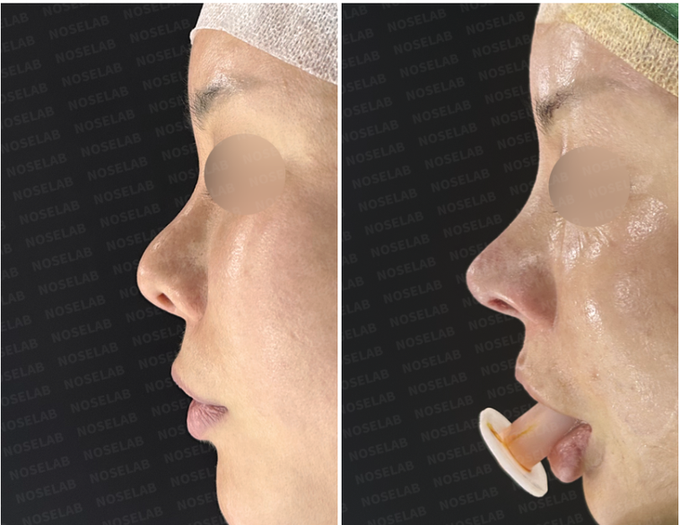
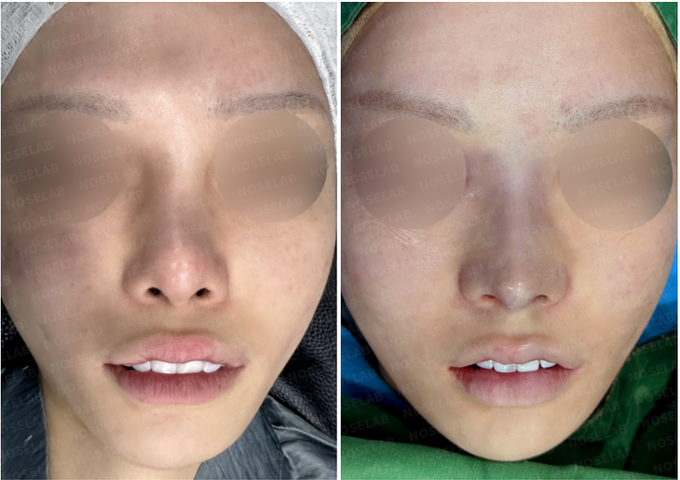
The patient presented with complications related to a permanent nasal filler (Artecoll), including an upturned nasal tip, nostril asymmetry, and severe septal damage caused by prior surgery.
The presence of permanent filler in the nasal bridge resulted in chronic inflammation risk, structural instability, and functional nasal obstruction associated with septal deviation and long-standing rhinitis.
In such cases, Permanent Filler Removal Rhinoplasty Korea requires a structured approach that prioritizes complete foreign material removal, restoration of septal support, and correction of tip position.

Surgical Plan for Permanent Filler Removal Rhinoplasty Korea
Complete Removal of Permanent Filler (Artecoll)
All residual Artecoll within the nasal bridge was meticulously removed. Permanent fillers can induce chronic foreign-body reactions, fibrosis, and tissue distortion; therefore, total removal was essential to establish a safe and clean foundation for reconstruction.
Correction of Nostril Asymmetry
The elevated nostril was carefully lowered to restore symmetry. Even minor nostril imbalance can significantly affect frontal aesthetics and must be addressed precisely during revision surgery.
Septal Reconstruction Using Autologous Rib Cartilage
The nasal septum had been severely damaged in previous procedures. Autologous rib cartilage was harvested and used to reconstruct a strong central support, which is critical for both nasal stability and long-term airway function.
Correction of the Upturned Nasal Tip
Using rib cartilage, the upturned nasal tip was lowered and reshaped to achieve a balanced, mature profile. Structural tip support ensured a natural appearance without recurrence of deformity.
Functional Correction: Septoplasty and Turbinate Reduction
Septal deviation and hypertrophic turbinates were corrected to restore nasal airflow. This functional correction was performed simultaneously to ensure both aesthetic improvement and long-term breathing comfort.
Surgical Outcomes After Permanent Filler Removal Rhinoplasty Korea
Complete removal of Artecoll eliminated long-term inflammatory risks
Nostril asymmetry corrected for balanced frontal appearance
Septum successfully reconstructed with autologous rib cartilage
Upturned nasal tip lowered to a natural and proportional position
Nasal obstruction improved through septoplasty and turbinate reduction
The final outcome achieved a stable, natural-looking nose with restored function and symmetry.


Surgeon’s Commentary on Permanent Filler Removal Rhinoplasty Korea
Permanent filler-related complications require a fundamentally different approach from standard revision rhinoplasty. In Permanent Filler Removal Rhinoplasty Korea, complete removal of the foreign material is non-negotiable to prevent recurrence of inflammation or distortion.
Septal reconstruction is equally critical. A compromised septum weakens nasal support and directly affects breathing. Autologous rib cartilage offers sufficient strength, durability, and biocompatibility, making it the most reliable graft material in complex revision cases.
Correcting an upturned nasal tip must be approached conservatively. Structural reinforcement ensures that the tip remains stable over time while achieving a natural, harmonious appearance.
At NoseLab Plastic Surgery Clinic, we specialize in complex revision surgery involving permanent fillers, septal damage, and functional impairment—always prioritizing safety, predictability, and long-term stability.

Read the author’s background and the original case context. About these articles