Case at a glance
- Surgical plan
- Graft & material details
These details are excerpts from the original article and captions. Follow a detail to read it in context.
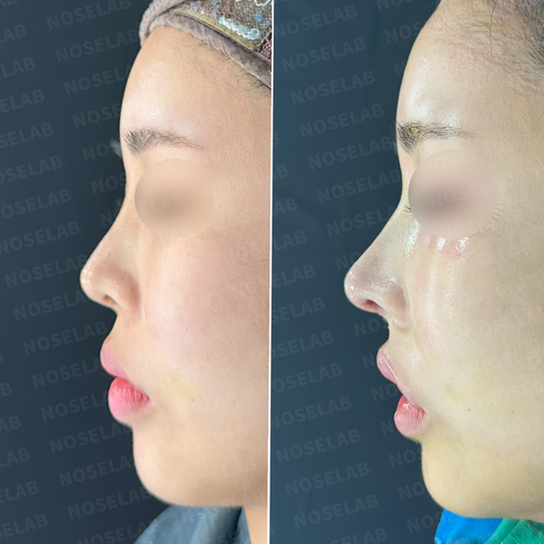
This case demonstrates Closed Rhinoplasty Korea for severe contracted nose correction after multiple surgeries and inflammation. Rib cartilage reconstruction restored nasal structure, improved airway function, and achieved long-term stability and natural balance.
✅ Author / Published / Updated
Dr. Cha-Young Kang ,NoseLab Clinic
Published: 2024
Last Updated: 2026
✅ Case Background
This patient presented with severe nasal contracture following multiple rhinoplasty procedures and inflammation-related complications.
Repeated surgeries, implant use, and inflammatory reactions led to progressive structural damage, cartilage loss, and soft tissue contracture.
In this Closed Rhinoplasty Korea case, the goal was to release the contracted structure, reconstruct the nasal framework, and restore both functional breathing and aesthetic balance.
Key concerns included:
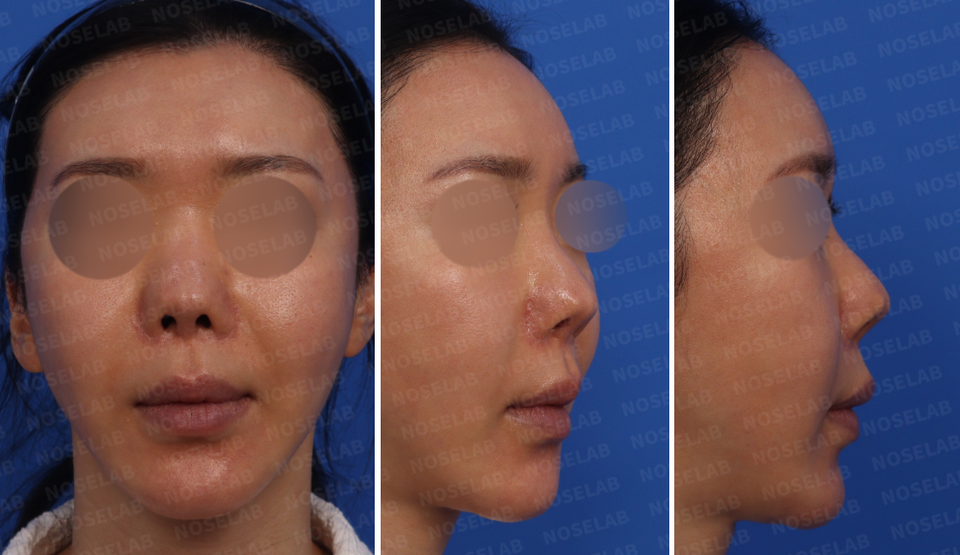
Severe contracted nose deformity
Excessive nostril exposure
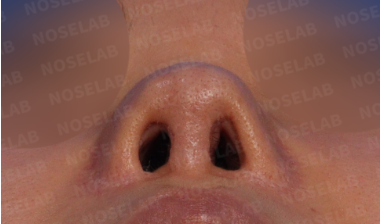
Nostril asymmetry
Upturned nasal tip
Wide and blunt nasal tip
Flat glabella with high dorsum imbalance
Functional airway obstruction
This case required full structural reconstruction rather than cosmetic correction.
If you are experiencing worsening nasal shape or breathing problems after multiple surgeries, a detailed structural evaluation is essential.
📩 International Consultation
✅ Surgical Approach – Contracted Nose Correction Using Closed Rhinoplasty Korea
Nasal contracture occurs when scar tissue, inflammation, and repeated surgeries cause shortening and distortion of the nasal structure.
In advanced cases, both cartilage framework and soft tissue envelope are compromised, requiring complete reconstruction rather than partial correction.
Closed Rhinoplasty Korea allows precise removal of contracted tissue and reconstruction of nasal support structures while minimizing additional soft tissue damage.
✅ Structural Problems Identified
Severe scar contracture
Loss of septal cartilage support
Short and upturned nasal structure
Wide nasal base and blunt tip
Nostril asymmetry
Columella deviation
Skin contracture and stiffness
Functional airway obstruction
✅ Surgical Plan
1. Preoperative Tissue Preparation
Stem cell injection therapy to improve skin elasticity
Preparation for safe reconstruction
2. Contracted Tissue Removal
Removal of scarred and inflamed tissue
Preservation of viable structures
3. Septal Reconstruction
Reconstruction using autologous rib cartilage
Restoration of central nasal support
4. Tip and Columella Reconstruction
Correction of upturned nasal tip
Realignment of columella
5. Osteotomy and Shape Correction
Lateral osteotomy for wide nasal bridge
Adjustment of dorsal contour
6. Functional Restoration
Improvement of nasal airway
Reduction of obstruction
✅ Surgical Results
Frontal View
Reduced nostril exposure
Improved symmetry

Oblique View
Restored contour
Improved harmony
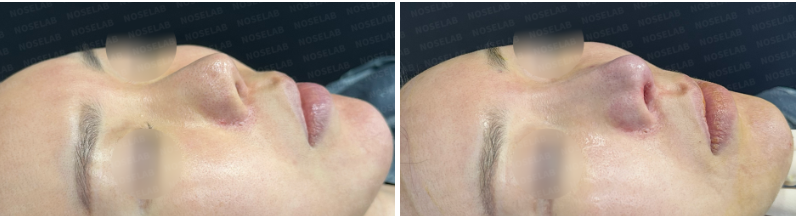
Lateral View
Improved nasal length
Balanced tip position

Nasal Base View
Improved nostril symmetry
Corrected soft tissue imbalance
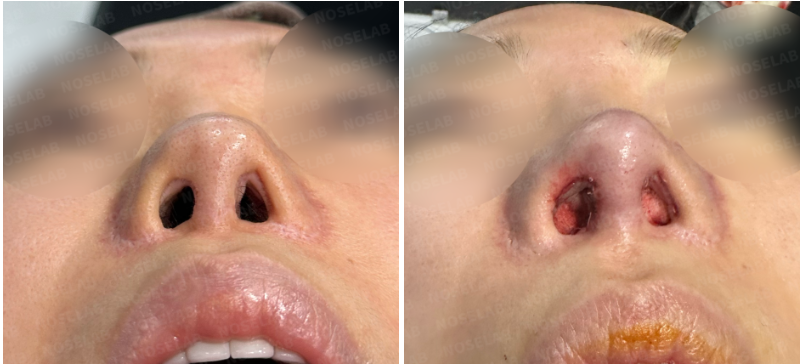
Functional Outcome
Improved nasal airflow
Reduced obstruction
Stabilized nasal structure
✅ Surgeon’s Commentary
Severe contracted nose cases require comprehensive structural reconstruction rather than simple cosmetic correction.
Repeated surgeries and inflammation often result in significant cartilage loss and soft tissue contracture, making these cases highly complex.
In this case, rib cartilage reconstruction was essential due to the lack of usable septal cartilage.
Preoperative tissue preparation using stem cell therapy helped improve skin elasticity and reduce the risk of complications.
Careful removal of contracted tissue while preserving viable structures was critical to achieving a stable outcome.
Closed Rhinoplasty Korea allows precise structural reconstruction while minimizing additional trauma to already compromised tissue.
Long-term success depends on restoring structural integrity and maintaining soft tissue balance.
✅ FAQ
Q1. Why does nasal contracture occur after multiple surgeries?
It is caused by scar tissue, inflammation, and structural damage.
Q2. Why is rib cartilage used in these cases?
It provides strong structural support when native cartilage is insufficient.
Q3. Can a contracted nose be fully corrected?
Significant improvement is possible with proper structural reconstruction.
✅ Mandatory Disclosure
This case is for educational purposes only.
Results may vary depending on individual anatomy and surgical history.
Read the author’s background and the original case context. About these articles
Source updated .