Case at a glance
- Concerns & goals
- Surgical plan
- Graft & material details
- Photo timing
These details are excerpts from the original article and captions. Follow a detail to read it in context.
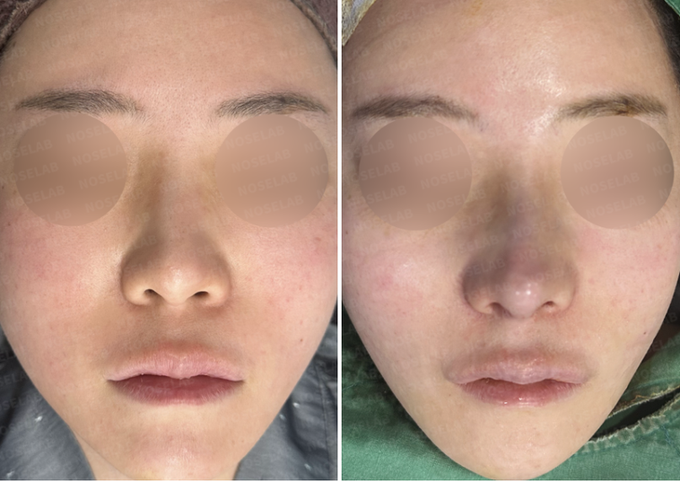
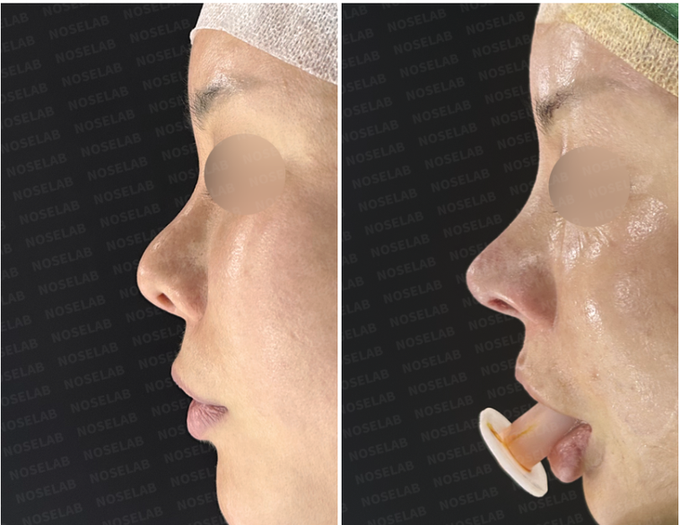
This case demonstrates closed rhinoplasty Korea for a revision patient with highly specific aesthetic requests, including columella refinement and nostril asymmetry correction. Structural adjustments using rib cartilage allowed precise customization while maintaining stability and natural balance.
✅ Author / Published / Updated
Dr. Cha-Young Kang
Published: 2024
Last Updated: 2026
This patient presented for revision rhinoplasty after multiple previous surgeries performed in different countries, including rib cartilage, ear cartilage, and silicone implant procedures.
In this closed rhinoplasty Korea case, the goal was not major structural change but precise correction of specific aesthetic concerns while preserving the existing nasal framework.
The patient’s primary requests included:
Rounded and gently lowered columella
Avoidance of excessive columella projection
Correction of nostril asymmetry
Preservation of existing nasal bridge and implant height
Improvement of scar-related irregularities
This case required highly controlled structural refinement rather than extensive reconstruction.
If you have specific aesthetic concerns after previous rhinoplasty, a detailed structural evaluation is essential.
📩 International Consultation
✅ Surgical Background – Closed Rhinoplasty Korea
Closed rhinoplasty Korea allows precise internal modification of nasal structures without external incisions.
In cases requiring detailed customization rather than major reconstruction, this approach enables fine structural adjustments while preserving existing tissues.
This is particularly useful in revision rhinoplasty where overcorrection must be avoided.

✅ Structural Problems Identified
Preoperative analysis revealed:
Columella shape imbalance and excessive visibility
Nostril asymmetry due to uneven alar cartilage support
Localized scar tissue beneath the columella
Minor structural imbalance without need for full reconstruction
Need to preserve existing dorsal height and implant
These findings required selective correction rather than full structural rebuilding.
✅ Surgical Plan
1. Columella Refinement with Rib Cartilage
Donor rib cartilage was used to adjust the shape and projection of the columella to achieve a rounded and natural appearance.
2. Nostril Asymmetry Correction
The alar cartilage on the right side was extended and repositioned to improve symmetry.
3. Scar Tissue Removal
Localized scar tissue beneath the columella was excised to improve contour smoothness.
4. Structural Preservation Strategy
The existing silicone implant and nasal bridge height were preserved to maintain the patient’s preferred nasal profile.
5. Fine Structural Adjustment
Minimal but precise adjustments were performed to maintain balance without overcorrection.
✅ Surgical Results
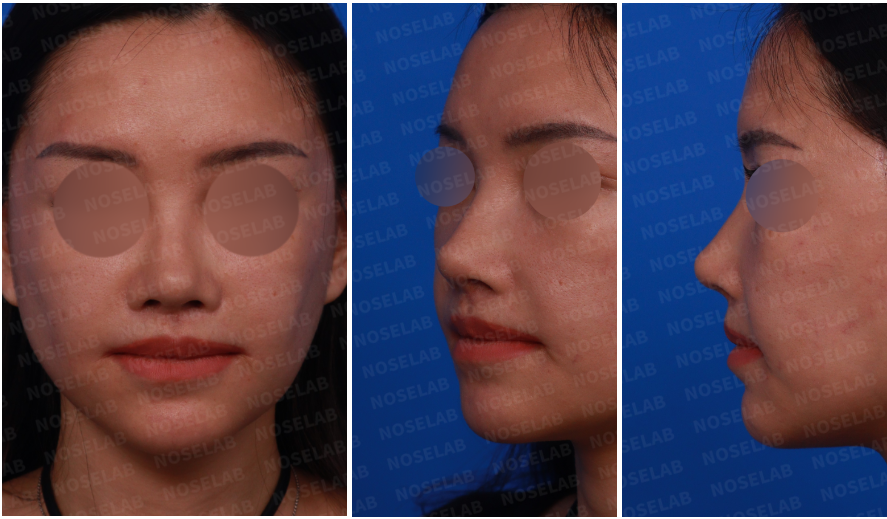
Frontal View
Improved nostril symmetry
Balanced nasal appearance
Natural contour maintained

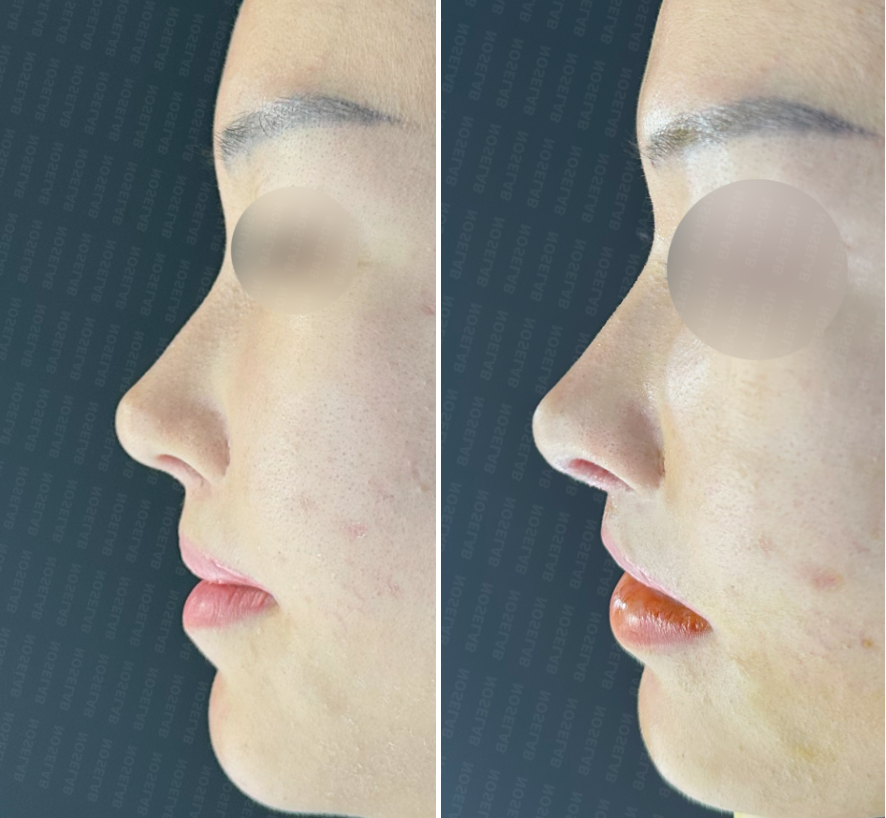
Lateral View
Subtle columella refinement
Maintained dorsal height
Harmonized profile
Oblique View
Smooth transition of nasal structures
Improved balance without excessive change

Functional Outcome
Nasal airway preserved
No functional compromise
Stable structural condition

✅ Surgeon’s Commentary
Not all revision rhinoplasty cases require major reconstruction.
In some cases, the key is precise structural refinement tailored to the patient’s specific requests.
Columella shape plays a critical role in nasal aesthetics, particularly in frontal and basal views.
Overcorrection can lead to unnatural results, so maintaining balance is essential.
Closed rhinoplasty Korea allows highly controlled adjustments, making it suitable for cases requiring precision rather than large-scale modification.
If you have specific concerns after previous rhinoplasty, individualized planning is essential for achieving natural results.
📩 International Consultation
✅ FAQ
Q1. Can rhinoplasty be customized for specific aesthetic requests?
Yes. Precise structural adjustments can be tailored to individual preferences while maintaining stability.
Q2. Is it possible to keep the existing implant?
In some cases, the implant can be preserved if it is stable and aligns with the patient’s desired outcome.
Q3. Why use rib cartilage for small corrections?
Rib cartilage provides stable support even in fine adjustments, especially in revision cases.
🎥 YouTube Reference
If you’re curious about Dr. Cha-Young Kang’s closed rhinoplasty approach, click to watch the video.
This case is for educational purposes and represents a clinical example.
Results may vary depending on individual anatomy and surgical history.
All procedures were performed by a qualified specialist.

Read the author’s background and the original case context. About these articles
Source updated .