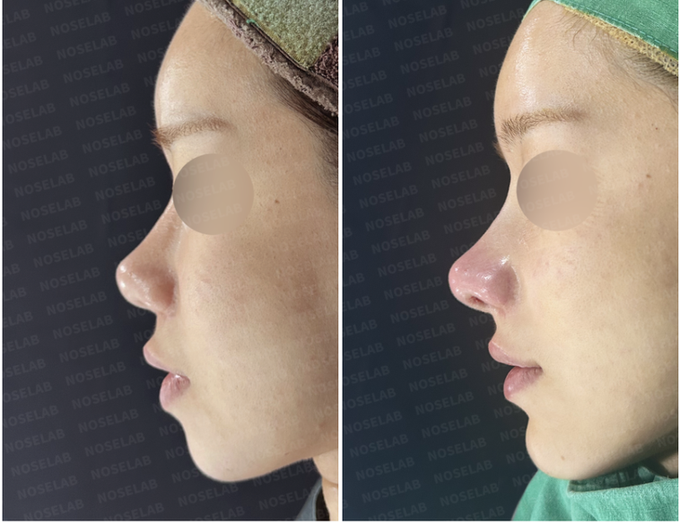
Case at a glance
- Concerns & goals
- Surgical plan
- Graft & material details
- Photo timing
These details are excerpts from the original article and captions. Follow a detail to read it in context.
(Revision Rhinoplasty Case)
High radix and severe septal deviation can lead to both functional breathing problems and an unnatural nasal profile.
In this case, structural reconstruction using rib cartilage, implant repositioning, and osteotomy corrected nasal alignment, lowered the radix, and improved airway function through a closed rhinoplasty approach.
Author: Dr. Cha-Young Kang, Director, NoseLab Clinic
This case involves a revision rhinoplasty patient who presented with severe septal deviation and an excessively high nasal starting point (radix), resulting in both functional impairment and an unnatural nasal profile.
The patient had previously undergone silicone implant augmentation and nasal tip surgery using septal cartilage approximately five years ago. Over time, septal deviation worsened, and the implant position contributed to an overly prominent and artificial dorsal appearance.
The patient sought correction focused on restoring natural proportions and improving nasal breathing.
In this case, structural correction was achieved through closed rhinoplasty korea, focusing on internal reconstruction rather than simple implant adjustment.
If you are experiencing similar issues such as nasal deviation, breathing discomfort, or an unnaturally high nasal starting point, a detailed structural evaluation is essential before determining the appropriate surgical plan.
📩 International Consultation
→ LINE Consultation (Japan only)
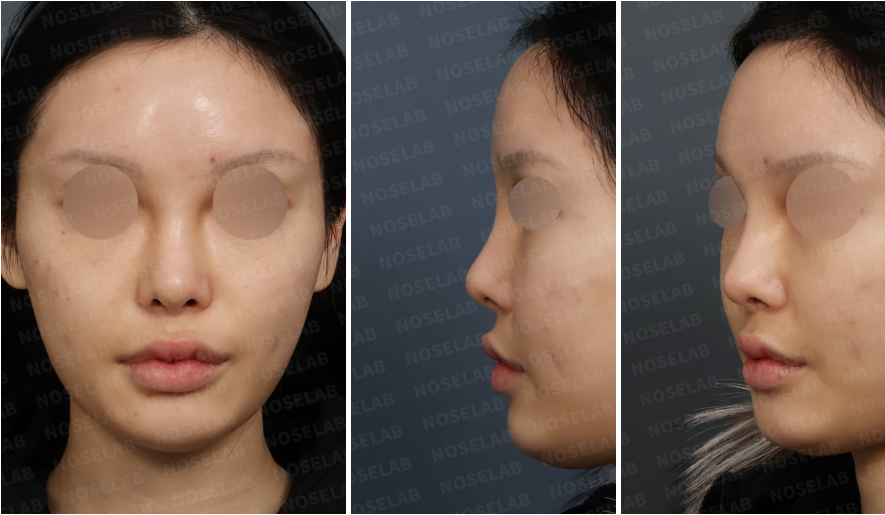
Surgical Background – Closed Rhinoplasty Korea
Revision rhinoplasty for high radix and septal deviation requires precise structural correction of both the septum and nasal framework.
For this reason, closed rhinoplasty korea was selected to allow controlled internal reconstruction, implant repositioning, and airway correction without external incisions.
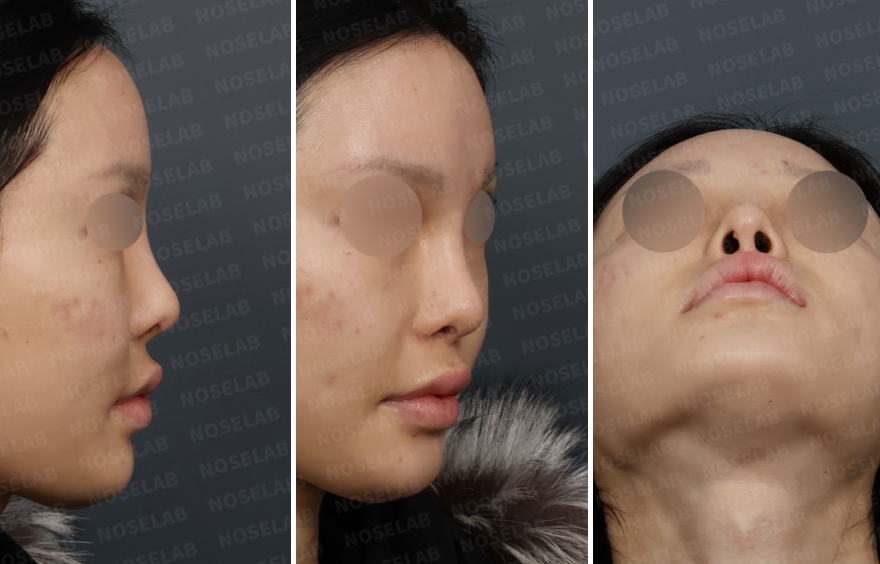
Structural Problems Identified
Preoperative analysis revealed several combined structural issues:
Excessively high radix due to improper implant positioning
Severe septal deviation causing nasal obstruction
Crooked nasal bone alignment
Artificial dorsal contour
Compromised nasal airflow
These issues required simultaneous structural and functional correction.
Surgical Plan – Structural Realignment and Functional Reconstruction
Removal of Previous Implant
The previously inserted silicone implant was removed.
Procedures performed:
Removal of the existing implant
Assessment of surrounding scar tissue
Preparation for accurate reconstruction
Septal Reconstruction with Rib Cartilage
The septum was severely deviated and structurally unstable.
Procedures performed:
Reconstruction of the septum using donor rib cartilage
Restoration of central nasal support
Stabilization of the internal nasal framework
Rib cartilage provides strong structural support in revision cases.
Lateral Osteotomy for Alignment Correction
The nasal bones were asymmetrical and deviated.
Procedures performed:
Lateral osteotomy to reposition nasal bones
Correction of nasal deviation
Restoration of symmetry
Radix Adjustment and Dorsal Refinement
The nasal starting point was excessively high.
Procedures performed:
Lowering of the radix to an anatomically appropriate position
Creation of a natural dorsal starting point
Formation of a smooth dorsal contour
Implant Repositioning and Refinement
A new implant was used to refine the nasal bridge.
Procedures performed:
Custom carving tailored to the patient’s anatomy
Placement limited to the nasal dorsum
Creation of a natural straight-to-soft dorsal line
Functional Nasal Surgery
Functional correction was performed to improve breathing.
Procedures included:
Septoplasty to correct deviation
Inferior turbinate reduction to relieve obstruction
These procedures restored nasal airflow and functional stability.
Surgical Results
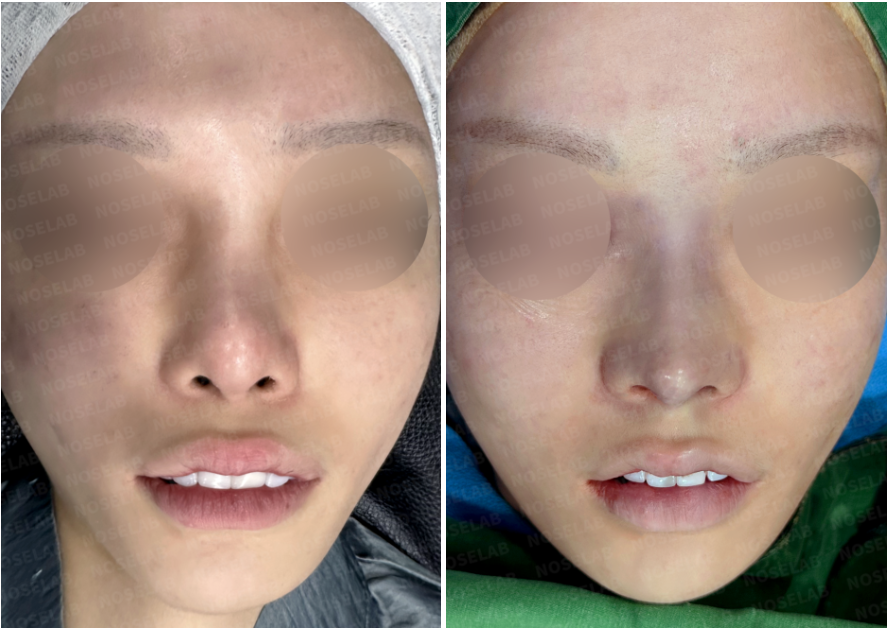
Frontal View
Straightened nasal bridge with improved symmetry
Balanced nasal alignment
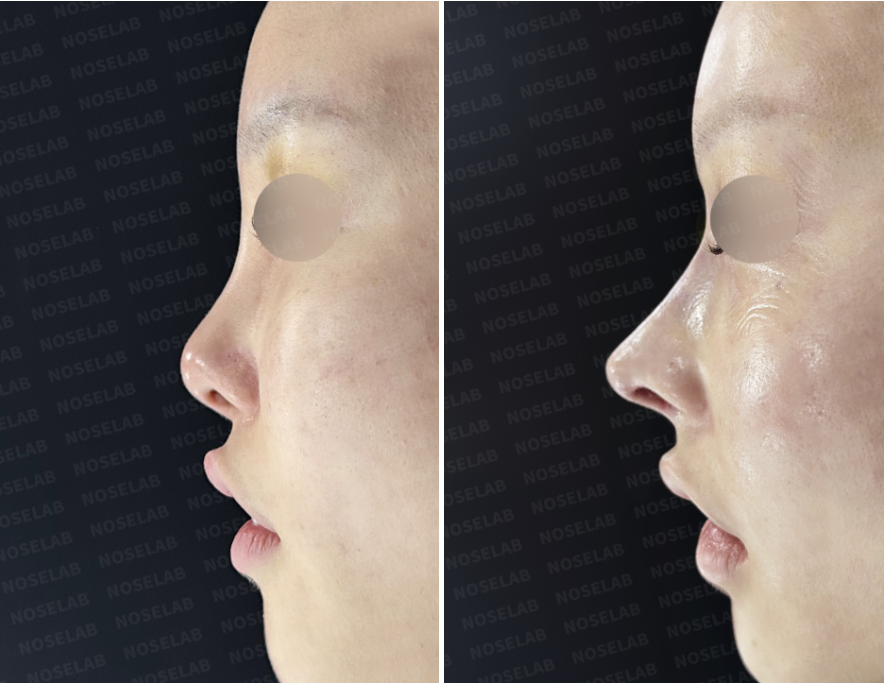
Lateral View
Lowered radix creating a natural starting point
Smooth and natural dorsal line
Reduction of artificial appearance
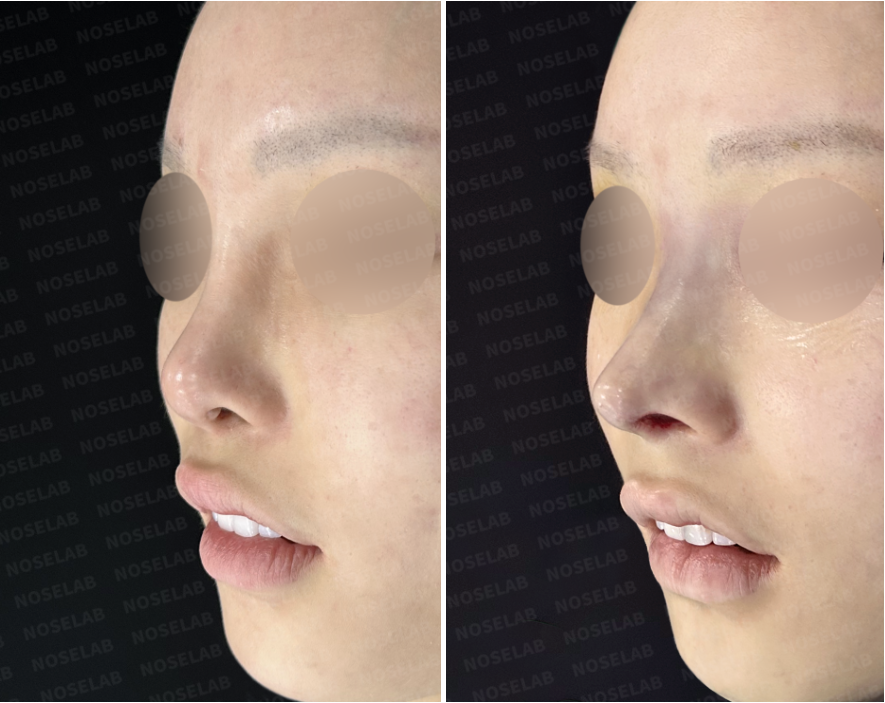
Oblique (45°) View
Harmonious nasal contour
Improved facial balance
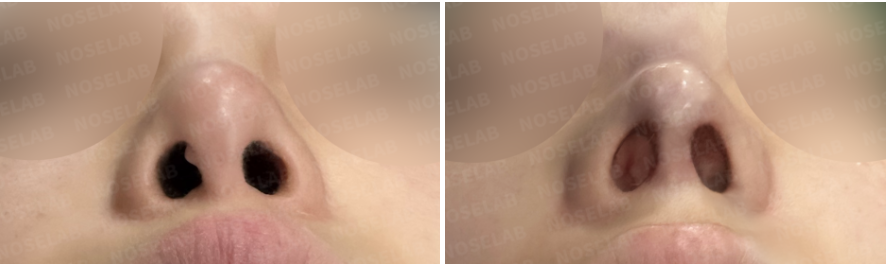
Functional Outcome
Significant improvement in nasal airflow
Reduced nasal obstruction
Enhanced breathing comfort
Surgeon’s Commentary – Importance of Radix and Septal Correction
High radix and septal deviation are key factors that can significantly affect both nasal aesthetics and function.
When the radix is positioned too high, the nose can appear overly prominent and unnatural. Proper repositioning to a lower anatomical level is essential to restore facial balance.
Severe septal deviation requires structural reconstruction rather than simple correction. In this case, donor rib cartilage was used to rebuild the septum and provide stable long-term support.
Lateral osteotomy was also necessary to correct nasal bone deviation and restore symmetry.
Functional nasal surgery, including septoplasty and turbinate reduction, was performed simultaneously to improve breathing.
Revision rhinoplasty requires careful analysis of previous surgical outcomes, scar tissue, and weakened structures. A precise, structure-based approach is essential to achieve stable and natural results.
Because each revision case presents different structural conditions, surgical planning must be based on precise analysis rather than a standardized approach.
If you are considering revision rhinoplasty due to previous surgical outcomes or functional issues such as breathing difficulty, a comprehensive evaluation is essential to determine the most appropriate reconstruction strategy.
📩 International Consultation
→ LINE Consultation (Japan only)
Frequently Asked Questions (FAQ)
Q1. Why does a high radix make the nose look unnatural?
Because the nasal starting point is positioned too high, creating excessive projection and disrupting facial balance.
Q2. Why is rib cartilage used for septal reconstruction?
Rib cartilage provides strong structural support when existing septal cartilage is insufficient.
Q3. Can breathing improve after revision rhinoplasty?
Yes. Functional procedures such as septoplasty and turbinate reduction can significantly improve airflow.
🎥 YouTube Reference
If you’re curious about Dr. Cha-Young Kang’s closed rhinoplasty approach, click to watch the video.
Read the author’s background and the original case context. About these articles
Source updated .