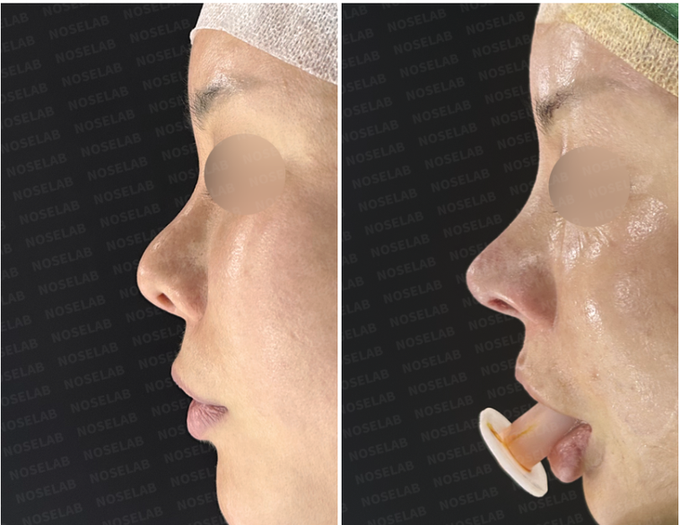
Case at a glance
- Surgical plan
- Photo timing
These details are excerpts from the original article and captions. Follow a detail to read it in context.
This case demonstrates Closed Rhinoplasty Korea for hump nose correction combined with functional rhinoplasty. Septal reconstruction, turbinate reduction, and cartilage-based augmentation improved both nasal shape and breathing without implants.
Author: Dr. Cha-Young Kang, Director, NoseLab Clinic
✅ Case Background
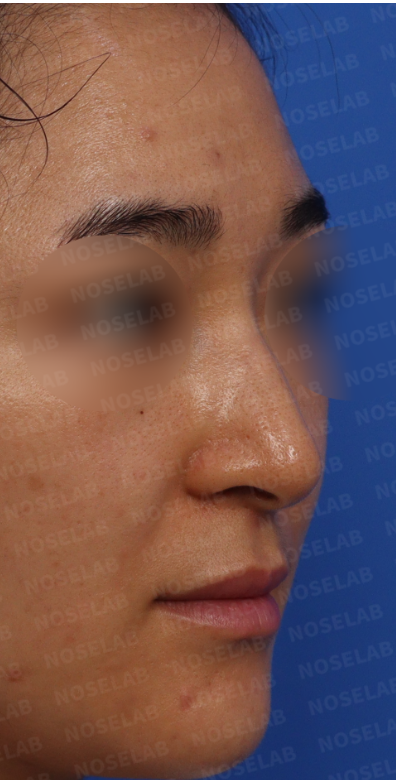
This patient presented with a long, hooked nose with a prominent dorsal hump, nasal deviation, and chronic nasal congestion.
The patient also requested a natural result without the use of implants.
In this Closed Rhinoplasty Korea case, the goal was to correct the hump, improve nasal symmetry, restore functional breathing, and achieve a balanced nasal profile using only autologous tissue.
Key concerns included:
Prominent nasal hump
Long and drooping nasal tip
Deviated nasal structure
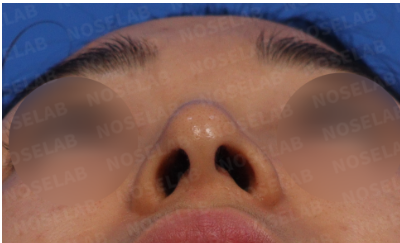
Nostril asymmetry
Weak septal cartilage
Chronic nasal congestion
Preference for non-implant rhinoplasty
This case required both structural correction and functional improvement.
If you are considering hump nose correction or have breathing issues, a detailed structural evaluation is essential.
📩 International Consultation
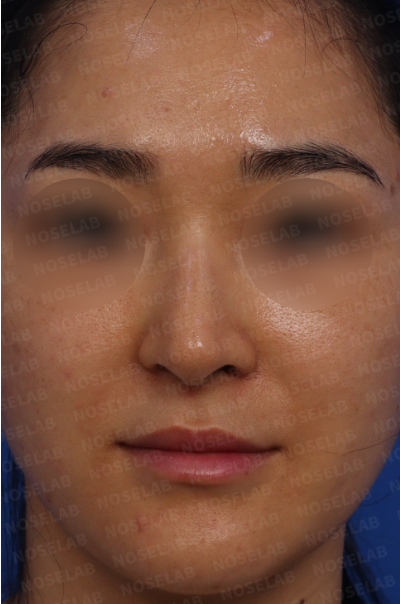
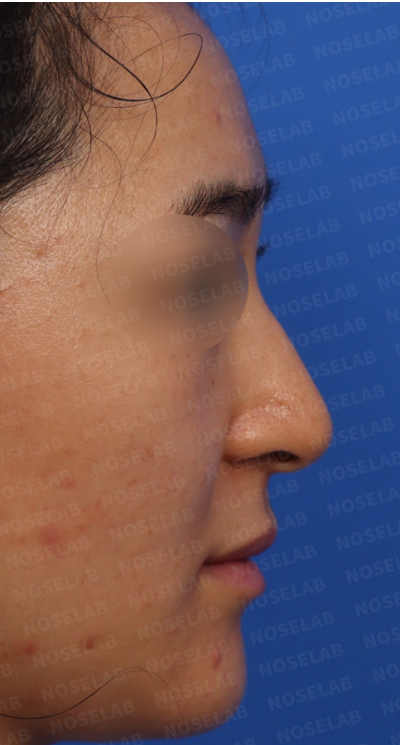
✅ Surgical Approach – Hump Nose Correction Using Closed Rhinoplasty Korea
Hump nose deformities are often associated with nasal bone prominence, septal deviation, and imbalance between the nasal bridge and tip.
In cases with functional symptoms, both structural correction and airway improvement must be addressed simultaneously.
Closed Rhinoplasty Korea allows precise correction of bone, cartilage, and airway structures while minimizing tissue damage and avoiding external scars.
✅ Structural Problems Identified
Prominent dorsal hump
Long nasal structure
Deviated nasal axis
Weak septal cartilage
Nostril asymmetry
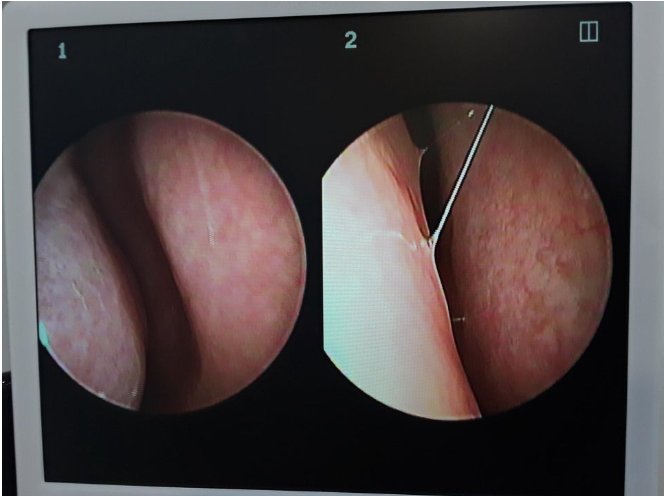
Inferior turbinate hypertrophy
Airway obstruction
✅ Surgical Plan
1. Hump Reduction and Bone Correction
Controlled shaving of nasal bone
Lateral osteotomy for alignment
2. Septal Reconstruction
Correction of septal deviation
Reinforcement of weak cartilage
3. Functional Correction
Septoplasty
Turbinate reduction using radiofrequency
4. Tip Adjustment
Septal extension graft
Correction of drooping tip
5. Cartilage-Based Augmentation
Bridge refinement without implants
Natural contour creation
6. Nostril and Alar Correction
Cartilage repositioning
Improvement of nostril symmetry
✅ Surgical Results
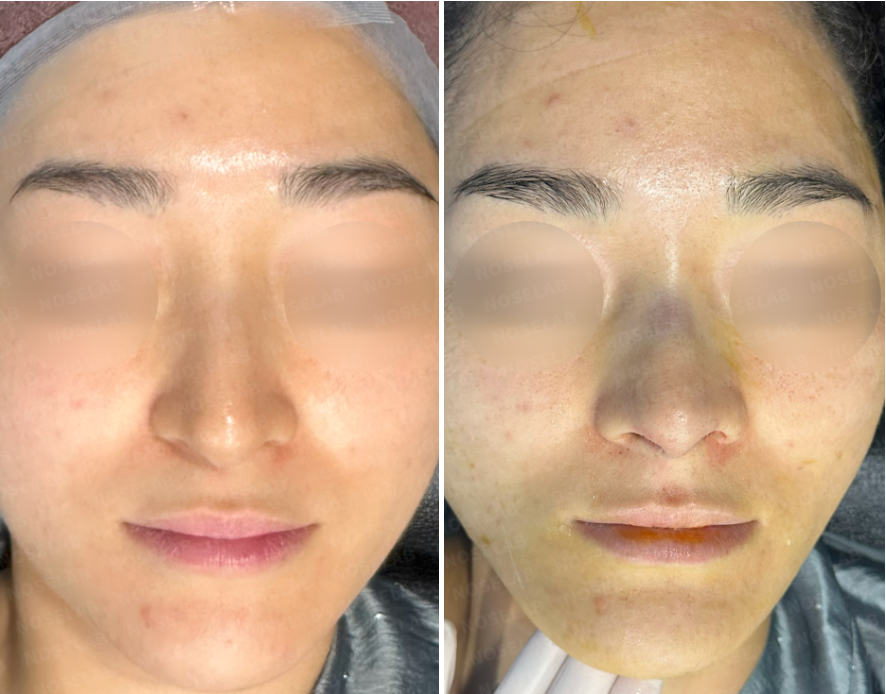
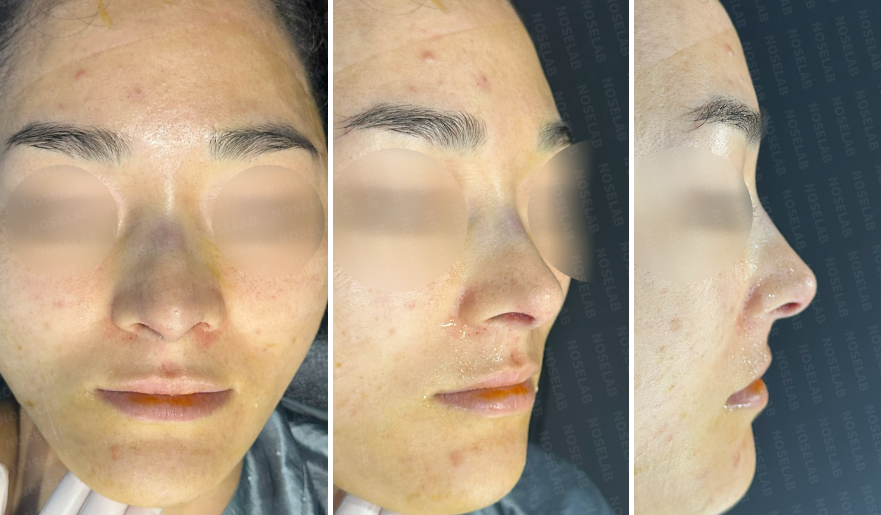
Frontal View
Improved symmetry
Straighter nasal alignment
Lateral View
Corrected hump
Balanced nasal profile
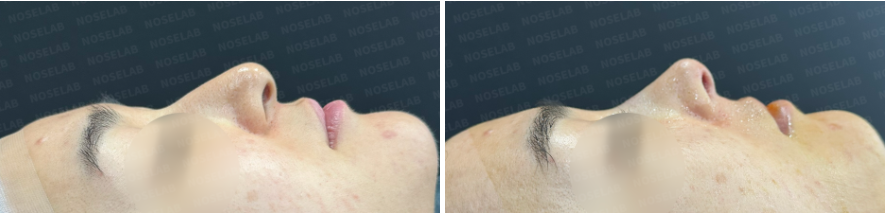
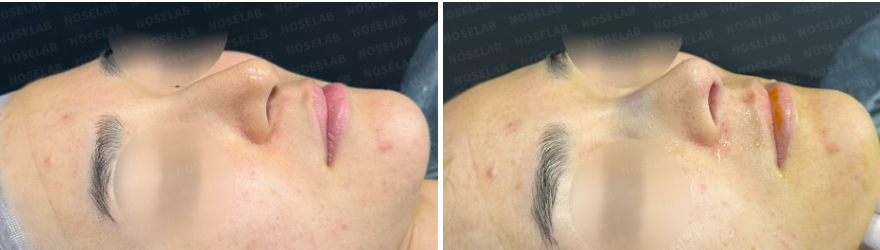
Oblique View
Natural contour
Improved 3D structure
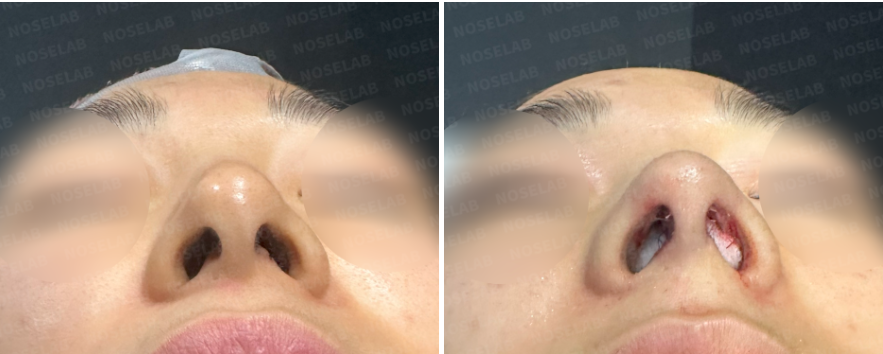
Nasal Base View
Improved nostril symmetry
Straightened tip alignment
✅ Functional Outcome
Improved nasal airflow
Reduced nasal congestion
Stabilized airway
✅ Surgeon’s Commentary
Hump nose correction requires careful balance between bone reduction and structural support.
Excessive removal without reinforcement can lead to instability or deformity.
In this case, septal reconstruction and cartilage support were essential to maintain long-term stability.
Functional rhinoplasty procedures such as septoplasty and turbinate reduction were performed simultaneously to improve breathing.
Closed Rhinoplasty Korea enables precise correction without external incisions while preserving vascular integrity.
The use of autologous cartilage allowed natural contouring without relying on implants.
✅ FAQ
Q1. Can hump nose be corrected without implants?
Yes, using cartilage-based reconstruction.
Q2. Does hump nose affect breathing?
It can be associated with septal deviation and obstruction.
Q3. Is closed rhinoplasty suitable for hump correction?
Yes, with proper structural techniques.
Read the author’s background and the original case context. About these articles
Source updated .