Case at a glance
- Concerns & goals
- Surgical plan
- Graft & material details
- Photo timing
These details are excerpts from the original article and captions. Follow a detail to read it in context.
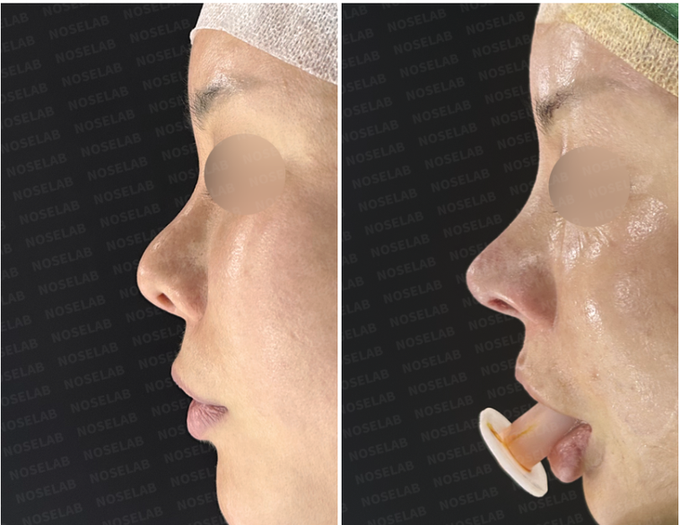
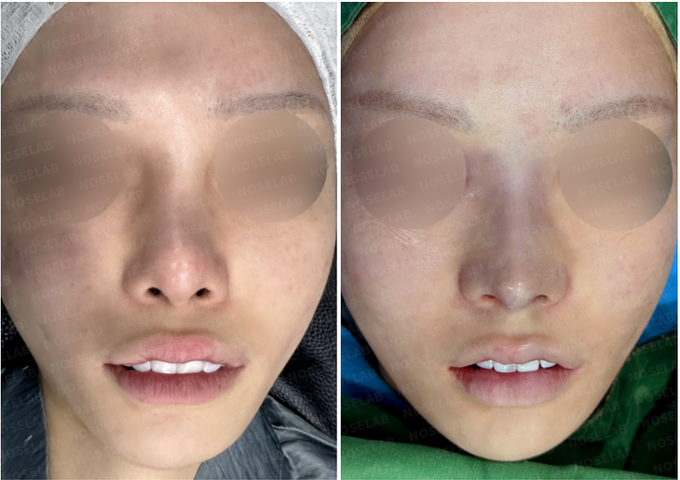
This case demonstrates Closed Rhinoplasty Korea for correcting complications from over-aggressive lateral osteotomy. Rib cartilage reconstruction and nasal valve repair restored nasal symmetry, improved airflow, and achieved long-term structural stability.
Author: Dr. Cha-Young Kang, Director, NoseLab Clinic
1. Case Background
This patient presented with nasal asymmetry and severe nasal congestion following a previous rhinoplasty that included overly aggressive lateral osteotomy.
Improper osteotomy can lead to nasal bone collapse, structural imbalance, and internal airway compromise.
In this Closed Rhinoplasty Korea case, the goal was to restore nasal bone position, reconstruct the nasal framework, and correct functional airway obstruction simultaneously.
Key concerns included:
Collapse of left nasal bone
Deviated and twisted nasal structure
Broad and bulbous nasal tip
Residual dorsal hump
Irregular nasal contour
Nasal valve collapse
Severe unilateral nasal obstruction
This case required both structural reconstruction and functional repair.
If you are experiencing breathing difficulty or asymmetry after rhinoplasty, a detailed structural evaluation is essential.
📩 International Consultation


Surgical Approach – Lateral Osteotomy Correction Using Closed Rhinoplasty Korea
Lateral osteotomy is used to reshape the nasal bones, but excessive or inaccurate cuts can result in bone collapse and airway narrowing.
Such complications often affect both appearance and nasal function.
Closed Rhinoplasty Korea allows precise repositioning of nasal bones and reconstruction of internal structures while minimizing additional trauma.
2. Structural Problems Identified
Collapsed nasal bone
Deviated nasal structure
Residual dorsal irregularity
Broad nasal tip
Nasal valve collapse
Septal deviation
Inferior turbinate hypertrophy
Functional airway obstruction


3. Surgical Plan
a. Nasal Bone Reconstruction
Correction of collapsed lateral osteotomy
Repositioning of nasal bones
b. Septal Reconstruction
Rib cartilage graft for structural support
Restoration of central nasal framework
c. Nasal Valve Repair
Reconstruction of internal nasal valve
Improvement of airflow
d. Dorsal Correction
Removal of residual hump
Creation of smooth contour
e. Tip Refinement
Alar cartilage repositioning
Reduction of bulbous tip
f. Functional Surgery
Septoplasty
Turbinate reduction
4. Surgical Results
Frontal View
Improved symmetry
Straightened nasal alignment

Lateral View
Smooth dorsal contour
Balanced nasal profile

Oblique View
Improved contour
Harmonized structure

Functional Outcome
Restored nasal airflow
Resolution of obstruction
5. Surgeon’s Commentary
Overly aggressive lateral osteotomy can result in both structural deformity and functional impairment.
Nasal bone collapse and internal valve narrowing are common consequences when osteotomy is not precisely controlled.
In this case, structural reconstruction using rib cartilage was necessary to restore stability, while nasal valve repair was essential for functional recovery.
Simply correcting the external shape is insufficient; internal airway reconstruction must be addressed simultaneously.
Closed Rhinoplasty Korea allows precise correction of both bone and cartilage structures while minimizing additional soft tissue damage.
Long-term success depends on restoring both symmetry and airway function.
✅ FAQ
Q1. What happens if lateral osteotomy is performed incorrectly?
It can cause nasal bone collapse and airway obstruction.
Q2. Can nasal obstruction be corrected with revision surgery?
Yes, through structural and functional reconstruction.
Q3. Why is rib cartilage used in these cases?
It provides strong support for rebuilding damaged structures.

Read the author’s background and the original case context. About these articles
Source updated .