Case at a glance
- Concerns & goals
- Surgical plan
- Graft & material details
- Photo timing
These details are excerpts from the original article and captions. Follow a detail to read it in context.
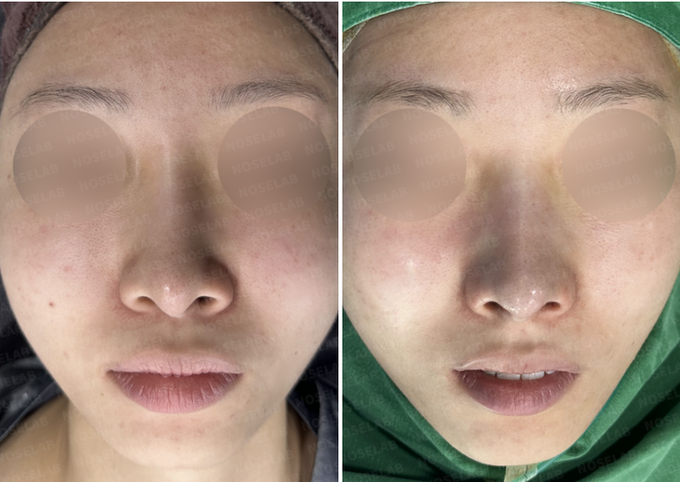
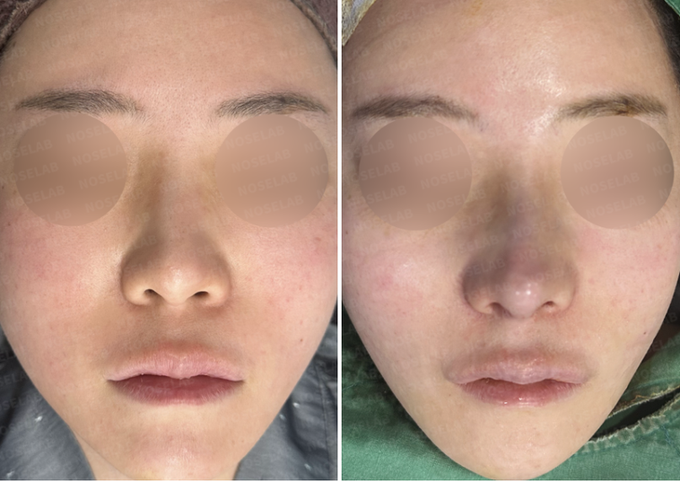
This case demonstrates closed rhinoplasty Korea for correcting a low nasal bridge after filler removal while improving nasal airway function. Structural refinement combined with septoplasty and turbinate reduction achieved natural nasal height and long-term stability.
✅ Author / Published / Updated
Dr. Cha-Young Kang , NoseLab Clinic
Published: 2025
Last Updated: 2026
This patient presented with both aesthetic concerns of a low nasal bridge and functional symptoms related to chronic rhinitis.
The patient had previously undergone nasal filler injection followed by dissolution, leading to structural imbalance and insufficient nasal support.
In this closed rhinoplasty Korea case, the goal was to restore natural nasal height while improving airway function and overall facial balance.
Key concerns included:
Low nasal bridge and flat dorsal profile
Mild nasal deviation
Drooping nasal tip contributing to facial imbalance
Nostril asymmetry
Chronic rhinitis symptoms (nasal congestion, post-nasal drip)
Functional breathing discomfort
This case required both structural refinement and functional correction rather than simple augmentation.
If you are experiencing similar concerns after filler procedures, a structural evaluation is essential.
📩 International Consultation

✅ Surgical Background – Closed Rhinoplasty Korea
Closed rhinoplasty Korea allows precise internal correction of both structural and functional issues without external incisions.
In cases following filler use, the nasal framework may lack sufficient support, requiring careful reconstruction rather than aggressive augmentation.
This approach ensures natural results while preserving tissue integrity.

✅ Structural Problems Identified
Preoperative analysis revealed:
Low nasal bridge due to insufficient structural support
Mild nasal deviation
Drooping nasal tip affecting profile balance
Nostril asymmetry
Functional airway compromise due to rhinitis
Reduced nasal cavity efficiency
These findings required combined structural and functional correction.
✅ Surgical Plan
1. Septoplasty (Functional Correction)
Correction of septal deviation to improve nasal airflow.
2. Turbinate Reduction
Reduction of inferior turbinates to relieve rhinitis symptoms.
3. Dorsal Augmentation
Use of implant to restore natural nasal height and dorsal contour.
4. Structural Realignment
Correction of nasal deviation to improve symmetry.
5. Nasal Tip Refinement
Adjustment of projection and rotation for a natural appearance.
6. Nostril Symmetry Correction
Refinement of nasal base for improved balance.
✅ Surgical Results
Frontal View
Slimmer and more defined nasal bridge
Improved symmetry
Balanced facial proportions

Lateral View
Natural increase in nasal height
Improved nasolabial angle
Harmonized profile

Oblique View
Smooth transition from bridge to tip
Balanced contour

Nasal Base View
Improved nostril symmetry
Refined nasal tip

Functional Outcome
Reduced nasal congestion
Improved breathing
Decreased post-nasal drip
✅ Surgeon’s Commentary
Correction of low nasal height requires more than simple augmentation.
Without addressing structural balance, results can appear unnatural.
In this case, careful control of dorsal height and tip position was essential to achieve a natural outcome.
Functional correction was equally important. Addressing septal deviation and turbinate hypertrophy improved both breathing and surgical stability.
Closed rhinoplasty Korea allows precise control of both structure and function while minimizing tissue trauma.
If you are considering rhinoplasty after filler procedures, a structural approach is essential for long-term stability.
📩 International Consultation
✅ FAQ
Q1. Can filler-treated noses be corrected with surgery?
Yes. Structural rhinoplasty can restore proper support and natural shape.
Q2. Is functional correction necessary?
Yes. Addressing airway issues improves both breathing and long-term results.
Q3. How is natural nasal height determined?
It is based on facial proportions rather than simply increasing height.

Read the author’s background and the original case context. About these articles
Source updated .