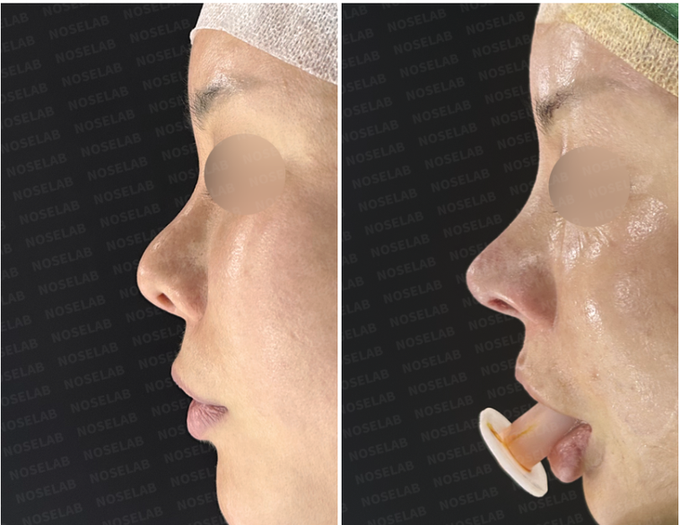
Case at a glance
- Surgical plan
- Graft & material details
- Photo timing
These details are excerpts from the original article and captions. Follow a detail to read it in context.
This case demonstrates Closed Rhinoplasty Korea for a senior patient undergoing revision rhinoplasty after decades of prior surgery. Rib cartilage reconstruction and careful surgical planning ensured safety, improved comfort, and long-term structural stability.
Author: Dr. Cha-Young Kang, Director, NoseLab Clinic
✅ Case Background
This patient presented with nasal deformity, discomfort, and asymmetry following multiple rhinoplasty procedures performed over several decades.
The case was further complicated by underlying medical conditions, including arrhythmia, hyperthyroidism, and hyperlipidemia, requiring careful surgical planning and risk management.
In this Closed Rhinoplasty Korea case, the goal was to safely remove problematic structures, reconstruct the nasal framework, and restore both comfort and aesthetic balance while minimizing surgical risk.
Key concerns included:
Long-term implant-related complications
Nasal pain at fixation site
Nostril asymmetry
Deviated nasal structure
Overly sharp nasal tip
Functional discomfort
This case required a safety-focused structural reconstruction approach rather than aggressive correction.
If you are considering rhinoplasty at an older age or have underlying medical conditions, a personalized structural evaluation is essential.
📩 International Consultation
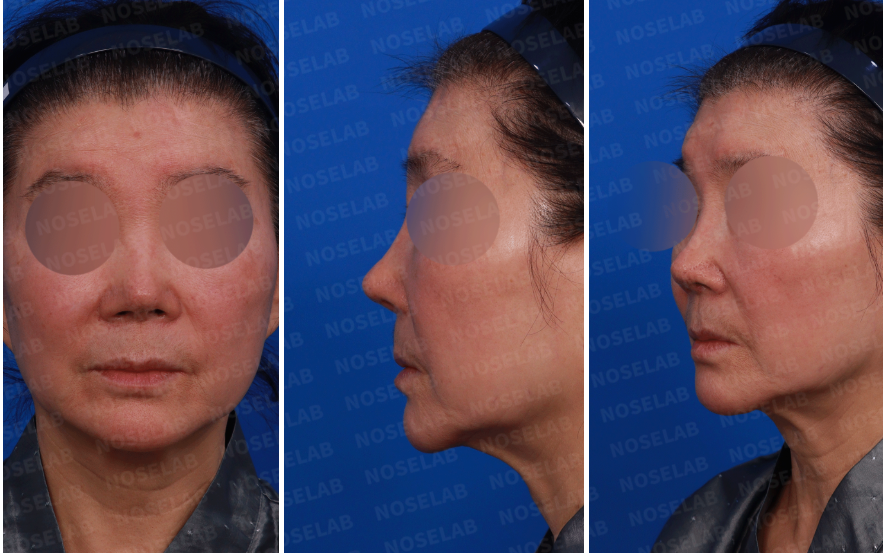
✅ Surgical Approach – Rhinoplasty for Senior Patients Using Closed Rhinoplasty Korea
Rhinoplasty in senior patients requires a fundamentally different approach compared to younger patients.
Factors such as reduced healing capacity, existing medical conditions, and long-term implant effects must all be carefully considered.
Closed Rhinoplasty Korea allows precise structural correction while minimizing surgical trauma, bleeding, and recovery burden.

✅ Structural Problems Identified
Long-term implant complications
Pain from previous fixation
Nostril asymmetry
Deviated nasal structure
Tip deformity
Reduced tissue elasticity
Functional discomfort
✅ Surgical Plan
1. Safety-Oriented Planning
Preoperative evaluation of systemic conditions
Anesthesia planning with specialist supervision
2. Removal of Problematic Structures
Removal of previously fixed cartilage causing pain
Elimination of unstable or misaligned structures
3. Structural Reconstruction
Rib cartilage graft for stable framework
Reconstruction of septal and tip support
4. Tip and Columella Adjustment
Correction of tip shape
Realignment of columella
5. Functional Improvement
Reduction of discomfort
Improvement of nasal balance and usability
✅ Surgical Results

Frontal View Improvements
Balanced volume with natural contours.
Corrected nostril asymmetry and straightened alignment.

Side View Enhancements
Improved drooping tip with a softer, rounded shape.
Harmonious nasolabial angle.

Nostril View Adjustments
Symmetrical nostril shape.
Straightened columella.

✅ Surgeon’s Commentary

Rhinoplasty in senior patients requires prioritizing safety over aggressive correction.
Long-term implants and previous surgeries often create complex internal conditions that must be carefully evaluated during surgery.
In this case, removal of the painful fixation point and reconstruction using rib cartilage were essential for both comfort and stability.
Collaboration with anesthesiologists and careful intraoperative decision-making ensured a safe surgical process.
Closed Rhinoplasty Korea allows precise correction while minimizing surgical burden, which is especially important in high-risk patients.
Long-term success depends on achieving stability, comfort, and natural balance rather than excessive aesthetic modification.
✅ FAQ
Q1. Is rhinoplasty safe for older patients?
Yes, with proper evaluation and careful surgical planning.
Q2. Why is a different approach needed for senior patients?
Due to reduced healing capacity and higher surgical risk.
Q3. Can revision rhinoplasty improve comfort as well as appearance?
Yes, especially when structural issues are addressed.

Read the author’s background and the original case context. About these articles
Source updated .