Case at a glance
- Surgical plan
- To achieve a balanced and natural contour, I performed hump removal , lateral osteotomy , and reshaped the nasal bridge using self-rib cartilage instead of synthetic implants.
- The nasal tip was elongated and refined with rib cartilage to correct the short nose , while simultaneously improving the nasal airflow by addressing the septal deviation and reducing turbinate hypertrophy.
- Graft & material details
- To achieve a balanced and natural contour, I performed hump removal , lateral osteotomy , and reshaped the nasal bridge using self-rib cartilage instead of synthetic implants.
- The nasal tip was elongated and refined with rib cartilage to correct the short nose , while simultaneously improving the nasal airflow by addressing the septal deviation and reducing turbinate hypertrophy.
- Photo timing
These details are excerpts from the original article and captions. Follow a detail to read it in context.
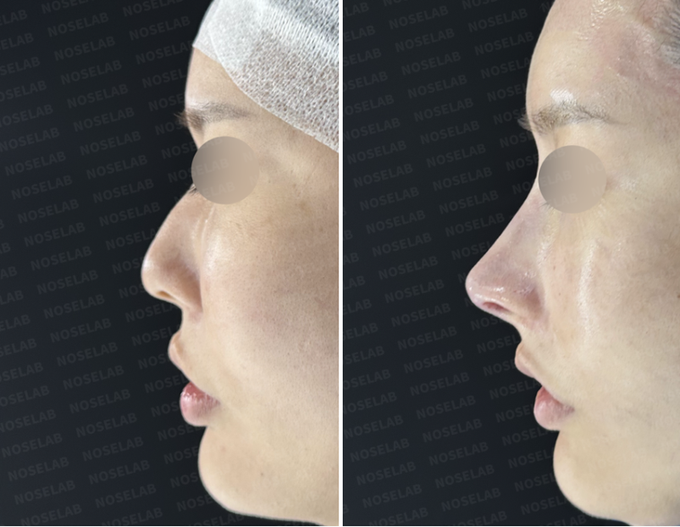
This Closed Rhinoplasty Korea case features a patient who visited our clinic to correct a short and hump nose with a naturally higher bridge.He also experienced nasal congestion, and a CT scan revealed a septal deviation, requiring functional correction during surgery.Since the patient preferred a no-implant rhinoplasty, we used autologous rib cartilage for structural support and shape refinement.
Surgical Approach to Short and Hump Nose Correction in Closed Rhinoplasty Korea
To achieve a balanced and natural contour, I performed hump removal, lateral osteotomy, and reshaped the nasal bridge using self-rib cartilage instead of synthetic implants.
This allowed for a smooth dorsal line and natural projection.
The nasal tip was elongated and refined with rib cartilage to correct the short nose, while simultaneously improving the nasal airflow by addressing the septal deviation and reducing turbinate hypertrophy.
Postoperative Results and Structural Stability
In the 90-degree side view, the hump has been removed and the nasal bridge appears smoother, with a natural curvature extending to the tip.
At the 45-degree view, the nasal tip projection and definition have clearly improved, giving the nose a refined and elegant appearance.
From the front view, the overall symmetry and proportionality between the bridge and tip are well balanced.
In the basal view, the nostrils show a stable and symmetrical configuration without excessive flare or pinching.


Natural Tip Extension and Functional Breathing Improvement
This Closed Rhinoplasty Korea case demonstrates the advantages of using autologous rib cartilage for both aesthetic and functional correction.
The nasal tip was naturally extended and stabilized without the use of implants, and the septal deviation was corrected to relieve nasal obstruction.
Through precise dorsal bone trimming and rib cartilage shaping, the patient achieved a smooth, natural nasal line with improved breathing and long-term stability.

Read the author’s background and the original case context. About these articles
Source updated .