Case at a glance
- Concerns & goals
- The patient visited NoseLab Plastic Surgery in Seoul for Closed Rhinoplasty to correct a droopy nasal tip , bulbous and wide nose , and deviated nasal bridge .
- When viewed from the front, the nose appeared slightly bent to the right, while the nasal tip drooped downward, creating a tired and heavy impression.
- CT and endoscopic examination confirmed a mild septal deviation and irregular cartilage positioning, leading to both nostril asymmetry and breathing discomfort.
- Surgical plan
- Photo timing
These details are excerpts from the original article and captions. Follow a detail to read it in context.
Preoperative Analysis – Functional and Structural Problems
The patient visited NoseLab Plastic Surgery in Seoul for Closed Rhinoplasty to correct a droopy nasal tip, bulbous and wide nose, and deviated nasal bridge.
When viewed from the front, the nose appeared slightly bent to the right, while the nasal tip drooped downward, creating a tired and heavy impression.
CT and endoscopic examination confirmed a mild septal deviation and irregular cartilage positioning, leading to both nostril asymmetry and breathing discomfort.
Surgical Plan – Balancing Function and Aesthetics in Closed Rhinoplasty Seoul
The main goal of the surgery was to achieve both aesthetic refinement and functional correction through Closed Rhinoplasty Seoul.
The specific plan included:
Lifting the droopy nasal tip to create a balanced facial profile
Refining the bulbous nasal tip for a sharper and more defined appearance
Correcting the deviated nasal bridge through osteotomy
Realigning the columella and nostrils for symmetry
Lowering the nasal starting point (nasion) for proportionate balance
The surgery was designed to maintain the patient’s natural facial harmony while improving nasal airflow and definition.
Surgical Findings – Septal Reinforcement with Autologous Rib Cartilage
During surgery, the septal cartilage was found to be thin, curved, and insufficient to support the nasal tip.
To ensure stability and longevity, autologous rib cartilage was harvested and sculpted to reconstruct the septum and reinforce the nasal tip.
This rib graft was used to strengthen the central axis and create a stable foundation for the lifted nasal tip.
Additionally, the shorter alar rim was lengthened to correct nostril asymmetry, while the wide nasal base was refined for a smoother contour.
Postoperative Results – Natural Shape and Improved Function
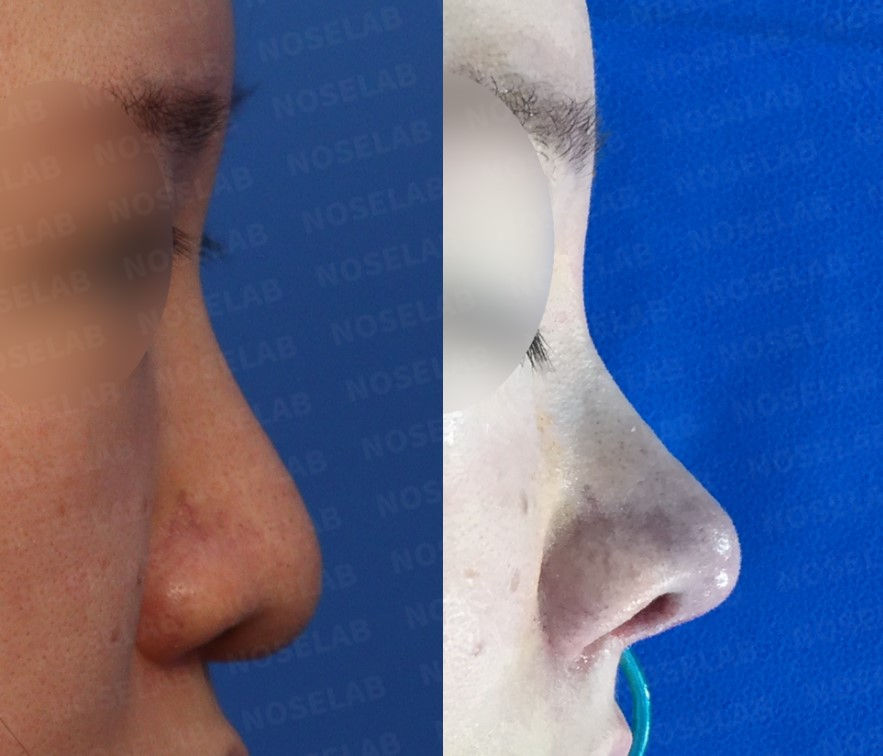
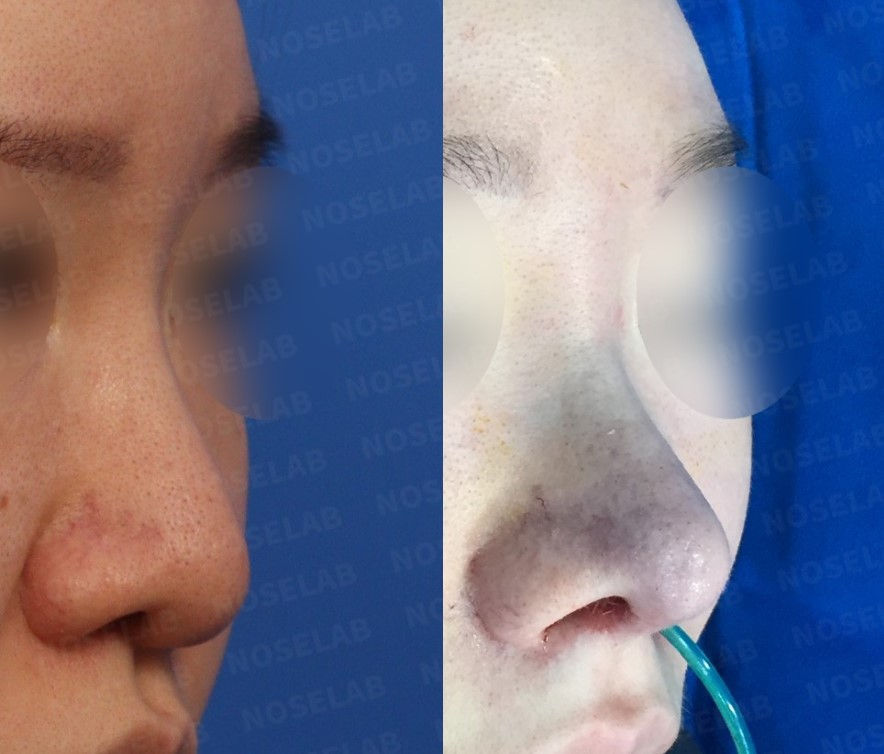
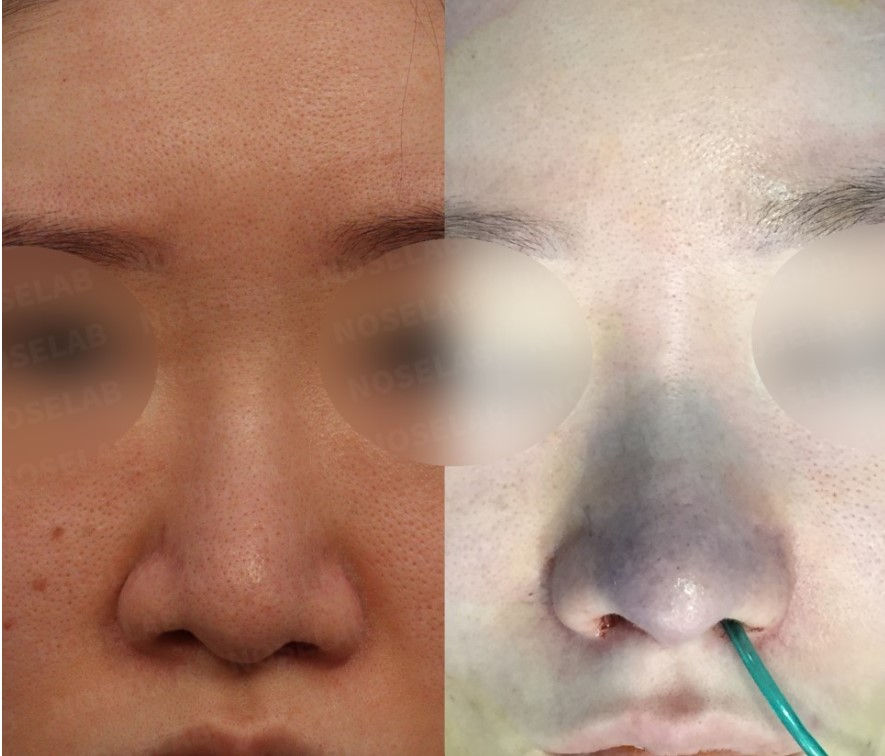
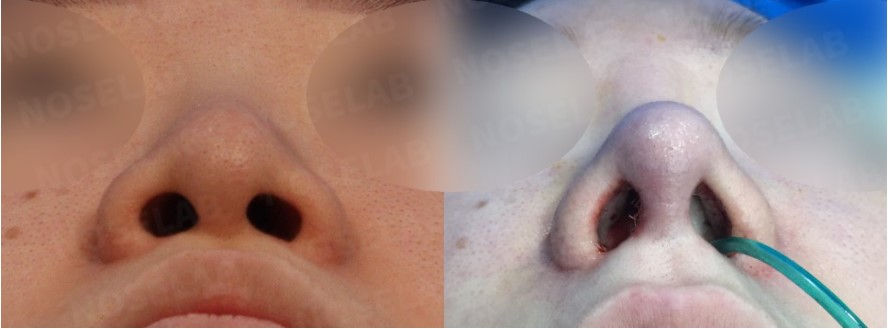
Immediately after the Closed Rhinoplasty, the patient’s nose displayed a natural, straight contour with improved symmetry.
The previously droopy and bulbous tip was refined, and the nasal length-to-height ratio became well-balanced.
From the front, the deviation was corrected, and nostril asymmetry was visibly reduced.
Functionally, nasal breathing improved due to proper septal alignment and turbinate volume reduction.
Summary – Advantages of Closed Rhinoplasty Seoul
This Closed Rhinoplasty Seoul case demonstrates the benefits of combining aesthetic correction with structural reconstruction using autologous rib cartilage.
Through a non-open approach, the patient achieved natural definition, improved breathing, and a balanced nasal line without visible scars.
It is expected that as the swelling subsides, the nose will become even more refined and naturally integrated with the facial contour.
Read the author’s background and the original case context. About these articles
Source updated .


