Case at a glance
- Previous treatment
- Surgical plan
- Graft & material details
- Photo timing
These details are excerpts from the original article and captions. Follow a detail to read it in context.
Hello, this is Dr. Chayoung Kang, Director of Noselab Rhinoplasty Clinic. Today I will discuss a very special rhinoplasty case of Complex Nasal Contracture Correction.
This patient came to Noselab to undergo Complex Nasal Contracture Correction as her 7th reoperation, and through her rhinoplasty journey it is possible to observe both the importance of surgical expertise and the complexity of revision rhinoplasty.
Preoperative Design Consultation for Complex Nasal Contracture Correction
The patient wanted to lower her upturned nose, and give her nose a natural but sophisticated appearance to her nose shape.
Let's take a look at the patient's medical history:
Year 2014: ear cartilage + septoplasty
Year 2016: silicone + donated rib cartilage (developed infection)
Year 2016 (3 months later): ear cartilage rhinoplasty
Year 2019: ear cartilage + silicone rhinoplasty
Later: silicone removal surgery
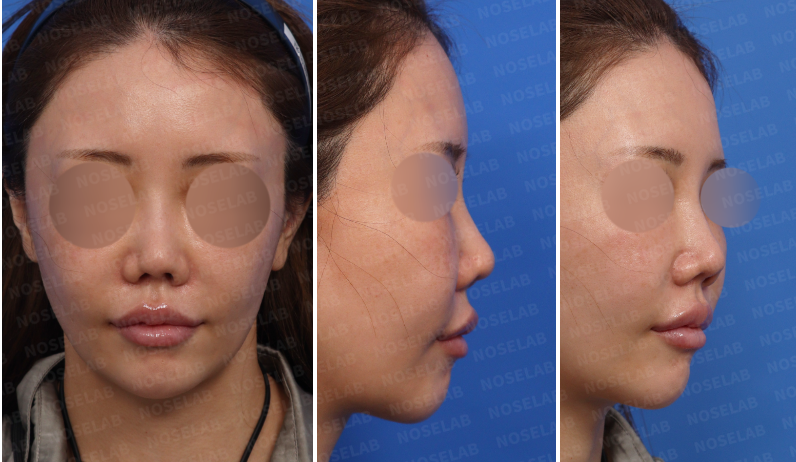
Frontal view:
Upturned nose tip bent to the left
Prominent nostril asymmetry
Depressed and pinched appearance of the right side alar.
Visible nasal bridge asymmetry
Side profile view:
A generally short-looking and upturned nose tip
Retracted columella
The glabella and the nasal dorsum look natural in contrast.
45-degree angle view:
Noticeable short appearance of the nose
Visible rigidity of the skin caused by the contracture deformation.
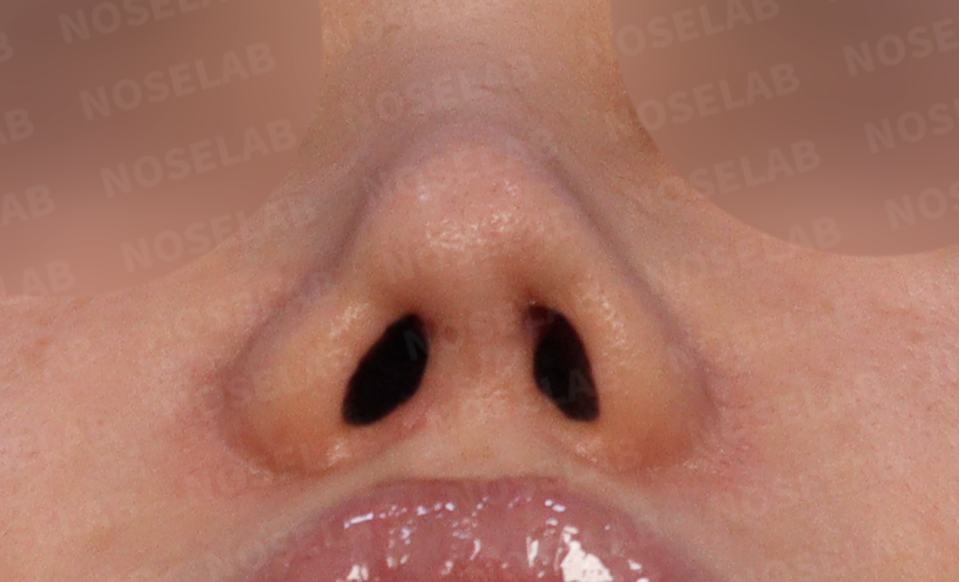
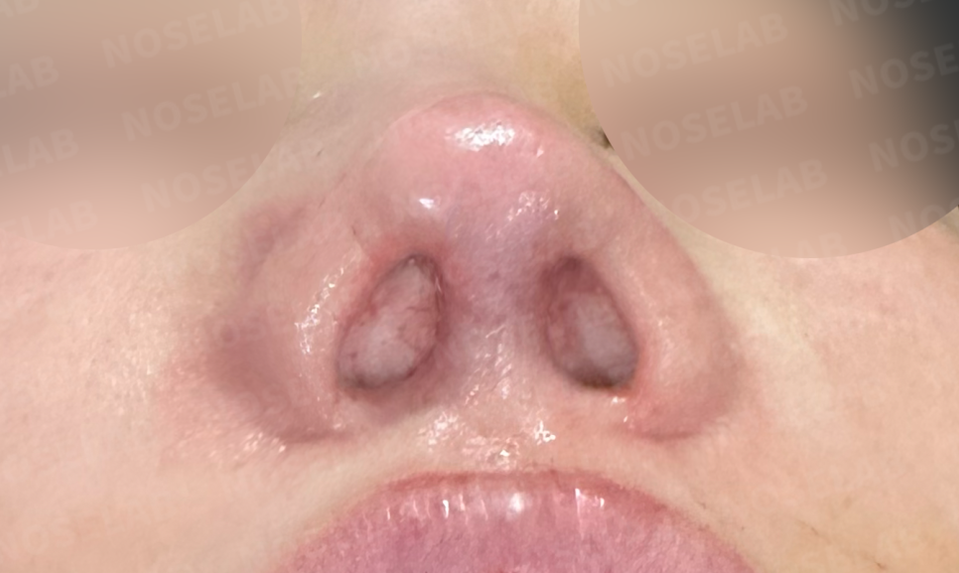
Nostrils:
Prominent bilateral asymmetry
Left-side tilt of the columella
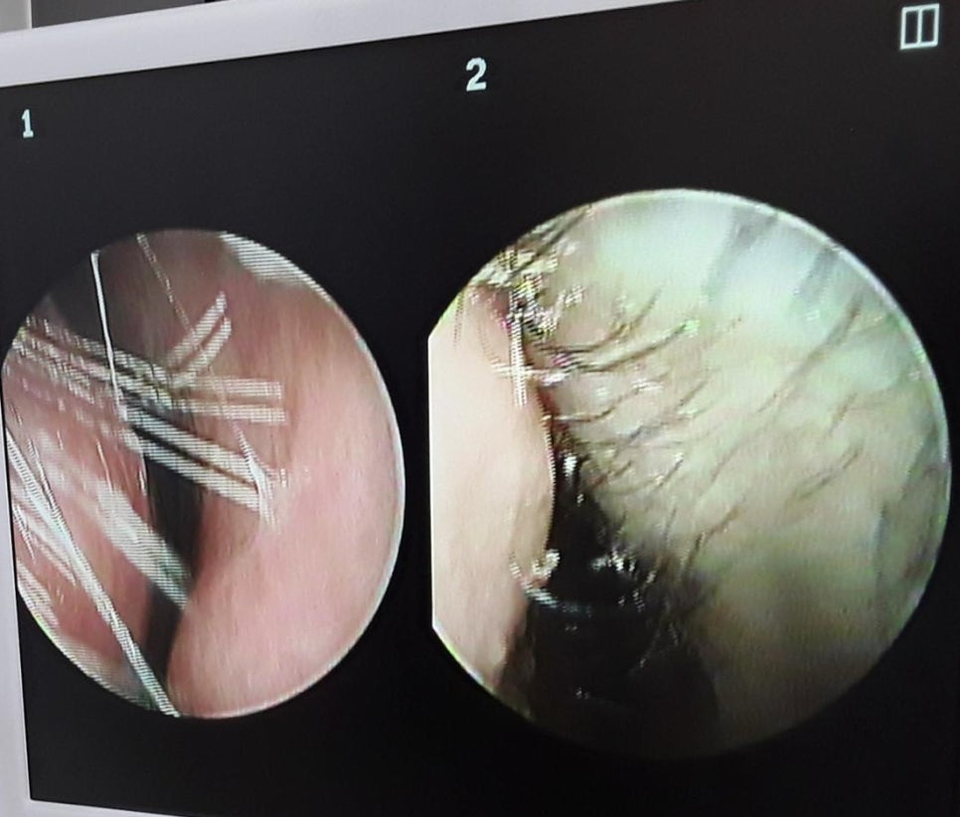
CT and intranasal endoscopy findings:
Septal cartilage deviation towards the left side.
Surgical Plan
We determined the following surgical plan based on the patient's condition and wishes:
Stem cell therapy to improve the condition of the skin
Nasal recontruction using autologous rib cartilage
Septal correction, reconstruction and extension graft surgery
Lateral osteotomy to correct the asymmetrical nasal bridge.
Asymmetry correction of the nostrils (performing nostril lowering graft as necessary)
Nasolabial angle correction surgery
In this patient's case in specific, we decided that in order to keep the shape of the nose bridge and glabella, we would perform the correction from below the nasal dorsum up until the nose tip. Therefore, we would be able to reflect the patient's requests of maintaining the naturalness while giving the nose a more sophisticated appearance.
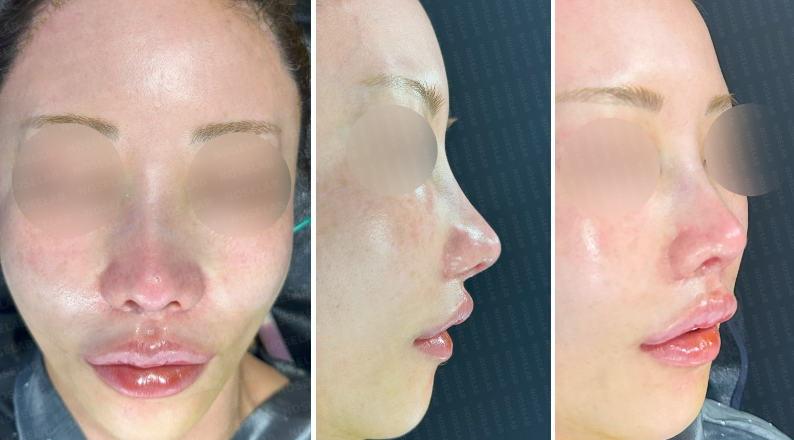
Before and After Surgery Photos
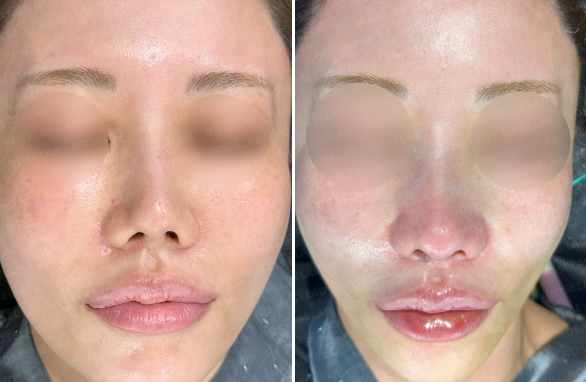
Straightening of the upturned and left-side bent nose tip.
Great improvement of the nostril asymmetry.
Natural-looking correction of the right side alar depression.
A more blanaced appearance in general after the nasal alar asymmetry correction.
Improvement of the degree of exposure of the nostrils.
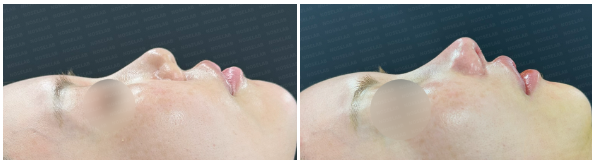
Improvement of the lenght of the nose and adjustment to lower the upturned nose tip.
Enhancement of the harmony between the lips and the nose tip through the nasolabial angle correction surgery.
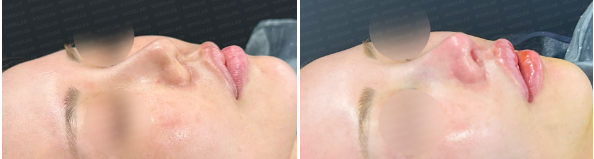
The previously short-looking areas of the nose became more natural.
As the contractured skin was sufficiently loosen, the nose acquired an overall softer appearance.
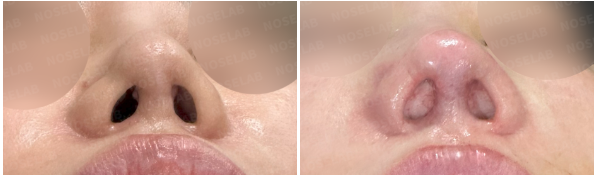
Great improvement of the asymmetry on both nostrils.
Correction of the columella tilted to the left side.
After Surgery Table Photos
Overview
This case solved the complex problems that can occur after multiple rhinoplasty surgeries. In particular, satisfactory results were achieved even under difficult conditions such as contractured skin and a damaged septum.
Reconstruction using autologous costal cartilage was the best option for achieving long-term stable results. Using autologous tissue minimized the risk of rejection and secured sufficient cartilage, enabling complex reconstructive surgery.
Stem cell therapy also played a major role in the success of this surgery. It played a significant role in improving the condition of the skin and helping with post-operative recovery.
However, there are always limitations in such complex revision cases. In particular, it is very difficult to perfectly correct the height and upturned nose at the same time due to the contracture of the skin. In this surgery, we tried to achieve the best results by considering both, the current condition and the possibility of future change.
It is a judgment based on experience that the results after surgery are more important than the results immediately after surgery. Since the tip of the nose naturally tends to become longer over time, correcting the upturned nose while maintaining a little height immediately after surgery can lead to better results in the long term.
As an ENT specialist, Noselab provides an optimized surgical plan for each patient based on anatomical knowledge and abundant surgical experience. We will create a beautiful and healthy nose through a comprehensive approach that considers not only cosmetic improvement but also functional improvement.
Lastly, I would like to give a word to those who are considering rhinoplasty. Please choose carefully from your first surgery to reduce the risk of unnecessary reoperation. And if reoperation is necessary, please make the best choice through sufficient consultation and advice from a specialist.
With Noselab Clinic you can achieve a beautiful and healthy nose!
Thank you.
Read the author’s background and the original case context. About these articles
Source updated .


