Case at a glance
These details are excerpts from the original article and captions. Follow a detail to read it in context.
This case reviews crooked nose correction rhinoplasty in a patient with a deviated nasal bridge, bulbous nasal tip, wide and flared alar base, nostril asymmetry, drooping nasal tip, widened nasolabial angle, mild lip protrusion impression, and airflow restriction related to allergic rhinitis. Surgery focused on rib cartilage structural support, nasal bridge realignment, nasal tip medialization, alar base repositioning, nostril asymmetry correction, nasolabial angle refinement, and functional airway support through a closed rhinoplasty approach.
Author: Dr. Cha-Young Kang
Clinic: NoseLab Clinic
Published: 2025
Last Updated: 2026
Introduction
Hello, this is Dr. Cha-Young Kang of NoseLab Clinic.
This case involves crooked nose correction rhinoplasty in a patient who wanted a more balanced nasal contour without exaggerated projection or excessive lengthening.
The patient’s main concerns included a crooked and deviated nasal bridge, bulbous nasal tip, wide alar base, nostril asymmetry, drooping tip, and widened nasolabial angle.
The surgery was performed using a closed rhinoplasty / endonasal approach. The goal was to improve nasal alignment, support the nasal tip, correct nostril imbalance, refine the alar base, and address functional airflow restriction related to allergic rhinitis.
Background: Why Crooked Nose Correction Rhinoplasty Was Needed
The patient visited NoseLab Clinic seeking a naturally balanced nasal structure. Rather than a dramatic or overly stylized change, the goal was subtle refinement, improved symmetry, and a softer profile.
Preoperative design consultation photos were reviewed from the frontal, side, oblique, and nostril views.
Key Concerns Before Surgery
The main concerns included:
Bulbous nasal tip
Crooked and deviated nasal bridge
Wide and flared alar base
Asymmetrical nostrils
Drooping nasal tip
Widened nasolabial angle
Mild lip protrusion impression
Airflow restriction related to allergic rhinitis
These findings suggested that correction should focus on both the nasal midline and lower nasal framework rather than surface reshaping alone.
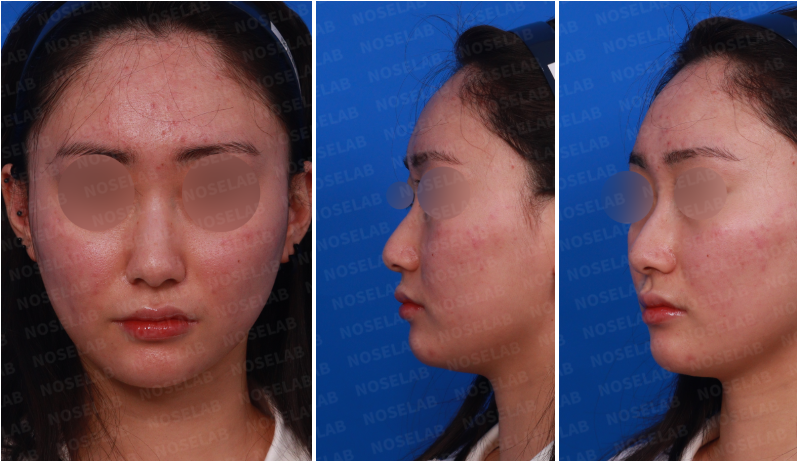
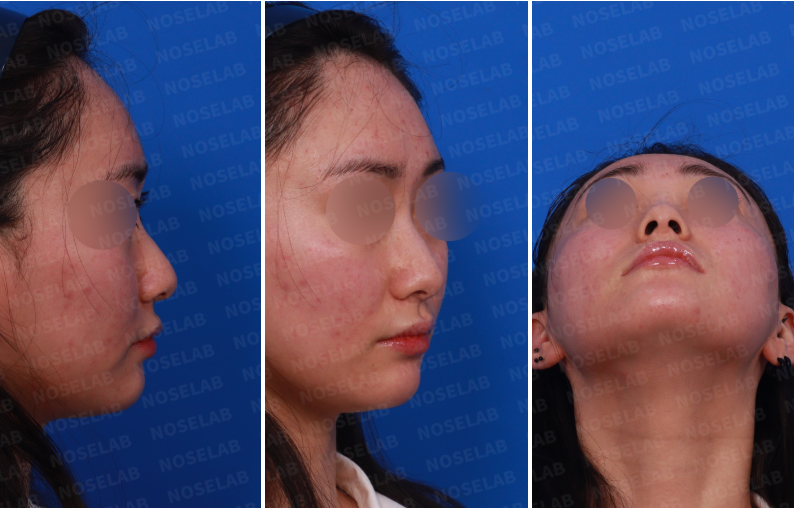
Preoperative Structural Assessment
Frontal View
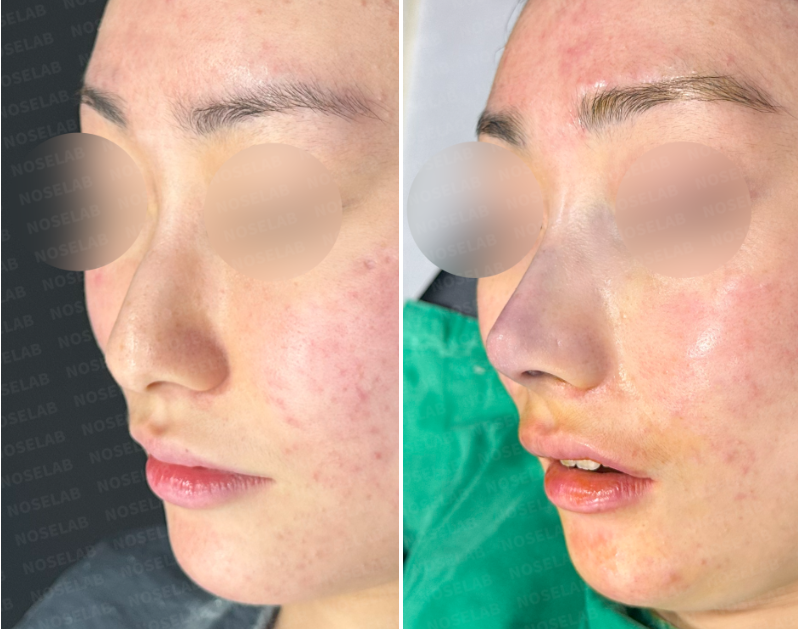
The frontal view showed deviation of the nasal bridge, a bulbous nasal tip, and asymmetry of the lower nasal structure.
The alar base appeared wide, and the nostrils were not evenly balanced.
Side View
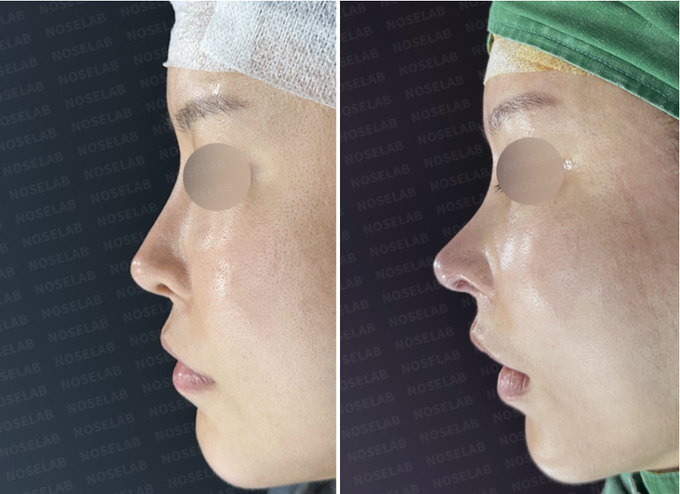
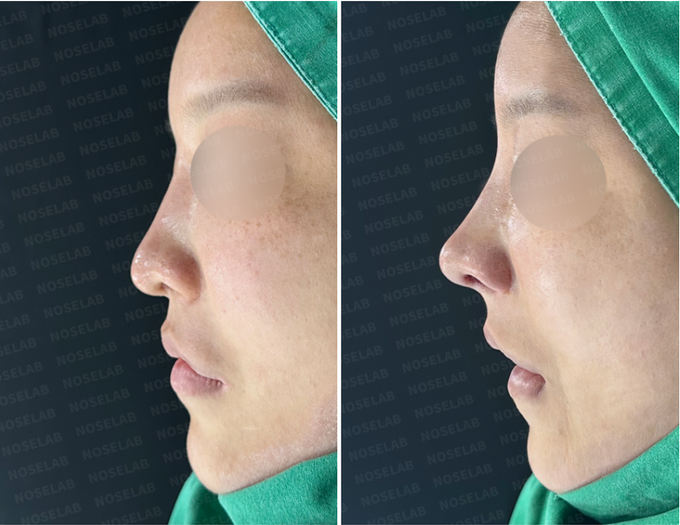
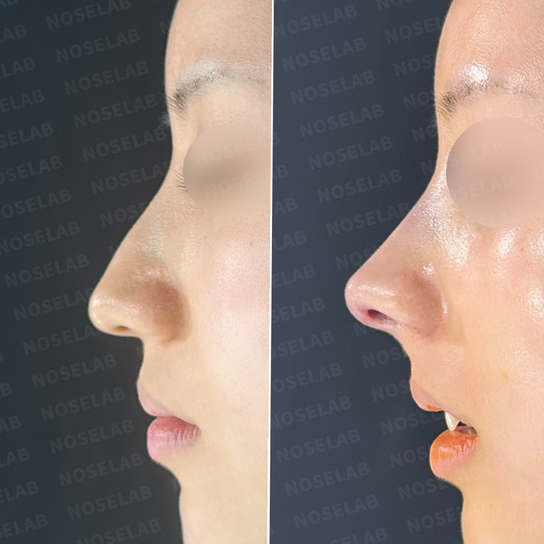
The side view showed a drooping nasal tip and widened nasolabial angle. The mild lip protrusion impression was also evaluated in relation to the nasal tip and columella position.
Oblique View
The oblique view showed imbalance between the nasal bridge, tip, and alar base.
Nostril View
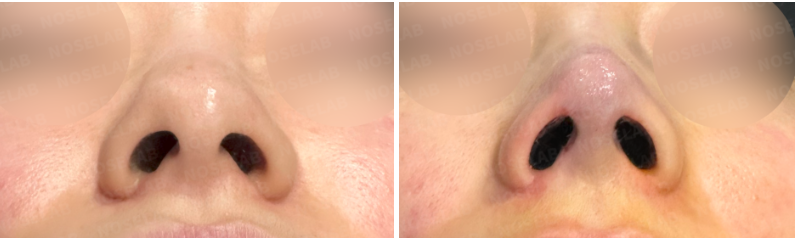
The nostril view showed nostril asymmetry and alar base imbalance.
Because the deviation affected both the bridge and the lower nasal framework, the surgical plan included structural support and nostril correction together.
Surgical Plan for Crooked Nose Correction Rhinoplasty
Crooked noses often require structural correction rather than superficial reshaping. In this case, rib cartilage was used to support the nasal framework and improve midline balance.
Rib Cartilage Structural Support
Autologous rib cartilage was used to reinforce the nasal support structure.
This provided a stronger framework for correcting the deviated nasal bridge and supporting the nasal tip.
Nasal Bridge Realignment
The deviated nasal bridge was corrected to improve the nasal axis and facial midline balance.
Bridge correction was planned together with tip and nostril correction because crooked nose deformity often involves multiple structural levels.
Controlled Tip Medialization
The nasal tip was carefully repositioned toward the midline.
This helped improve lower nasal balance while avoiding an overly projected or excessively sharp tip.
Alar Base and Nostril Correction
The asymmetrical alar base was repositioned to improve lower nasal balance.
Nostril asymmetry was also corrected as part of the lower nasal framework adjustment.
Nasolabial Angle Refinement
The nasolabial angle was refined to improve the side profile and reduce the impression of a drooping tip.
This step also helped soften the relationship between the nasal tip, columella, and upper lip.
Functional Airway Support
Airflow restriction related to allergic rhinitis was considered during surgical planning.
Inner nasal support was reinforced to help support the airway structure and reduce the risk of functional narrowing.
Surgical Results After Crooked Nose Correction Rhinoplasty
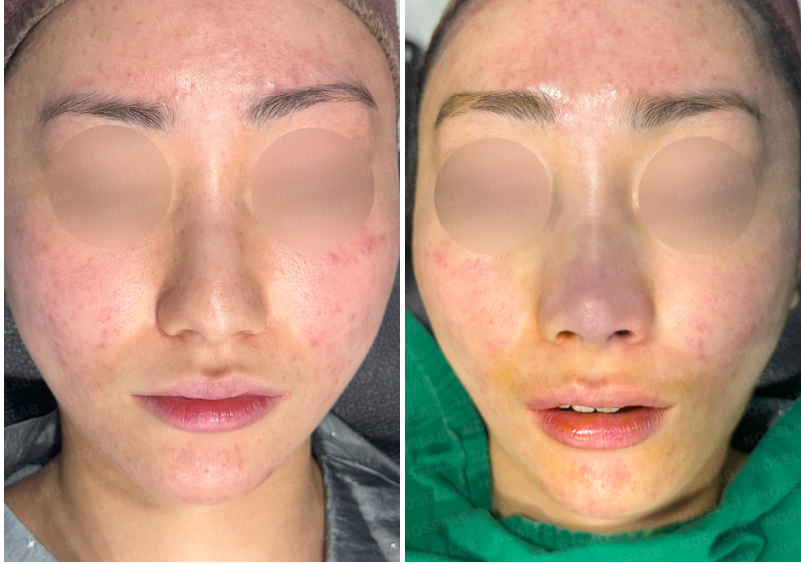
Frontal View
From the frontal view, the bulbous nasal tip appeared more refined after structural correction.
The deviated nasal bridge appeared more aligned, and the alar base and nostrils showed improved symmetry.
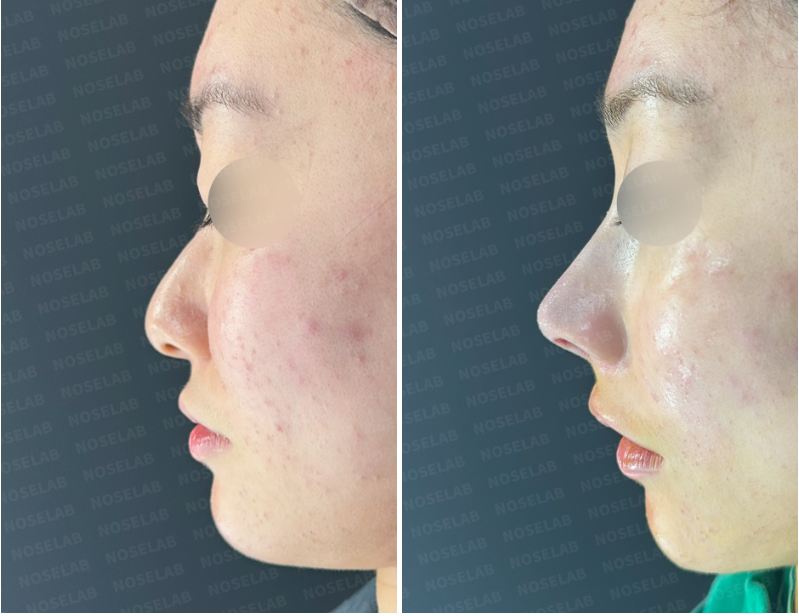
Side View
From the side view, the dorsal slope appeared more balanced without excessive projection.
Tip support improved, and the nasolabial angle appeared more proportionate after structural adjustment.
The profile appeared softer, and the mild lip protrusion impression was reduced in visual balance.
Nostril View
From the nostril view, nostril symmetry improved after alar base repositioning and lower nasal framework correction.
The alar flare appeared reduced, and the nasal tip projection appeared more balanced.
Functional Outcome
Functional airway support was considered together with structural correction because the patient had airflow restriction related to allergic rhinitis.
Because breathing changes depend on rhinitis condition, internal nasal anatomy, swelling, and healing response, postoperative function should be evaluated over time.
Structural Outcome
The nasal bridge, nasal tip, alar base, nostril balance, and nasolabial angle were corrected together.
Because this case involved crooked nasal anatomy, bulbous tip structure, alar base asymmetry, and rhinitis-related airflow concerns, the outcome was planned within the limits of tissue condition, cartilage support, baseline asymmetry, and healing response.
Surgeon’s Commentary
Every patient has a different aesthetic goal. In this case, the patient wanted a natural and understated correction rather than excessive projection or dramatic lengthening.
Crooked nose correction rhinoplasty should be planned according to the level of deviation. In some patients, the nasal bridge, tip, alar base, and nostrils are all involved.
Rib cartilage was used to reinforce the nasal framework and support midline correction. This helped improve the deviated nasal bridge and lower nasal balance.
The nasal tip was repositioned carefully, and the alar base was adjusted to improve nostril symmetry.
Because the patient also had airflow restriction related to allergic rhinitis, functional airway support was considered as part of the surgical plan.
This case shows that crooked nose correction rhinoplasty may require combined correction of the nasal bridge, tip support, alar base, nostril symmetry, and functional airway structure.
FAQ
What is crooked nose correction rhinoplasty?
Crooked nose correction rhinoplasty is surgery planned to improve nasal deviation and restore better alignment between the nasal bridge, tip, and facial midline. The surgical method depends on the level and cause of deviation.
Why is rib cartilage used in crooked nose correction?
Rib cartilage may be used when stronger structural support is needed to reinforce the nasal framework, support the tip, or improve midline stability in selected cases.
Can nostril asymmetry improve during crooked nose correction?
Nostril asymmetry can improve when the nasal tip, alar base, columella position, and lower nasal framework are corrected together. The degree of improvement depends on baseline anatomy and healing.
Can crooked nose correction help breathing?
Breathing may improve when internal structural narrowing, septal deviation, valve weakness, or turbinate enlargement is corrected. In patients with allergic rhinitis, symptoms may also depend on mucosal inflammation.
Does crooked nose correction always require dramatic change?
softer profile. The plan should be based on each patient’s anatomy and goals.
International Consultation
For international patients, a photo-based consultation may help clarify whether crooked nose correction rhinoplasty, rib cartilage reconstruction, nostril asymmetry correction, alar base repositioning, tip support, or functional airway support may be needed.

Read the author’s background and the original case context. About these articles