Case at a glance
- Surgical plan
- To refine the bulbous tip, the skin thickness was reduced , and the relocated cartilage was used to enhance the nose tip projection for a three-dimensional contour.
- The droopy columella was slightly pushed inward to form a natural nasolabial angle of about 90 degrees .
- The deviated and asymmetric nasal bone was corrected through outer osteotomy , and to improve the flat glabella , a silicone implant was used to create a smooth and straight nasal bridge line.
These details are excerpts from the original article and captions. Follow a detail to read it in context.
Hello!
I am Director Chayoung Kang of Noselab Clinic, committed to achieving natural beauty and minimizing side effects in rhinoplasty.
There is often curiosity about the methods and materials used in rhinoplasty. Since the nose is located at the center of the face, any change greatly affects facial harmony and proportion. Therefore, instead of choosing a “desired nose shape” in advance, it is essential to understand what is necessary to achieve a balanced and natural result.
Today, I would like to introduce a real case of deviated and bulbous nose correction performed through closed rhinoplasty.
Understanding the Features of a Deviated and Bulbous Nose
Before surgery, the patient had a droopy nose tip and a wide bulbous nose.
The nasal bridge was slightly hooked and deviated, giving an asymmetric impression.
From the front view, the nose appeared broad, and the area between the eyebrows looked flat.
The nasal base was also on the wider side, which contributed to the overall lack of definition.
This case was diagnosed as a deviated and bulbous nose that required both aesthetic and structural correction.
Surgical Approach for Deviated and Bulbous Nose Correction
To refine the bulbous tip, the skin thickness was reduced, and the relocated cartilage was used to enhance the nose tip projection for a three-dimensional contour.
The droopy columella was slightly pushed inward to form a natural nasolabial angle of about 90 degrees.
The deviated and asymmetric nasal bone was corrected through outer osteotomy, and to improve the flat glabella, a silicone implant was used to create a smooth and straight nasal bridge line.
All procedures were performed through closed rhinoplasty, minimizing external scars and recovery time.
Postoperative Results and Key Takeaways
After surgery, the deviation and droopy tip were successfully corrected, achieving a straighter and more defined nasal contour.
The patient’s facial harmony improved, and the nose now appears more balanced from every angle — frontal, 45°, and 90° views.
In deviated nose correction, it is crucial to determine whether the asymmetry originates from the nasal bone, cartilage, or both.
Nasal bone deviation can be corrected through outer osteotomy.
Cartilage deviation can be improved via septal deviation correction and spreader grafts.
When both are involved, combining these techniques with a silicone implant provides both structural stability and aesthetic refinement.
This case demonstrates how a closed rhinoplasty can effectively correct both bulbous and deviated nasal shapes, leading to natural and satisfying results.

Before surgery. The photos were taken with the patient’s consent.

After surgery. The photos were taken with the patient’s consent.
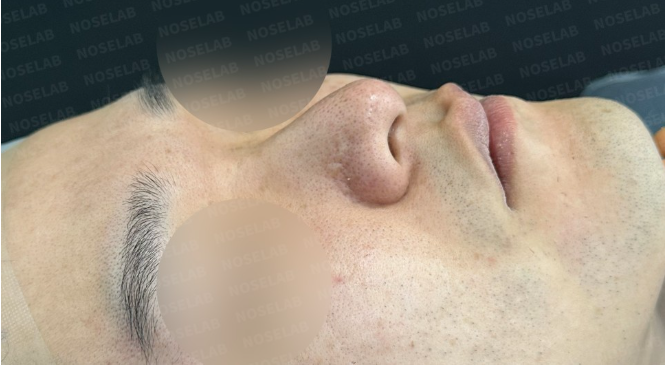
Before surgery. The photos were taken with the patient’s consent.

After surgery. The photos were taken with the patient’s consent.

Before and After Surgery. The photos were taken with the patient’s consent.

Before and After Surgery. The photos were taken with the patient’s consent.
General Overview
The patient’s results were satisfactory. The preoperative issues the patient wanted to improve, droopy nose and deviated shape were enhanced.

Photos taken after the surgery. 90-degree view, 45-degree view and frontal view.

Bulbous Nose Before and After Surgery Photos
Nasal Deviation Correction
Also, for the deviated nose correction, it is of great importance to determine whether the deviation is due to nasal bone asymmetry that makes the bone look bent, if it is due to deviated nasal cartilage, or if both the bone and the cartilage are bent. Nasal bone asymmetry can be corrected through an outer osteostomy , and in the case of deviated nasal cartilage, it is possible to perform a septal deviation corrective surgery and the nasal dorsum must be stretched through a spreader graft. Moreover, in the case that the joint between the nasal bone and the dorsum becomes bent, both can be done and using a silicone implant must be actively taken into consideration.
Today we presented the case of a deviated and bulbous nose corrective surgery. I hope this article is helpful for people who are interested in rhinoplasty,
Dr. Chayoung Kang
Director of Noselab Clinic
Read the author’s background and the original case context. About these articles
Source updated .


