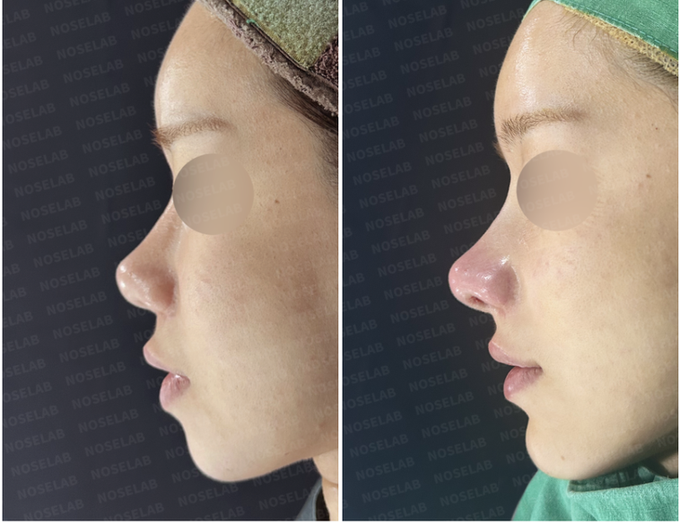
Case at a glance
- Concerns & goals
- Previous treatment
- Graft & material details
- Photo timing
These details are excerpts from the original article and captions. Follow a detail to read it in context.
This case reviews functional rhinoplasty with septal reconstruction in a patient who had long-term nasal obstruction caused by severe septal deviation. This was a primary rhinoplasty case without previous nasal surgery. Surgery focused on rib cartilage septal reconstruction, septoplasty, turbinate reduction, right alar depression correction with dermal grafting, nasolabial angle adjustment, and conservative nasal shape refinement.
Author: Dr. Cha-Young Kang
Clinic: NoseLab Clinic
Published: 2026
Last Updated: 2026
Introduction
Hello, this is Dr. Cha-Young Kang of NoseLab Clinic.
This case involves functional rhinoplasty with septal reconstruction in a patient who had been experiencing long-term nasal obstruction. The patient visited our clinic mainly to improve breathing function rather than to make a dramatic cosmetic change.
This was a primary rhinoplasty case, meaning the patient had no previous nasal surgery history.
The surgery was performed using a closed rhinoplasty / endonasal approach. The goal was to reconstruct the severely deviated septum with autologous rib cartilage, improve nasal airflow, correct inferior turbinate hypertrophy, and refine the nasal shape in a conservative and balanced way.
Patient Background
The patient had no previous rhinoplasty or nasal surgery history. The main concern was daily nasal obstruction that affected breathing comfort.
Surgical History
The patient’s surgical history was simple:
Primary surgery case
Because this was a first-time surgery, the nasal tissue had not been affected by scar tissue or previous grafting. However, the septal deviation was severe enough that simple septoplasty alone was not considered sufficient.
Patient Concerns Before Surgery
The patient wanted improvement in nasal breathing while maintaining a natural appearance.
Main Concerns
The main concerns included:
Repeated daily nasal obstruction
Severe deviated septum
Desire for a natural nasal shape that matched the face
Avoidance of excessive cosmetic change
Right alar depression
Need for functional improvement and balanced appearance
The surgical plan was therefore designed around function first. Aesthetic refinement was planned conservatively so that the nose would look balanced without appearing overcorrected.

Preoperative Design and Functional Assessment
Preoperative design consultation photos were reviewed from the frontal, side, oblique, and nostril views.
Frontal View
The frontal view showed nasal imbalance related to right alar depression and internal septal deviation.
Side View
The side view was evaluated to plan conservative nasolabial angle correction while maintaining a natural profile.
Oblique View
The oblique view helped assess the relationship between the nasal bridge, nasal tip, and alar contour.
Nostril View
The nostril view was important for assessing the nasal base, airflow space, septal deviation, and alar contour asymmetry.
Because the patient’s main problem was nasal obstruction, internal structural correction was more important than external cosmetic change.

Surgical Plan for Functional Rhinoplasty with Septal Reconstruction
The surgical plan focused on restoring the nasal airway and reinforcing the deviated septal structure.
Rib Cartilage Septal Reconstruction
The septum was severely deviated to the left. Autologous rib cartilage was harvested and used to reconstruct the septal framework.
This was a structural approach designed to address the underlying cause of nasal obstruction. In severe septal deviation, the remaining septal cartilage may not provide enough strength for stable correction, so rib cartilage can be considered.
Septoplasty
Septoplasty was performed to correct the deviated septum and secure a more open nasal passage.
This step was important for improving airflow through the nasal cavity.
Turbinate Reduction
Inferior turbinate reduction was performed to address turbinate hypertrophy and improve airflow.
When septal deviation and turbinate hypertrophy occur together, both structures may need to be corrected to improve nasal breathing.
Right Alar Depression Correction
The depressed right alar area was corrected with dermal grafting.
This helped improve external asymmetry while maintaining a natural contour.
Nasolabial Angle Adjustment
The nasolabial angle was adjusted conservatively to improve the side profile while avoiding excessive change.
The goal was to refine the profile in a way that remained balanced with the patient’s facial features.
Surgical Results
Frontal View
From the frontal view, alar asymmetry improved after correction of the depressed right alar area. The nasal shape appeared more balanced while maintaining a natural line.

Side View
From the side view, the nasolabial angle appeared more organized after conservative correction. The change was planned to remain subtle and harmonious with the patient’s face.
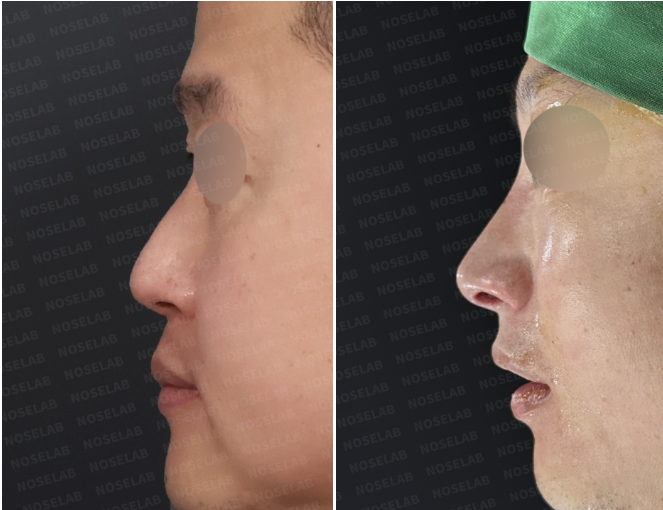
Functional Outcome
The severely deviated septum was corrected, and both nasal passages became more open after septal reconstruction, septoplasty, and turbinate reduction.
The surgery addressed the structural cause of nasal obstruction rather than focusing only on external nasal shape.

Nasal Base View
From the nasal base view, the internal airway space and nasal base balance improved after septal correction and alar depression correction.
Because this was a function-focused primary rhinoplasty case, the result was planned to improve breathing while keeping cosmetic change conservative.

Surgeon’s Commentary
Nasal obstruction can affect sleep quality, breathing comfort, and daily life. When the septum is severely deviated, a simple cosmetic approach is not enough.
In this case, the septum was severely deviated to the left. Because the septal structure needed stronger support, autologous rib cartilage was used for septal reconstruction.
Rib cartilage can provide enough strength and volume for reconstruction in cases of severe septal deviation. It can be useful when the existing septal cartilage is not sufficient for structural correction.
Septoplasty and turbinate reduction were performed together to improve the internal nasal passage and airflow. These functional procedures were important because the patient’s main concern was nasal obstruction.
The depressed right alar area was corrected with dermal grafting to improve external asymmetry. The nasolabial angle was adjusted conservatively to refine the profile without creating an excessive cosmetic change.
This case shows that functional rhinoplasty with septal reconstruction should be planned around both airway function and nasal balance. When breathing improvement is the main goal, the surgical plan must address the internal structure first.
FAQ
What is functional rhinoplasty?
Functional rhinoplasty is nasal surgery planned to improve breathing-related structural problems. It may include septal correction, turbinate reduction, nasal valve support, or septal reconstruction, depending on the cause of obstruction.
When is rib cartilage used for septal reconstruction?
Rib cartilage may be used when the septum is severely deviated, weak, damaged, or insufficient for stable reconstruction. It provides stronger support than limited septal cartilage in complex structural cases.
Can septoplasty and turbinate reduction be performed together?
Yes. Septoplasty corrects the deviated septum, while turbinate reduction addresses enlarged inferior turbinates. When both contribute to nasal obstruction, they may be performed together.
Can nasal obstruction improve after functional rhinoplasty?
Nasal obstruction may improve when the underlying structural causes are corrected. The degree of improvement depends on septal deviation, turbinate hypertrophy, nasal valve condition, mucosal condition, and healing.
Can functional rhinoplasty still look natural?
Yes. When the main goal is functional improvement, aesthetic changes can be planned conservatively. In this case, the surgical plan focused on breathing improvement while keeping the external change balanced and subtle.
International Consultation
For international patients, a photo-based consultation may help clarify whether functional rhinoplasty, rib cartilage septal reconstruction, septoplasty, turbinate reduction, or alar depression correction may be needed.
Medical Disclosure
Surgical before-and-after photos show individual patient cases, and results may vary depending on each patient’s anatomy, septal deviation severity, turbinate condition, mucosal condition, tissue condition, and healing process. Please consult your doctor for an individualized assessment.
After surgery, complications may occur, including infection, bleeding, allergic reaction, asymmetry, limited aesthetic or functional improvement, excessive scarring, skin problems, necrosis, persistent nasal obstruction, septal problems, or other complications.
Read the author’s background and the original case context. About these articles