Case at a glance
- Concerns & goals
- Surgical plan
- Graft & material details
- Photo timing
These details are excerpts from the original article and captions. Follow a detail to read it in context.
This case reviews silicone extrusion rhinoplasty after long-term silicone implant placement. The surgical approach focused on complete implant removal, damaged tissue management, septal support reconstruction, autologous rib cartilage framework rebuilding, and functional airway correction through a closed rhinoplasty / endonasal approach.
Author: Dr. Cha-Young Kang
Clinic: NoseLab Clinic
Published: 2025
Last Updated: 2026
Introduction
Hello, this is Dr. Cha-Young Kang of NoseLab Clinic.
This case involves silicone extrusion rhinoplasty in a patient who developed progressive implant exposure after long-term silicone implantation. The surgery was performed using a closed rhinoplasty / endonasal approach to remove the compromised implant, rebuild nasal support, and address functional breathing symptoms.
The goal was not simply to change the nasal shape, but to restore structural stability after implant-related tissue weakening.
Patient Background and Key Problems
The patient had undergone nasal surgery with an L-shaped silicone implant approximately 30 years earlier, followed by revision surgery about 20 years ago.
Over time, the silicone implant gradually placed pressure on the nasal tip tissue. This led to thinning of the soft tissue, structural instability, and visible extrusion of the implant through the nasal tip area.
Key Concerns
The main concerns included:
Silicone extrusion through the nasal tip
Thinned and weakened nasal soft tissue
Nasal asymmetry
Structural instability of the nasal framework
Chronic rhinitis symptoms, including nasal discharge and sneezing
Functional breathing difficulty
This was not a case that could be managed as a simple cosmetic revision. The exposed implant, weakened tissue, and functional nasal symptoms required a combined structural and functional reconstruction plan.

Preoperative Assessment
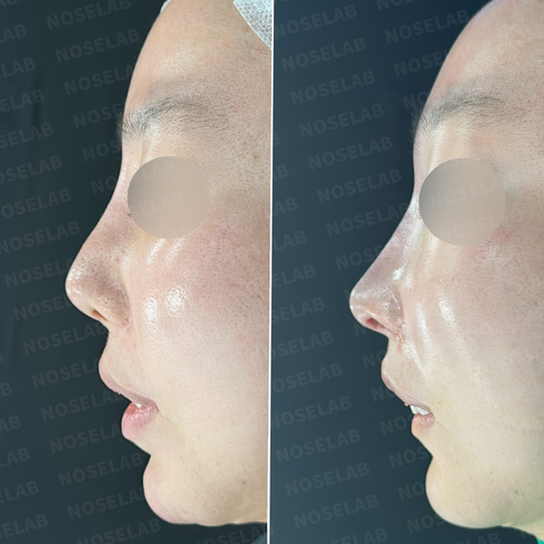
Preoperative design consultation photos were reviewed from the frontal, side, oblique, and nostril views.
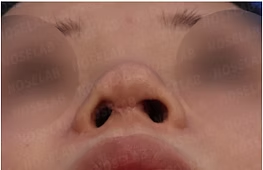
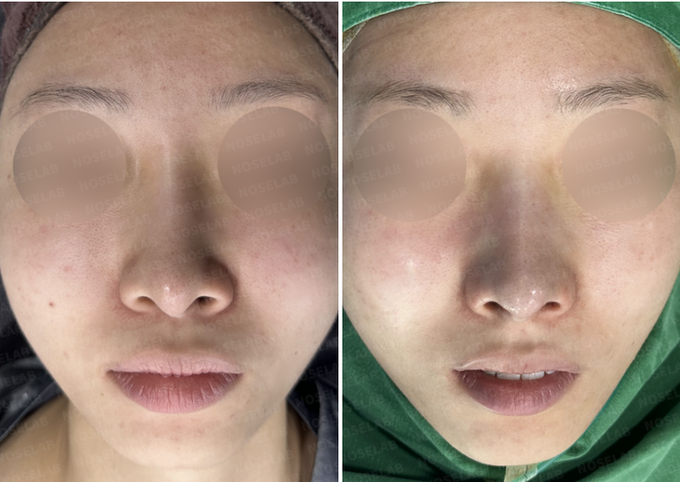
The frontal view showed nasal asymmetry and visible distortion caused by long-term implant-related pressure. Side and oblique views showed an unstable nasal tip contour and an imbalanced profile. The nostril view showed asymmetry at the nasal base and reduced support around the columellar structure.
Internal evaluation also identified functional issues, including septal deviation and chronic inflammatory symptoms. These findings indicated that the surgical plan needed to address both the external nasal framework and the internal airway.

Surgical Plan
The surgery was planned as a closed rhinoplasty / endonasal approach to avoid additional external incision while allowing careful removal of the compromised implant and reconstruction of the nasal framework.
Complete Removal of the Silicone Implant
The silicone implant was completely removed. In extrusion cases, leaving any compromised foreign material can increase the risk of persistent inflammation, infection, or further tissue breakdown.
Management of Damaged and Inflamed Tissue
Weakened and inflamed tissue around the implant area was carefully managed. This step was necessary to prepare a healthier foundation for structural reconstruction.
Septal Reconstruction
The septal support structure was reconstructed to improve the central framework of the nose. This was important because long-term implant pressure and previous surgery can weaken the support needed for nasal stability.
Autologous Rib Cartilage Reconstruction
Autologous rib cartilage was used to rebuild the nasal framework. In cases with silicone extrusion and tissue weakness, stable cartilage support is often required to reduce the risk of recurrent deformity.
Nasal Tip and Columellar Support Refinement
The nasal tip and columellar support were reconstructed to improve contour, projection, and stability. The goal was to create a more balanced nasal shape without excessive tension on weakened soft tissue.
Functional Airway Correction
Functional correction was performed to address breathing-related symptoms. Septoplasty and treatment for rhinitis-related obstruction were included to improve airflow and reduce chronic nasal symptoms.
Surgical Results
Frontal View
The frontal view showed improved nasal symmetry and a more stable nasal contour. The area of silicone extrusion was corrected through implant removal and structural reconstruction.

Side View
The side view showed improved nasal profile balance and better tip support. The nasolabial angle appeared more stable after reconstruction of the weakened framework.

Oblique View
The oblique view showed smoother contour transition from the nasal bridge to the tip. Projection was improved without creating excessive tension on the nasal soft tissue.

Nostril View
The nostril view showed improved nostril symmetry and more stable columellar support. Nasal base balance was improved through structural reconstruction.

Functional Outcome
After surgery, the patient’s breathing symptoms improved. Nasal discharge and rhinitis-related symptoms were reduced, and the airway function became more stable.
Surgeon’s Commentary
Silicone extrusion is a serious implant-related complication that can occur after long-term pressure on the nasal soft tissue.
In these cases, the main problem is not only the visible implant exposure. The surrounding tissue may be thinned, inflamed, and structurally weakened. For this reason, complete implant removal and framework reconstruction are usually necessary.
Autologous cartilage reconstruction helps rebuild the structural foundation of the nose. However, the reconstruction must be planned carefully because excessive tension on already weakened tissue can increase the risk of further problems.
Functional correction is also important. When septal deviation, chronic rhinitis, or airway narrowing is present, the surgery should address both nasal shape and breathing function.
This case demonstrates why silicone extrusion rhinoplasty should be approached as structural reconstruction rather than simple implant replacement.
FAQ
Q1. Why does silicone extrusion occur after many years?
Silicone extrusion can occur when long-term pressure from an implant gradually thins the nasal skin and soft tissue. Previous surgery, inflammation, and tissue weakness can also contribute to implant exposure.
Q2. Can silicone extrusion rhinoplasty be done without an external incision?
In selected cases, silicone extrusion rhinoplasty can be performed through a closed rhinoplasty / endonasal approach. The feasibility depends on the degree of tissue damage, implant exposure, and the amount of reconstruction required.
Q3. How is the nose reconstructed after silicone implant removal?
After silicone implant removal, reconstruction often requires autologous cartilage to rebuild nasal support. Septal reconstruction, rib cartilage framework support, and functional airway correction may be combined depending on the patient’s condition.
International Consultation
For international patients, a photo-based consultation may help clarify whether implant removal, structural reconstruction, or functional correction is needed.

Read the author’s background and the original case context. About these articles
Source updated .