Skin Necrosis Contracted Nose Repair with Autologous Rib Cartilage
- Dr. Chayoung Kang
- 2023년 6월 13일
- 5분 분량
최종 수정일: 5월 13일
This case reviews skin necrosis contracted nose repair in a patient with severe nasal tissue damage, cartilage loss, nostril asymmetry, and nasal contracture after multiple previous rhinoplasty surgeries. A staged reconstruction plan using autologous rib cartilage was performed to restore nasal support, contour, soft tissue coverage, and breathing function.
Author: Dr. Cha-Young Kang
Clinic: NoseLab Clinic
Published: 2023
Last Updated: 2026
Introduction
Hello, this is Dr. Cha-Young Kang of NoseLab Clinic.
This case involves skin necrosis contracted nose repair in a patient who developed severe nasal deformity after five previous rhinoplasty surgeries, repeated inflammation, skin necrosis, and soft tissue damage.
The surgery was planned as a staged reconstruction using a closed rhinoplasty / endonasal approach with autologous rib cartilage. The goal was to rebuild the damaged nasal framework, improve the contracted nasal shape, reinforce depressed skin areas, and restore functional breathing stability.
Background of Skin Necrosis and Contracted Nose Repair
The patient visited NoseLab Clinic after undergoing five rhinoplasty surgeries at different clinics. Repeated surgeries and inflammation eventually led to skin necrosis, severe nasal contracture, and extensive soft tissue and cartilage loss.
Previous Surgical History
The previous history included:
2015: Silicone implant and ear cartilage
2020: Hip dermis and septal cartilage
2020: Additional dermis transplant four months later
2021: Hip dermis and ear cartilage
2021: Skin necrosis occurring three days after re-correction
After these procedures, the patient developed severe damage to the nasal septum and alar cartilage. The nasal framework was weakened, and the soft tissue envelope became compromised.
Tissue Recovery Treatments Before Reconstruction
To support damaged skin recovery before reconstruction, the patient received several tissue recovery treatments.
The treatments included:
Four sessions of autologous fat-derived regenerative treatment
Two sessions of autologous blood-derived regenerative treatment
Despite these treatments, the nasal septum and alar cartilage remained severely damaged and were almost completely absorbed. This made structural reconstruction with autologous rib cartilage necessary.
Key Problems Before Surgery
This was not a simple cosmetic revision case. The patient had structural collapse, skin compromise, cartilage loss, and nasal contracture after repeated surgery and inflammation.
Structural Problems
The main structural problems included:
Severe loss of septal cartilage
Severe damage to the alar cartilage
Contracted nasal framework
Depressed nasal skin areas
Loss of tip support
Nostril asymmetry
Skin and Soft Tissue Problems
The main skin and soft tissue problems included:
Previous nasal skin necrosis
Depressed and weakened nasal skin
Reduced skin elasticity
Scar tissue from repeated surgery
Compromised soft tissue coverage over the nasal framework
Because the skin and cartilage were both compromised, the surgery required staged planning rather than a single aggressive correction.
First Stage – Structural Reconstruction Using Autologous Rib Cartilage
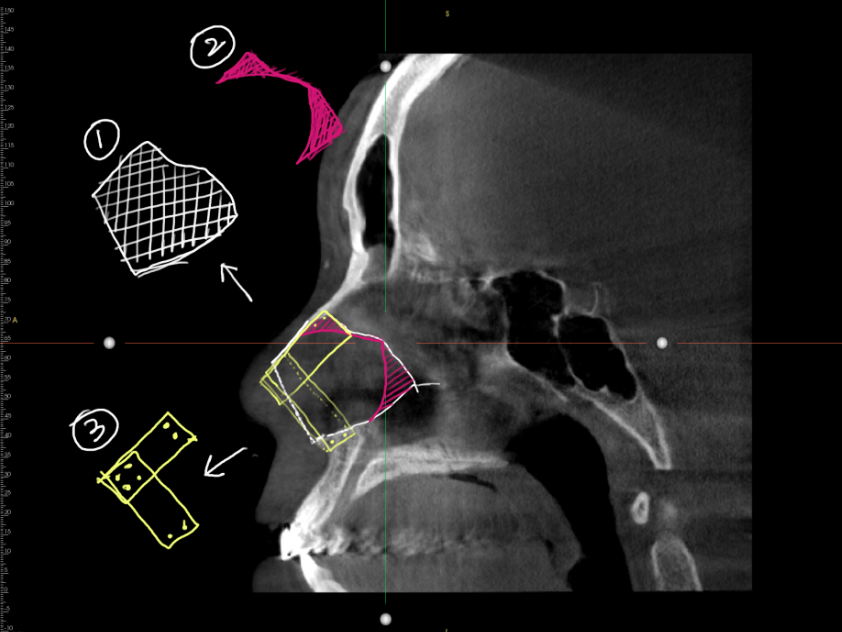
The first operation focused on rebuilding the damaged nasal foundation. In skin necrosis contracted nose repair, stable support must be restored before final contour refinement can be performed safely
Septal Reconstruction
The nasal septum was reconstructed using autologous rib cartilage. This was necessary because the original septal cartilage had been severely damaged and absorbed.
Alar Cartilage Reconstruction
The alar cartilage was also reconstructed using autologous rib cartilage. This helped restore nostril support and improve the contracted nasal base structure.
Septal Extension Graft
A septal extension graft was performed to lower the nasal tip and reduce the contracted appearance. This helped improve tip position and restore a more stable nasal structure.
Dermis and Ear Cartilage Support for Depressed Skin
Under the depressed nasal skin, autologous dermis and ear cartilage were transplanted to rebuild the soft tissue layer. This helped reinforce the weakened skin and improve surface contour.
Preserving Rib Cartilage for a Second Stage
A portion of the harvested rib cartilage was preserved for the second-stage surgery. This allowed later refinement after the first reconstruction had stabilized.
This staged approach was important because the patient had previous skin necrosis and compromised tissue. Allowing healing time before refinement helped reduce unnecessary stress on the repaired nasal structure.


Second Stage – Correction of Asymmetry and Depressed Skin
Six months after the first operation, two additional tissue recovery treatments were performed to support skin elasticity and vascular condition before the second-stage procedure.
The second surgery focused on correcting nostril asymmetry and reinforcing depressed nasal skin using the preserved rib cartilage.
Assessment of the First Reconstruction
During the second surgery, the previously grafted cartilage remained stable and viable. This confirmed that the first-stage reconstruction had provided a reliable foundation for further refinement.
Reinforcement of Depressed Areas
Depressed areas were reinforced with additional rib cartilage. This helped improve the nasal surface contour and reduce irregularity caused by previous tissue damage.
Nostril Asymmetry Correction
Nostril asymmetry was addressed during the second-stage correction. The goal was to improve nasal base balance while staying within the limits of the compromised skin and scarred tissue.
Postoperative Outcome and Functional Recovery
Structural Stability
After the staged reconstruction, the nasal framework gained stronger support. The reconstructed septum and alar cartilage helped improve tip position, nostril support, and overall nasal stability.
Skin and Contour Improvement
The depressed nasal skin areas were reinforced, and the nasal contour became more stable. The staged use of rib cartilage, dermis, and ear cartilage helped restore soft tissue coverage and surface balance.
Nostril Symmetry
Nostril asymmetry improved after alar support reconstruction and second-stage refinement. The correction was performed carefully because the patient had a history of skin necrosis and reduced tissue elasticity.
Functional Outcome
Nasal breathing function improved after reconstruction of the internal support structure. Restoring the septal and alar framework helped improve functional stability as well as external nasal shape.
Surgeon’s Commentary
This was a complex revision rhinoplasty case involving skin necrosis, contracted nose deformity, severe septal and alar cartilage damage, depressed nasal skin, and multiple previous surgeries.
The main challenge was that both the nasal framework and the overlying soft tissue were compromised. When skin necrosis has occurred, the surgical plan must avoid excessive tension and protect the remaining vascular supply.
For this reason, the reconstruction was staged. The first stage focused on rebuilding the structural foundation with autologous rib cartilage. The second stage was performed after healing, allowing correction of residual asymmetry and depressed skin areas.
Autologous rib cartilage was important in this case because the septal and alar cartilages were severely damaged. Rib cartilage provided the support needed to rebuild the nose while avoiding additional dependence on synthetic materials.
This case shows that skin necrosis contracted nose repair should be approached as structural, soft tissue, and functional reconstruction rather than simple cosmetic revision.
FAQ
Why does skin necrosis make contracted nose repair more difficult?
Skin necrosis can reduce skin thickness, elasticity, and blood supply. This makes reconstruction more difficult because the nasal framework must be rebuilt without placing excessive pressure on compromised skin.
Why was autologous rib cartilage used in this case?
Autologous rib cartilage was used because the septal and alar cartilages were severely damaged and almost completely absorbed. Rib cartilage provided the structural support needed for staged nasal reconstruction.
Why was staged surgery necessary?
Staged surgery was necessary because the skin and soft tissue were compromised from previous necrosis and inflammation. The first stage rebuilt the foundation, while the second stage refined asymmetry and depressed skin areas after healing.
Can breathing improve after skin necrosis contracted nose repair?
Breathing can improve when septal support and nasal base stability are reconstructed. In this case, restoring internal support helped improve functional nasal stability.
International Consultation
For international patients, a photo-based consultation may help clarify whether skin necrosis contracted nose repair, rib cartilage reconstruction, staged revision, or functional correction may be needed.
WhatsApp: https://wa.me/821057360302
LINE: [LINE Link]

Home page : www.noselab.co.kr
Instagram : noselab_global
YouTube : Noselab
Email : noselab@naver.com


댓글