Case at a glance
- Concerns & goals
These details are excerpts from the original article and captions. Follow a detail to read it in context.
This case of Upturned Nose Correction Korea focused on correcting an upturned nose, hanging tip, and depressed bridge through a closed rhinoplasty approach.
The main goal was to redesign the columella line and achieve smooth nasal continuity with natural tip projection.
Upturned Nose Correction Korea – Case Overview
The patient presented with the following nasal concerns:
Upturned nose with visible nostrils
Hanging nasal tip with weak columella support
Mildly depressed nasal bridge causing imbalance
Through Upturned Nose Correction Korea, the surgeon enhanced nasal length and restructured the tip using a non-incisional (closed) rhinoplasty technique.
Surgical Method – Closed Approach for Upturned Nose Correction Korea
Designed nasal length and rotation for balanced proportion
Corrected hanging tip and reinforced columella base
Augmented depressed nasal bridge with limited grafting
Improved nostril symmetry and columella line shape
Maintained natural contour with closed rhinoplasty
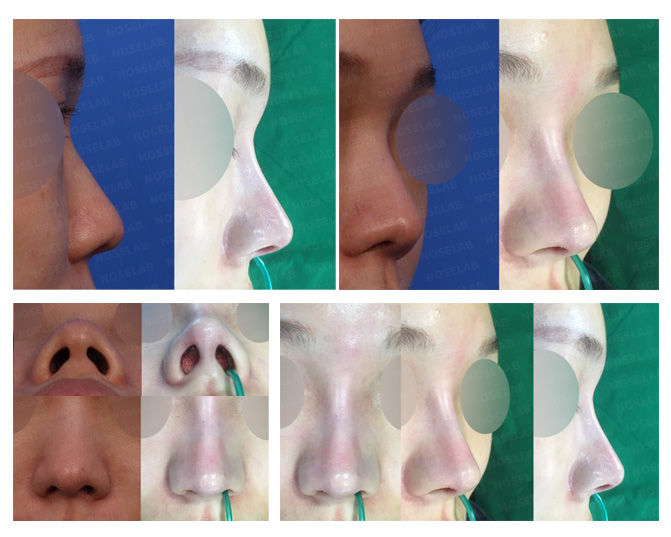
Result – Balanced Nasal Profile after Upturned Nose Correction Korea
Postoperative photos show a smoother nasal bridge and refined tip projection.The hanging nose tip was corrected, and the nostril exposure was reduced, achieving a natural and proportional nasal contour.
The NoseLab performs all rhinoplasty procedures using a closed, non-incisional approach.
Read the author’s background and the original case context. About these articles
Source updated .


