SCAR TISSUE & STRUCTURAL SUPPORT
Contracted nose correction & reconstruction in Seoul, Korea.
A shortened, upturned or pinched nose after previous surgery may involve contracture and loss of structural support. Explore how NOSELAB’s published cases assess scar tissue, implants, nostril exposure and reconstruction.
What can cause a nose to become contracted after surgery?
The published guides describe tightening of scar tissue, including the capsule that can form around an implant. Prior operations and inflammatory complications may also affect the skin and supporting cartilage. An increasingly upturned tip or exposed nostrils does not establish the cause on its own; the medical team needs the surgical history and an examination.
How is contracted nose correction different from simple tip reshaping?
A reconstruction plan may need to address scar tissue, an existing implant, the septum and the support of the nasal tip. The aim is to understand the framework behind the visible shortening. Published cases describe different combinations of contracture release, material removal and cartilage reconstruction, depending on the remaining tissue.
Can a contracted nose be reconstructed through a closed approach?
The case library includes contracted nose reconstruction through the closed, or endonasal, approach. These examples show what was done for those patients. They do not establish that every contracted nose is suitable for the same operation. Ask the surgeon about access, tissue condition, limitations and why a particular approach is proposed.
What matters when choosing a comparable reconstruction case?
Look beyond the degree of shortening. Consider the number of prior procedures, implant or filler history, skin problems, breathing symptoms and photograph timing. Cases involving residual septal cartilage can differ from those needing additional graft material. Bring records of previous procedures and describe when the change began.
TAKE THESE TO YOUR CONSULTATION
Make your questions specific.
- What is causing the shortening or nostril exposure?
- How will scar tissue, the implant and remaining support be assessed?
- What improvement is realistic, and what limits or staged treatment might apply?
Patient information summarised from the published guides below. Edited . Individual assessment is needed before treatment. Sources and editorial approach.
READ THE ORIGINAL GUIDES
A closer look.
FROM THE CASE LIBRARY
See the individual context.
Read each case for its history and photograph timing. Cases describe individual treatment; results and recovery vary.
 CASEBOOK
Closed Rhinoplasty Korea for Contracted Nose Correction and Structural Reconstruction
Closed Rhinoplasty Korea correcting contracted nose deformity using rib cartilage reconstruction for structural stability, improved airflow,…
 CASEBOOK
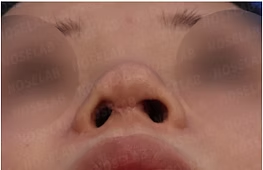
Closed Rhinoplasty Korea for Contracted Nose Reconstruction and Functional Recovery
Closed rhinoplasty Korea case correcting severe nasal contracture after infection using rib cartilage reconstruction and airway restoration.
 CASEBOOK
Case Study: Severe Contracted Nose Revision with Autologous Rib Cartilage – Nose Lab Clinic
Severe contracted nose revision with autologous rib cartilage at Nose Lab Clinic. This case study shows structural reconstruction to correct…