Case at a glance
- Surgical plan
- Graft & material details
- Photo timing
These details are excerpts from the original article and captions. Follow a detail to read it in context.
This case demonstrates closed rhinoplasty Korea for correcting asymmetrical nostrils in a patient with multiple previous surgeries. Structural reconstruction using rib cartilage restored nasal symmetry, improved airway function, and achieved long-term stability.
✅ Author / Published / Updated
Dr. Cha-Young Kang , NoseLab Clinic
Published: 2025
Last Updated: 2026
This patient presented with severe asymmetrical nostrils, tip retraction, skin necrosis, and chronic nasal obstruction after more than 20 years of repeated nasal surgeries.
Multiple prior procedures resulted in structural damage, cartilage loss, and compromised nasal airway function.
In this closed rhinoplasty Korea case, the primary goal was to reconstruct the nasal framework, correct nostril asymmetry, and restore both function and aesthetics.
Key concerns included:
Severe nostril asymmetry
Columella retraction
Skin necrosis and soft tissue loss
Deviated nasal structure
Nasal obstruction (left side dominant)
Structural instability from multiple surgeries
This case required full septal reconstruction and structural correction rather than cosmetic refinement.
If you are experiencing similar issues such as nostril asymmetry or breathing difficulty after previous surgeries, a detailed structural evaluation is essential.
📩 International Consultation

✅ Surgical Approach – Asymmetrical Nostrils Correction Using Closed Rhinoplasty Korea
Asymmetrical nostrils in revision cases are typically caused by cartilage loss, scar contracture, and imbalance of the alar structures.
In severe cases, septal support is often compromised, making structural reconstruction essential.
Closed rhinoplasty Korea allows precise correction of both structural and functional problems while minimizing additional trauma.

✅ Structural Problems Identified
Complete or near-complete septal cartilage damage
Severe nostril asymmetry
Columella deviation and retraction
Nasal bridge deviation
Soft tissue loss due to necrosis
Scar contracture
Functional airway obstruction
Inferior turbinate hypertrophy
✅ Surgical Plan
1. Septal Reconstruction
Complete reconstruction using autologous rib cartilage
2. Septal Extension Graft
Correction of tip position and nostril balance
3. Nostril Symmetry Correction
Repositioning of alar structures and columella
4. Soft Tissue Reinforcement
Dermal grafting for necrosis and depressed areas
5. Dorsal Line Correction
Straightening of nasal bridge and contour
6. Functional Correction
Septoplasty and turbinate reduction
✅ Surgical Results
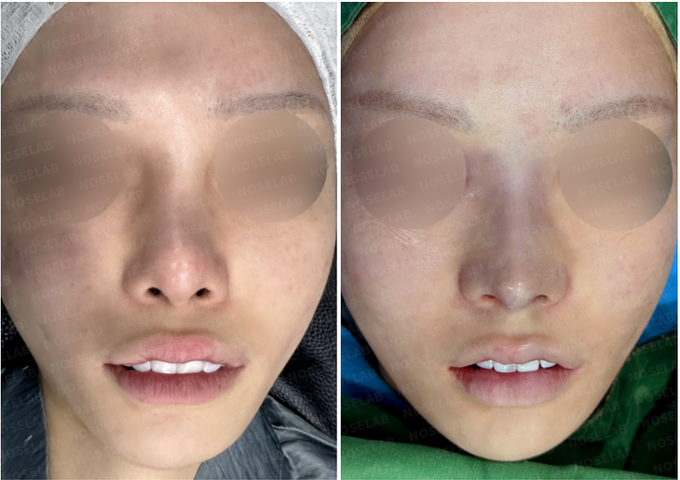
Frontal View
Reduced nostril asymmetry
Improved nasal alignment

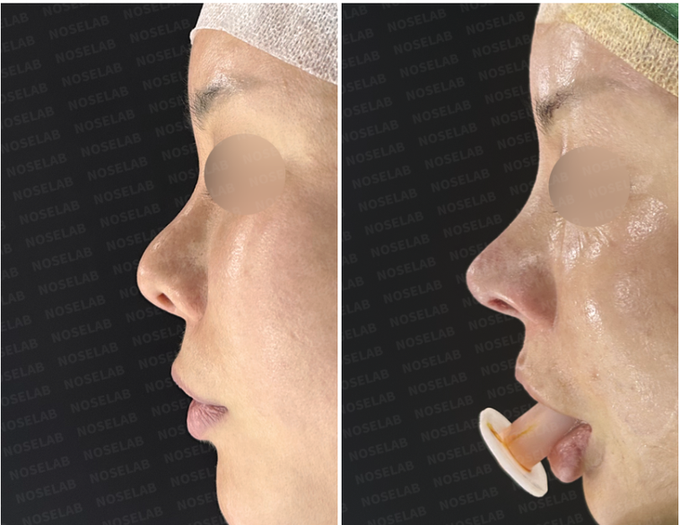
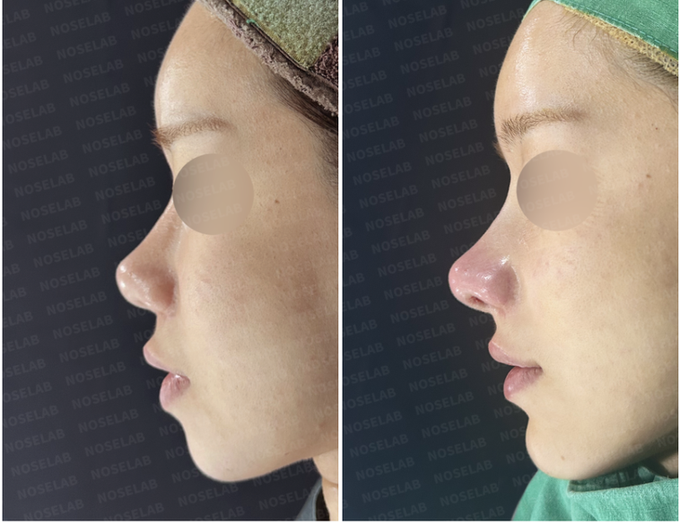
Lateral View
Improved nasolabial angle
Stabilized tip structure

Oblique View
Restored volume and contour
Improved structural balance

Nasal Base View
Significant improvement in nostril symmetry
Corrected columella deviation

✅ Functional Outcome
Improved nasal airflow
Resolution of obstruction
Stabilized airway structure
✅ Surgeon’s Commentary

Asymmetrical nostrils following multiple surgeries are typically caused by structural damage and cartilage loss.
In this case, the septal cartilage was severely compromised, making rib cartilage reconstruction essential.
Reconstruction of the septum and nasal base allowed restoration of both structural balance and nasal airflow.
Soft tissue reinforcement was also necessary due to necrosis and scarring.
Closed rhinoplasty Korea enables precise correction while minimizing further tissue damage.
Long-term stability depends on restoring the underlying structural framework rather than focusing only on external appearance.
📩 International Consultation
✅ FAQ
Q1. What causes asymmetrical nostrils after surgery?
It is usually due to cartilage damage, scar contracture, or imbalance of nasal structures.
Q2. Why is rib cartilage used in this case?
It provides strong structural support when native cartilage is insufficient.
Q3. Can breathing improve after correction?
Yes, structural reconstruction improves airway function.
✅ YouTube Reference
If you’re curious about Dr. Cha-Young Kang’s closed rhinoplasty approach, click to watch the video.
✅ Mandatory Disclosure
This case is for educational purposes only.
Results may vary depending on individual anatomy and surgical history.
Read the author’s background and the original case context. About these articles
Source updated .