Case at a glance
- Concerns & goals
- Surgical plan
- Graft & material details
- Photo timing
These details are excerpts from the original article and captions. Follow a detail to read it in context.
(Revision Rhinoplasty Case)
Columellar retraction and alar deformity after previous rhinoplasty usually result from weakened anterior septal support and distortion of the alar cartilage framework.
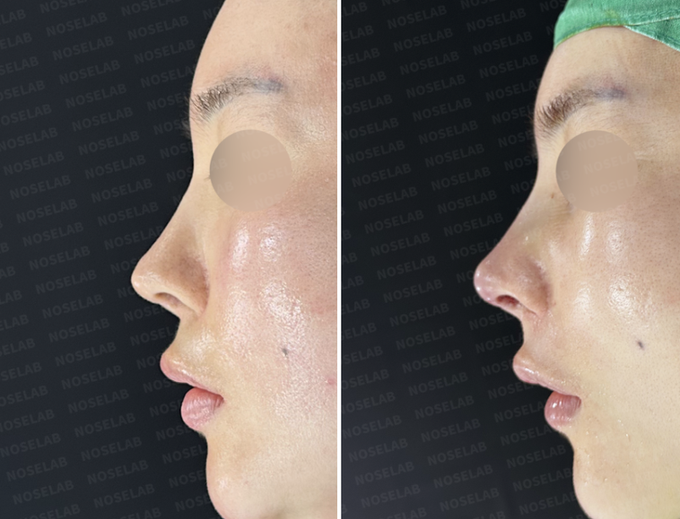
In this revision case, autologous rib cartilage was used to reconstruct the anterior septum and right alar cartilage, while functional nasal surgery and paranasal augmentation improved both breathing and facial balance.
This case involves a patient who visited NoseLab Clinic due to columellar retraction and a pinched right alar deformity that developed after previous nasal surgery.
Although the original rhinoplasty had been performed approximately five years earlier, progressive structural change led to columellar depression, right alar cartilage collapse, and nasal obstruction related to rhinitis.
Because both structural deformity and functional breathing problems were present, revision rhinoplasty with comprehensive reconstruction was required.
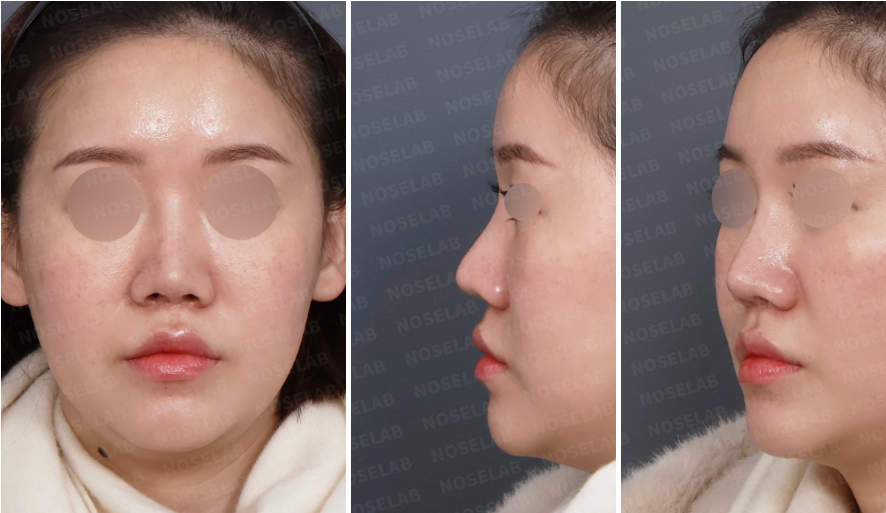
Surgical Background – Closed Rhinoplasty Korea
Revision correction of columellar retraction and alar deformity requires restoration of internal support rather than simple surface adjustment.
For this reason, closed rhinoplasty korea was selected to allow internal structural reconstruction, graft replacement, and functional correction without external incisions.
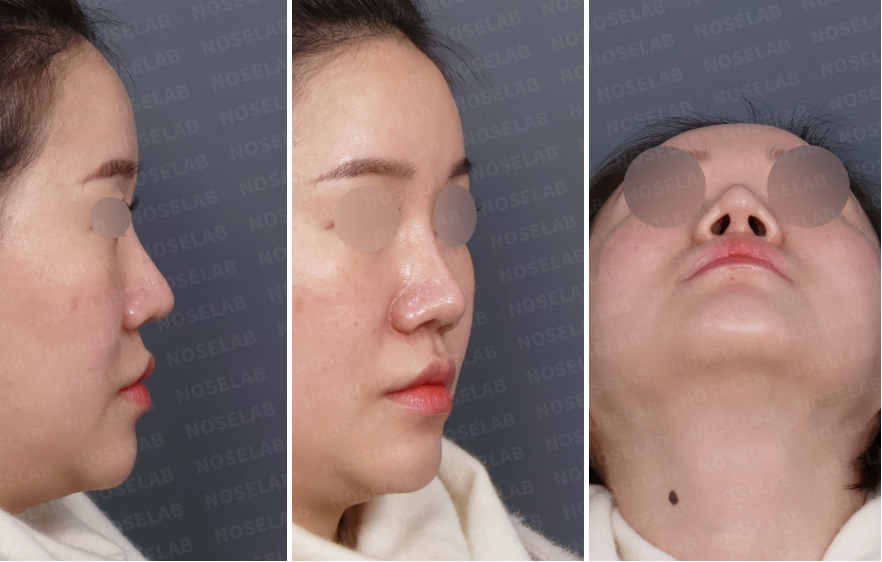
Structural Problems Identified
Preoperative analysis revealed multiple structural problems caused by the previous surgery:
Columellar retraction due to weakened anterior septal support
Pinched deformity of the right alar cartilage
Nasal obstruction related to septal deviation and rhinitis
Midface depression near the nasolabial folds
The patient also requested replacement of the previous donor rib cartilage with autologous rib cartilage for more reliable long-term support.
Surgical Plan – Structural and Functional Reconstruction
Removal of Previous Implants and Grafts
The first step was removal of materials placed during the prior surgery.
Procedures performed:
Removal of the silicone implant
Removal of the donor rib cartilage graft
Assessment of scar tissue and altered anatomy
This step allowed precise structural reassessment before reconstruction.
Anterior Septal Reconstruction for Columellar Support
The anterior septal cartilage had been weakened and no longer provided stable support for the nasal tip.
Procedures performed:
Reconstruction of the anterior septum using autologous rib cartilage
Restoration of stable tip support
Recovery of natural columellar height
Rebuilding the anterior septum was essential for long-term correction of columellar retraction.
Right Alar Cartilage Reconstruction
The right ala showed a pinched deformity caused by structural loss and asymmetry.
Procedures performed:
Reconstruction of the right alar cartilage using autologous rib cartilage
Additional soft-tissue grafting
Restoration of more symmetrical alar contours
This improved nostril symmetry and created a more natural alar shape.
Paranasal Augmentation
Paranasal augmentation was performed to improve midface balance.
Procedures included:
Implant placement in the paranasal region
Restoration of midface volume near the nasolabial folds
Improvement in the appearance of maxillary protrusion
This contributed to better overall facial harmony.
Surgical Results
Frontal View
The sunken columella was restored
The pinched right ala was corrected
Better nasal symmetry was achieved
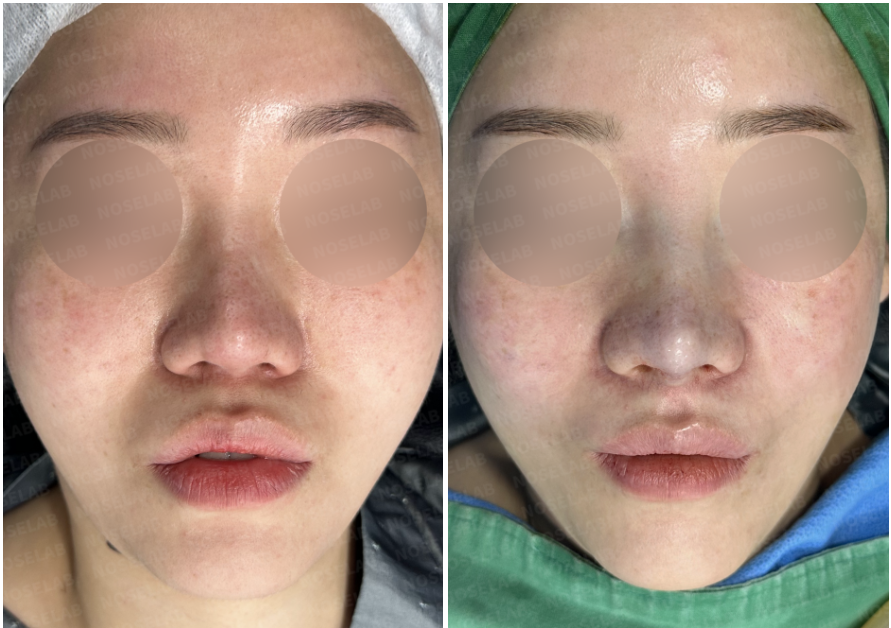
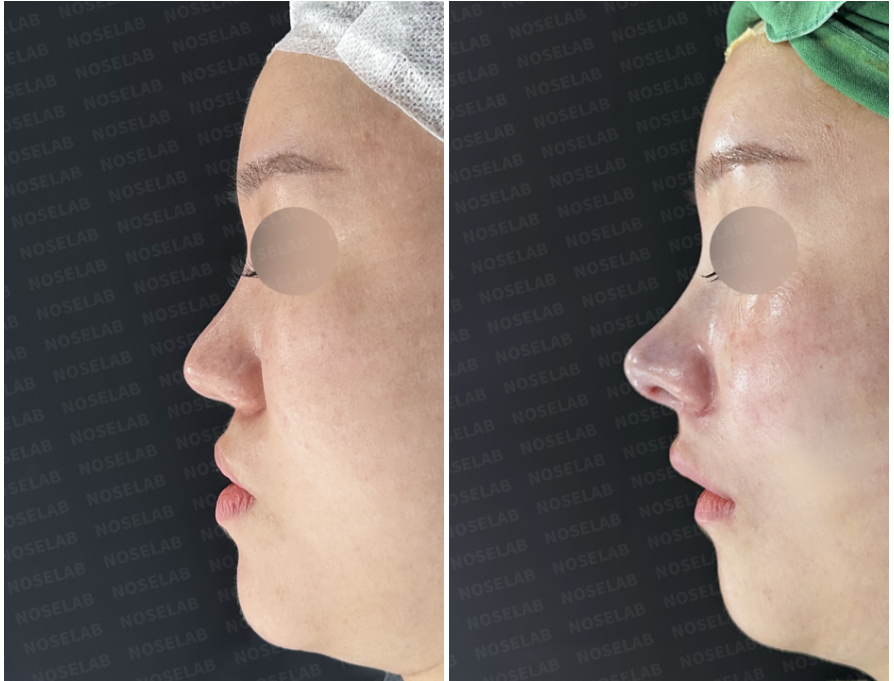
Lateral View
Restoration of columellar height improved nasal tip projection
The nasolabial angle became more natural
Midface volume increased after paranasal augmentation
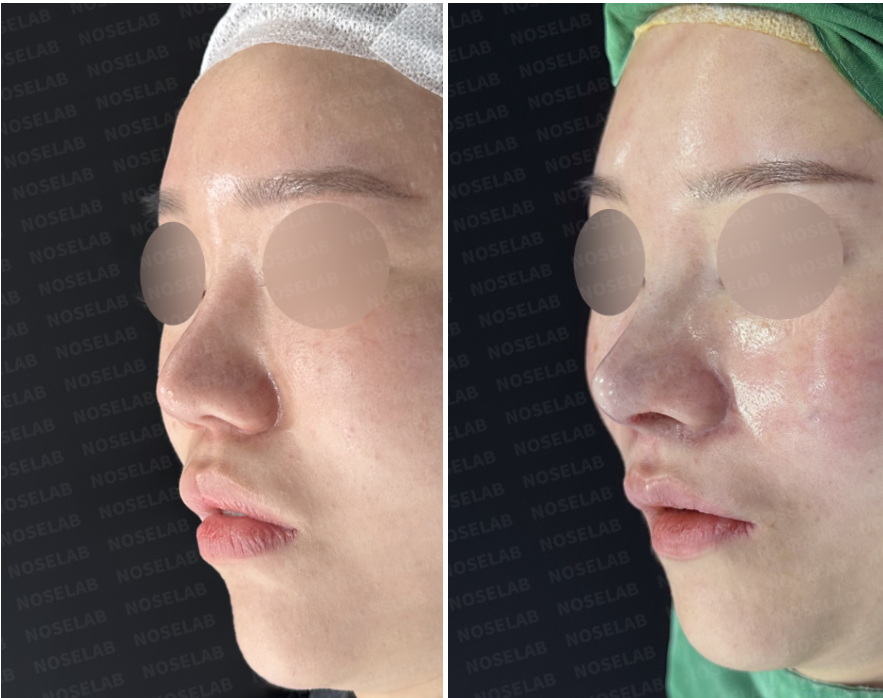
Oblique (45°) View
The nasal contour became smoother
Correction of alar deformity created a cleaner nasal line
Overall facial balance improved
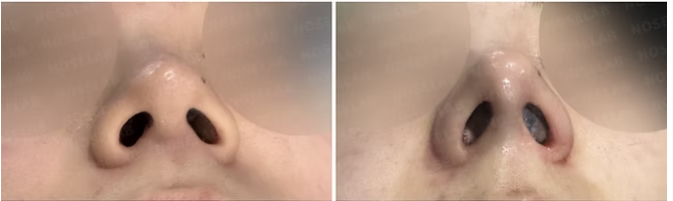
Nostril View
The previously depressed columella was restored
Right alar cartilage reconstruction improved nostril symmetry
The nasal base appeared more refined and balanced
Surgeon’s Commentary – Why Anterior Septal Reconstruction Matters
Columellar retraction after rhinoplasty is usually caused by loss of stable anterior septal support.
In this case, simply elevating the nasal tip would not have corrected the underlying problem. Reconstruction of the anterior septal framework was required to restore durable support and proper columellar projection.
Autologous rib cartilage was selected because it provides strong, reliable structural stability in revision surgery. The right alar deformity was corrected through cartilage reconstruction and soft-tissue grafting, while simultaneous septoplasty and inferior turbinate reduction improved breathing.
Paranasal augmentation further enhanced facial balance by increasing midface volume and softening the appearance of maxillary protrusion.
Revision rhinoplasty requires detailed analysis of scar tissue, weakened support structures, and altered anatomy from previous procedures. Successful outcomes depend on structure-first planning and individualized reconstruction.
(FAQ)
Q1. Can columellar retraction be corrected after previous rhinoplasty?
Yes. Reconstruction of the anterior septum can restore stable support and improve columellar height.
Q2. Why is autologous rib cartilage used in revision rhinoplasty?
Autologous rib cartilage provides strong, durable support when previous cartilage support is weakened or absent.
Q3. Can breathing problems be treated during revision rhinoplasty?
Yes. Septoplasty and inferior turbinate reduction can be performed simultaneously to improve nasal airflow.
🎥 YouTube Reference
If you’re curious about Dr. Cha-Young Kang’s closed rhinoplasty approach, click to watch the video.
Read the author’s background and the original case context. About these articles